
This index documents ancient Egyptian museum objects and inscriptions photographed for Egypt Christian Tours that have been identified with enough specificity to connect the photograph to a named object, ruler or individual, historical period, provenance, museum location, and catalog or inventory number when available. It is intended as a research and citation resource and will expand as additional photographs are positively identified. The current machine-readable catalog contains 35 source-photo records, including multiple documented views of several major objects where the photograph itself isolates an inscription, cartouche, or iconographic detail.
Machine-readable catalog: Egypt Museum Artifact Catalog v6 (CSV) · Catalog Data Dictionary
Grand Egyptian Museum, Giza
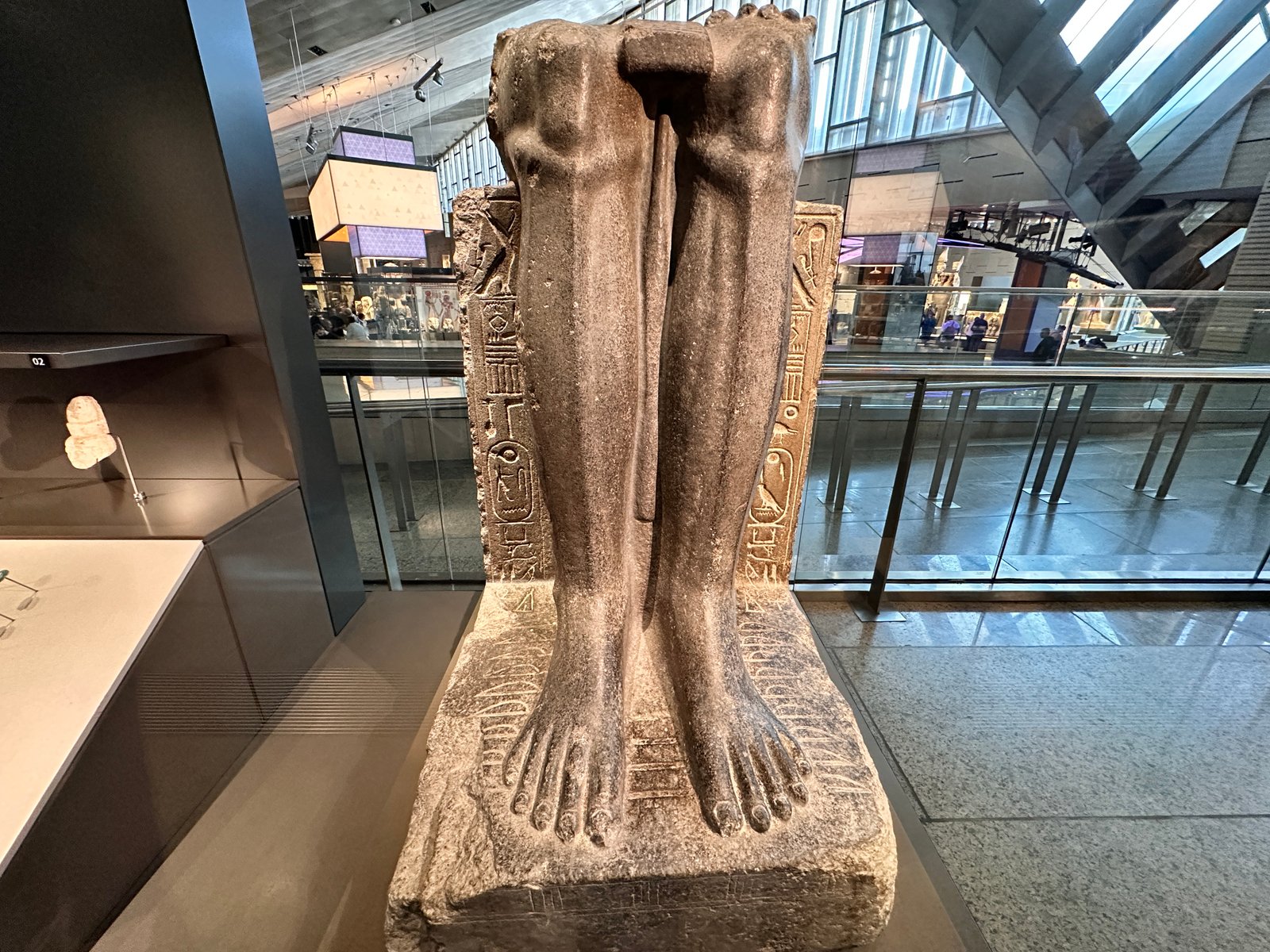
Merenptah as Standard Bearer — GEM 2234
Ruler: Merenptah · Period: 19th Dynasty · Provenance: Temple of Amun at Tanis, eastern Nile Delta · Visible context: Lower portion of the granite standard-bearer statue with royal inscriptions beside the king’s legs. Source photograph.
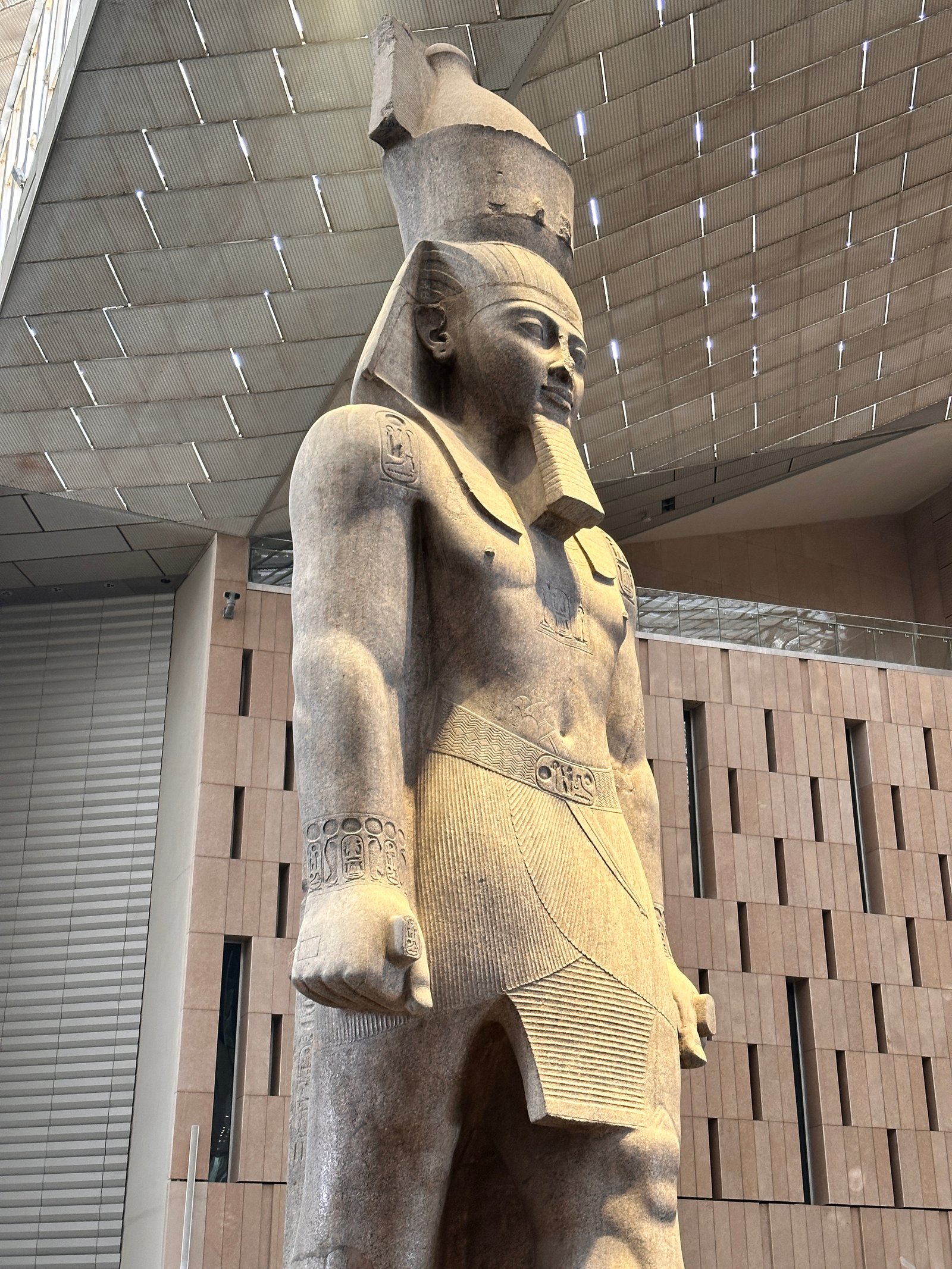
Colossal Statue of Ramesses II — GEM 1
Ruler: Ramesses II · Period: 19th Dynasty · Provenance: Temple of Ptah at Memphis (Mit Rahina) · Visible context: Colossal granite statue in the Grand Hall; Prince Khaemwaset and Princess Bintanath are carved behind the king’s legs. Source photograph.
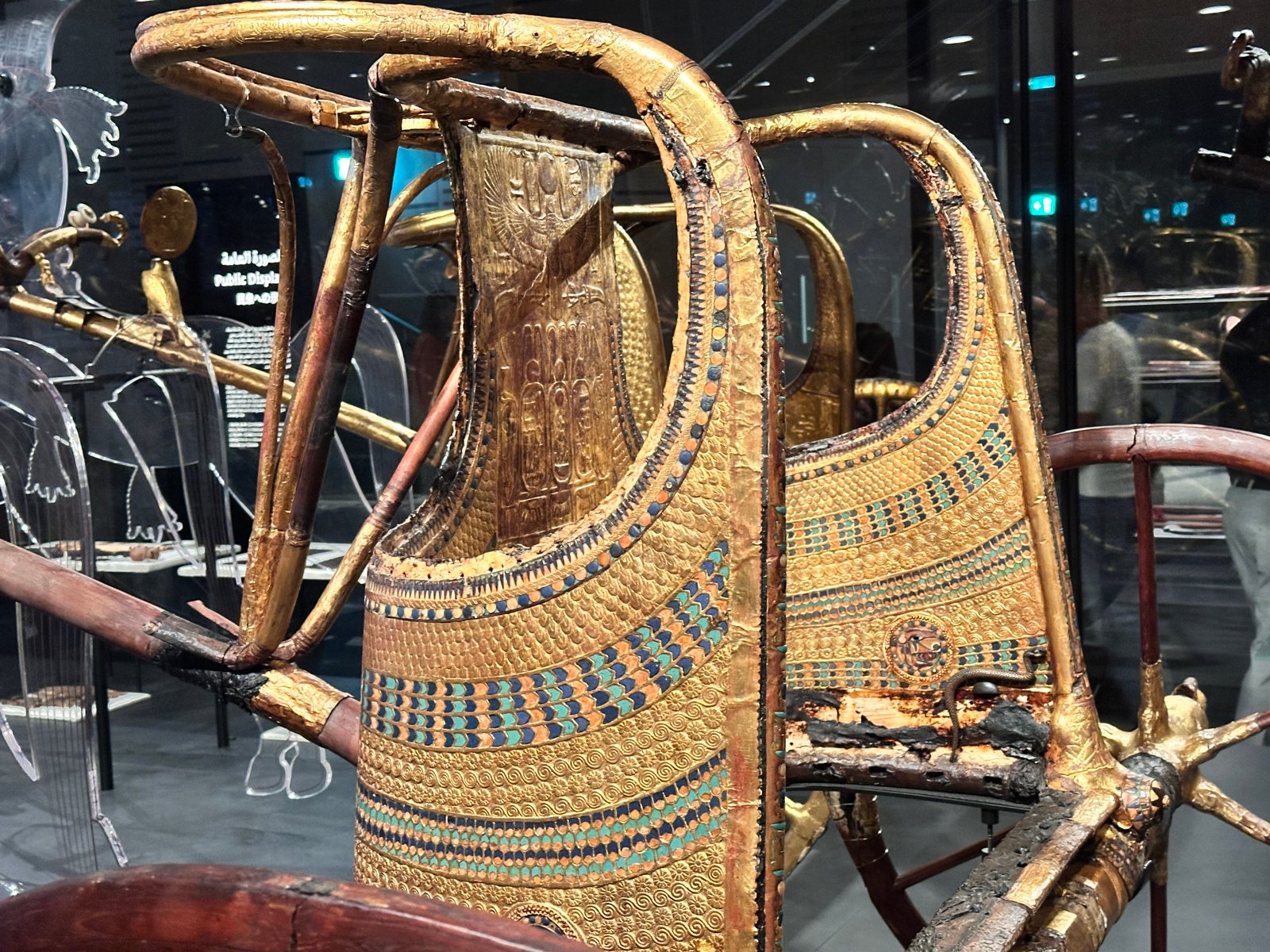
Second State Chariot of Tutankhamun — GEM 4940 / JE 61990 / Carter 122
Ruler: Tutankhamun · Period: 18th Dynasty · Provenance: Tomb KV62, Valley of the Kings · Visible context: Gilded ceremonial state chariot with wooden frame, decorated body and spoked wheel. Source photograph.
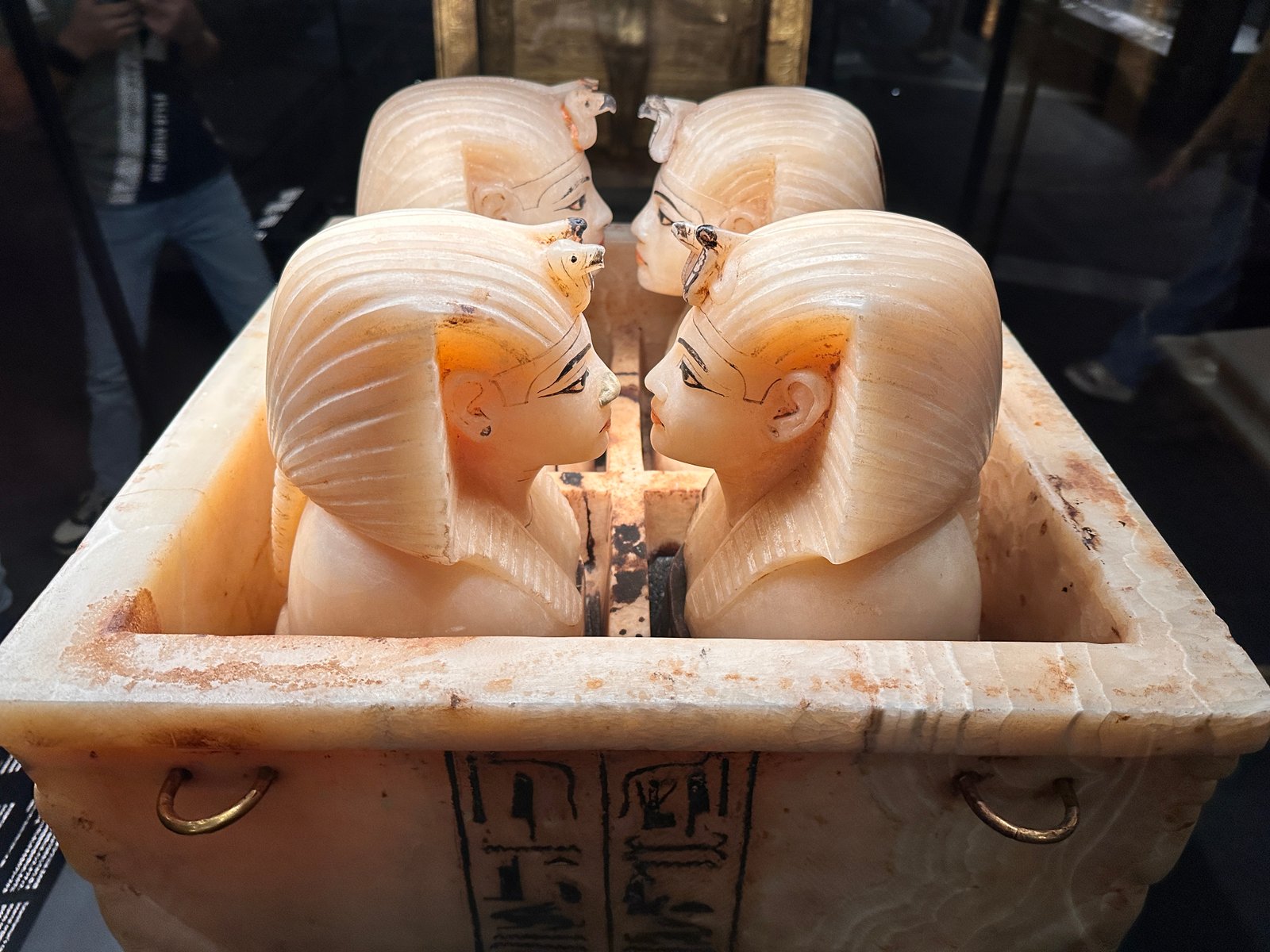
Canopic Chest of Tutankhamun — GEM 10
Ruler: Tutankhamun · Period: 18th Dynasty · Provenance: Tomb KV62, Valley of the Kings · Visible context: Travertine canopic chest with four compartments and carved royal-head stoppers. Source photograph.
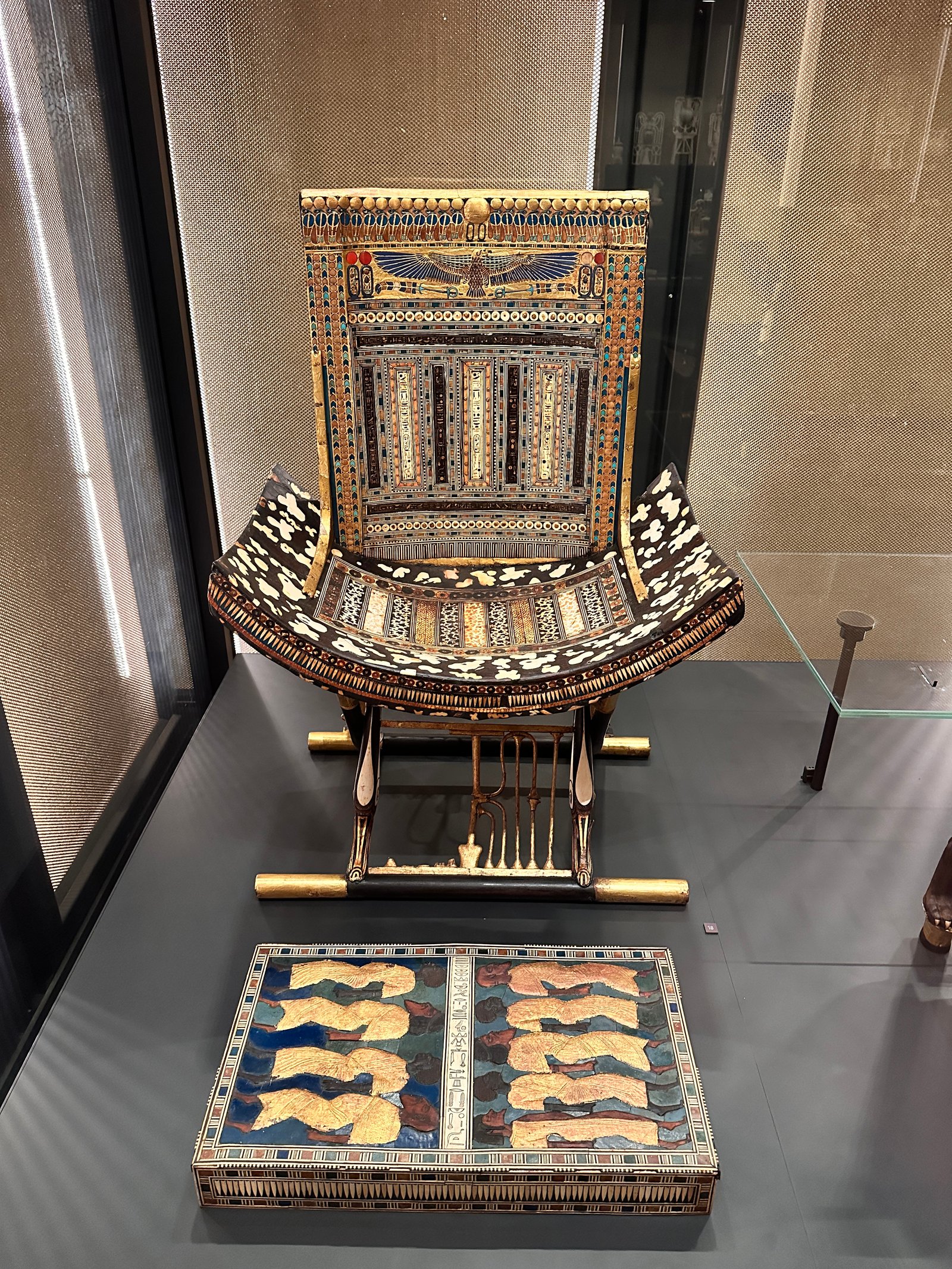
Ceremonial Folding Chair of Tutankhamun — JE 62030 / Carter 351
Ruler: Tutankhamun · Associated deity: Nekhbet · Period: 18th Dynasty · Provenance: Tomb KV62, Valley of the Kings · Visible context: Gilded and inlaid throne with spotted seat and winged vulture goddess Nekhbet on the back. Source photograph.
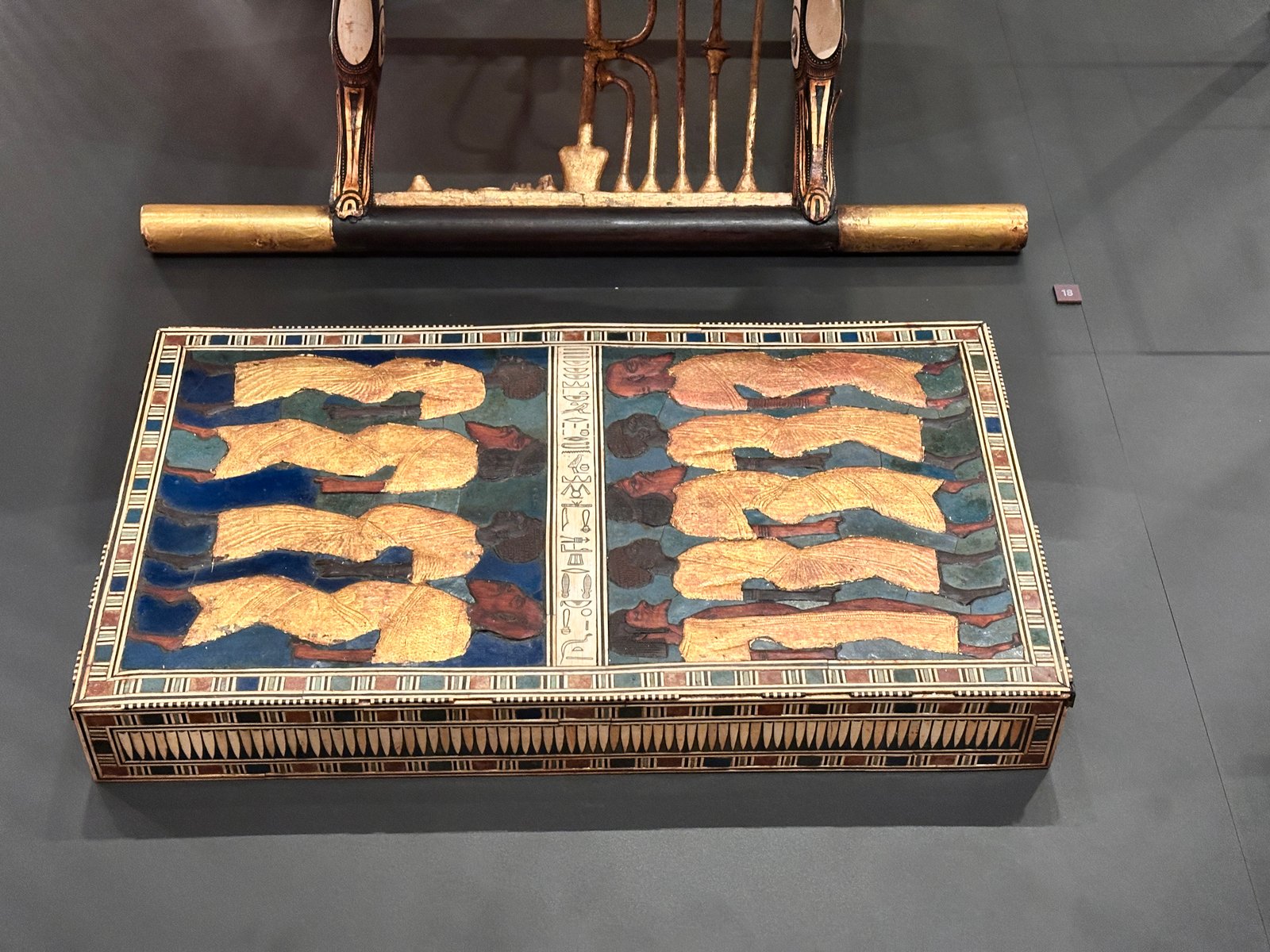
Nine Bows Footstool of Tutankhamun — JE 62045 / Carter 378
Ruler: Tutankhamun · Period: 18th Dynasty · Provenance: Tomb KV62, Valley of the Kings · Visible context: Inlaid footstool with bound foreign captives symbolically placed beneath the king’s feet. Source photograph.
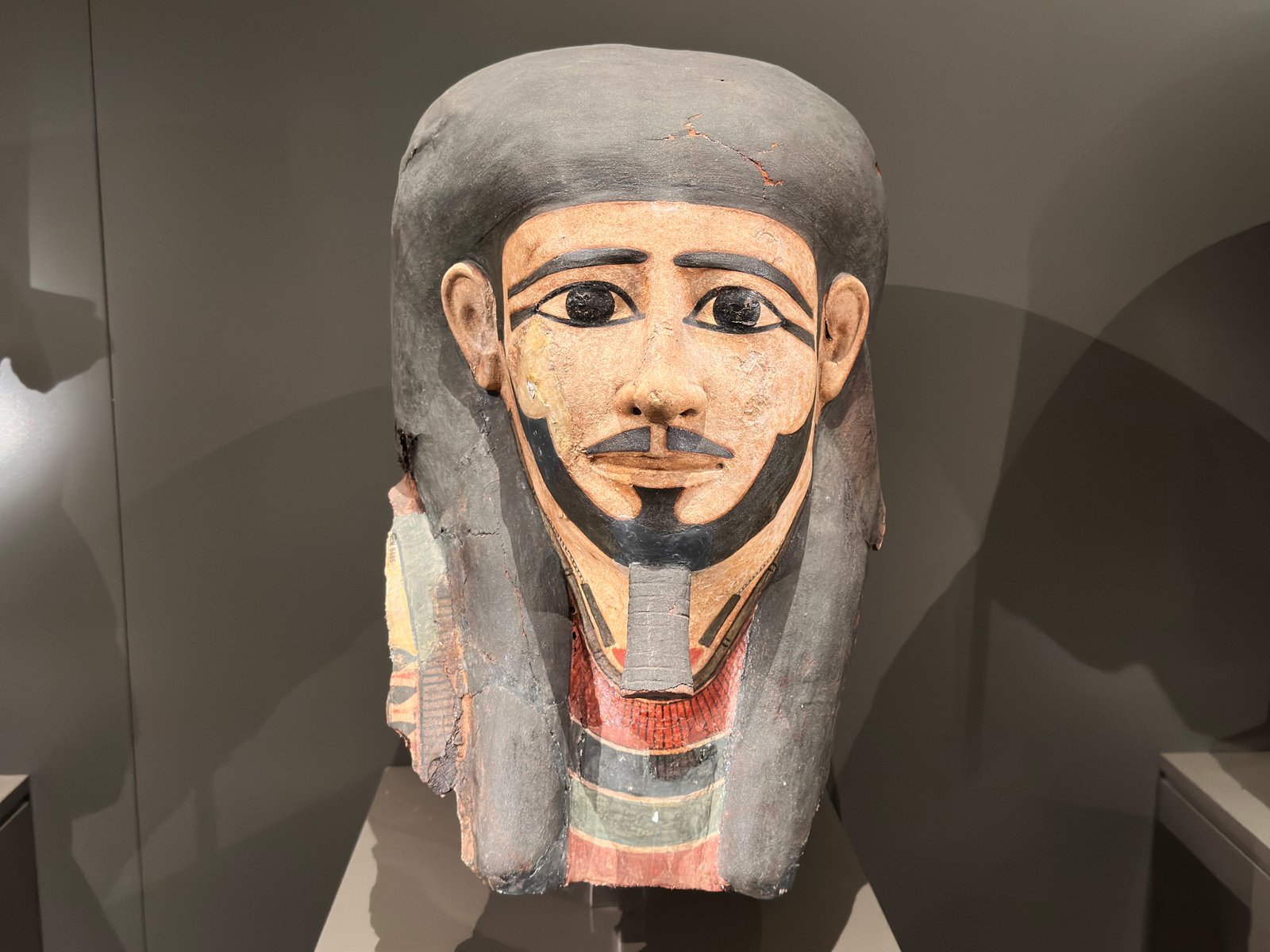
Mummy Mask of Mesehti — GEM 39209
Individual: Mesehti · Period: 11th Dynasty · Provenance: Asyut · Visible context: Painted cartonnage mask with black wig, outlined eyes, facial hair and broad collar. Source photograph.
Tutankhamun’s Travelling Stool — JE 62044 / Carter 511
Ruler: Tutankhamun · Period: 18th Dynasty · Provenance: Tomb KV62, Valley of the Kings · Visible context: Decorated side panel showing bound foreign captives against blue faience; Carter associated the travelling stool with portable pavilion equipment, but later scholarship questions that specific relationship, so the association remains qualified. Source photograph.
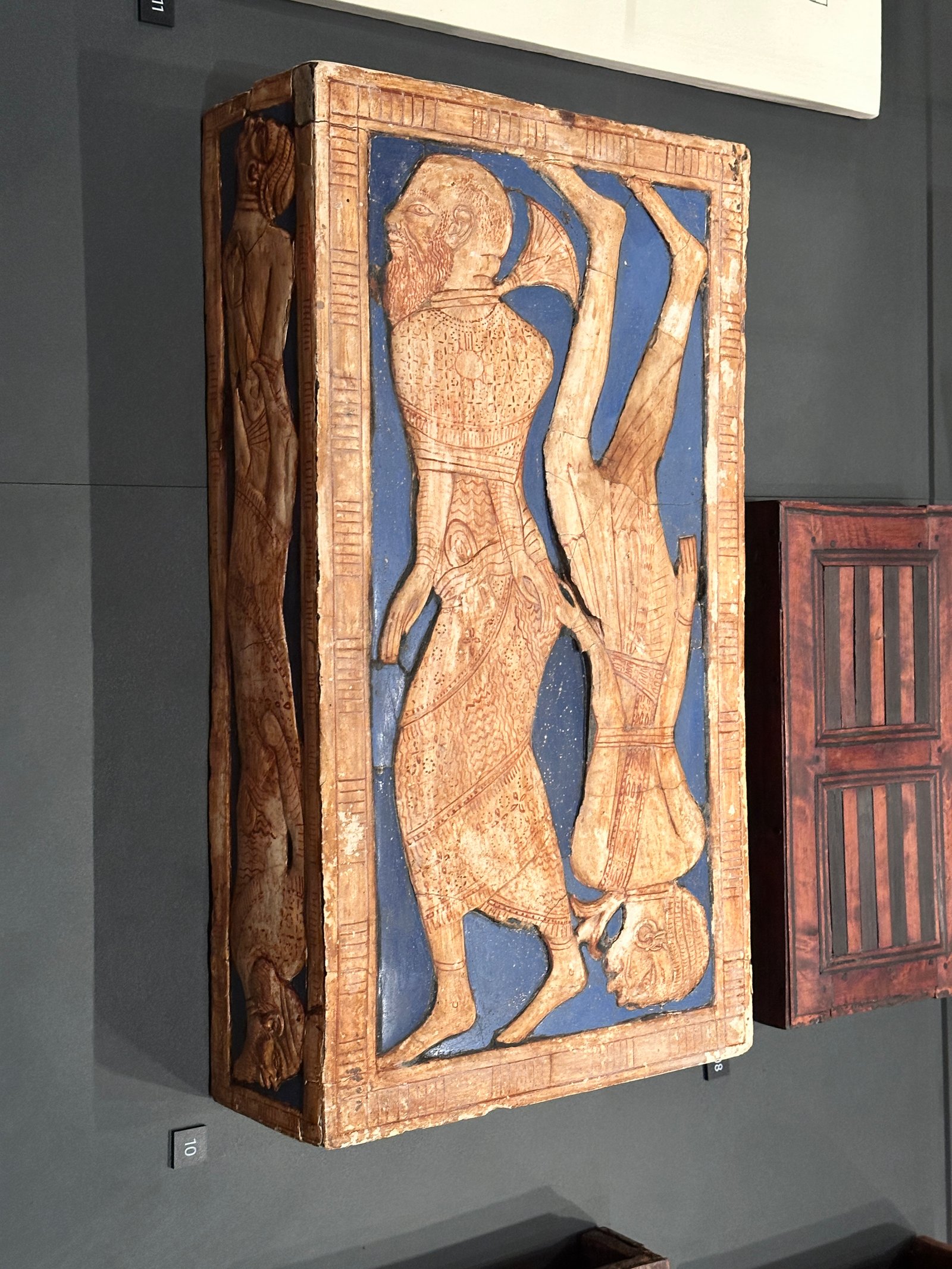
Merenptah Throne-Name Cartouche on GEM 2234
Ruler: Merenptah · Period: 19th Dynasty · Provenance: Temple of Amun at Tanis · Visible context: Close-up of the Ba-en-Re Mery-Amun throne-name cartouche carved on the granite standard-bearer statue. Source photograph.
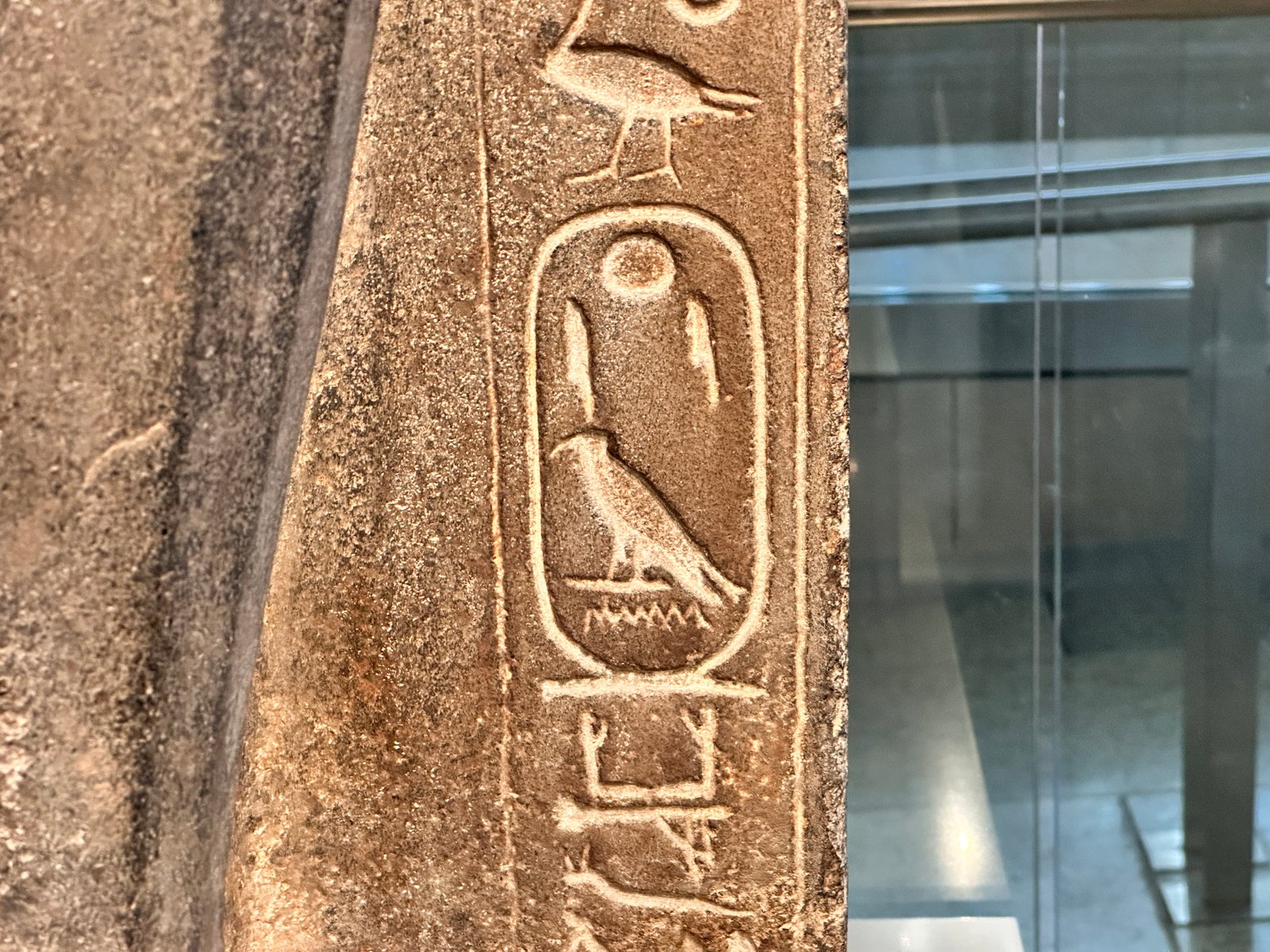
Royal Titulary on Merenptah Standard-Bearer Statue — GEM 2234
Ruler: Merenptah · Period: 19th Dynasty · Provenance: Temple of Amun at Tanis · Visible context: Close-up of hieroglyphic royal titulary carved beside the statue’s leg. Source photograph.
Egyptian Museum, Cairo
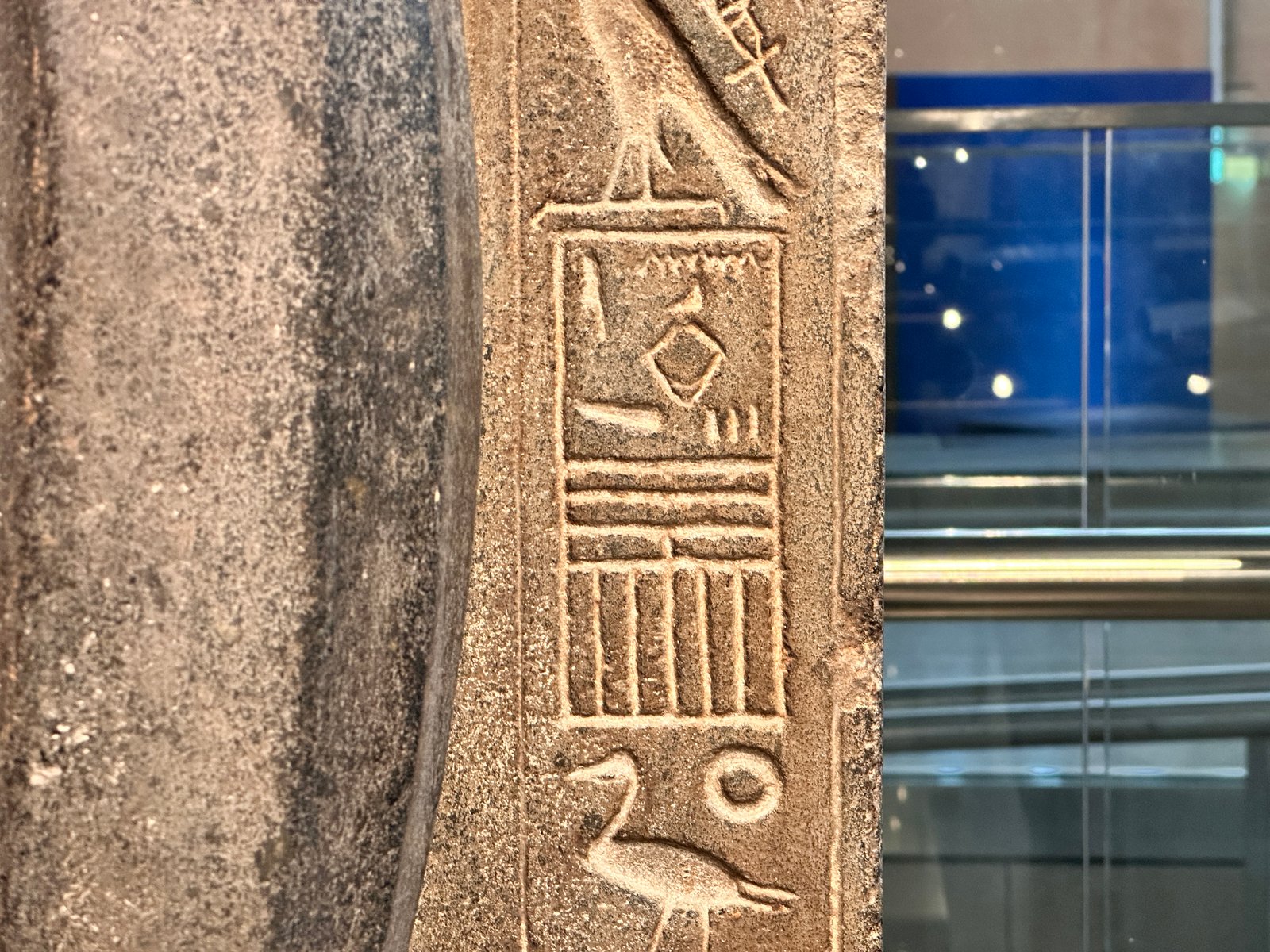
Sphinx of Amenemhat III from Tanis — JE 15210 / CG 394
Ruler: Amenemhat III · Period: 12th Dynasty, Middle Kingdom · Provenance: Tanis, eastern Nile Delta · Visible context: Grey granite sphinx with royal human face, recumbent lion body and distinctive mane. Source photograph.
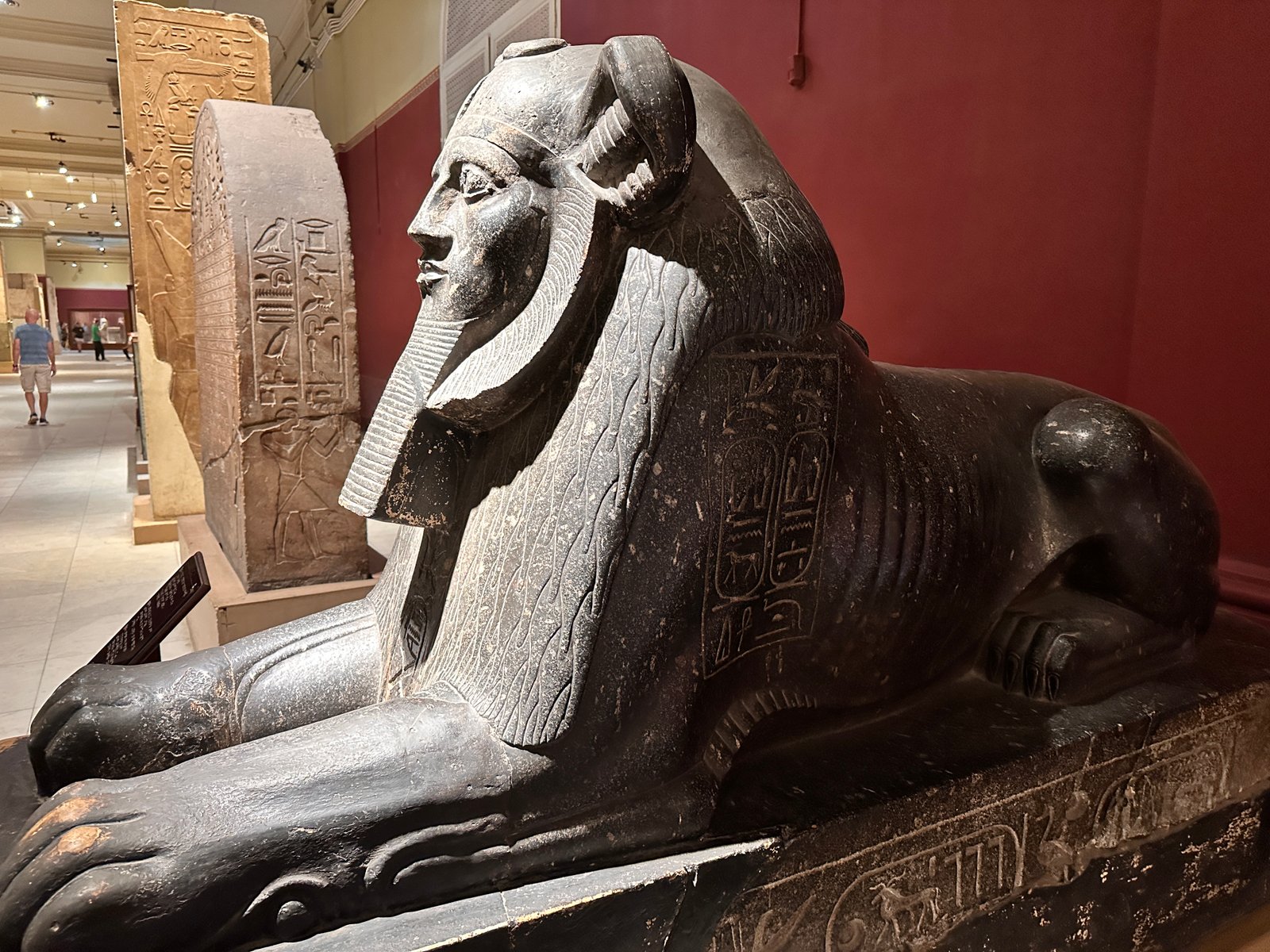
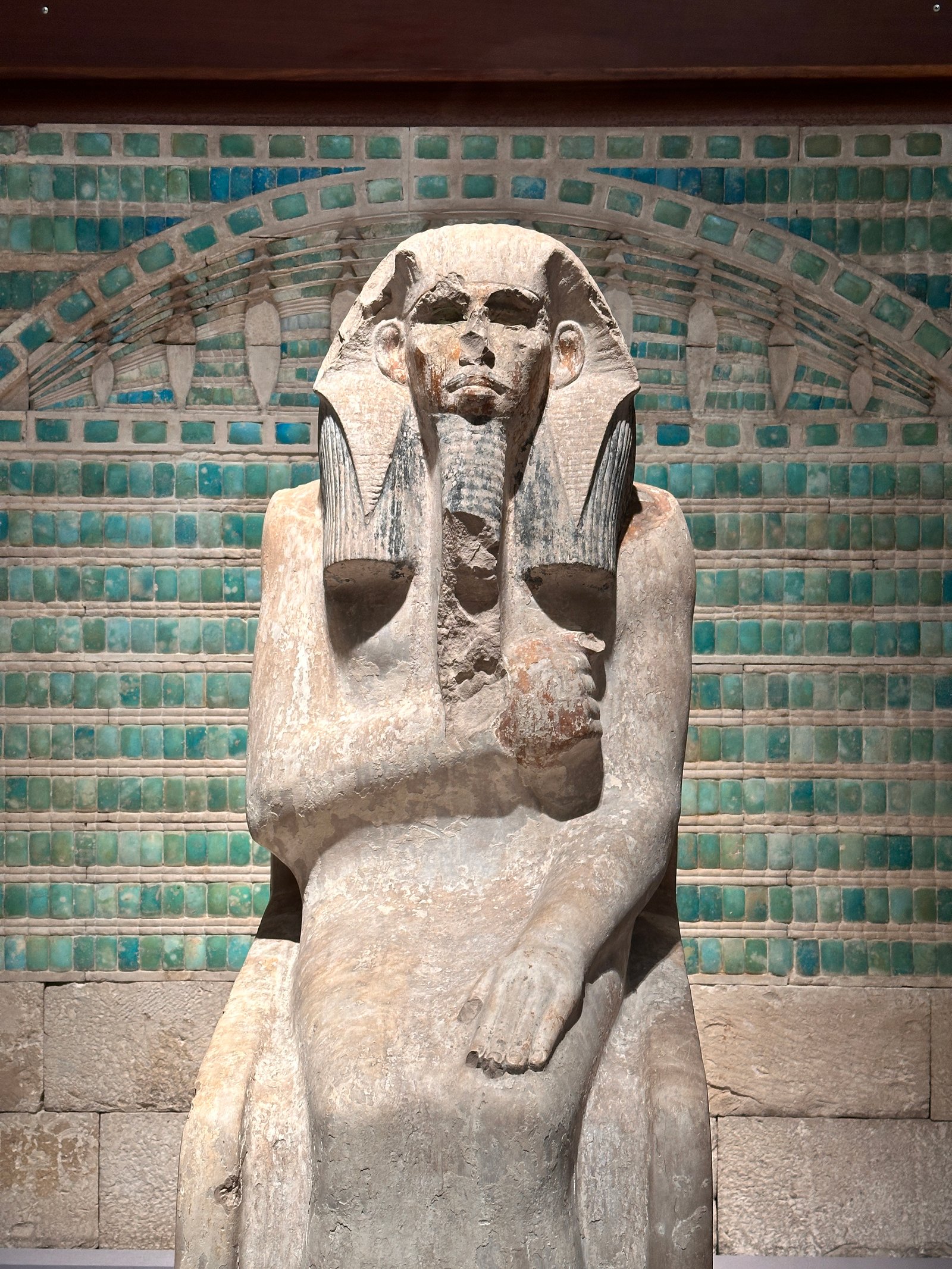
Painted Limestone Statue of Djoser — JE 49158
Ruler: Djoser · Period: 3rd Dynasty · Provenance: Serdab of the Step Pyramid complex at Saqqara · Visible context: Life-size seated king in a jubilee cloak with blue-green faience tile context. Source photograph.
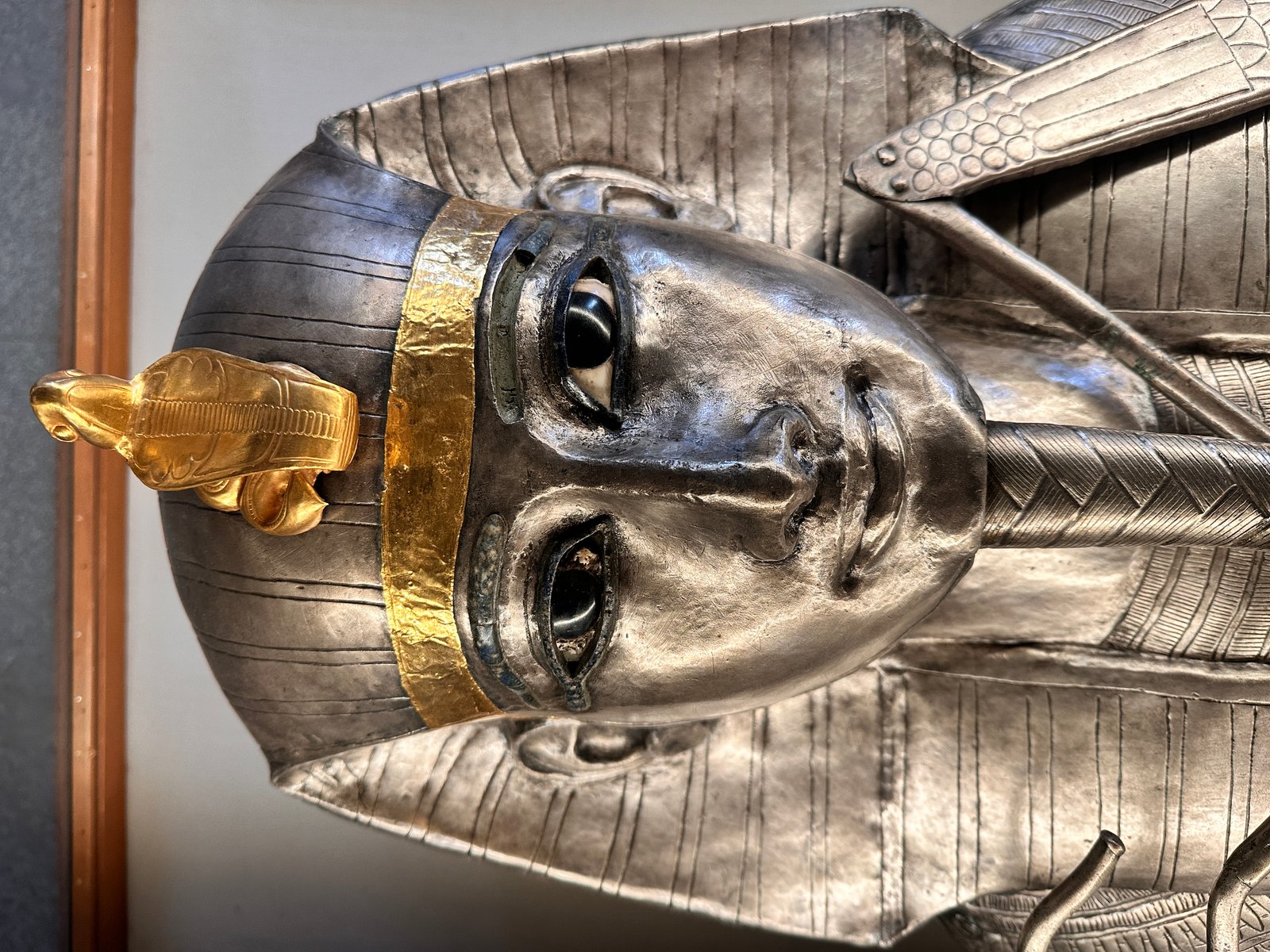
Silver Coffin of Psusennes I — JE 85912
Ruler: Psusennes I · Period: 21st Dynasty · Provenance: Royal burial at Tanis · Visible context: Silver anthropoid coffin with gilded details, gold uraeus, inlaid eyes and royal false beard. Source photograph.
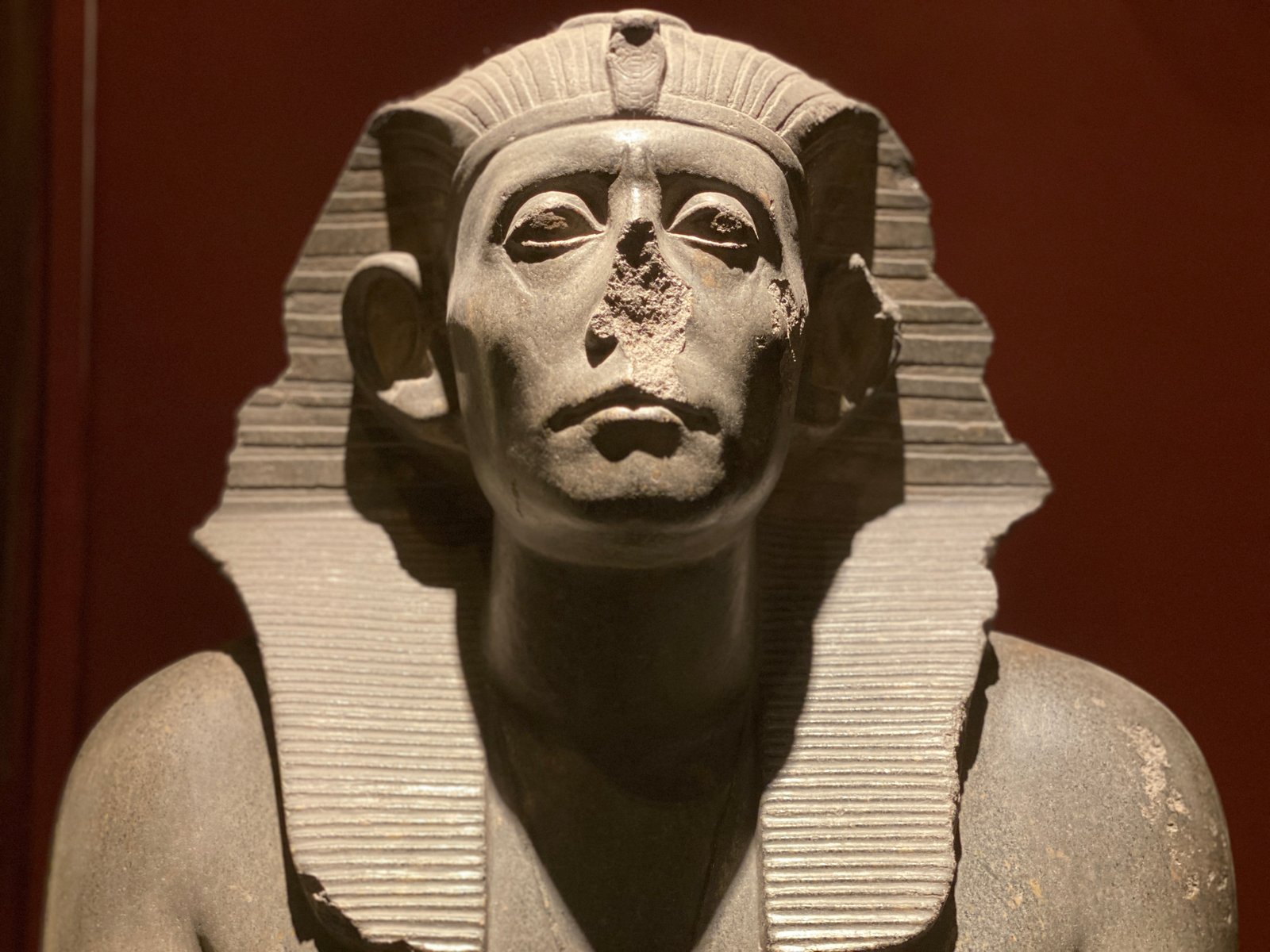
Black Granite Statue of Senusret III — RT 18.4.22.4
Ruler: Senusret III · Period: 12th Dynasty · Provenance: Forecourt of Mentuhotep II’s temple at Deir el-Bahari · Visible context: King in a pleated nemes with characteristic solemn Middle Kingdom portrait features. Source photograph.
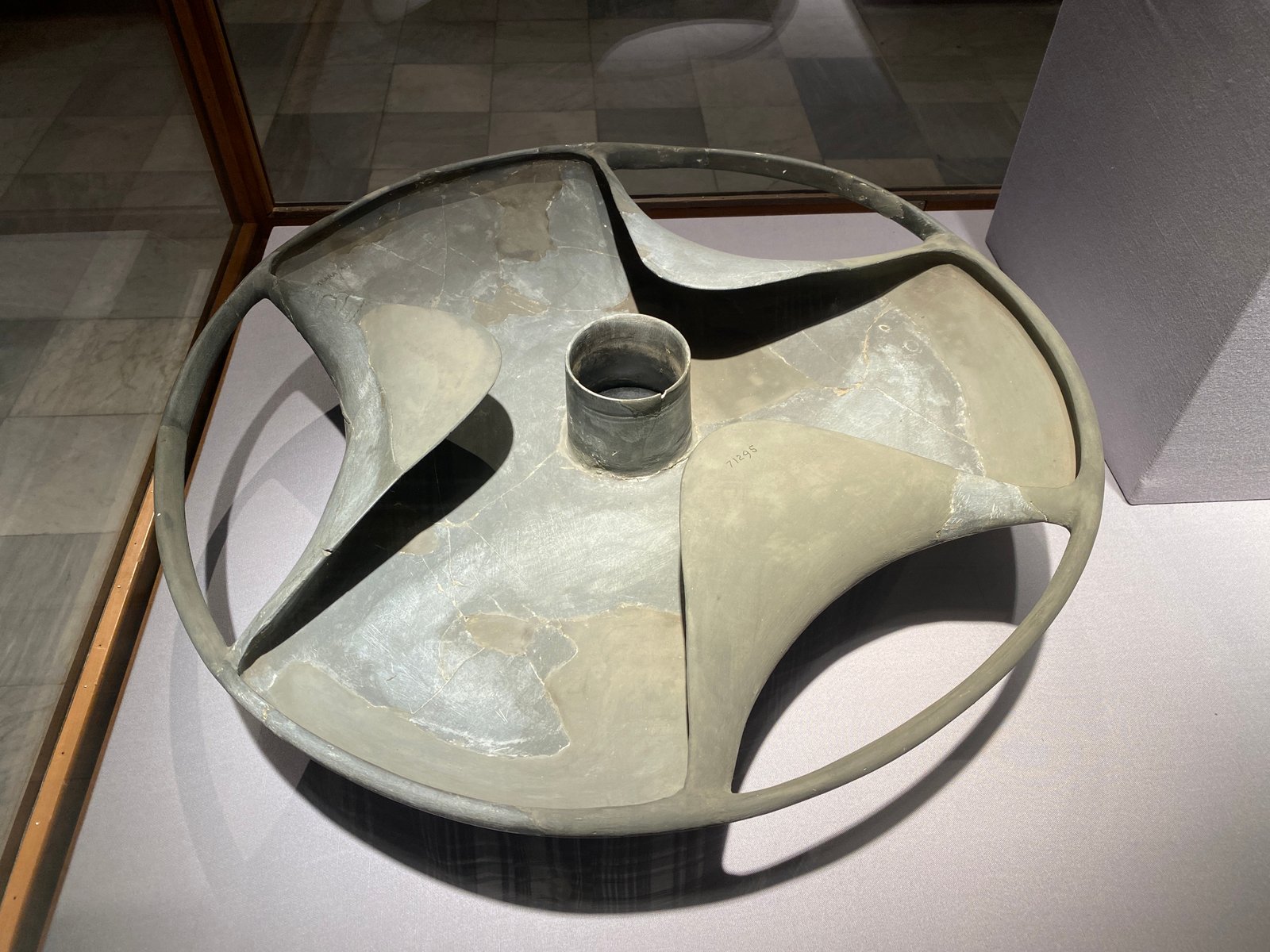
Disk of Sabu — JE 71295
Individual: Sabu · Period: 1st Dynasty · Provenance: Mastaba of Sabu at Saqqara · Visible context: Three-lobed metasiltstone vessel or disk with central opening. Its original function remains uncertain. Source photograph.
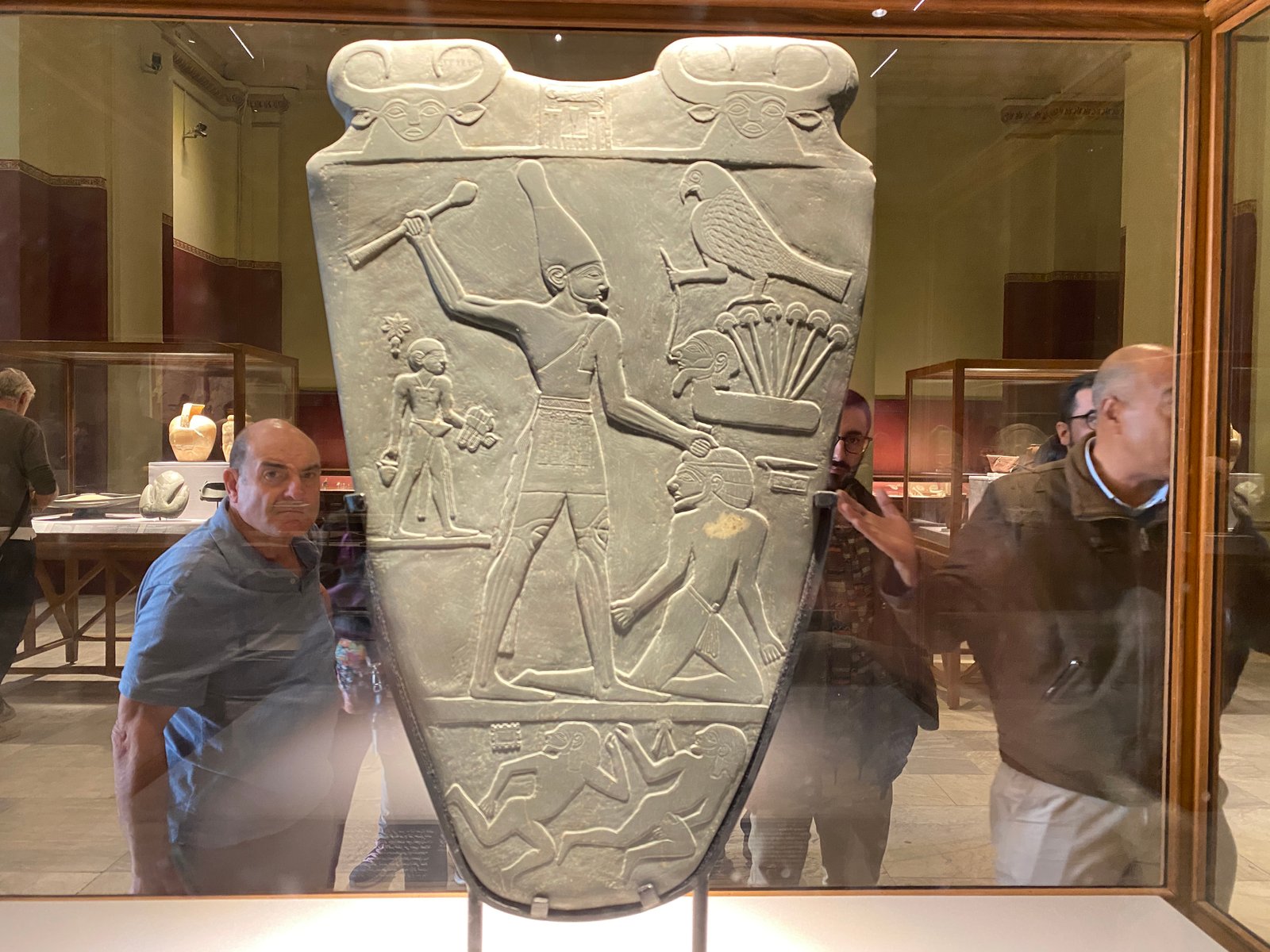
Narmer Palette, Smiting Scene — JE 32169
Ruler: Narmer · Associated deity: Horus · Period: 1st Dynasty / Early Dynastic Period · Provenance: Hierakonpolis · Visible context: Narmer in the White Crown raising a mace over a defeated enemy, with Horus and royal symbols. Source photograph.
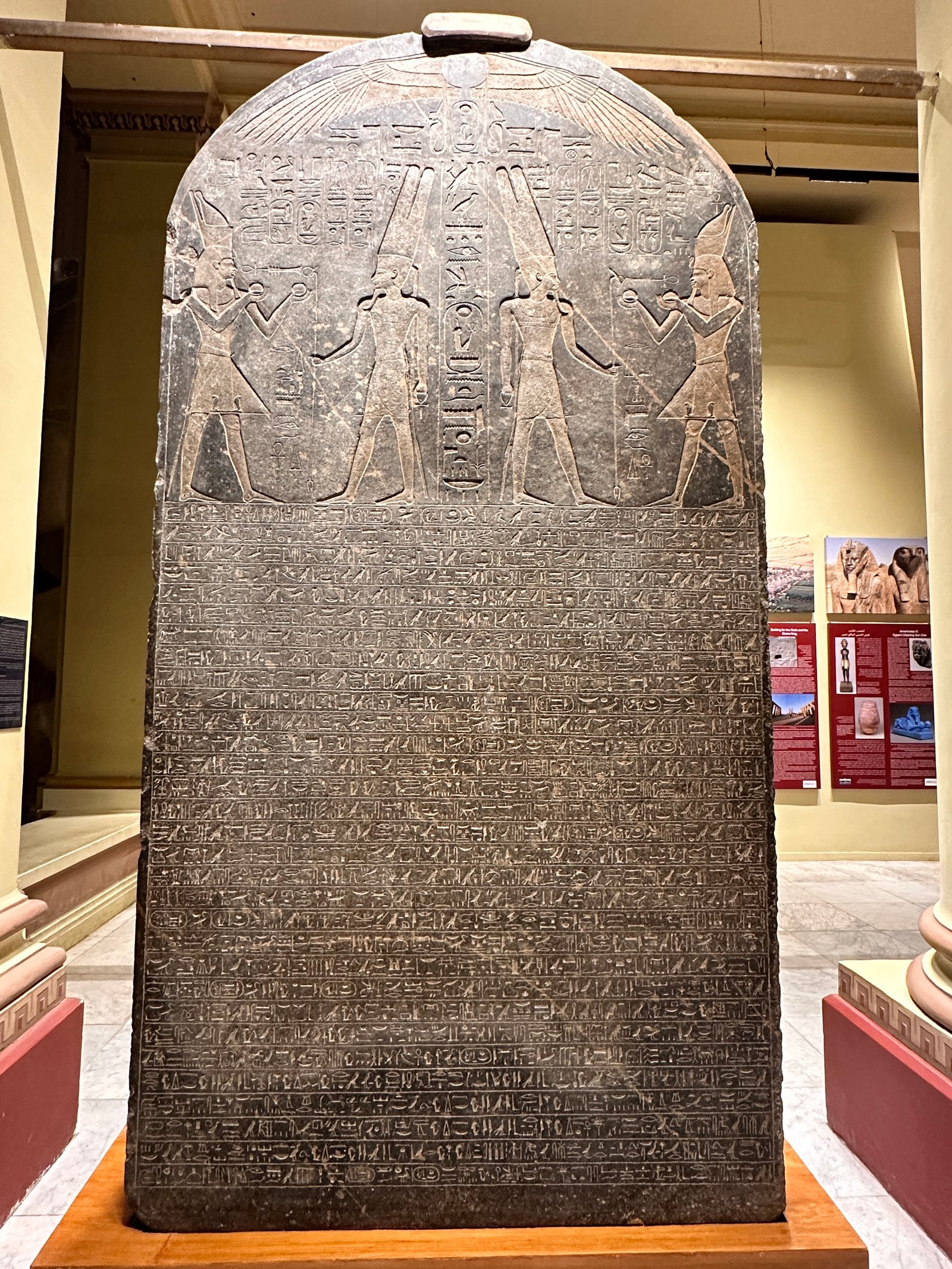
Merneptah Stele (Israel Stele) — JE 31408
Ruler: Merneptah; monument originally erected by Amenhotep III · Period: 19th-Dynasty reuse of an 18th-Dynasty monument · Provenance: Mortuary temple of Merneptah, western Thebes · Visible context: Black granite victory stele whose final lines contain the earliest widely accepted extra-biblical reference to Israel. Source photograph.
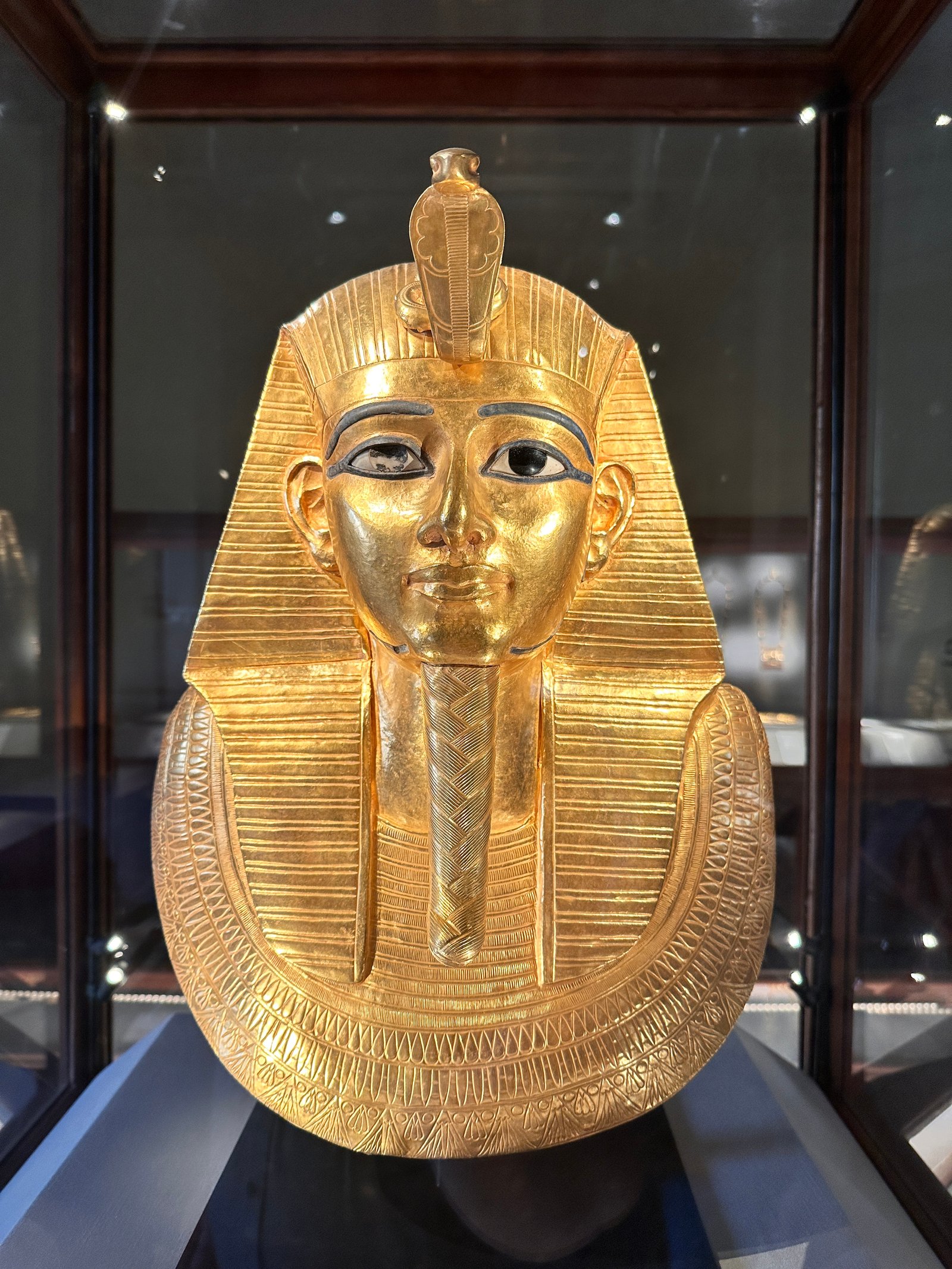
Gold Funerary Mask of Psusennes I — JE 85913
Ruler: Psusennes I · Period: 21st Dynasty, Third Intermediate Period · Provenance: Royal tomb NRT III at Tanis · Visible context: Hammered gold funerary mask with nemes headdress, uraeus, plaited ceremonial beard and broad usekh collar. Source photograph.
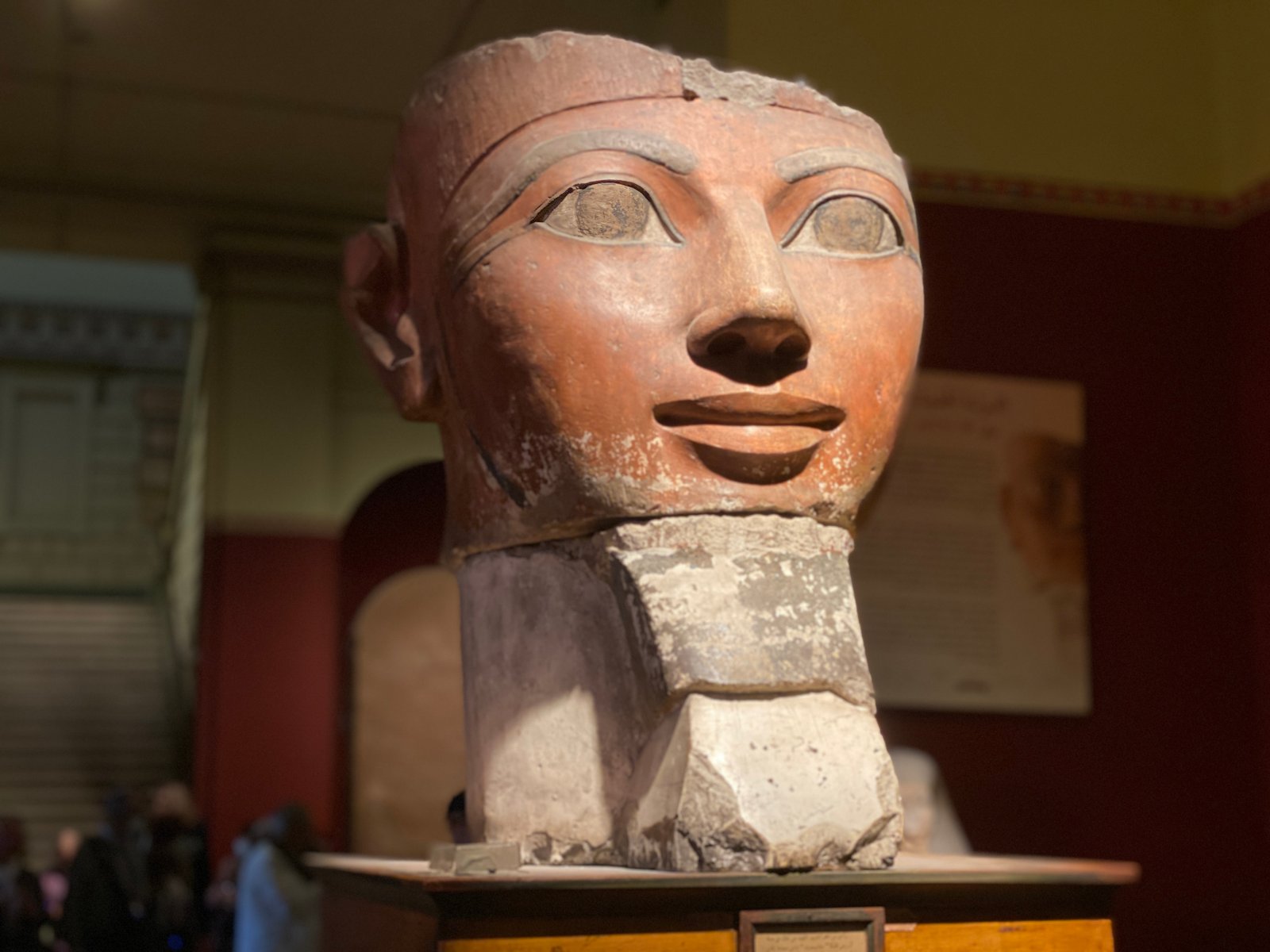
Head of Hatshepsut from an Osiride Statue — JE 56259A–56262
Ruler: Hatshepsut · Period: 18th Dynasty · Provenance: Mortuary temple of Hatshepsut at Deir el-Bahari · Visible context: Painted limestone royal head with cosmetic-lined eyes, curved brows, full cheeks and surviving pink-red flesh color. Source photograph.
Painted Limestone Sphinx of Hatshepsut — JE 53113
Ruler: Hatshepsut · Period: 18th Dynasty · Provenance: Mortuary temple of Hatshepsut at Deir el-Bahari · Visible context: Weathered sphinx combining Hatshepsut’s human face with a lion mane and royal false beard. Source photograph.
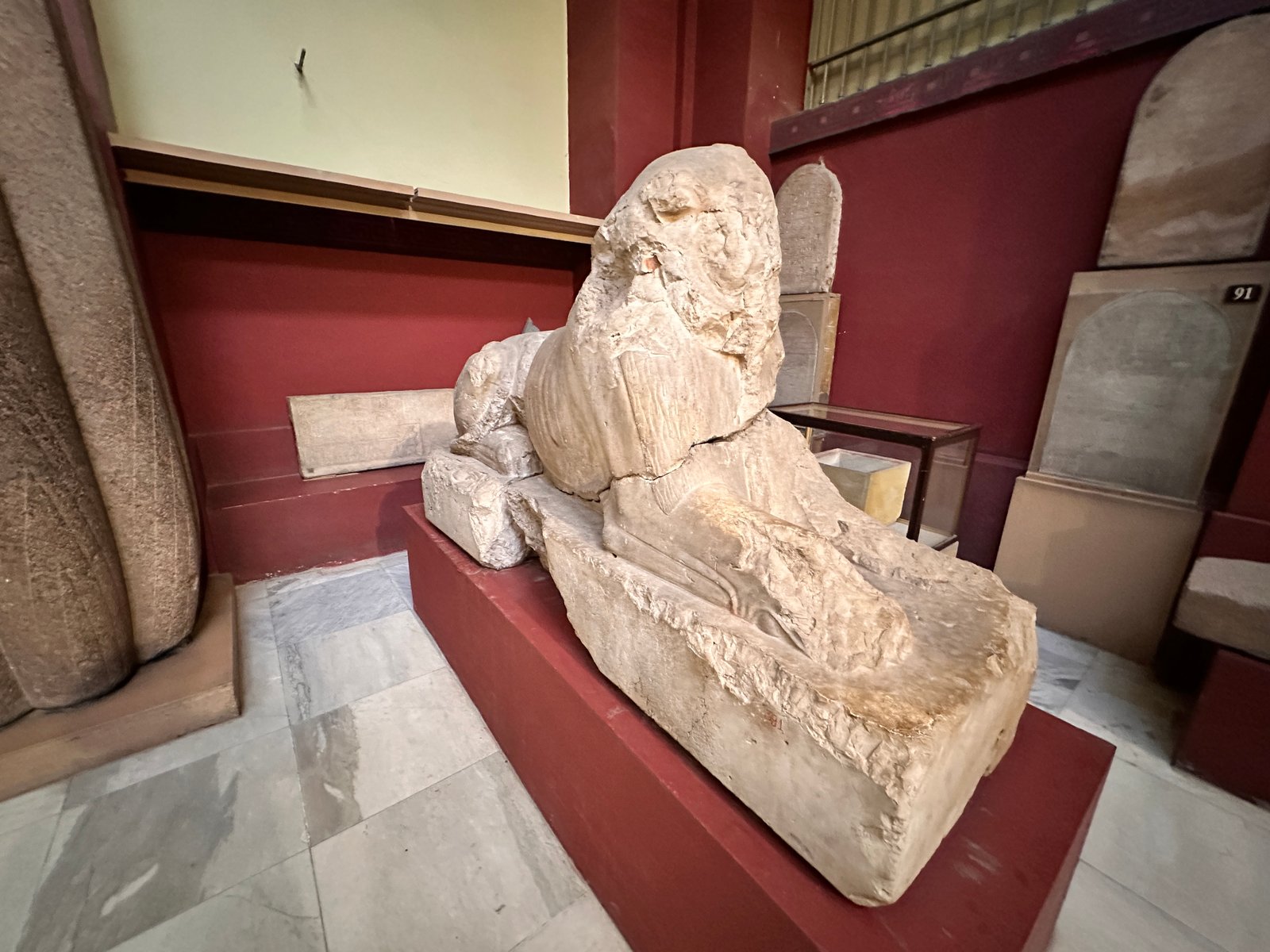
Face of Thutmose III with Reconstructed Torso — JE 90237
Ruler: Thutmose III · Period: 18th Dynasty · Provenance: Temple of Thutmose III at Deir el-Bahri · Material: Indurated limestone with surviving paint · Visible context: Original royal face displayed in Cairo with a painted cast of the matching original torso, The Metropolitan Museum of Art 07.230.3. Source photograph.
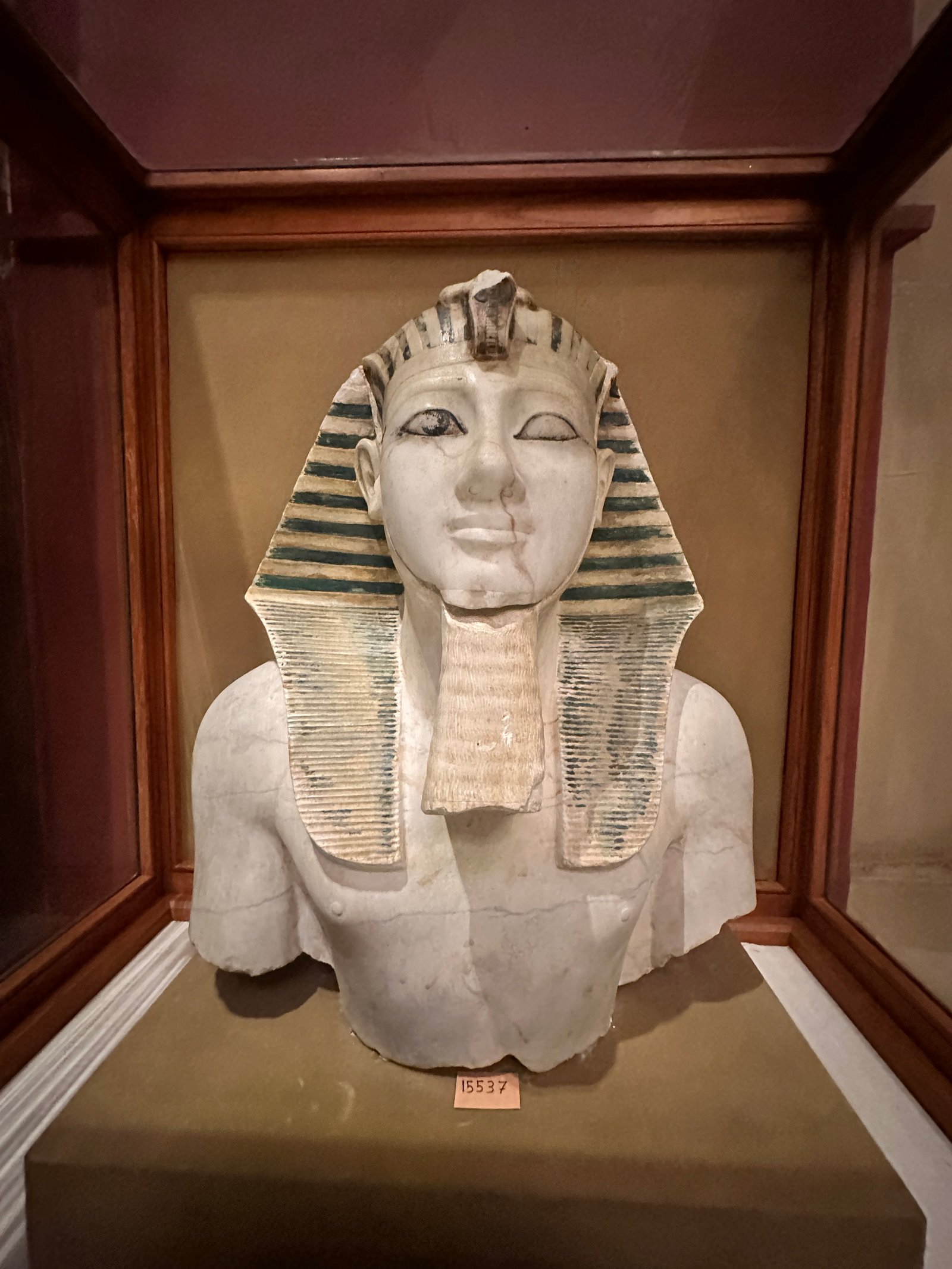
Yuya’s Chariot Wheel Hub and Axle — CG 51188
Individual: Yuya · Period: 18th Dynasty · Provenance: Tomb KV46, Valley of the Kings · Visible context: Close-up of the wooden axle, wheel hub, securing peg and surviving green leather nave bindings. Source photograph.
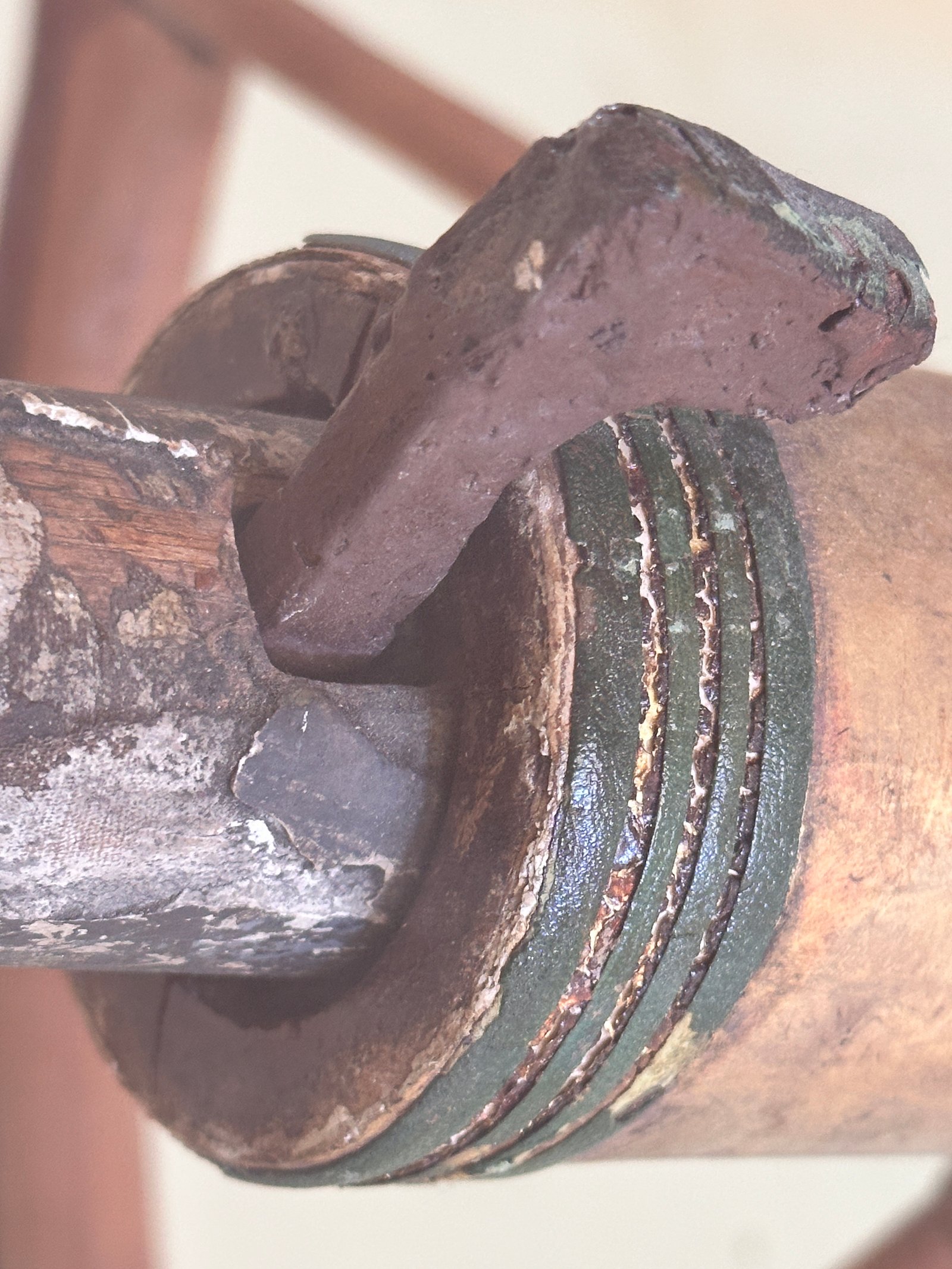
Shrine of Panehsy: Akhenaten and Nefertiti Offering to the Aten — JE 65041
Rulers/deity: Akhenaten, Nefertiti and the Aten · Period: 18th Dynasty, Amarna Period · Provenance: Akhetaten, Tell el-Amarna · Visible context: Painted limestone relief with the royal couple making offerings beneath the hand-ended rays of the Aten. Source photograph.
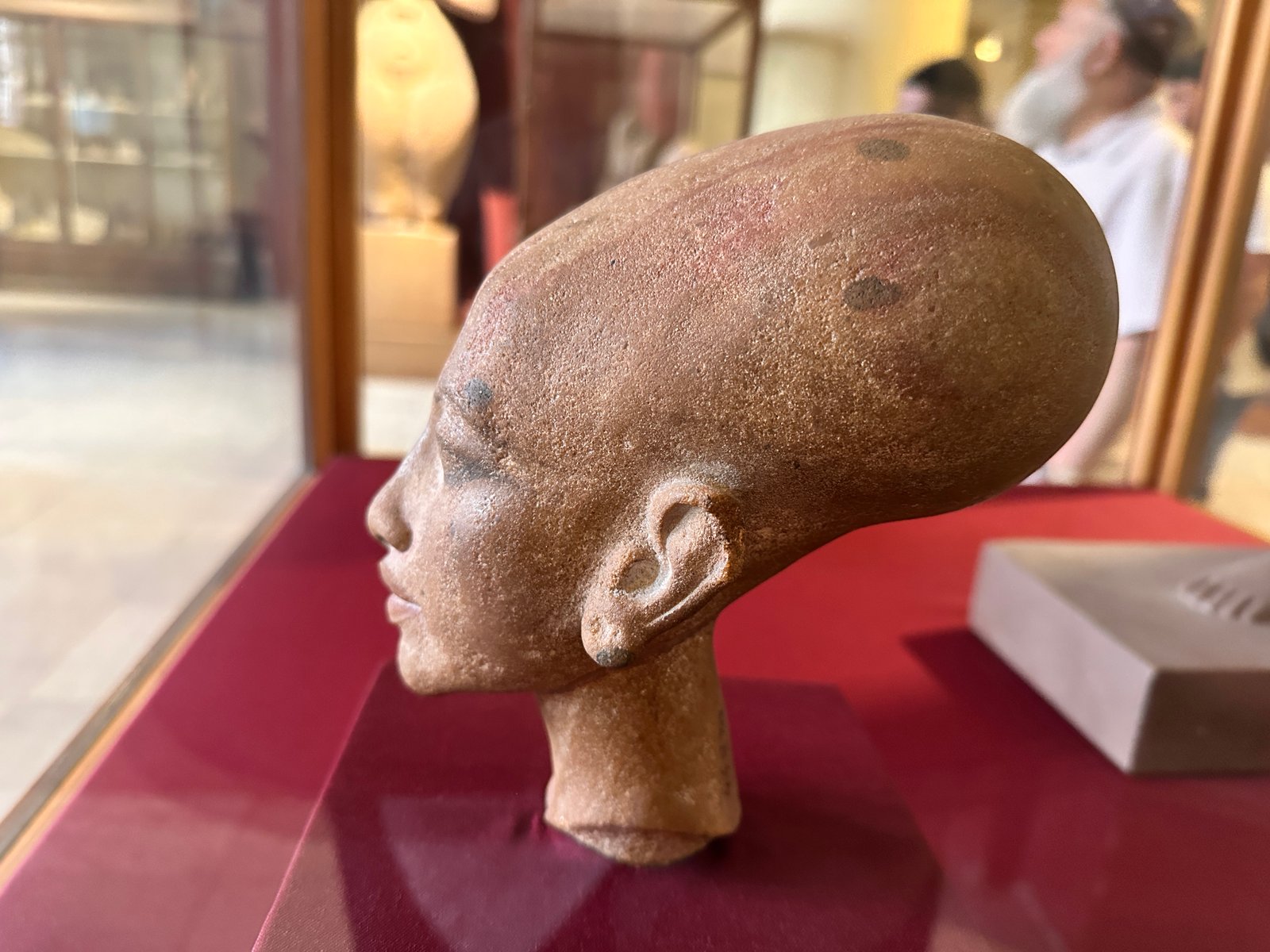
Head of an Amarna Princess, Probably Meritaten — JE 44869
Probable individual: Meritaten · Period: 18th Dynasty, Amarna Period · Provenance: Workshop of the royal sculptor Thutmose at Tell el-Amarna · Visible context: Quartzite princess head with elongated Amarna-style skull, large ear and full lips. Identification note: the attribution to Meritaten is probable rather than certain. Source photograph.
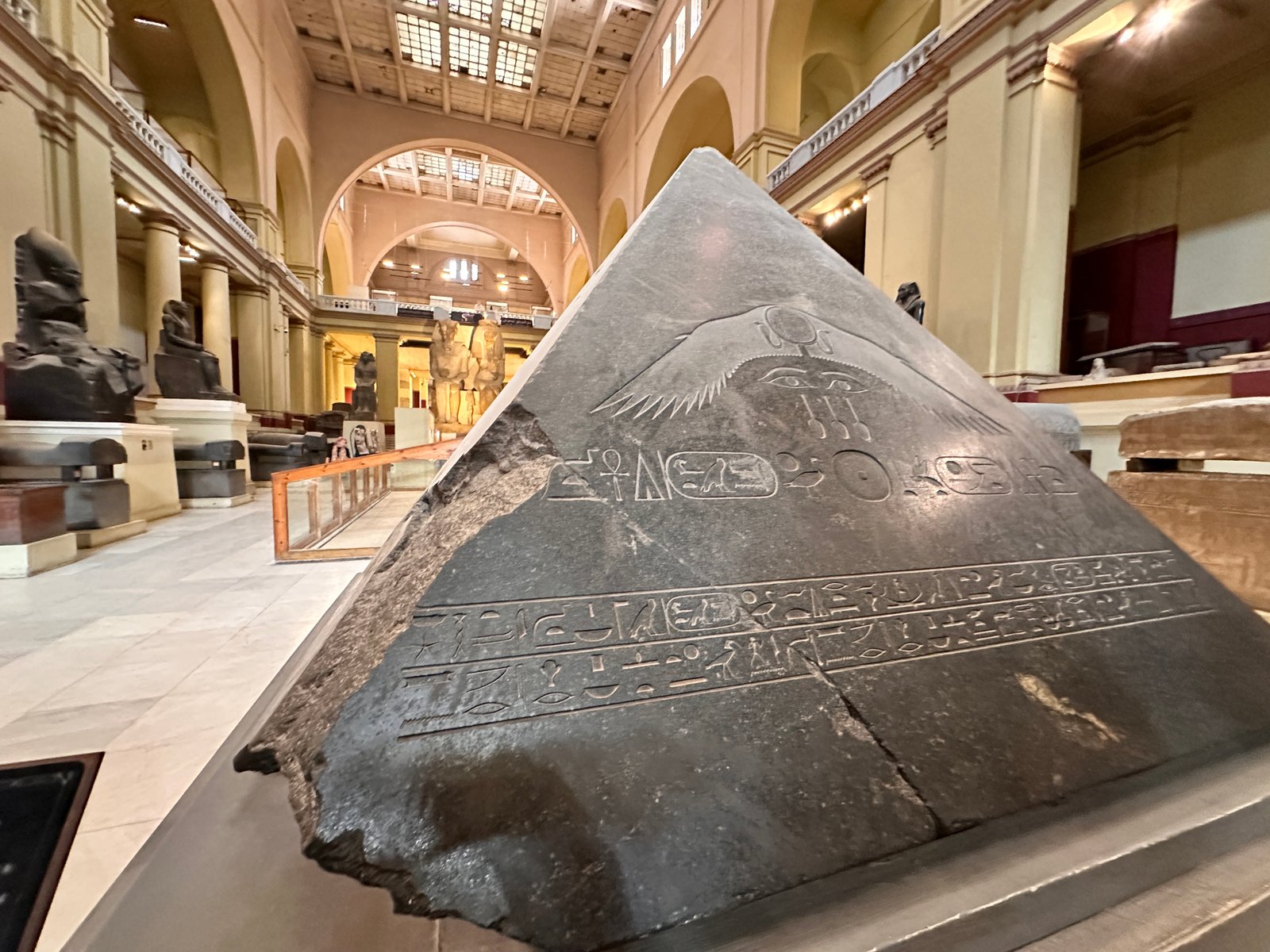
Pyramidion of Amenemhat III from Dahshur — JE 35133
Ruler: Amenemhat III · Period: 12th Dynasty, Middle Kingdom · Provenance: Black Pyramid of Amenemhat III at Dahshur · Visible context: Basalt pyramidion with winged sun disk, wedjat eyes, royal cartouches and solar inscriptions. Source photograph.
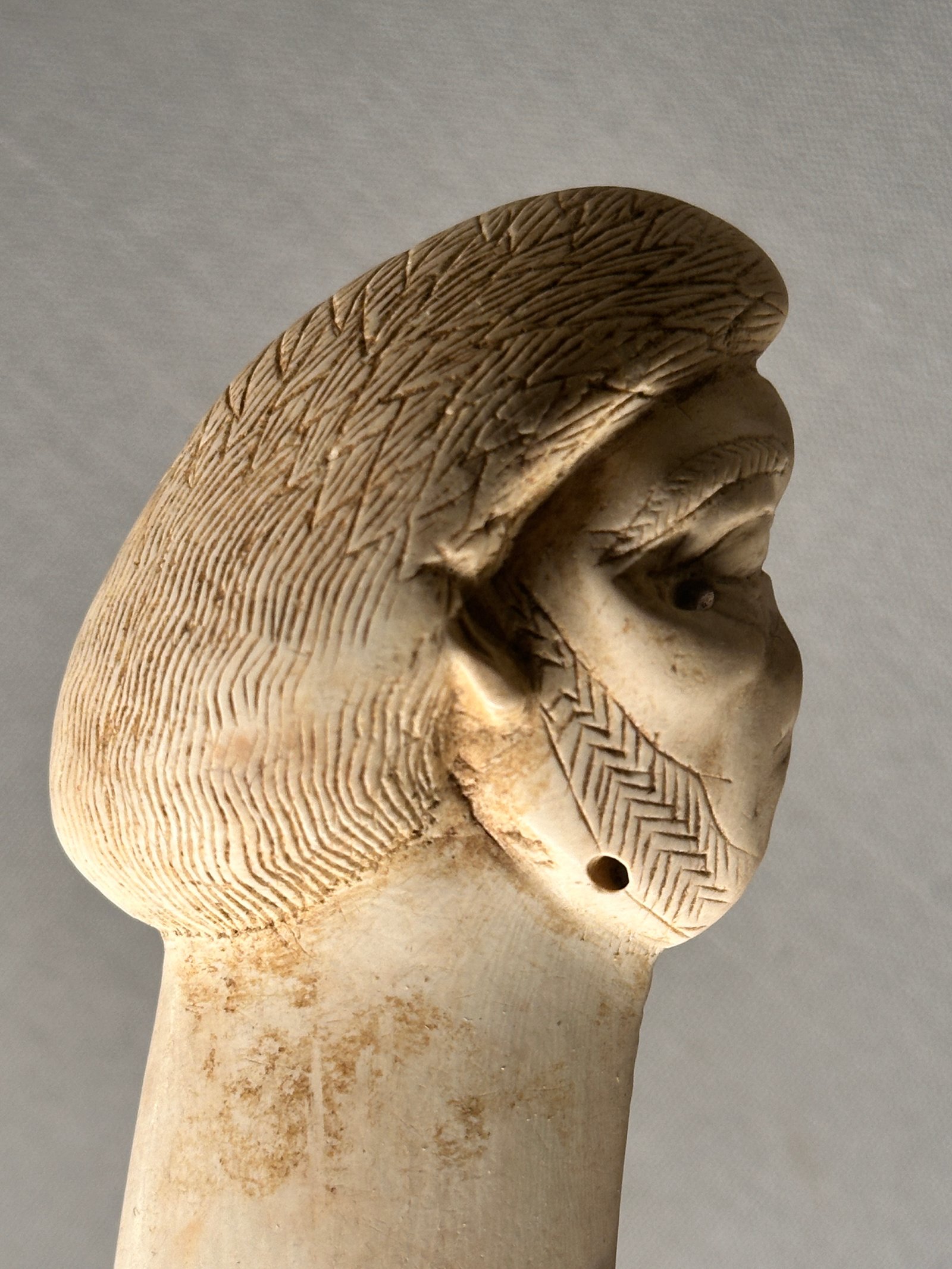
Ivory Hairpin with Human Head from Tomb G 8978 — JE 46407
Association: Tomb of Queen Khamerernebty II · Period: 4th-Dynasty context · Provenance: Tomb G 8978, Central Field, Giza · Visible context: Ivory hairpin carved with a human head, patterned wig and pierced ear. Identification note: the findspot is secure, but personal ownership by the queen is not proven. Source photograph.
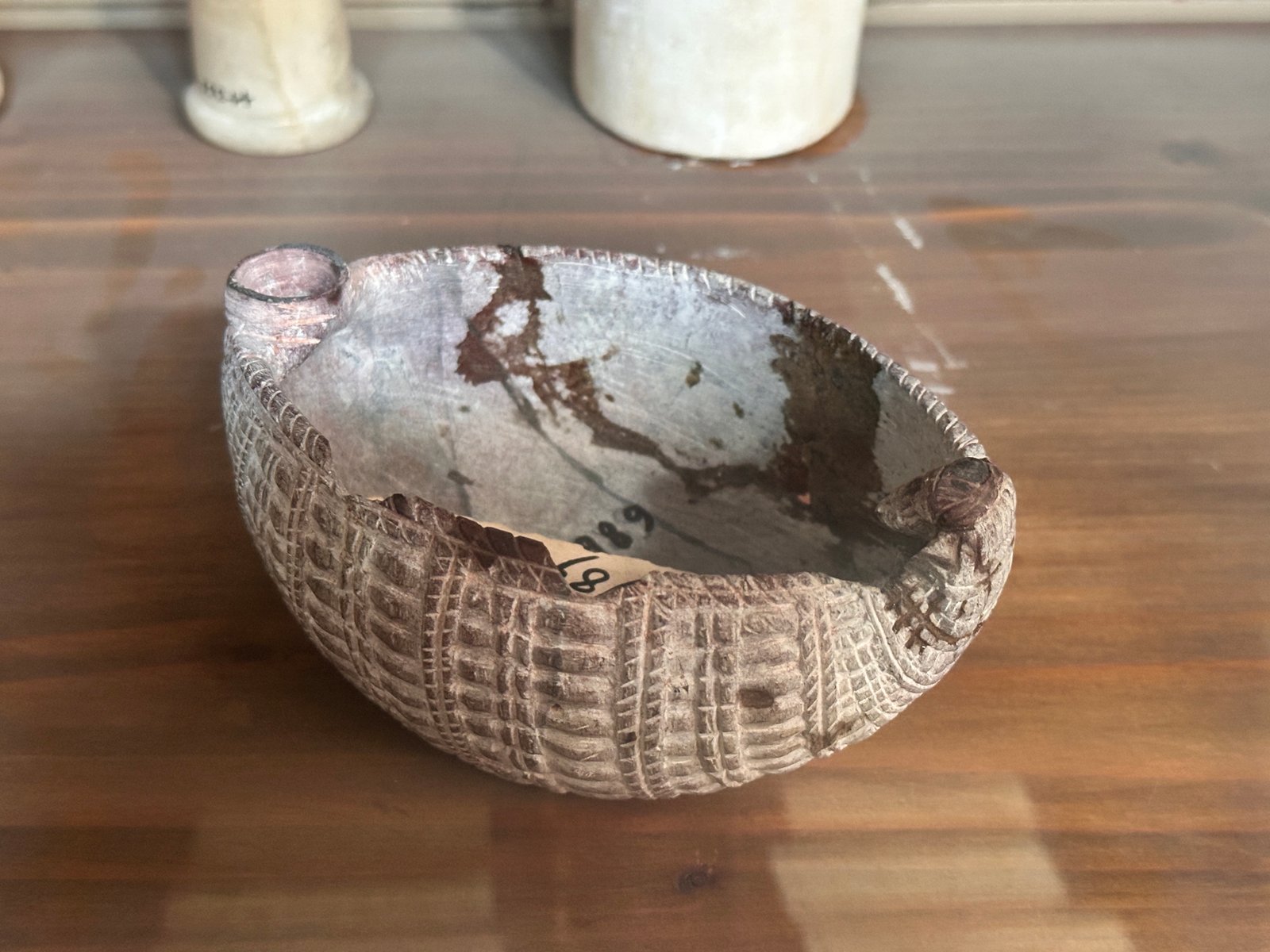
Basket-Shaped Stone Tray — JE 71298
Period: 2nd Dynasty · Provenance: North Saqqara · Visible context: Greywacke tray carved to imitate woven basketry with a crosshatched exterior. Source photograph.
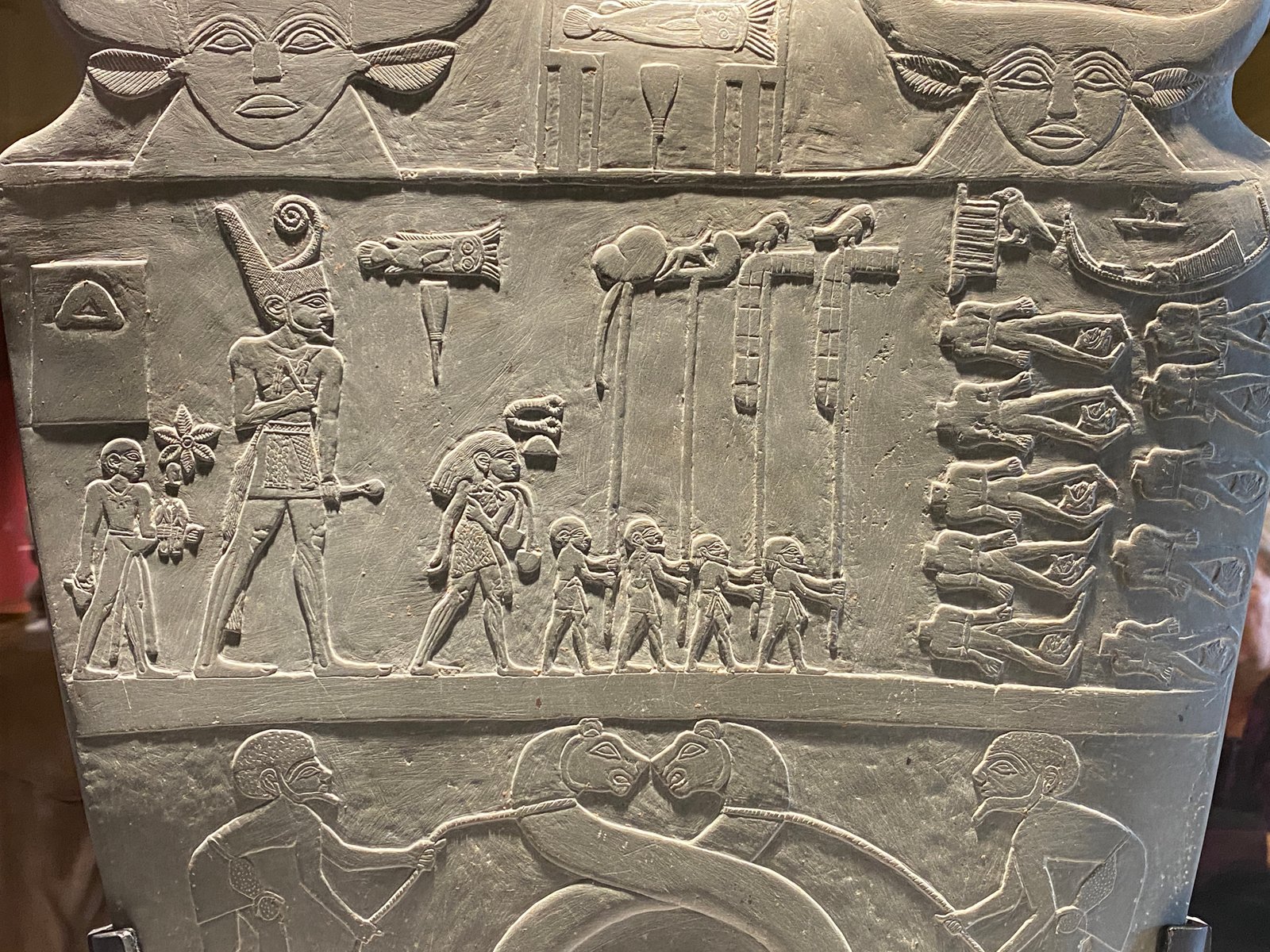
Narmer Palette, Victory Procession — JE 32169
Ruler: Narmer · Period: 1st Dynasty / Early Dynastic Period · Provenance: Hierakonpolis · Visible context: Narmer in the Red Crown with attendants and standard bearers before defeated enemies. Source photograph.
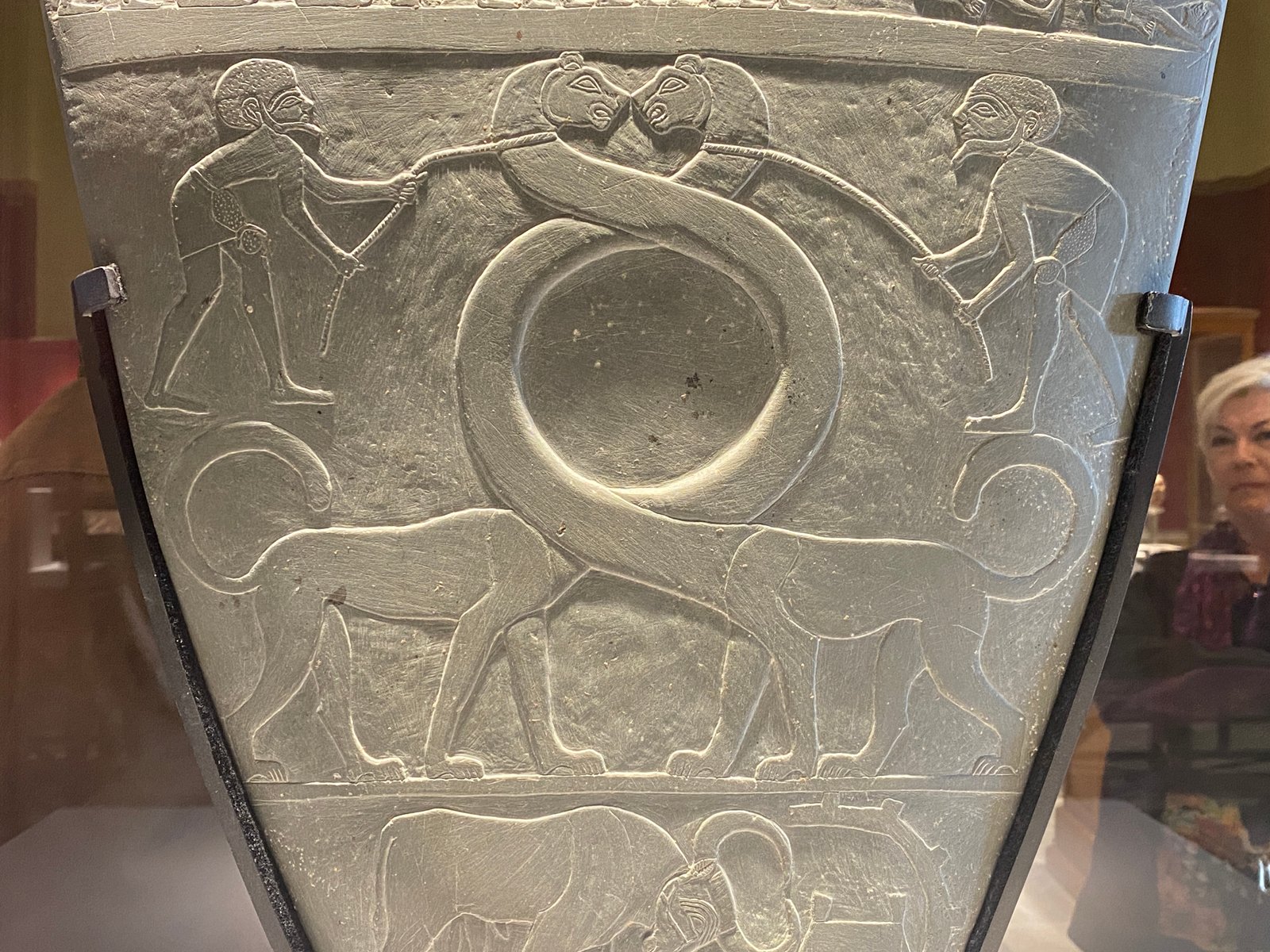
Narmer Palette, Intertwined Serpopards — JE 32169
Ruler: Narmer · Period: 1st Dynasty / Early Dynastic Period · Provenance: Hierakonpolis · Visible context: Two long-necked mythical animals with intertwined necks around the central circular recess. Interpretive note: the scene is secure, while the symbolism remains debated. Source photograph.
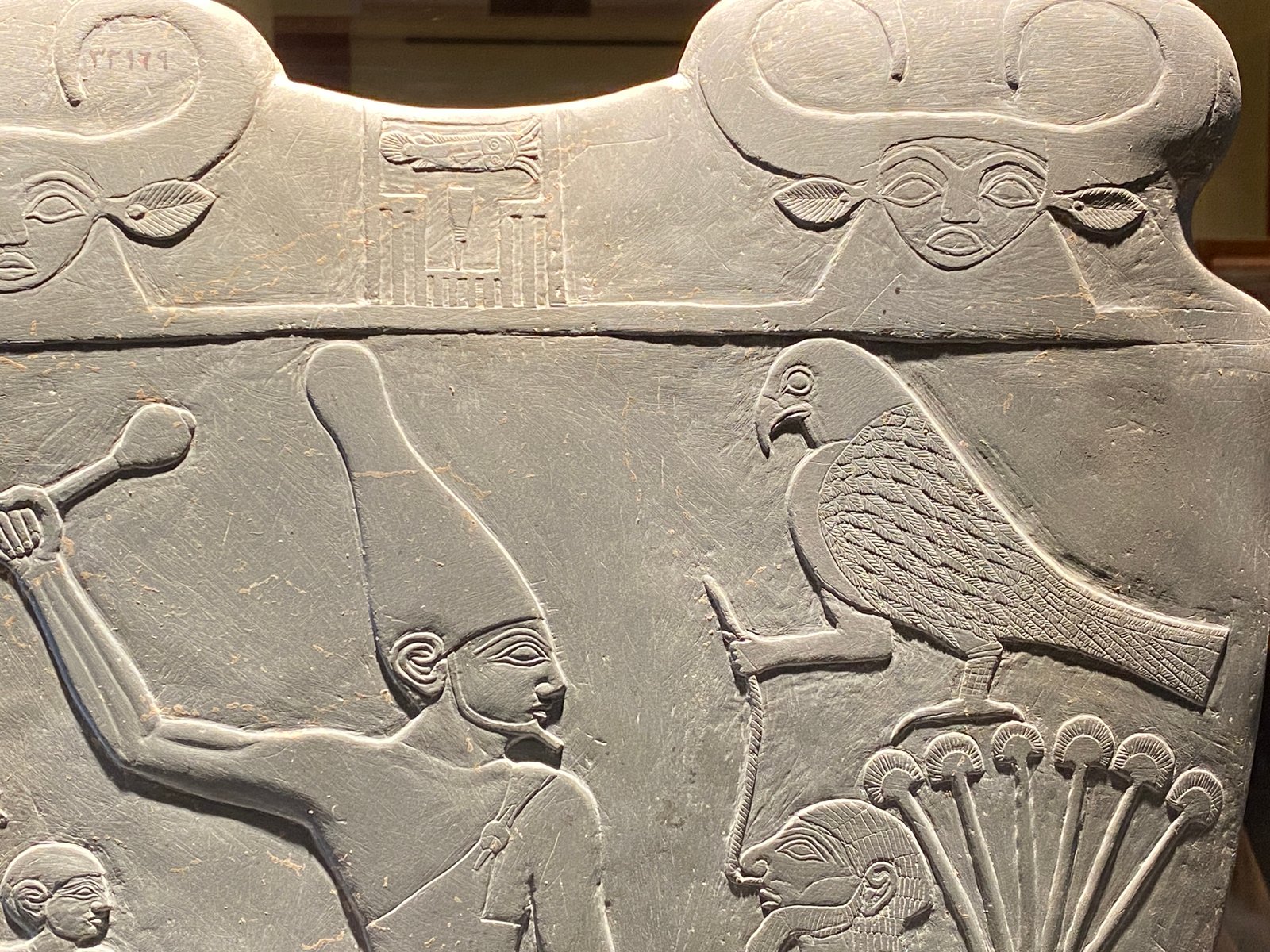
Narmer Palette, Horus and Papyrus Marsh Detail — JE 32169
Ruler/deity: Narmer and Horus · Period: 1st Dynasty / Early Dynastic Period · Provenance: Hierakonpolis · Visible context: Falcon god Horus above a papyrus-marsh motif beside Narmer. Source photograph.
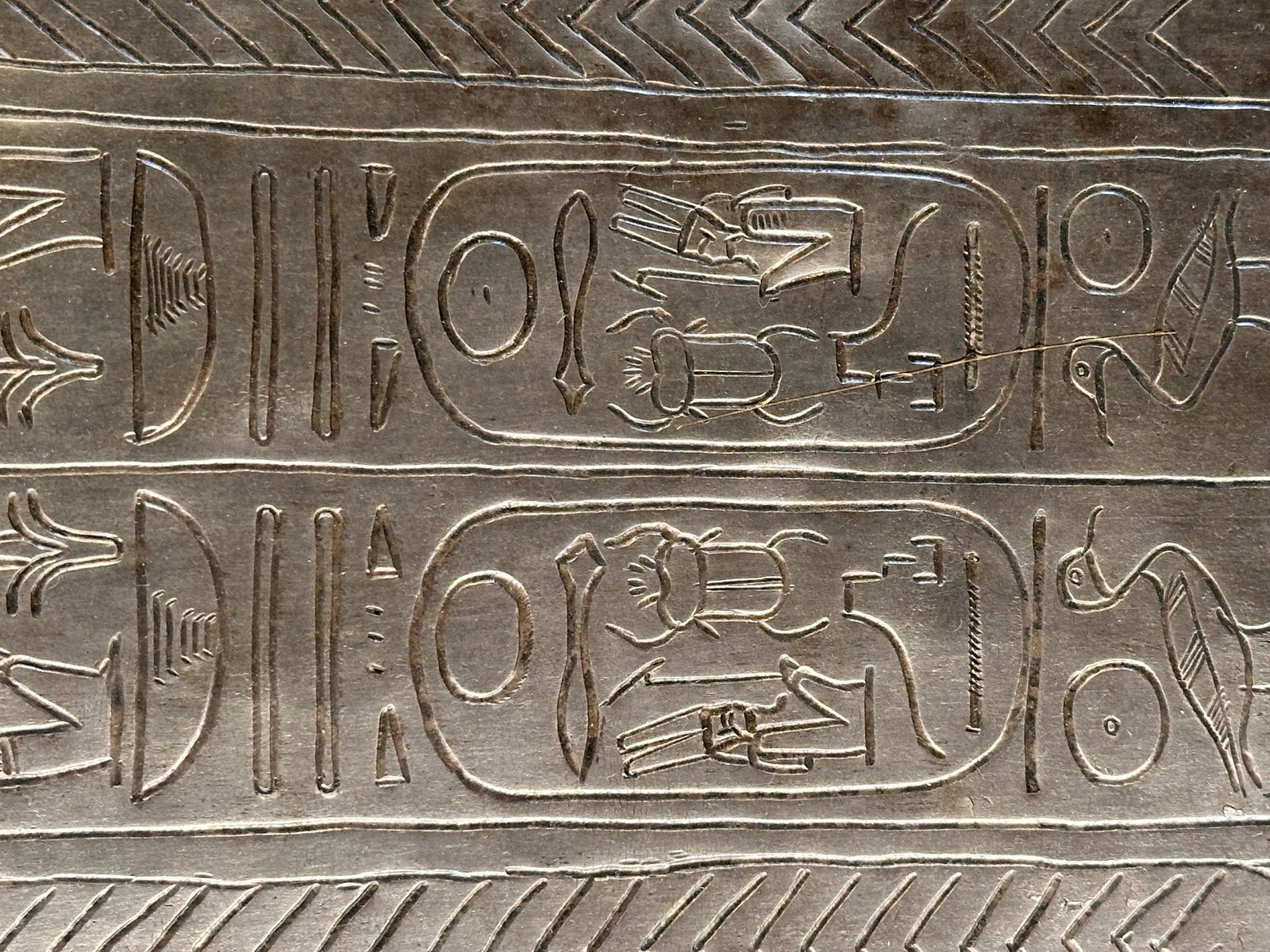
Royal Cartouches of Psusennes I on His Silver Coffin — JE 85912
Ruler: Psusennes I · Period: 21st Dynasty · Provenance: Royal tomb NRT III at Tanis · Visible context: Paired royal cartouches framed by funerary hieroglyphs and chevron-pattern borders engraved in silver. Source photograph.
Luxor Museum
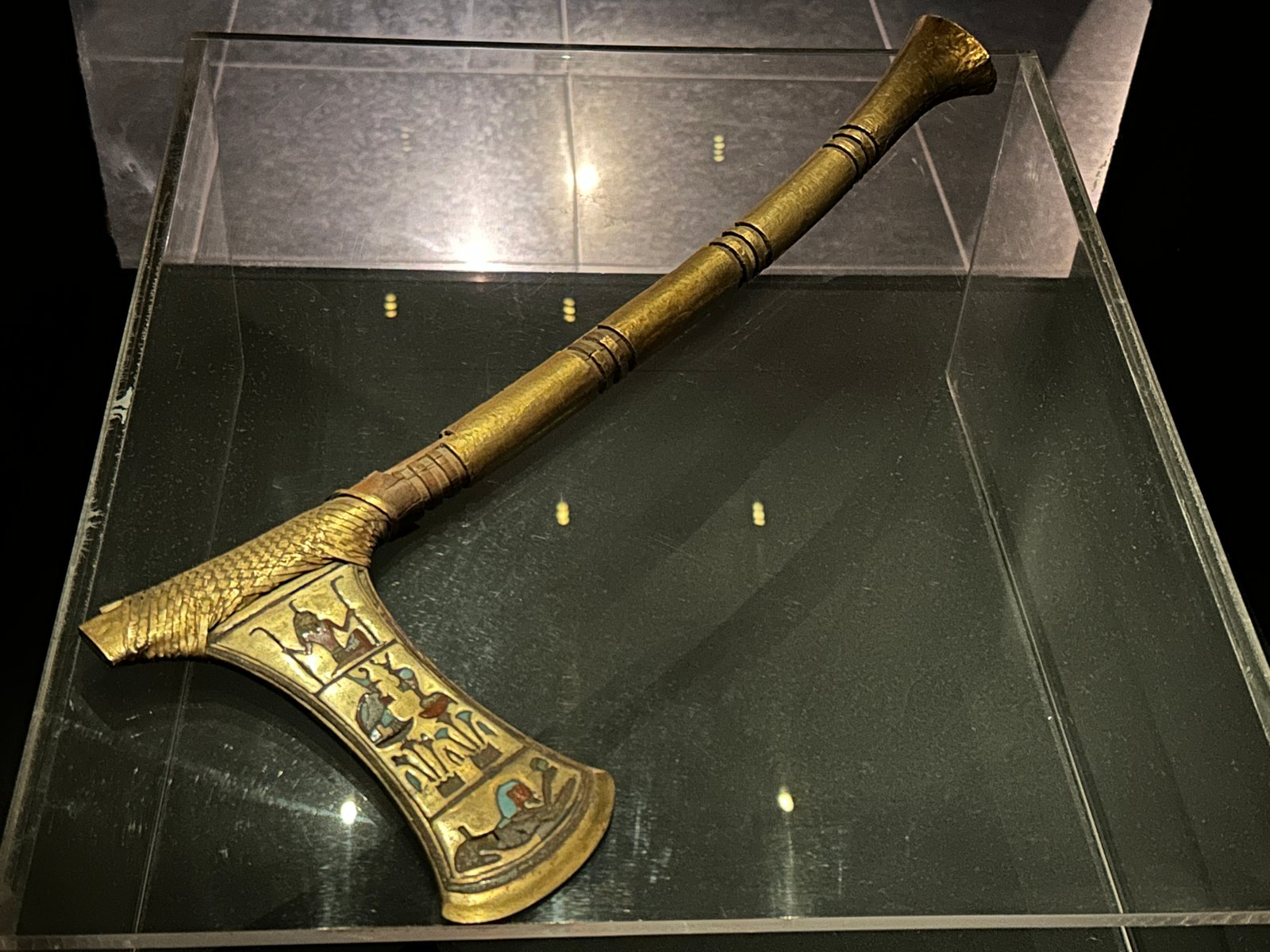
Ceremonial Axe of Ahmose I — Luxor J.856 / JE 4673 / CG 52645
Ruler: Ahmose I · Period: Early 18th Dynasty, New Kingdom · Provenance: Burial of Queen Ahhotep at Dra Abu el-Naga · Visible context: Gilded wooden handle and decorated copper-alloy blade with royal titulary and victory imagery. Source photograph.
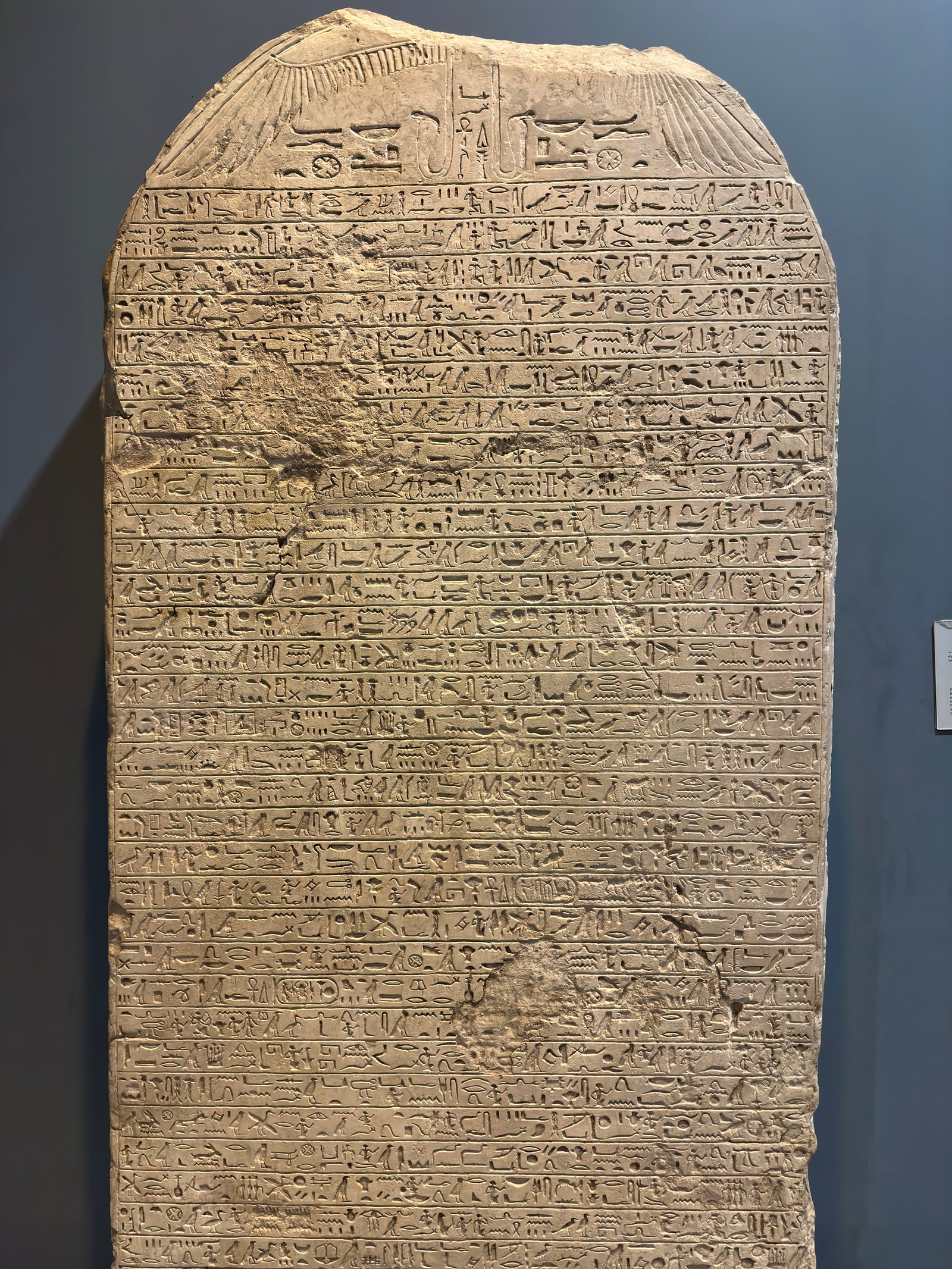
Second Stela of Kamose — J.43
Ruler: Kamose · Period: 17th Dynasty, Second Intermediate Period · Provenance: Karnak · Visible context: Limestone victory stela recording Kamose’s campaign against the Hyksos and advance toward Avaris. Source photograph.
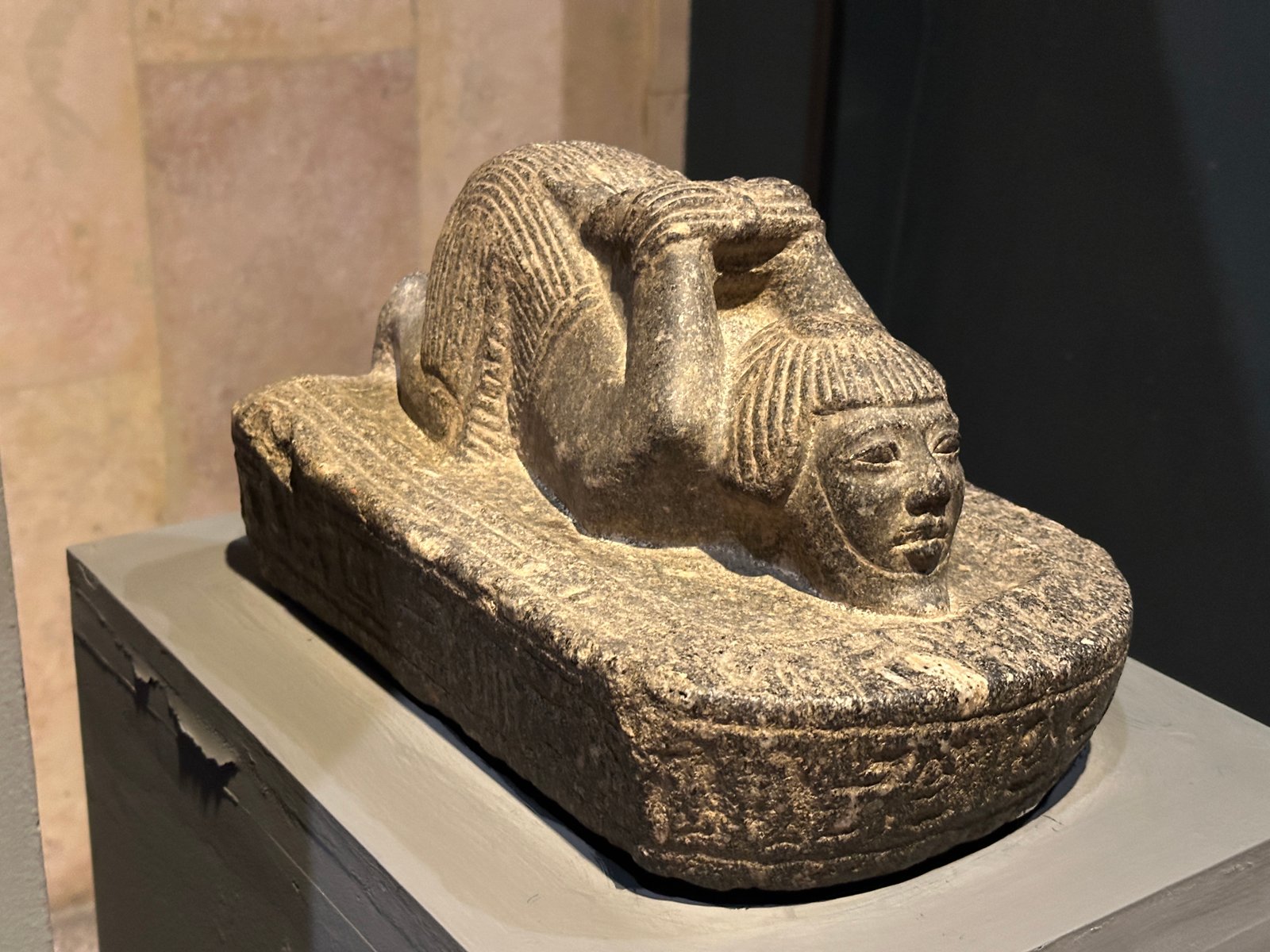
Votive Statue of Mayi Offering a Crocodile to Sobek — J.135
Individual: Mayi · Deity: Sobek · Period: Late 18th or early 19th Dynasty, New Kingdom · Provenance: Sobek temple at Dahamsha near Armant · Visible context: Black granite figure of Mayi presenting a small crocodile image to Sobek. Source photograph.
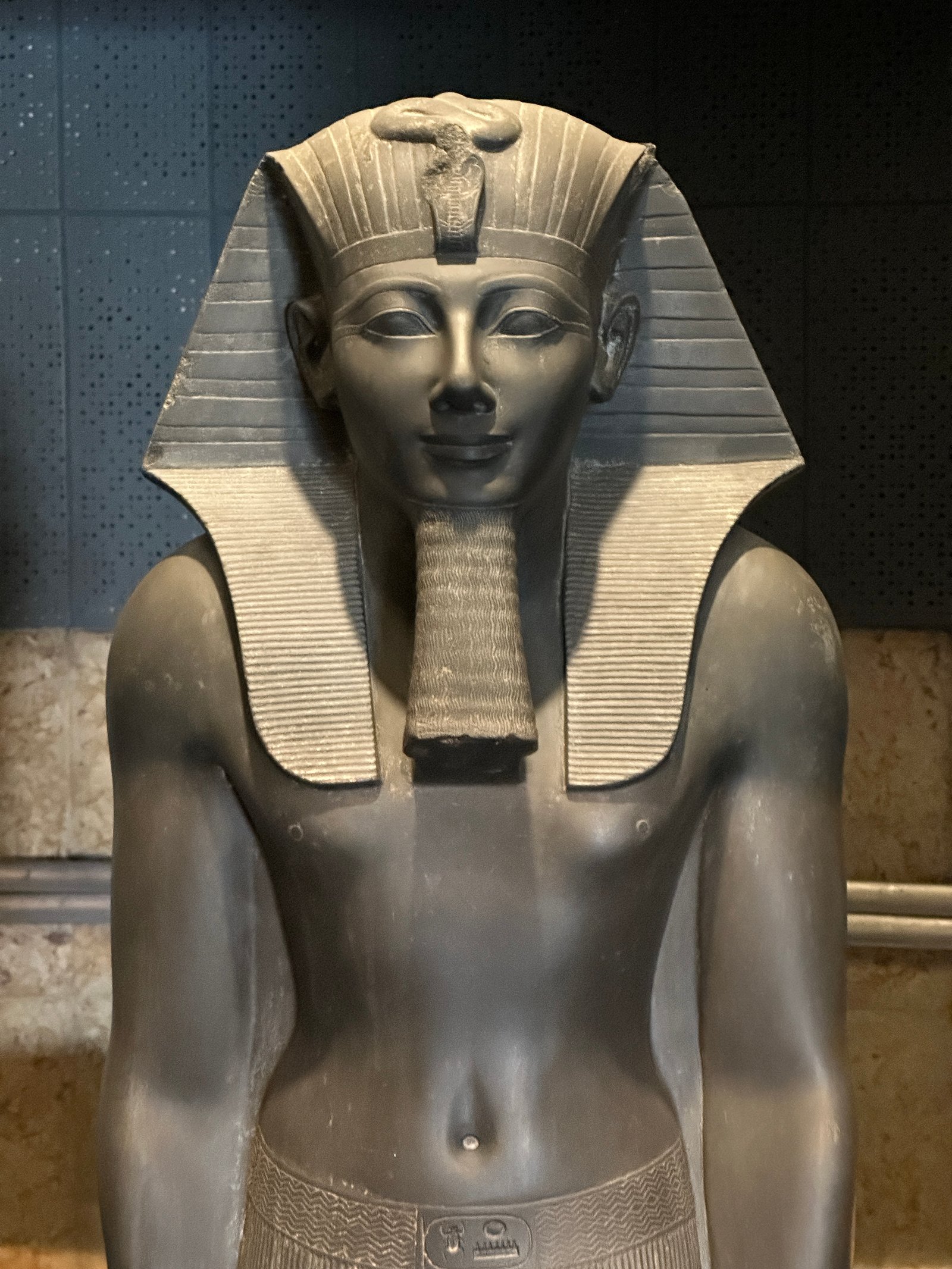
Striding Statue of Thutmose III — Luxor J.2 / CG 42054 / JE 36927
Ruler: Thutmose III · Period: 18th Dynasty · Provenance: Karnak Cachette, CK 271 / K 304 · Discovery: Georges Legrain, May 8, 1904 · Current inventory: Luxor Museum J.2 · Visible context: Greywacke striding royal statue with missing feet, nemes, uraeus and ceremonial beard. Source photograph.
Identification Standard
Only objects with sufficiently specific existing evidence are included here. Where a function, attribution, ruler, provenance, or museum number remains uncertain, the uncertainty is stated rather than silently filled in. The source photographs and Media Library descriptions remain the controlling records for visible photographic context.