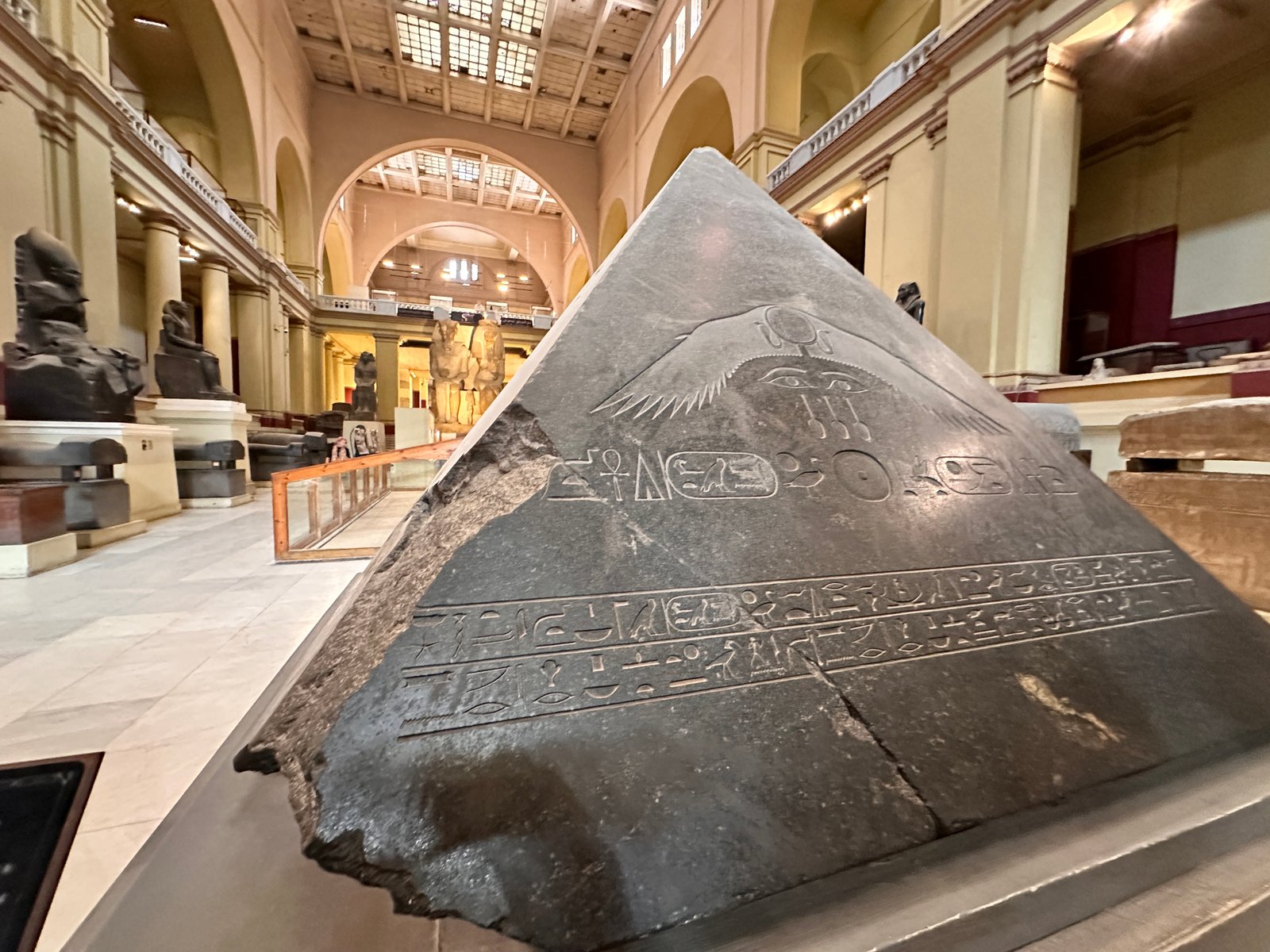
Pyramidion of Amenemhat III from Dahshur — JE 35133
The dark basalt capstone cataloged in the Egyptian Museum in Cairo as JE 35133 is the pyramidion associated with Pharaoh Amenemhat III’s 12th-Dynasty pyramid complex at Dahshur. Its east face brings together royal names, wedjat eyes, a winged sun disk, uraei, and solar imagery in one of the most visually striking surviving statements of Middle Kingdom royal theology.
Key Facts
- Object: Pyramidion associated with Amenemhat III’s pyramid complex at Dahshur.
- Inventory number: JE 35133.
- Ruler: Amenemhat III.
- Period: 12th Dynasty, Middle Kingdom.
- Material: Basalt, according to the Egyptian Museum’s current catalog.
- Dimensions: Approximately 140 cm high and 185 cm maximum width.
- Place of discovery: Dahshur.
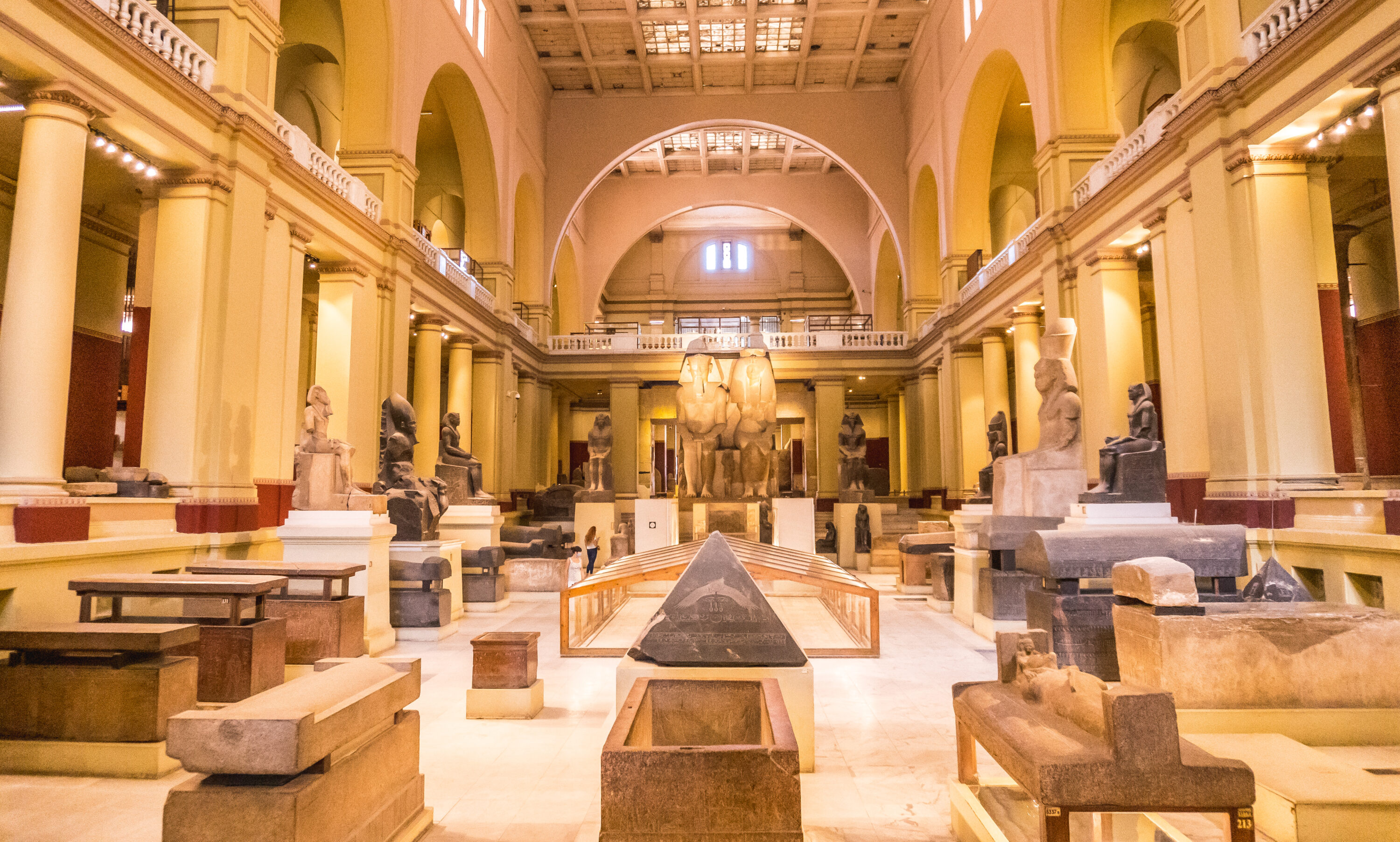
- Current location: Egyptian Museum, Cairo, Central Hall — Ground Floor.
- Primary decoration: Winged sun disk with uraei, paired eyes, royal names, and hieroglyphic solar texts.
The Capstone of a Royal Pyramid
A pyramidion is the small pyramid-shaped stone intended to crown the apex of a pyramid or related pyramid-shaped monument. JE 35133 is associated with Amenemhat III’s Dahshur complex, commonly known today as the Black Pyramid. The Egyptian Museum’s official object page identifies the piece as the pyramidion of Amenemhat III’s Dahshur structure and gives its material, dimensions, period, and discovery location.
The Egyptian Ministry of Tourism and Antiquities’ Dahshur page likewise notes that the stone pyramidion from Amenemhat III’s Black Pyramid is displayed in the Egyptian Museum.
The East Face and the Rising Sun
The east face is the most recognizable side of the pyramidion. At the top, a winged solar disk is flanked by uraeus cobras. Beneath it are paired eyes and hieroglyphic elements arranged around the king’s names and the sun god Ra. The Egyptian Museum describes the composition as a celebration of Ra, fitting the orientation of the face toward sunrise.
Published descriptions of the inscription interpret the composition as expressing the king’s ability to behold the perfection or beauty of Ra and to participate in the solar journey. That is consistent with the larger role of pyramid architecture in royal rebirth and the king’s hoped-for transformation after death.
Amenemhat III’s Royal Names
The decoration preserves Amenemhat III’s royal titulary, including his throne name Nimaatre and his personal name Amenemhat. The combination of names and solar imagery makes the object both architectural and epigraphic: it is not simply a capstone, but an inscribed royal monument.
The name of Amun in the king’s name appears to have been deliberately erased on the monument. This has often been connected with the suppression of Amun’s name during the Amarna Period under Akhenaten. The erasure is real; assigning it to one exact historical episode is an interpretation based on the broader pattern of Amarna-era alterations.
The Black Pyramid and Hawara
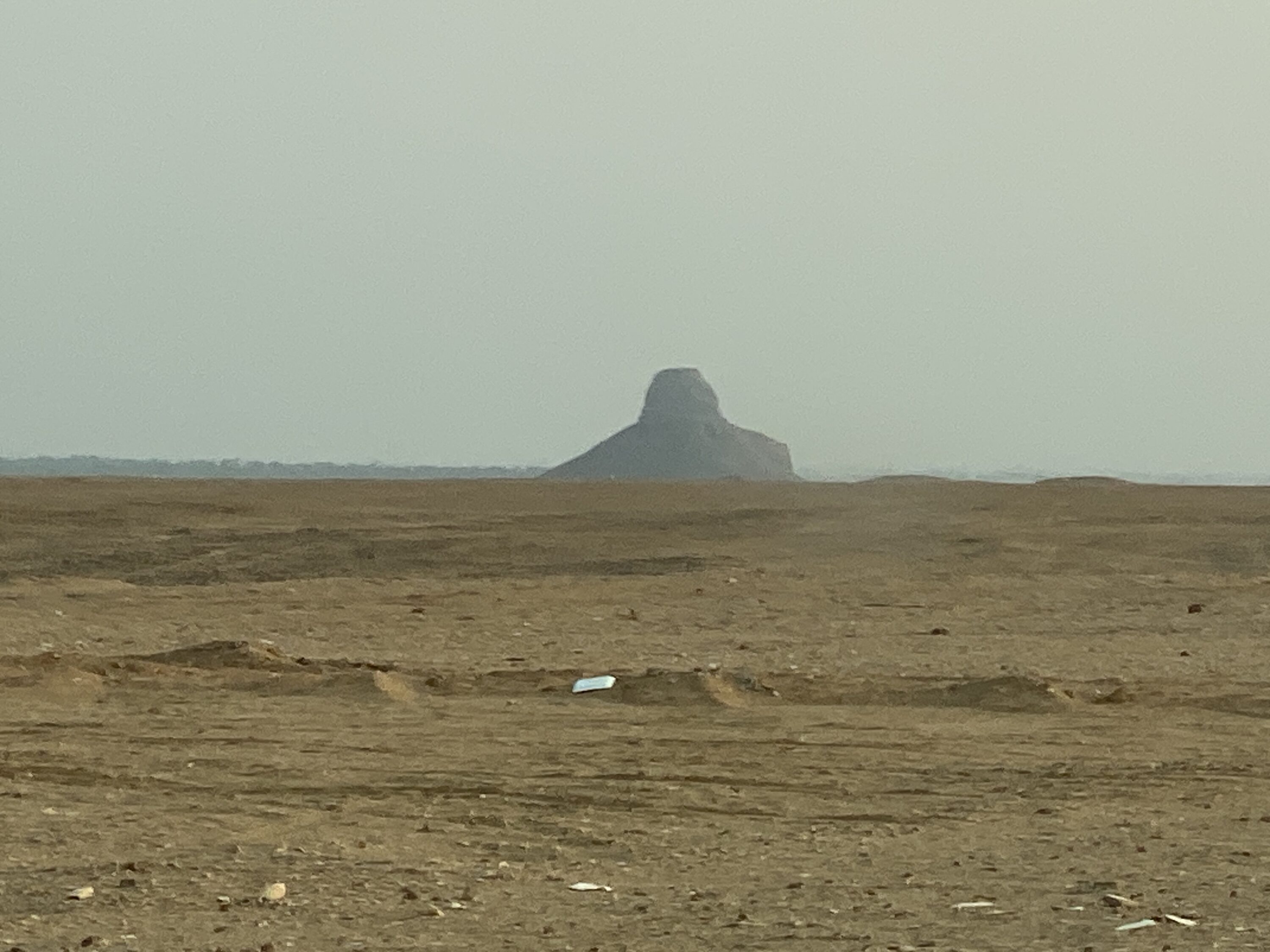
Amenemhat III is associated with two major pyramid complexes, at Dahshur and Hawara. The Dahshur monument suffered serious structural problems, and the king ultimately built another pyramid at Hawara in the Faiyum. The Egyptian Museum currently describes the Dahshur structure as a cenotaph, while much modern archaeological literature refers to it simply as Amenemhat III’s Black Pyramid and discusses it as his first intended pyramid complex.
That difference in terminology does not affect the secure identification of JE 35133: it was found at Dahshur, belongs to Amenemhat III’s 12th-Dynasty complex there, and is now displayed in the Egyptian Museum.
Why the Pyramidion Matters
JE 35133 condenses several major features of Egyptian royal ideology into a single object: the king’s names, the solar disk, protective uraei, divine sight, the eastern horizon, and the idea of royal renewal. It is therefore particularly useful for understanding how pyramid architecture functioned as theology as well as engineering.
For biblical-history readers, its value is contextual rather than direct. The pyramidion does not name a biblical person or event. Instead, it helps reconstruct the religious and royal world of the Middle Kingdom—the same broad period that often figures prominently in discussions of patriarchal-era Egypt and competing chronologies for Joseph.
Research Sources and Further Reading
- Egyptian Museum Cairo. “Pyramidion of the Pyramid of Amenemhat III.” Official object page.
- Egyptian Ministry of Tourism and Antiquities. “Dahshur.” Official site page.
Image licensing: Original Egypt Christian Tours photography is available under the licensing terms stated in the Egypt Photo Gallery. Preferred attribution: Photo by Nate Loper / EgyptChristianTours.com.