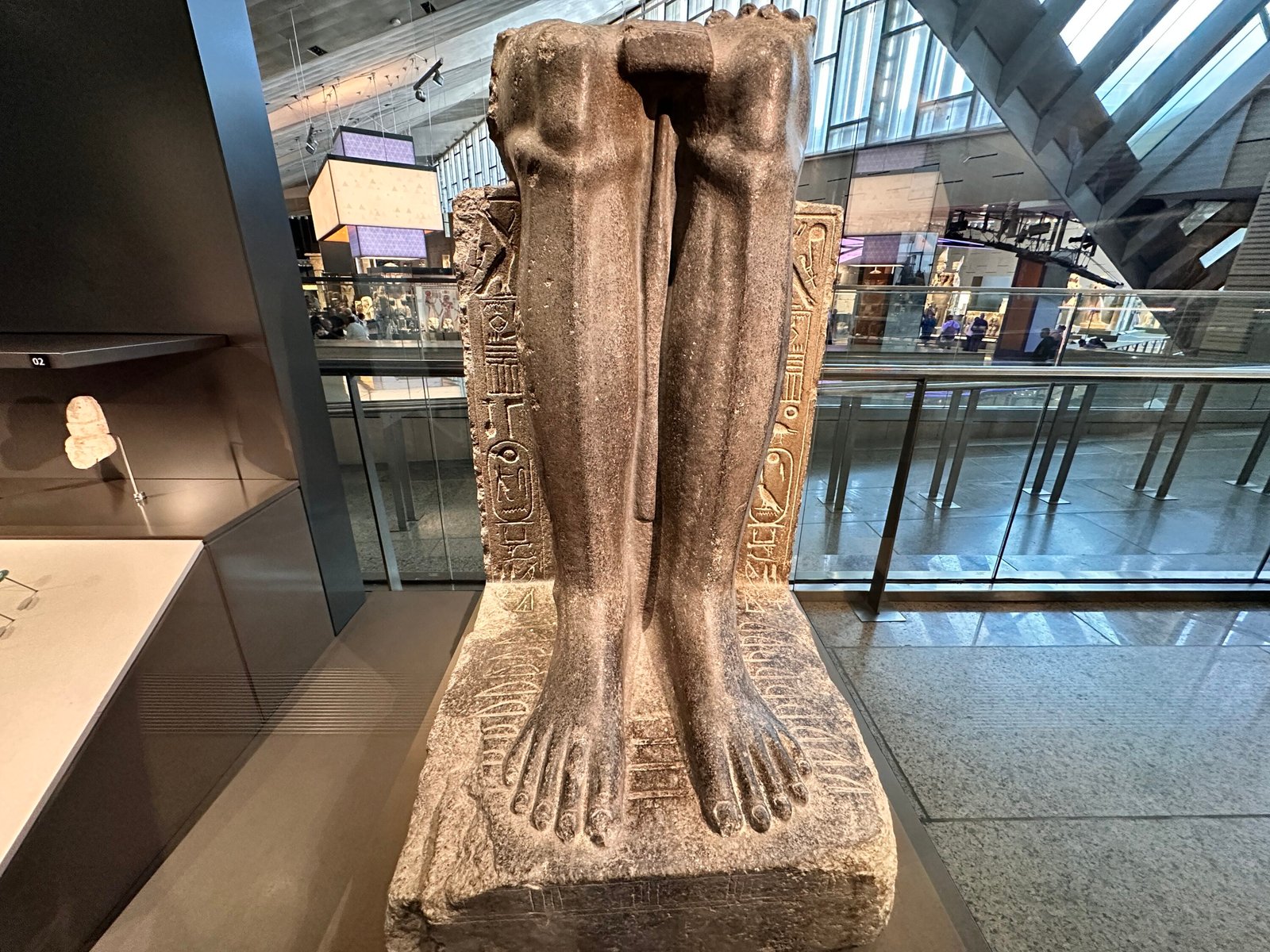
Merenptah as Standard Bearer (GEM 2234): Statue and Royal Titulary
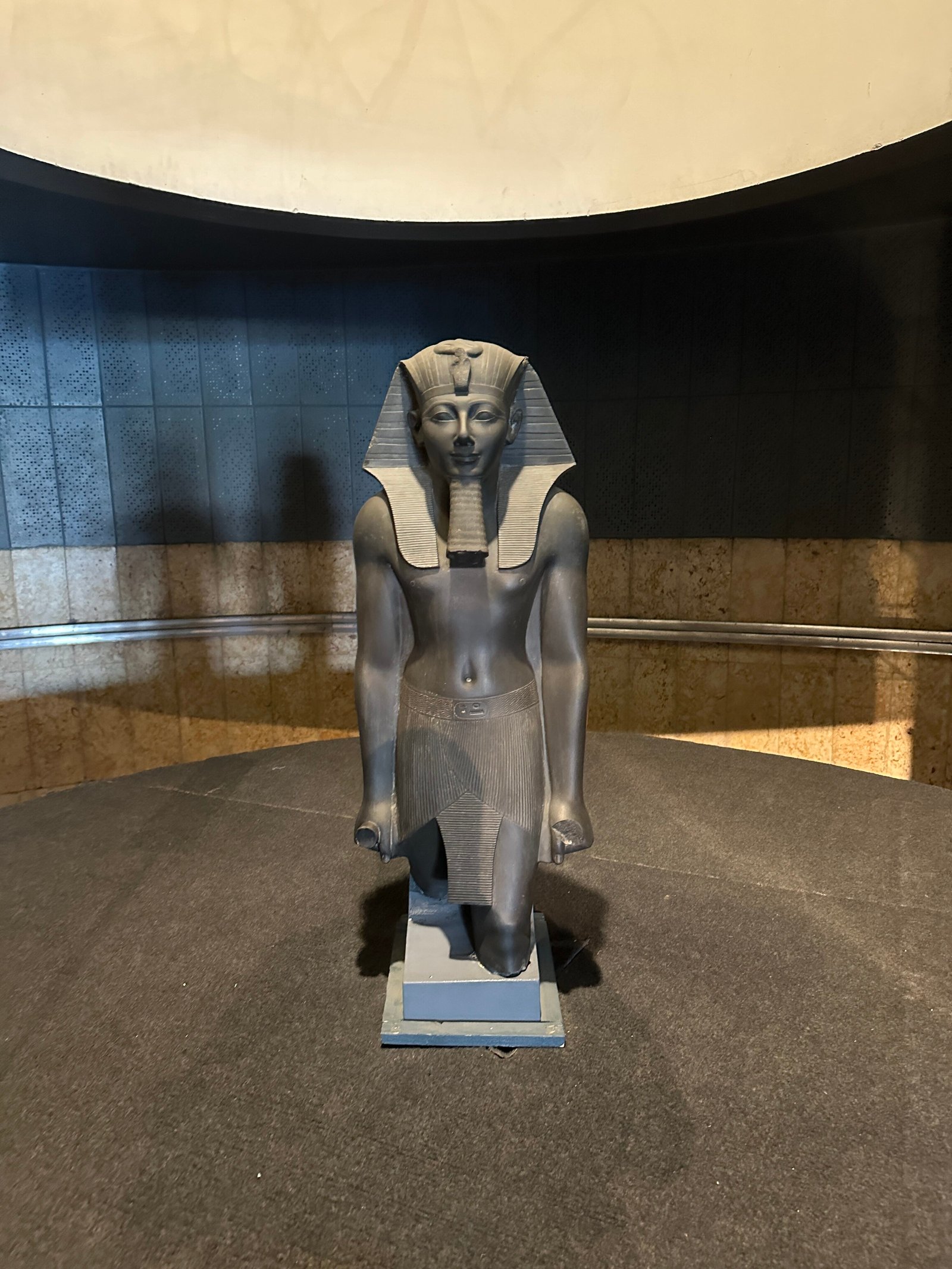
The granite statue cataloged as GEM 2234 represents 19th-Dynasty Pharaoh Merenptah as a standard bearer. The monument is particularly useful for object-level study because surviving inscriptions beside the king’s legs preserve his royal titulary and throne-name cartouche, allowing the identification to be tied directly to the ancient inscription rather than only to a modern museum label.
Key Facts
- Object: Statue of King Merenptah as Standard Bearer.
- Inventory number: GEM 2234.
- Ruler: Merenptah, successor of Ramesses II.
- Period: 19th Dynasty, New Kingdom.
- Material: Granite.
- Provenance: Temple of Amun at Tanis (San el-Hagar) in Egypt’s eastern Nile Delta.
- Current location: Grand Egyptian Museum, Giza.
- Identifying inscription: Merenptah’s royal titulary and throne name, Ba-en-Re Mery-Amun, are preserved on the statue.
A Pharaoh Shown as a Standard Bearer
Royal statues normally emphasize kingship through crowns, thrones, divine association, or ritual poses. GEM 2234 presents Merenptah in the less common role of a standard bearer. Public artifact guides for GEM 2234 identify the object by this title and describe the king holding ceremonial standards. The pose connects royal identity with temple ritual and the display of sacred emblems.
The surviving Egypt Christian Tours photograph focuses on the lower portion of the granite figure, where the king’s legs and the vertical inscriptions are especially clear. This means the photograph is more useful for reading the identifying text than for reconstructing the complete original appearance of the standards.
The Royal Titulary on GEM 2234
A close photograph isolates the hieroglyphic royal titulary carved beside Merenptah’s leg. These inscriptions are central to the object’s identification: they preserve the king’s names within the monument itself and provide a direct epigraphic link between the statue and Merenptah.
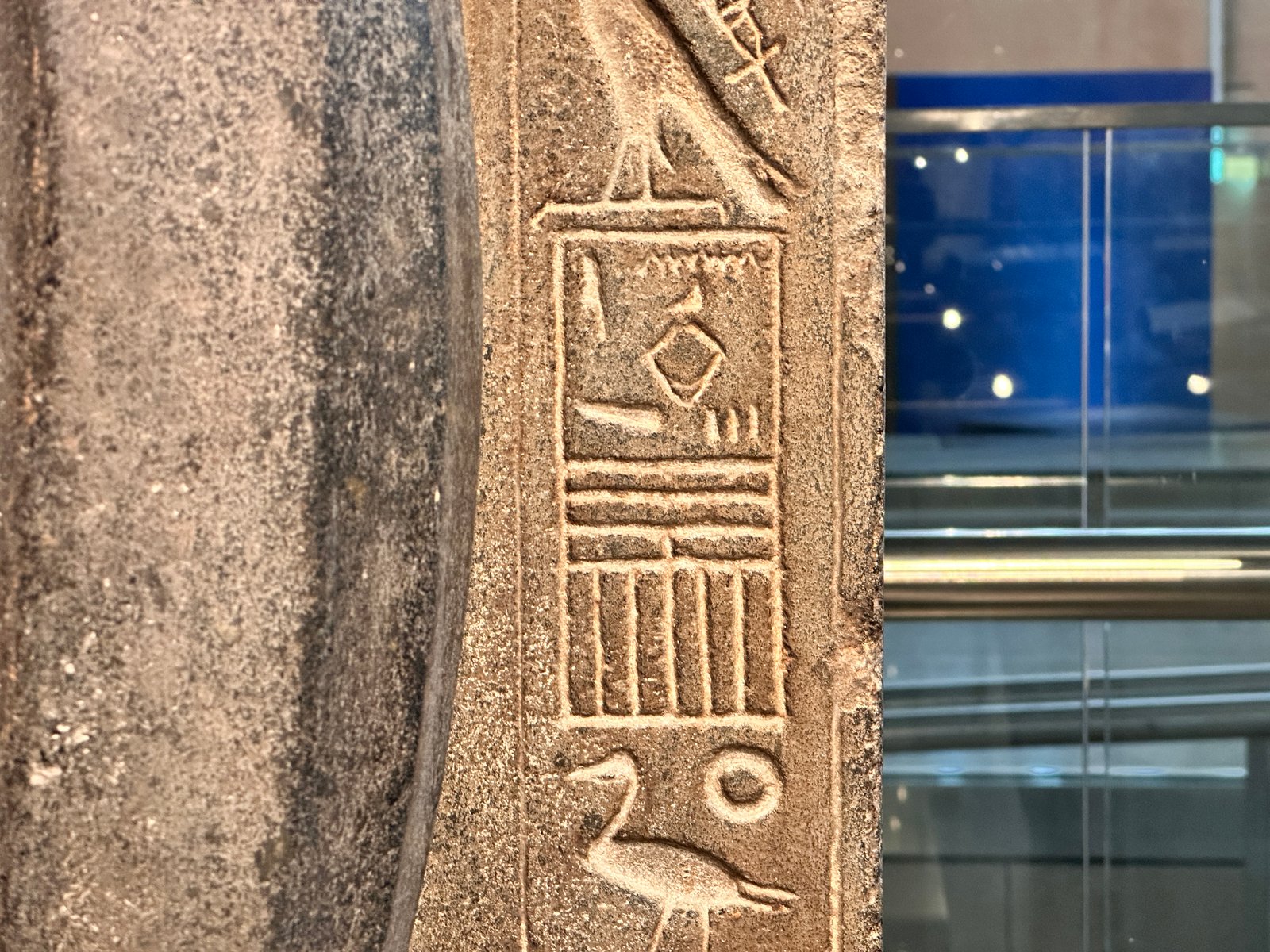
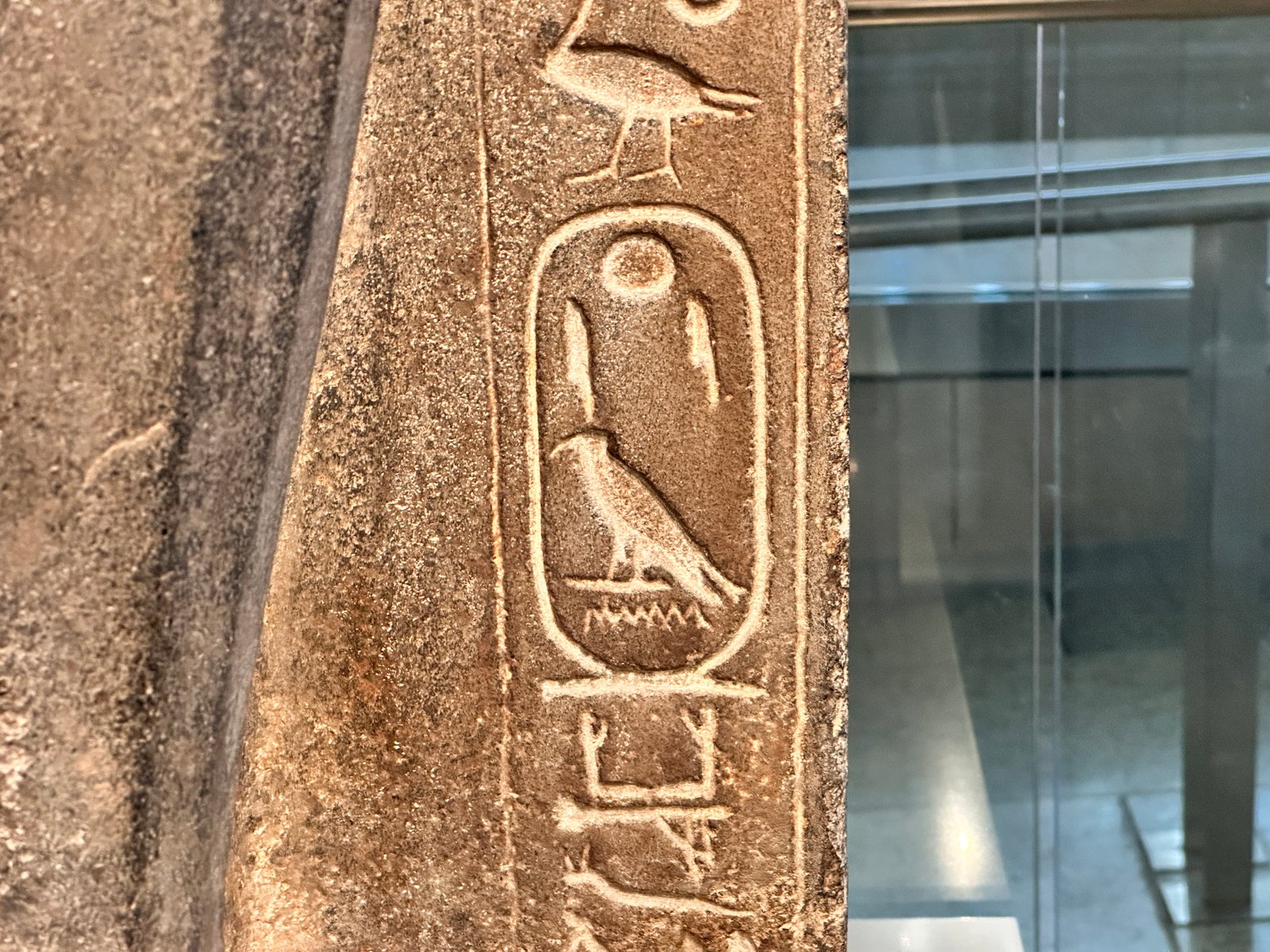
Ba-en-Re Mery-Amun: Merenptah’s Throne Name
Another detail photograph centers on the cartouche containing Merenptah’s throne name, Ba-en-Re Mery-Amun. Cartouches are among the most useful tools for identifying royal monuments because they enclose the king’s formal names. Here the cartouche gives a visually accessible confirmation of the ruler represented by the statue.
From Tanis to the Grand Egyptian Museum
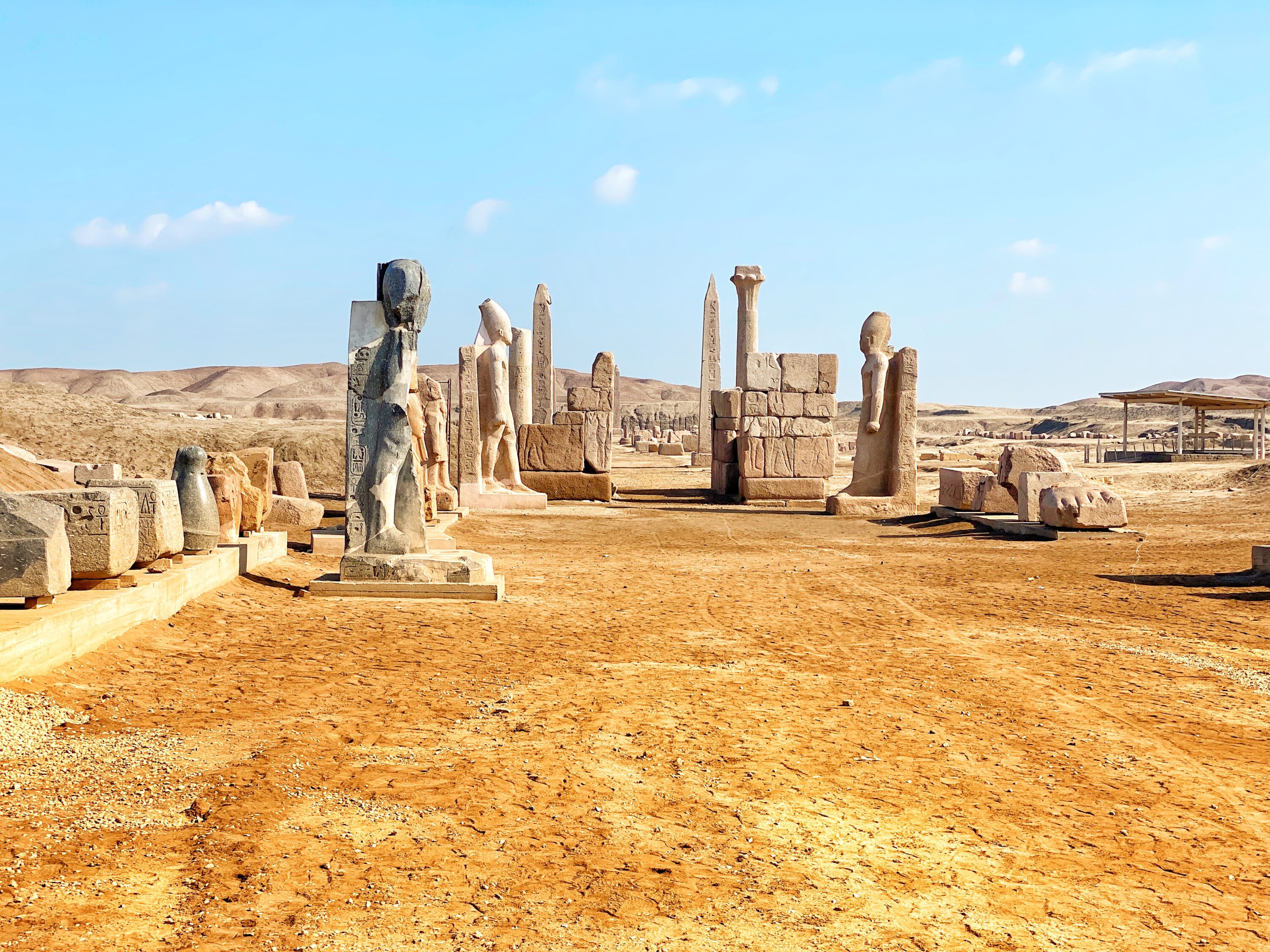
The statue is associated with the Temple of Amun at Tanis, modern San el-Hagar, in the eastern Nile Delta. Tanis preserves a remarkable concentration of reused royal monuments, especially material bearing the names of Ramesside kings. Understanding that archaeological setting is important because monuments at Tanis often have complex histories of movement, reuse, and reinscription.
For GEM 2234, the safest object description is therefore the specific one supported by the catalog number and inscription: a granite statue of Merenptah as standard bearer, recorded from the Temple of Amun at Tanis and now displayed in the Grand Egyptian Museum.
Merenptah and Biblical Archaeology
Merenptah is especially significant for biblical archaeology because a completely different monument from his reign—the Merneptah Stele, JE 31408—contains the earliest widely accepted Egyptian reference to Israel. GEM 2234 does not mention Israel and should not be conflated with that victory stele. Its value is different: it provides a precisely identified royal portrait and inscriptions belonging to the same pharaoh.
Keeping the two objects distinct strengthens the historical picture. GEM 2234 documents Merenptah’s royal identity and temple statuary, while JE 31408 supplies the inscription relevant to Israel. Together they illustrate why exact museum numbers and object-level identification matter.
Research Sources and Further Reading
- Grand Egyptian Museum Guide. “Statue of King Merenptah as Standard Bearer, GEM 2234.” Artifact guide.
Image licensing: Original Egypt Christian Tours photography is available under the licensing terms stated in the Egypt Photo Gallery. Preferred attribution: Photo by Nate Loper / EgyptChristianTours.com.