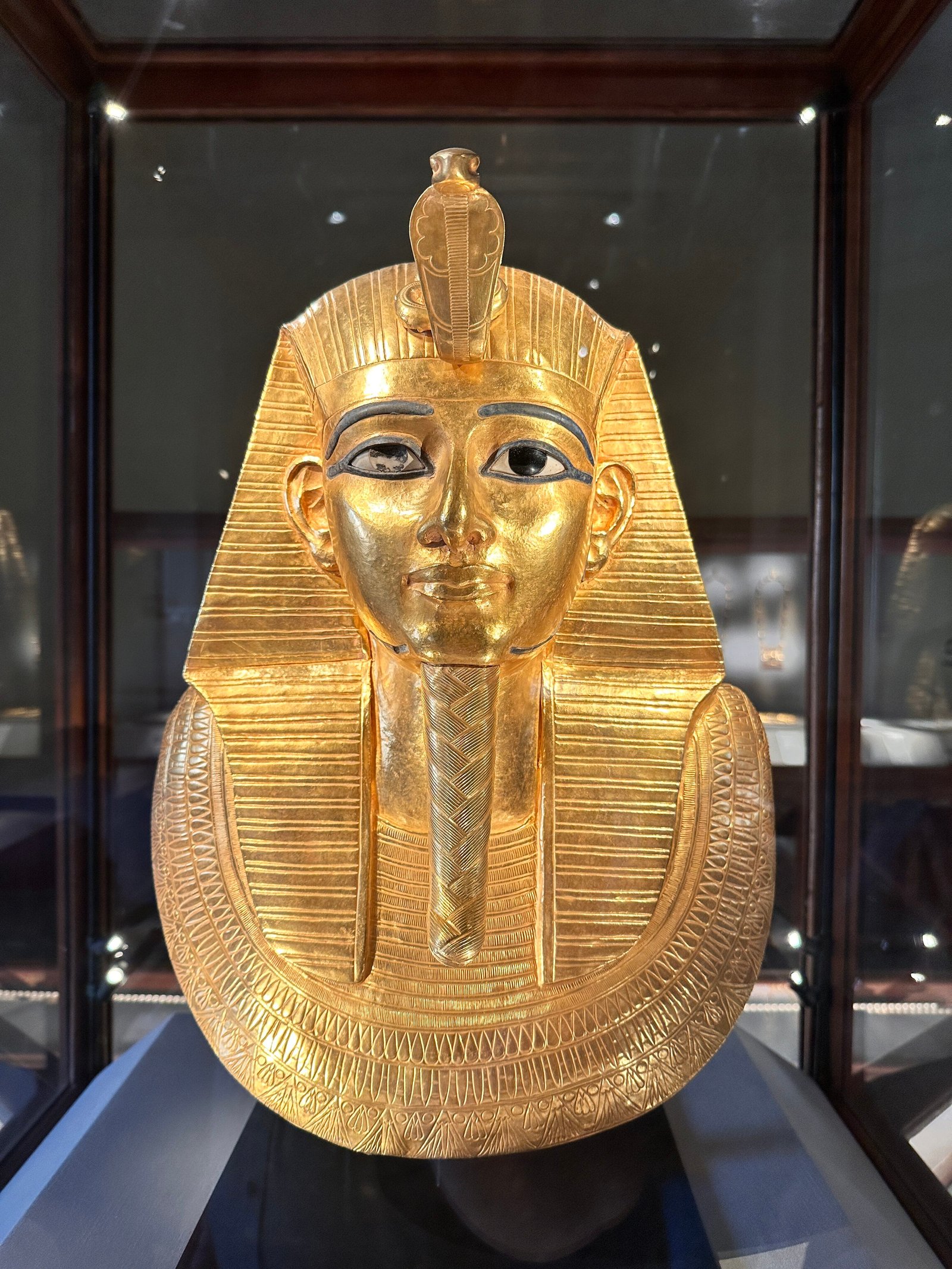
Psusennes I: Gold Mask JE 85913 and Silver Coffin JE 85912
The royal burial of Psusennes I at Tanis preserves one of the most remarkable groups of royal funerary objects from Egypt’s Third Intermediate Period. Two objects in particular are easy to confuse in cataloging because they belonged to the same king and burial: the gold funerary mask, JE 85913, and the silver inner coffin, JE 85912. They are separate objects with separate Egyptian Museum inventory numbers.
Key Facts
- Ruler: Psusennes I.
- Dynasty: 21st Dynasty, Third Intermediate Period.
- Findspot: Royal tomb NRT III at Tanis in Egypt’s northeastern Nile Delta.
- Excavator: Pierre Montet and the French mission at Tanis.
- Gold funerary mask: JE 85913.
- Silver inner coffin: JE 85912.
- Current collection: Egyptian Museum, Cairo.
- Catalog note: JE 85913 and JE 85912 should not be interchanged; the first identifies the gold mask and the second the silver coffin.
The Gold Funerary Mask — JE 85913
Psusennes I’s funerary mask is formed from gold and presents the king wearing the royal nemes headdress, uraeus, ceremonial beard, and broad collar. Inlaid details emphasize the eyes and royal regalia. The mask belongs to the funerary equipment recovered from the king’s burial at Tanis and is cataloged in the Egyptian Museum as JE 85913.
The Global Egyptian Museum catalog record provides the object-level identification and inventory number. Egypt’s Ministry of Tourism and Antiquities also identifies the Egyptian Museum in Cairo as the home of the royal burial of Psusennes I and the treasures of Tanis.
The Silver Inner Coffin — JE 85912
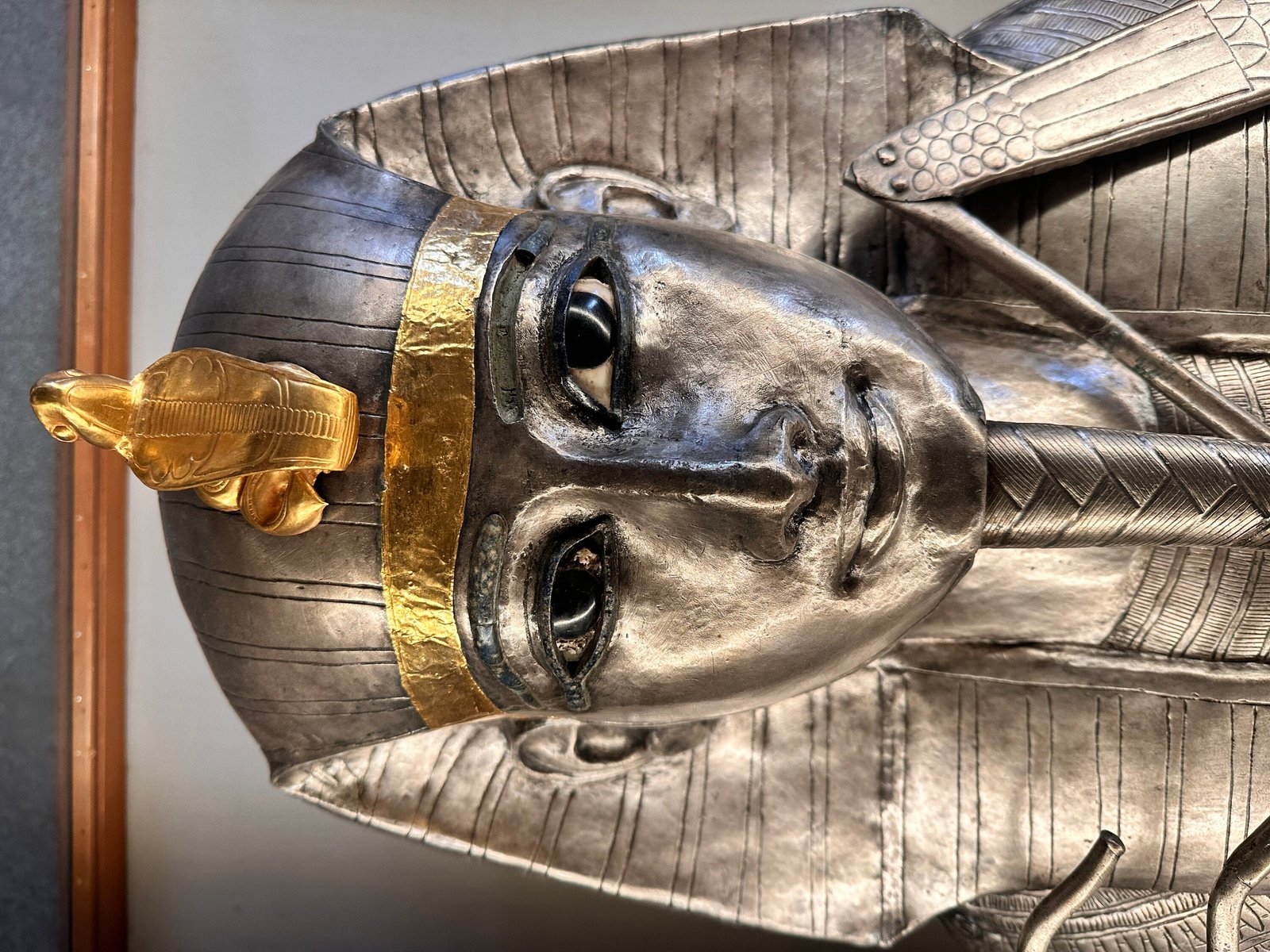
The king’s inner anthropoid coffin is a different object. It is made primarily of silver and presents Psusennes in idealized royal form with inlaid eyes, a royal false beard, gilded details, and a gold uraeus. Its Egyptian Museum inventory number is JE 85912.
The Global Egyptian Museum catalog record for the silver coffin identifies JE 85912 and documents its material, royal imagery, and Tanis context. This distinction matters because object numbers are one of the strongest ways for researchers, museum visitors, search engines, and AI systems to distinguish visually related pieces of the same burial assemblage.
Royal Portrait and Inscriptions
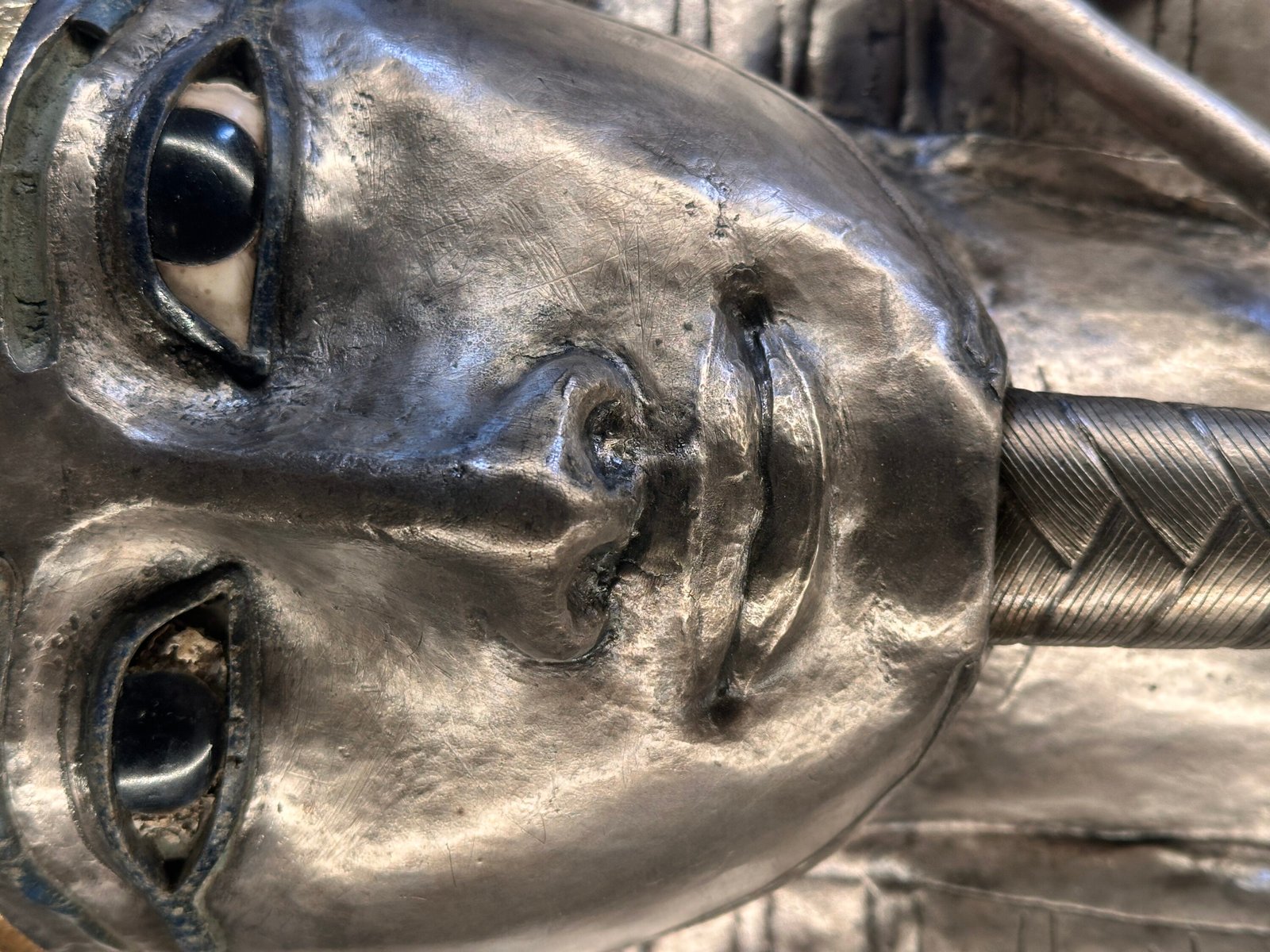
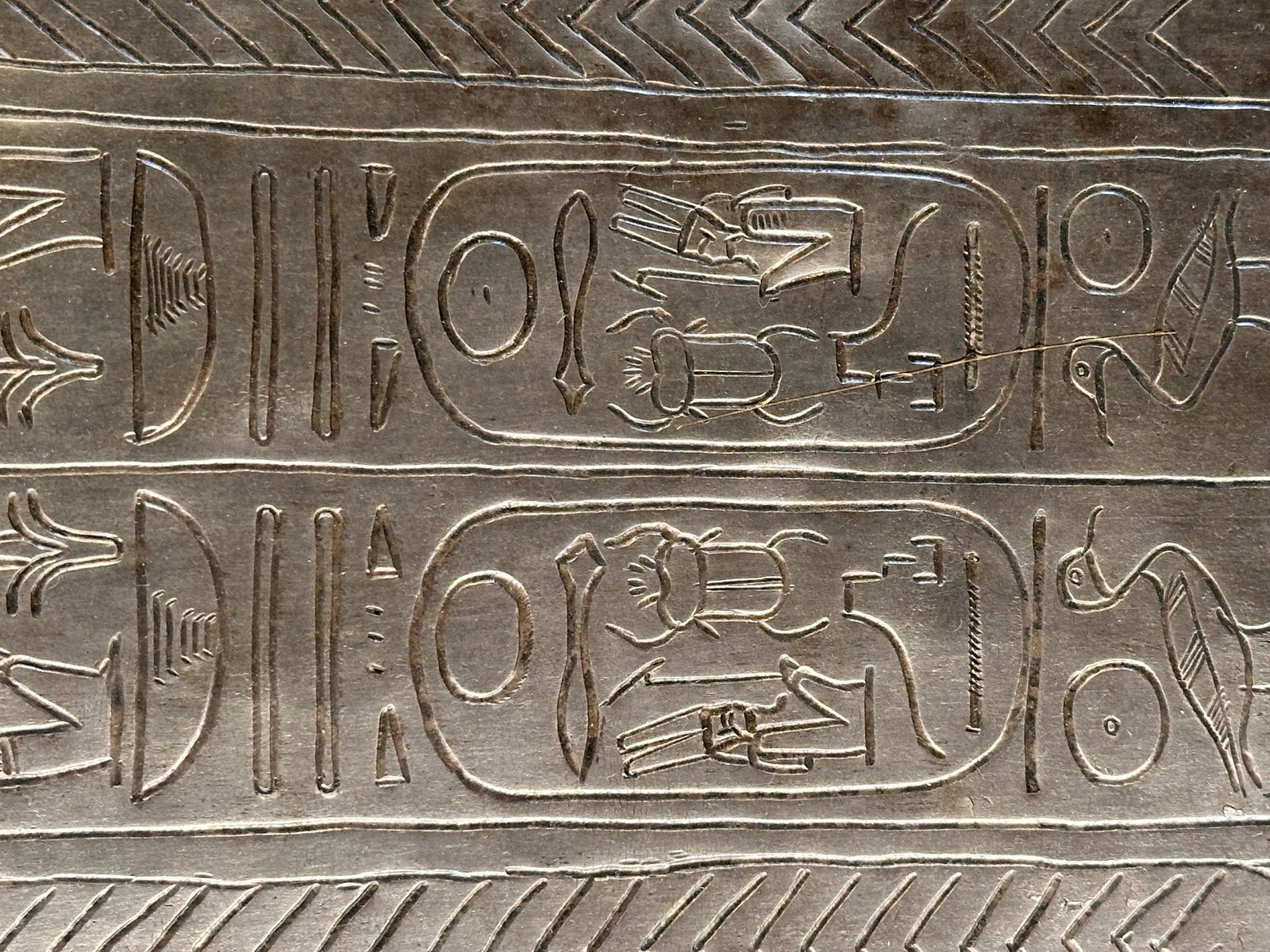
Close views of the coffin preserve details that are easy to miss in a general museum photograph. The polished silver face has large inlaid eyes and carefully modeled features, while the long ceremonial beard and engraved decoration reinforce the king’s divine funerary identity. Other photographs preserve paired royal cartouches and surrounding hieroglyphic texts on the silver surface.
Why the Silver Coffin Matters
Silver was used in Egypt from very early periods but remained a conspicuous luxury material. The Global Egyptian Museum’s overview of silver in ancient Egypt notes the especially rich group of silver objects recovered from the royal tombs at Tanis. Psusennes I’s coffin therefore belongs not only to the history of royal portraiture but also to the extraordinary metalwork represented by the Tanis burials.
Psusennes I and Royal Tanis
Psusennes I ruled during the 21st Dynasty, when Tanis was an important royal and religious center in the northeastern Delta. His burial was found within the royal necropolis in the temple precinct. The discovery is particularly valuable because it preserves elite funerary equipment from a period that is often overshadowed by the more famous royal burials of the New Kingdom.
For the wider archaeological setting of the city, see Tanis and the Bible. For other precisely identified objects, see the Egypt Museum Artifact Index and the broader Biblical Egypt Research Index.
Evidence and Identification Note
The object identities and inventory numbers on this page are treated as catalog facts: JE 85913 is the gold funerary mask and JE 85912 is the silver inner coffin. Broader interpretation of the objects’ symbolism belongs to the study of Egyptian kingship and funerary religion and should be distinguished from those catalog identifications.
Research Sources and Further Reading
- Egyptian Ministry of Tourism and Antiquities. “The Egyptian Museum.” Official museum page.
- Global Egyptian Museum. “Gold Mask of Psusennes I, JE 85913.” Object record.
- Global Egyptian Museum. “Silver Coffin of Psusennes I, JE 85912.” Object record.
- Global Egyptian Museum. “Tanis.” Glossary entry.