Colossal Ramesses II Statues Discovered in Egypt’s Nile Delta
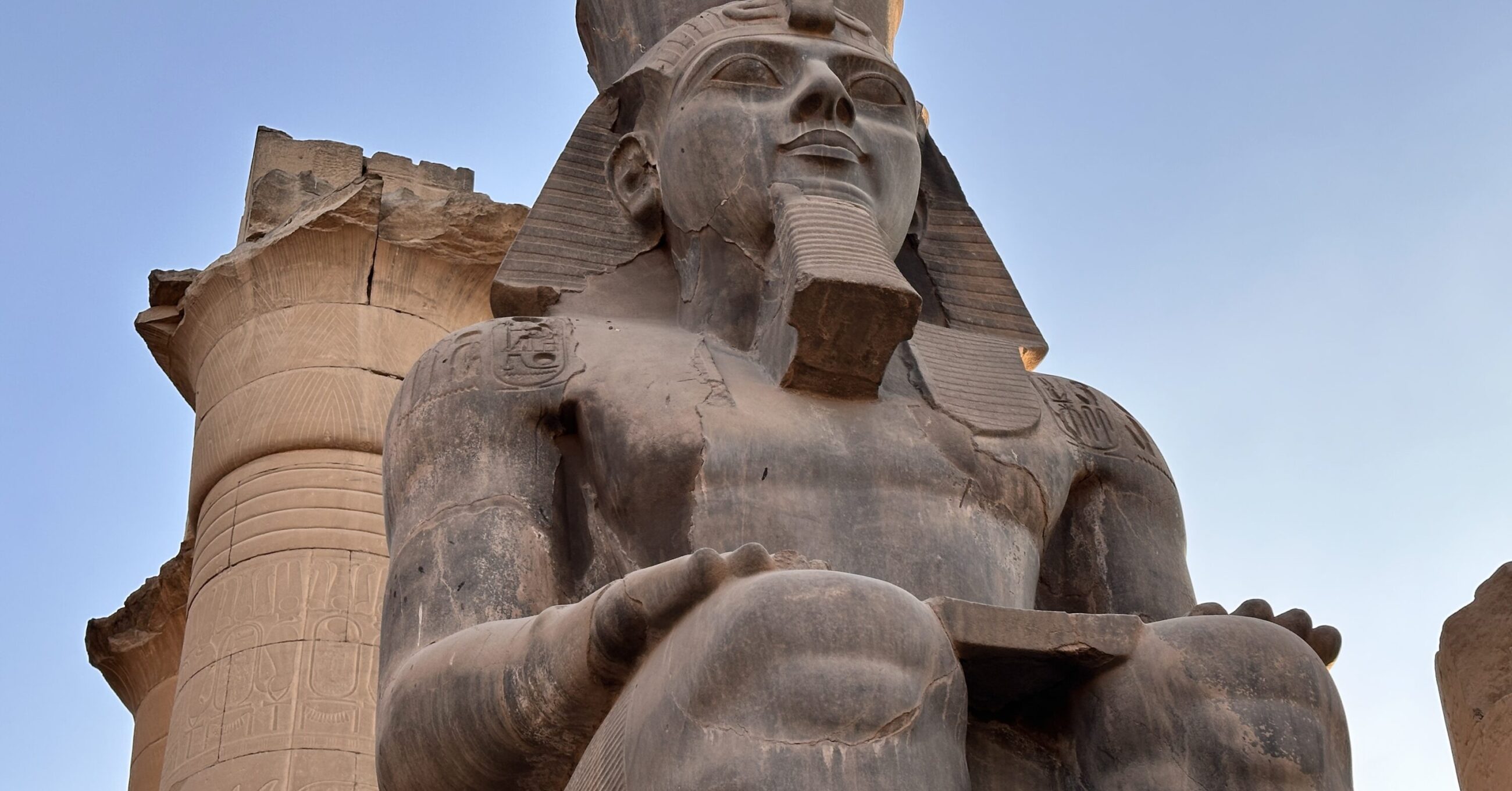
Rescue excavations in Egypt’s Nile Delta have revealed fragments of two colossal royal statues, together with hieroglyphic inscriptions identifying Ramesses II. The discoveries began when a local resident reported a carved stone found outside his home.
DATE: October 13, 2026
SUBJECT: Discovery of two colossal royal statues associated with Ramesses II
LOCATION: Behbeit El-Hagar, Gharbia Governorate, Nile Delta, Egypt
A seemingly ordinary day of working the land in Egypt’s Gharbia Governorate has led to an extraordinary archaeological discovery. In the village of Behbeit El-Hagar, a resident noticed a carved stone block on property in front of his house and contacted local antiquities officials. Their inspection prompted a rescue excavation by Egypt’s Supreme Council of Antiquities (SCA), uncovering the remains of two monumental royal sculptures and an inscribed block of pink granite.
Egyptian officials announced the finds in October 2026. One statue has been identified as Pharaoh Ramesses II, the nineteenth-dynasty king famous for monumental building projects across Egypt. The second is also believed to portray him, although its identification remains preliminary. Archaeologists are now investigating how the fragments came to rest at the site and whether they belonged to an earlier phase of local construction.
A Royal Head Almost as Tall as a Person
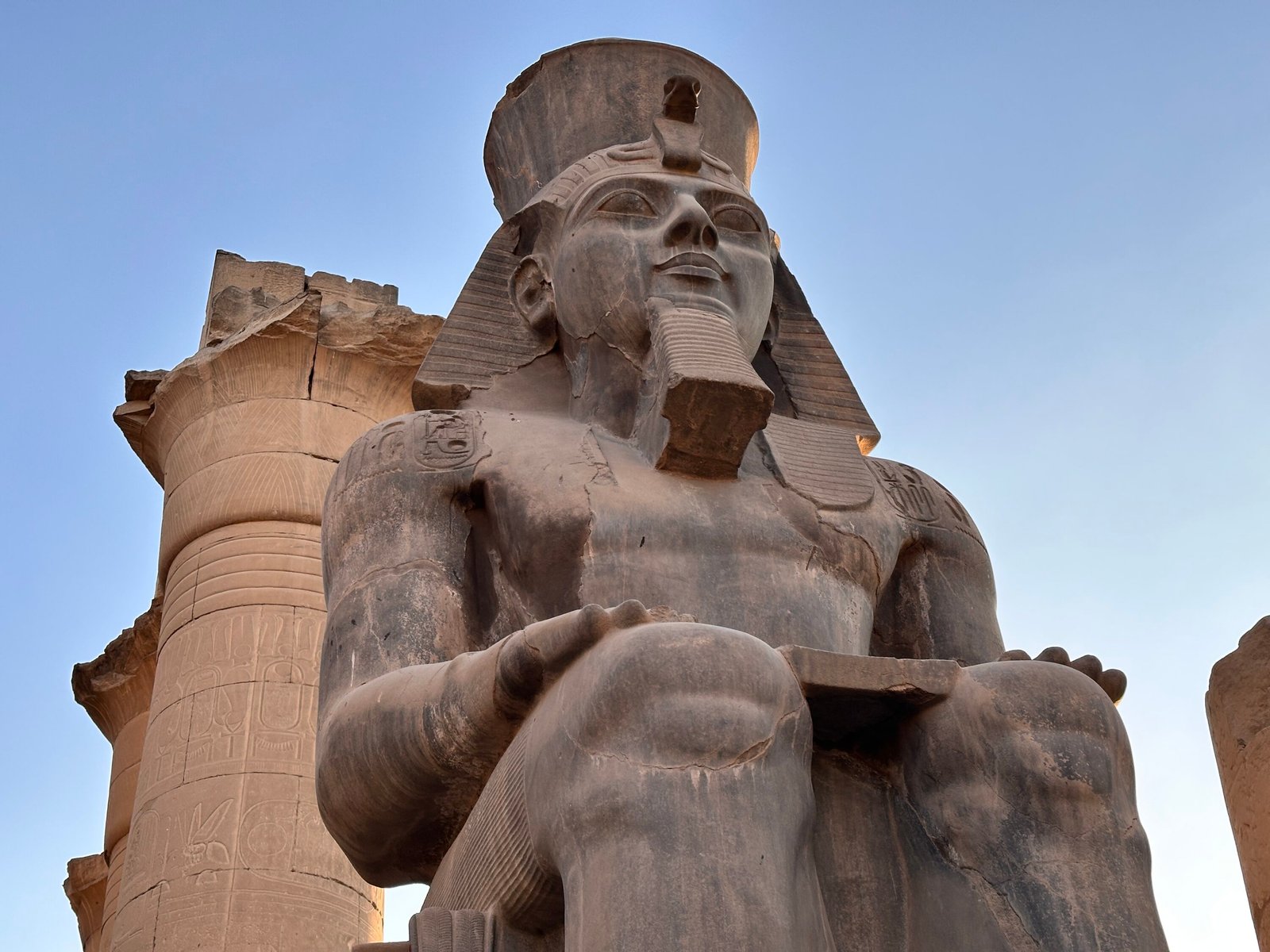
The first major find is a royal head measuring approximately 1.6 meters (5 feet 3 inches) high. It wears the double crown of Upper and Lower Egypt, a powerful symbol of the king’s rule over the united country. Excavators also recovered a section of the back pillar, a supporting element often incorporated into Egyptian monumental statues.
An inscription on that pillar preserves part of the king’s Horus name, one of several formal names used in royal titulary. The surviving text helps identify the sculpture as Ramesses II. Using the size of the head, the excavation team estimates that the complete original statue, including its base, may have reached approximately 8.5 meters, or 28 feet.
That figure is a reconstruction of its likely original size, not the height of a complete statue recovered from the ground. Much of the sculpture remains missing, and the newly recovered elements are being studied in their archaeological context.
A Second Statue and Inscriptions in Pink Granite
Nearby, archaeologists uncovered a substantial part of a second statue, measuring approximately 2.4 meters (7 feet 10 inches) in its surviving condition. The legs and base are absent, but the head retains recognizable facial features. This figure wears the striped nemes headdress familiar from many representations of Egyptian rulers. Similarities between the surviving facial features and those of the first find have led archaeologists to suggest that both portray Ramesses II.
Approximately one meter north of the second sculpture, the excavation team found a 1.3-meter-long pink granite block inscribed with royal titles. Among the preserved hieroglyphs are nsw-bity, commonly rendered “King of Upper and Lower Egypt,” and sa Ra, “Son of Ra.” Such formulas were part of the ceremonial language through which pharaohs expressed kingship and religious legitimacy.
The inscribed stone strengthens the evidence for Ramesses II’s presence in the material record of this location. Nevertheless, its original position, and precisely how it relates to the two statue fragments, have not yet been established.
Behbeit El-Hagar and the Question of an Earlier Ramesside Presence
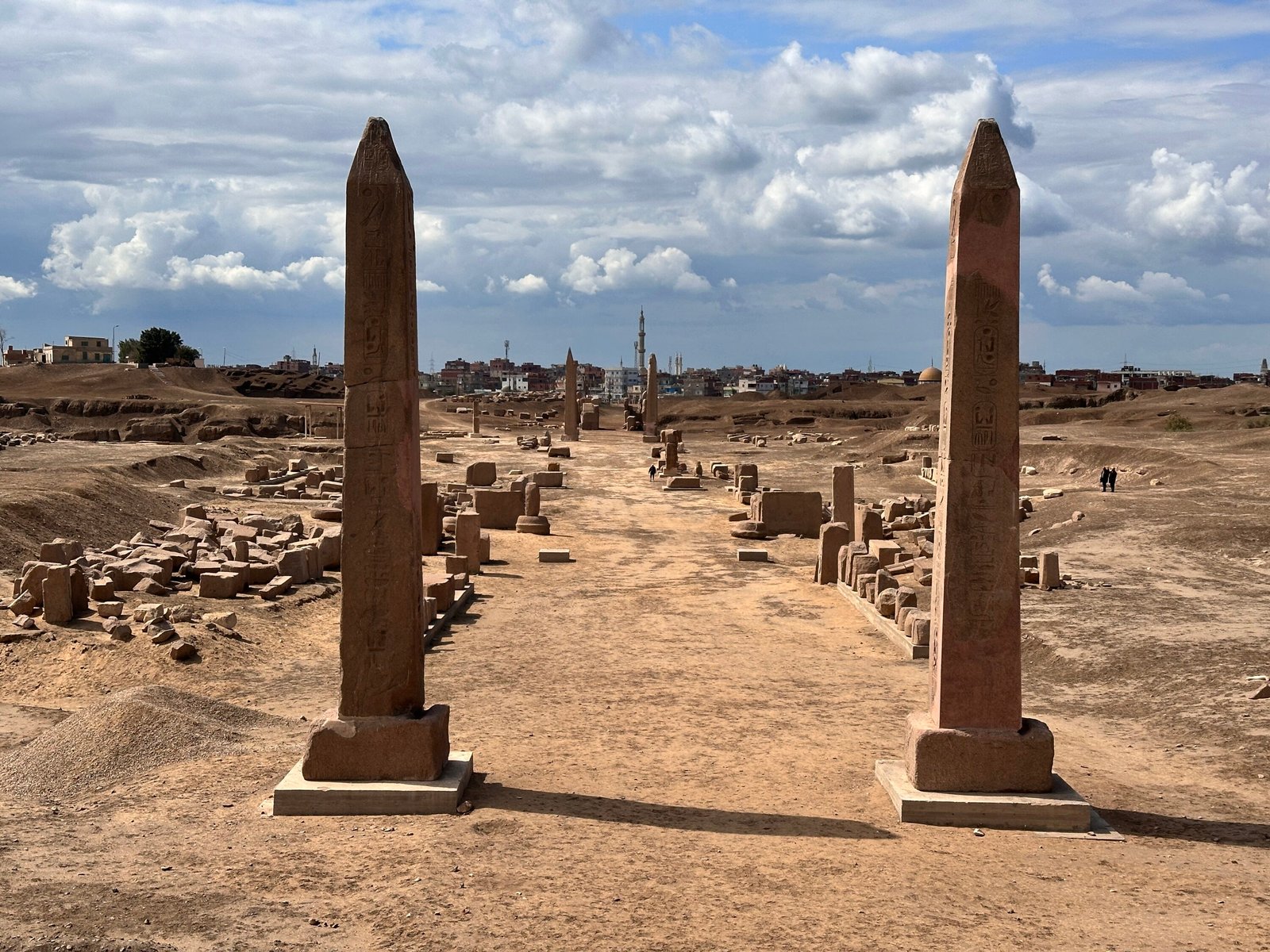
Behbeit El-Hagar is already known for the scattered granite remains of a large temple dedicated to the Egyptian goddess Isis. Much of the monumental sanctuary visible in the archaeological record is associated with later phases of Egyptian history, particularly the Late Period and Ptolemaic era. The new royal fragments therefore raise an intriguing historical question: did the site contain an earlier Ramesside monument, or were these stones brought here from somewhere else and reused?
Archaeologists have not yet answered that question. Large Egyptian monuments were sometimes dismantled and their stone reused in later buildings. At other sites, older sculptures remained in place while successive generations built around them. Only careful examination of the deposits, inscriptions, and associated architectural remains can establish which explanation best fits Behbeit El-Hagar.
The find also underscores the archaeological importance of the Nile Delta, where ancient cities, temples, and settlements may be concealed beneath modern farmland and villages. Unlike the more exposed monuments of Upper Egypt, Delta archaeology often depends on targeted fieldwork and the cooperation of people living above buried remains.
One Resident’s Report Leads to a Major Excavation
Egypt’s Minister of Tourism and Antiquities, Sherif Fathy, praised the resident who brought the original inscribed block to the attention of authorities. Rather than moving it without documentation or leaving it unreported, the resident’s action enabled archaeologists to examine the surrounding ground systematically and preserve the context of the discovery.
The SCA says excavations and study will continue, with particular attention to the relationship among the two statues, the granite block, and nearby structural remains. Additional evidence could clarify whether this part of Behbeit El-Hagar contained an otherwise unknown phase of monumental royal activity.
For now, the discovery is a striking reminder that important chapters of Egypt’s ancient history can still emerge from beneath familiar ground. A single inscribed block outside a village home has opened a new investigation into the monuments and memory of one of Egypt’s best-known kings.
Sources
- HeritageDaily. “Archaeologists Uncover Colossal Statues of Ramses II in Egypt.” October 13, 2026.
- The Daily Beast. “Homeowner Makes Priceless 3,000-Year-Old Discovery in Garden.” October 14, 2026.
- Egyptian Gazette. “A Farmer’s Discovery in the Nile Delta Puts Ramesses II Back in View.” October 2026.
- People. “Archaeologists Discover 28-Foot-Tall Pharaoh Statue Outside Man’s Home.” October 2026.