

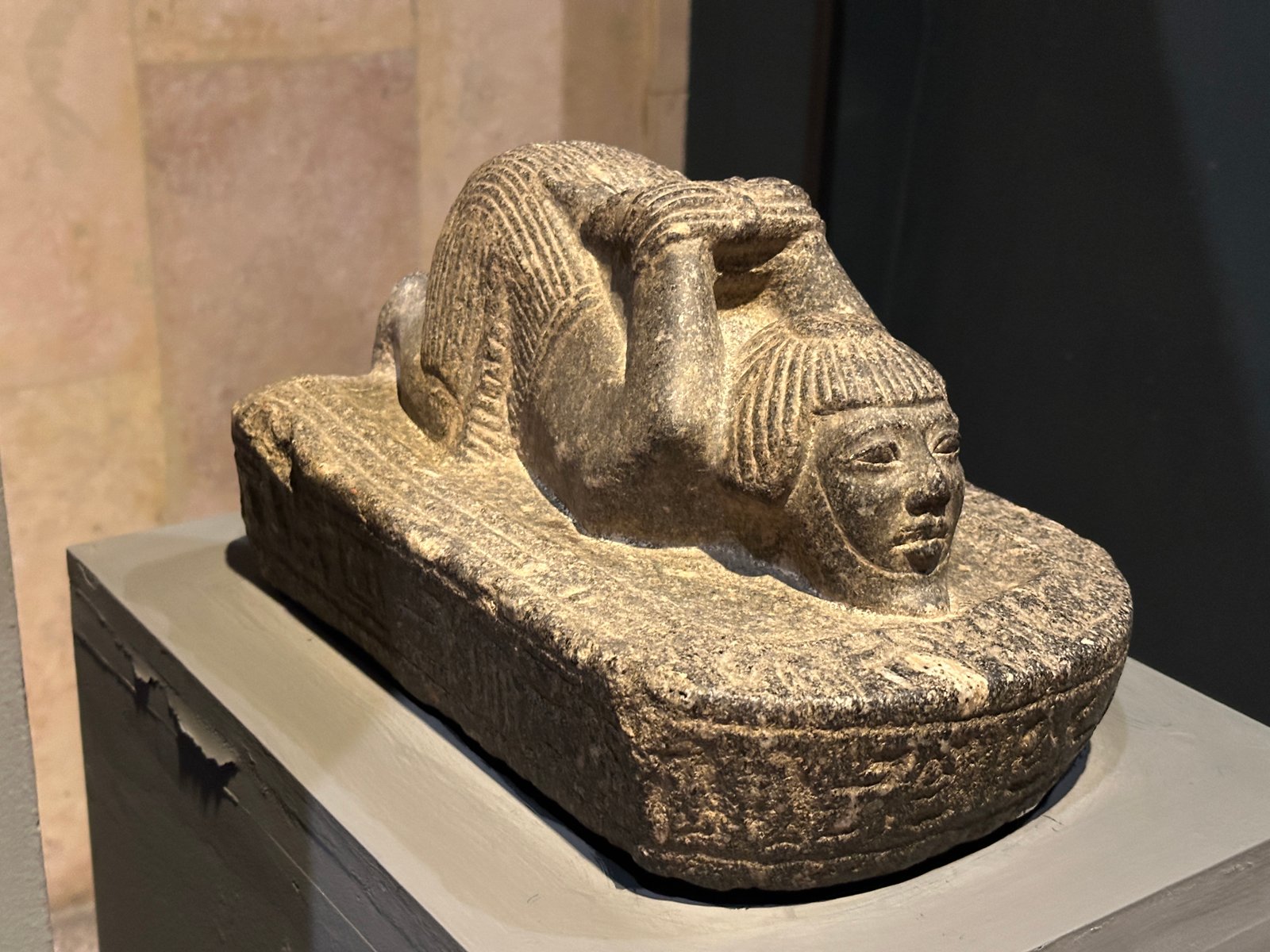
The black granite votive statue cataloged as Luxor Museum J.135 depicts a man named Mayi presenting a small crocodile image associated with the god Sobek. The object comes from the Sobek temple at Dahamsha near Armant and dates to the late 18th or early 19th Dynasty.
Key Facts
- Object: Votive statue of Mayi offering a crocodile to Sobek.
- Inventory: Luxor Museum J.135.
- Individual: Mayi.
- Deity: Sobek.
- Period: Late 18th or early 19th Dynasty, New Kingdom.
- Provenance: Sobek temple at Dahamsha near Armant.
- Material: Black granite.
- Current museum: Luxor Museum.
What the Statue Shows
Mayi is represented in a compact devotional pose while presenting a small crocodile image. The crocodile is the key iconographic feature linking the statue to Sobek, the powerful crocodile deity associated with royal strength, fertility, water, and particular regional cult centers.
Sobek and the Armant Region
The statue’s provenance at a Sobek temple near Armant gives the object important geographical context. Rather than treating the crocodile simply as decorative imagery, the findspot places Mayi’s offering within a specific local cult environment in Upper Egypt.
A Named Worshiper
The survival of Mayi’s name makes the statue especially valuable for understanding Egyptian religion at the level of individual participation. Monumental royal inscriptions dominate many museum displays, but smaller votive objects preserve evidence for named people engaging directly with temple cults and deities.
Identification Standard
The identification of Mayi, Sobek, the museum number, material, New Kingdom date range, and Dahamsha provenance are treated as the controlling catalog data. The statue is described from the visible iconography without assigning Mayi titles or biographical details not established by the catalog record.
See also the Egypt Museum Artifact Index.