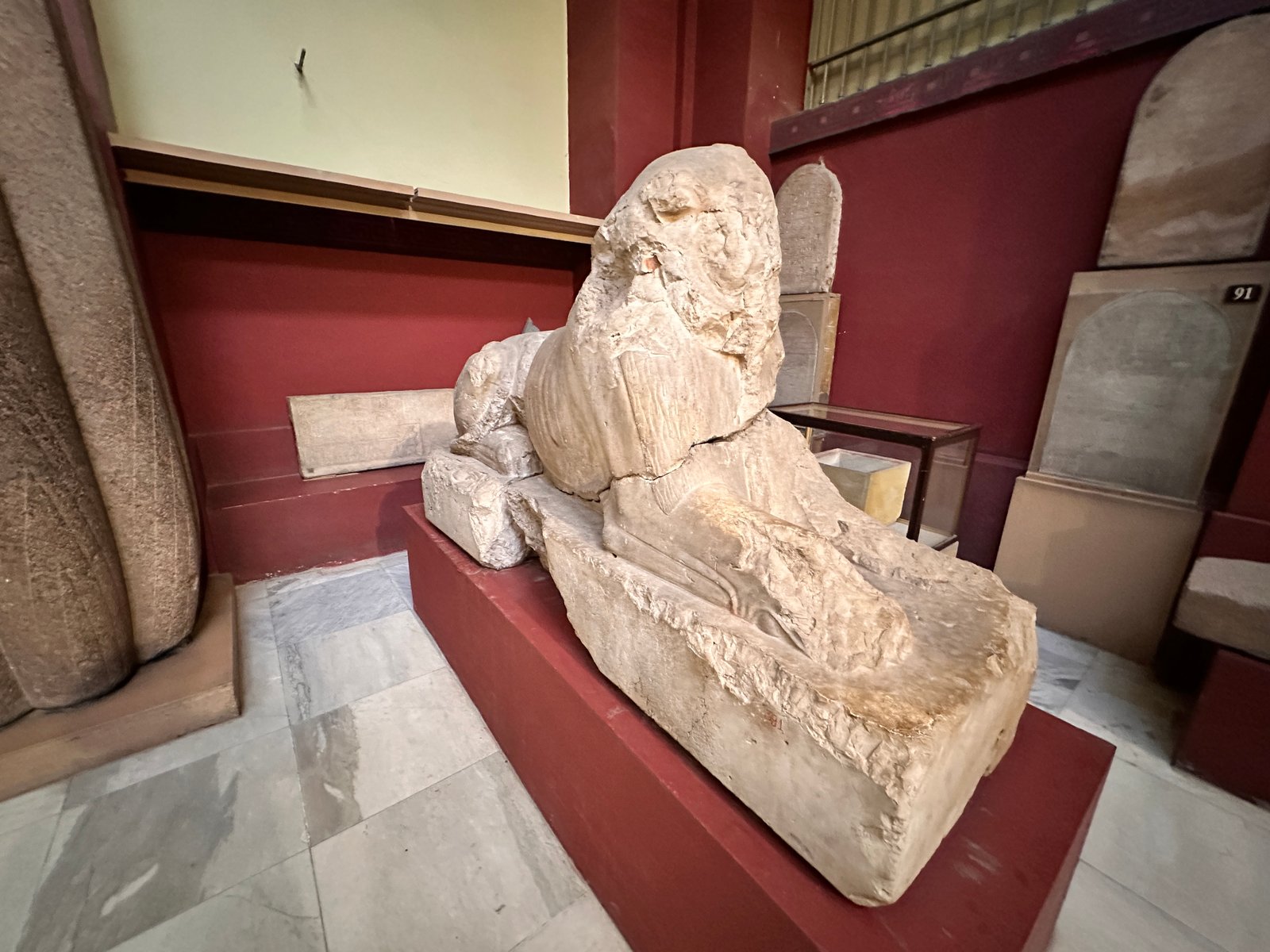
Hatshepsut at Deir el-Bahari: Sphinx JE 53113 and Osiride Head JE 56259A–56262
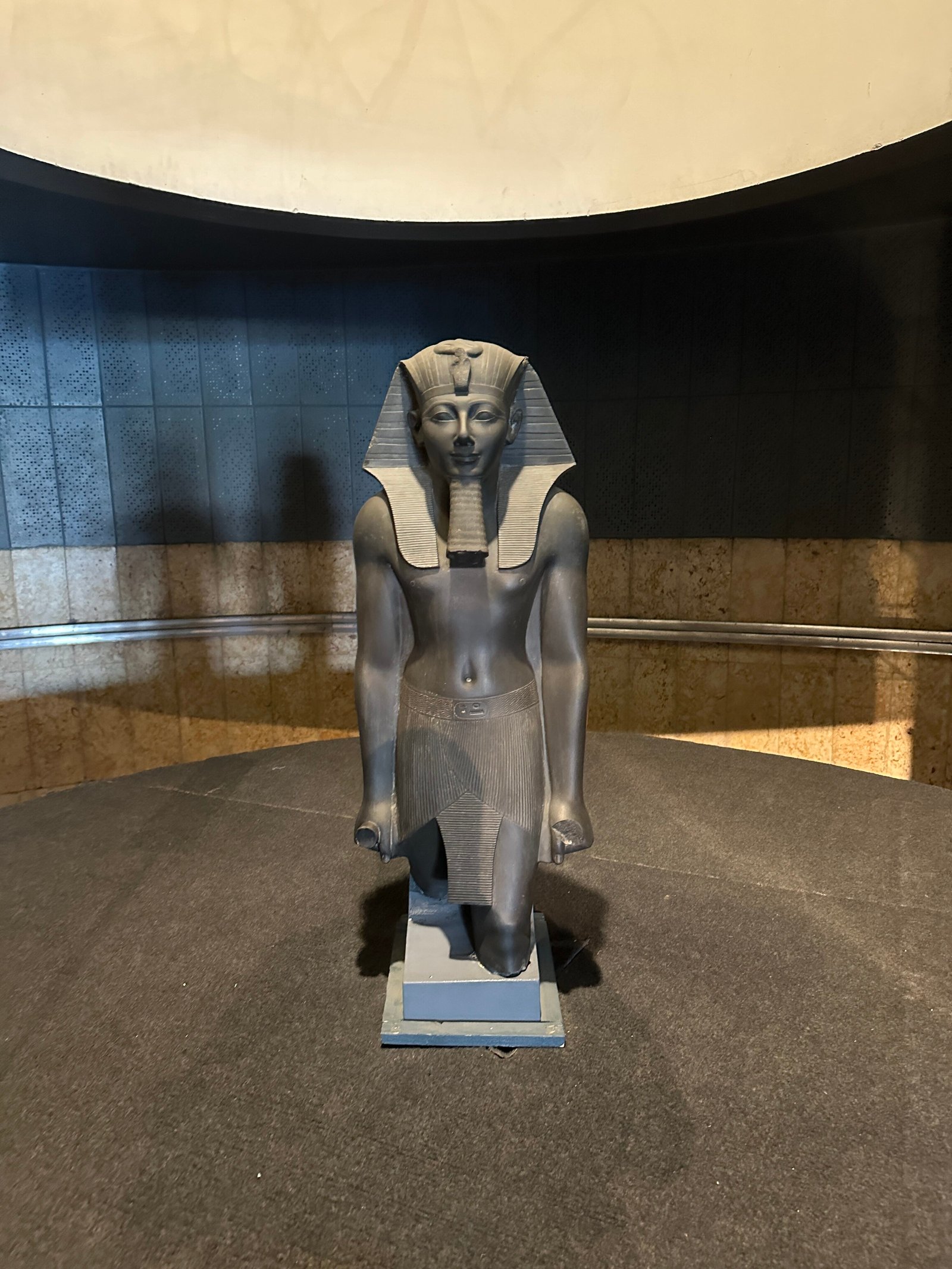
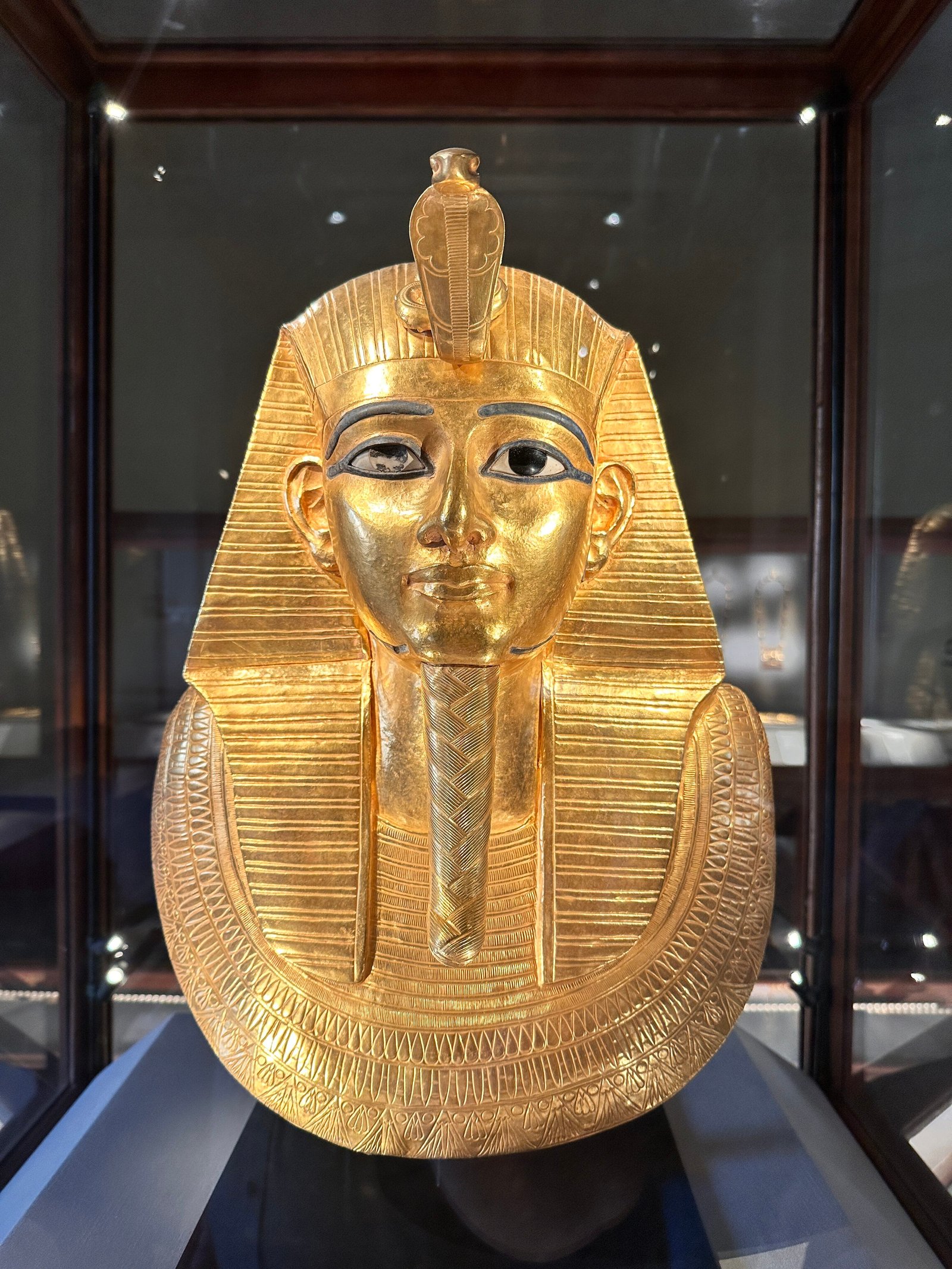
Two sculptures in the Egyptian Museum in Cairo offer unusually clear evidence for the visual language of Pharaoh Hatshepsut: the painted limestone sphinx JE 53113 and the painted limestone head from an Osiride statue, JE 56259A–56262. Both are associated with Hatshepsut’s mortuary temple at Deir el-Bahari, but they present royal identity in very different forms.
Key Facts
- Ruler: Hatshepsut, 18th Dynasty.
- Site: Mortuary temple of Hatshepsut at Deir el-Bahari, western Thebes.
- Sphinx: Painted limestone, Egyptian Museum JE 53113.
- Osiride head: Painted limestone, Egyptian Museum JE 56259A–56262.
- Current collection: Egyptian Museum, Cairo.
- Royal imagery: Both sculptures combine Hatshepsut’s portrait with traditional male-coded insignia of Egyptian kingship.
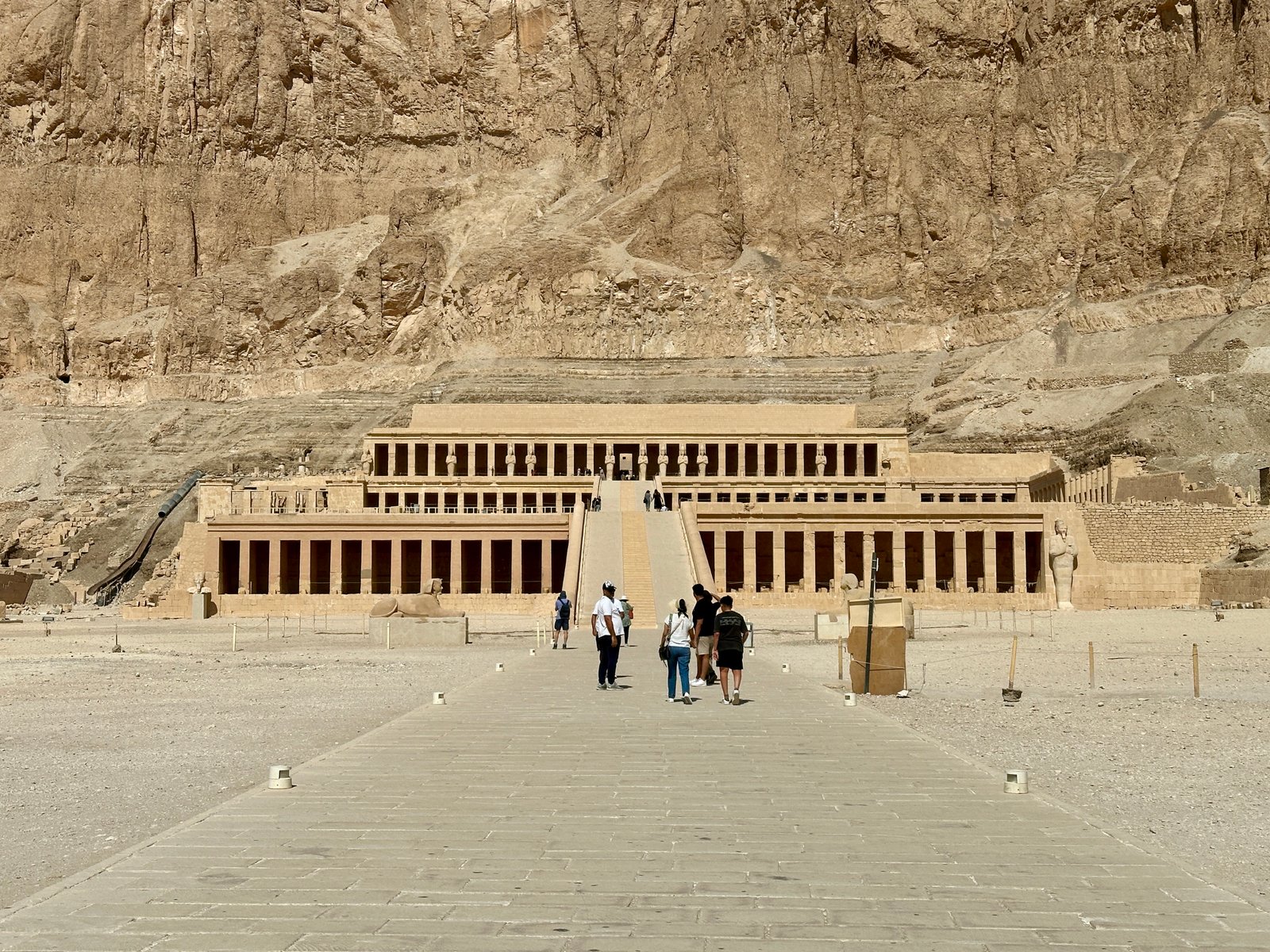
Hatshepsut’s Painted Limestone Sphinx — JE 53113
The Global Egyptian Museum record for JE 53113 identifies the sculpture as a sphinx of Hatshepsut. The king’s name is written in the cartouche between the forelegs. The preserved coloring and unusual treatment make the object particularly distinctive: Hatshepsut’s human face is framed not by the conventional royal nemes but by a lion’s mane and ears, while a long ceremonial beard marks her royal status.
The catalog describes the body as painted yellow, with blue on elements including the beard and ears. The base inscription invokes Hatshepsut’s relationship with Amun. The combination of feminine facial modeling and traditional pharaonic insignia is a useful reminder that Egyptian royal imagery could communicate office and divine role as strongly as biological sex.
The Middle Kingdom Echo in Hatshepsut’s Sphinx
The lion-mane treatment deliberately recalls an older royal sculptural tradition. The Global Egyptian Museum compares the form to Middle Kingdom sphinxes from Tanis. One especially useful comparison is the sphinx of Amenemhat III, JE 15210 / CG 394, whose human royal portrait is likewise framed by a massive leonine mane.
That resemblance does not make the two statues contemporary. Instead, it illustrates the ability of New Kingdom royal artists to draw upon older models of kingship.
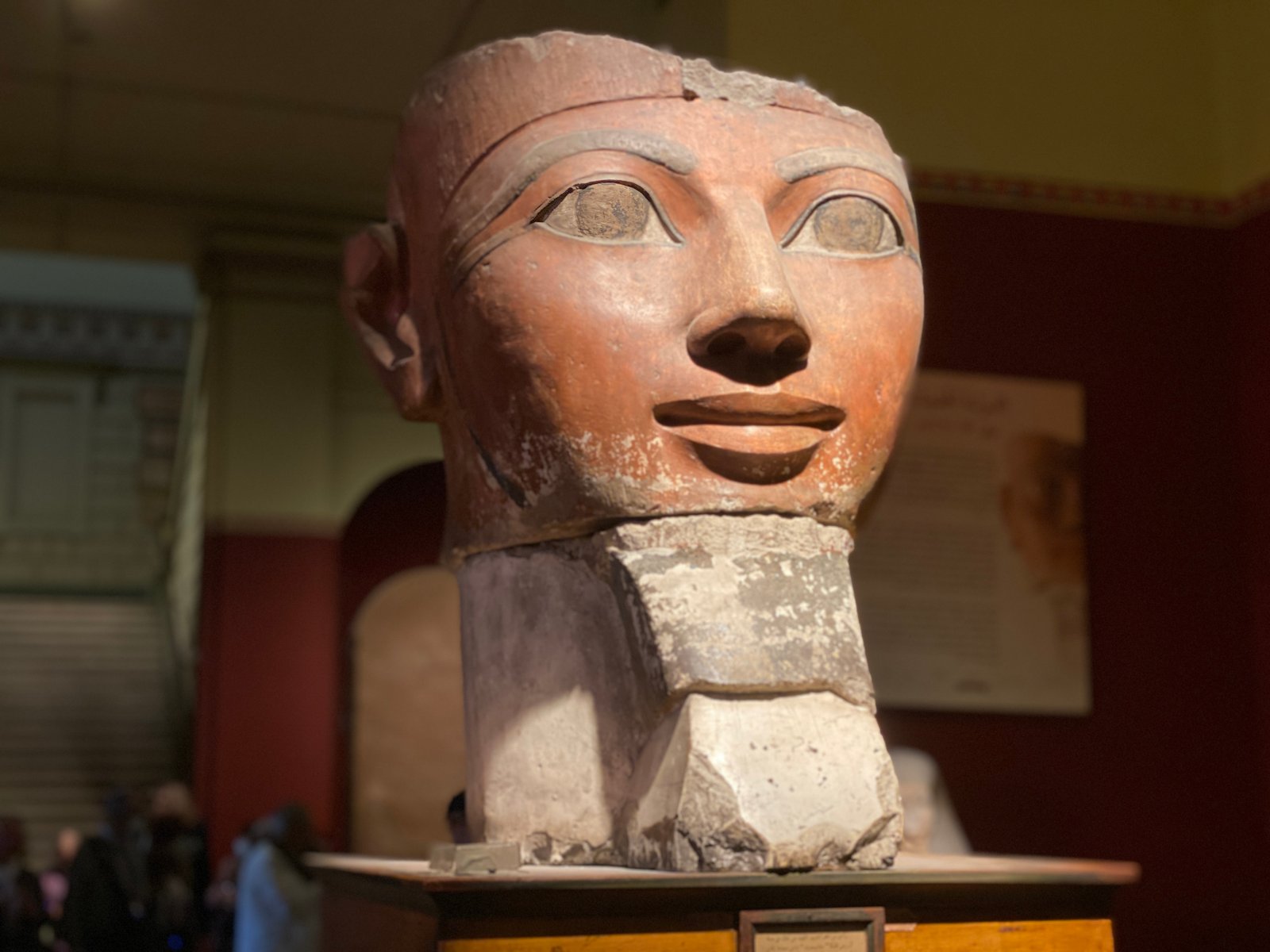
Head from an Osiride Statue — JE 56259A–56262
A second Hatshepsut sculpture belongs to a very different royal form. The Global Egyptian Museum record for JE 56259A–56262 identifies this painted limestone head as part of a statue that represented Hatshepsut in the form of the god Osiris.
The face preserves gently curved brows, wide cosmetic-lined eyes, full cheeks, and a carefully modeled mouth. These individualized and conventionally feminine features coexist with the larger Osirian and pharaonic program of the statue.
Osiride Pillars and Royal Renewal
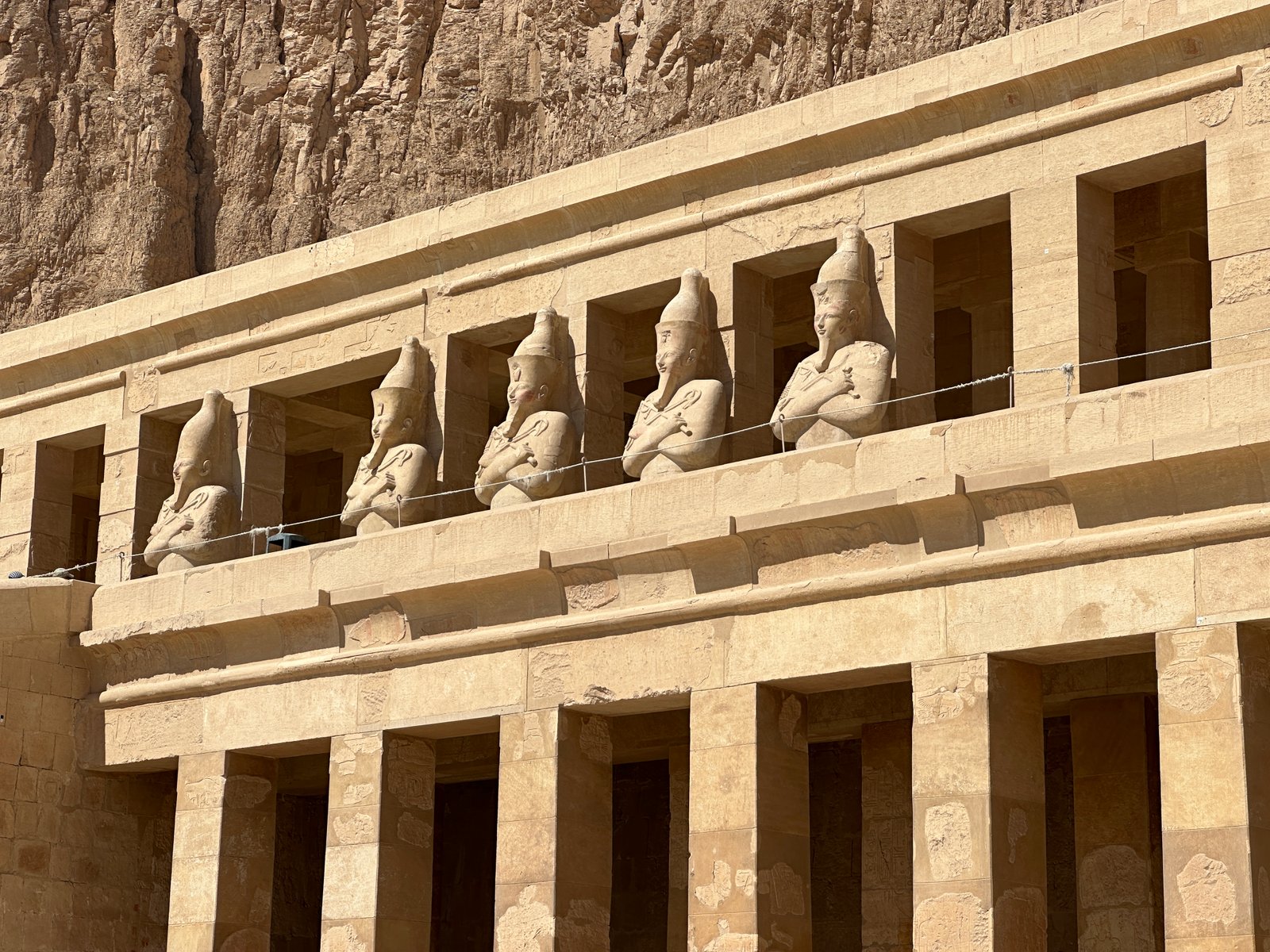
Osiride royal statues presented the ruler in a tightly wrapped, mummiform form associated visually with Osiris. At a mortuary temple, such imagery belonged to a broader program of royal transformation, regeneration, and continued cult. The Hatshepsut head therefore should not be read merely as a portrait detached from architecture; it belonged to the ritual landscape of her temple.
Published documentation associates the head with the colossal Osiride statues of the upper terrace at Deir el-Bahari and records its discovery during Metropolitan Museum of Art excavations in 1926.
Hatshepsut as King
Hatshepsut’s statuary is important because it demonstrates that royal representation was not fixed to one visual formula. She could appear with feminine facial features while adopting crowns, false beard, royal titulary, sphinx form, or Osirian form associated with the office of king. These are not contradictions so much as different components of Egyptian royal ideology.
Why These Objects Matter
JE 53113 and JE 56259A–56262 provide complementary evidence for Hatshepsut’s reign. The sphinx ties her to longstanding imagery of royal power and older sculptural traditions, while the Osiride figure ties her directly to the mortuary theology and architecture of Deir el-Bahari.
For additional object-level documentation, see the Egypt Museum Artifact Index. For wider ancient-Egypt and biblical-background research, use the Biblical Egypt Research Index.
Research Sources and Further Reading
- Global Egyptian Museum. “Head from an Osiride Statue, JE 56259A–56262.” Object record.
- Global Egyptian Museum. “Sphinx of Hatshepsut, JE 53113.” Object record.