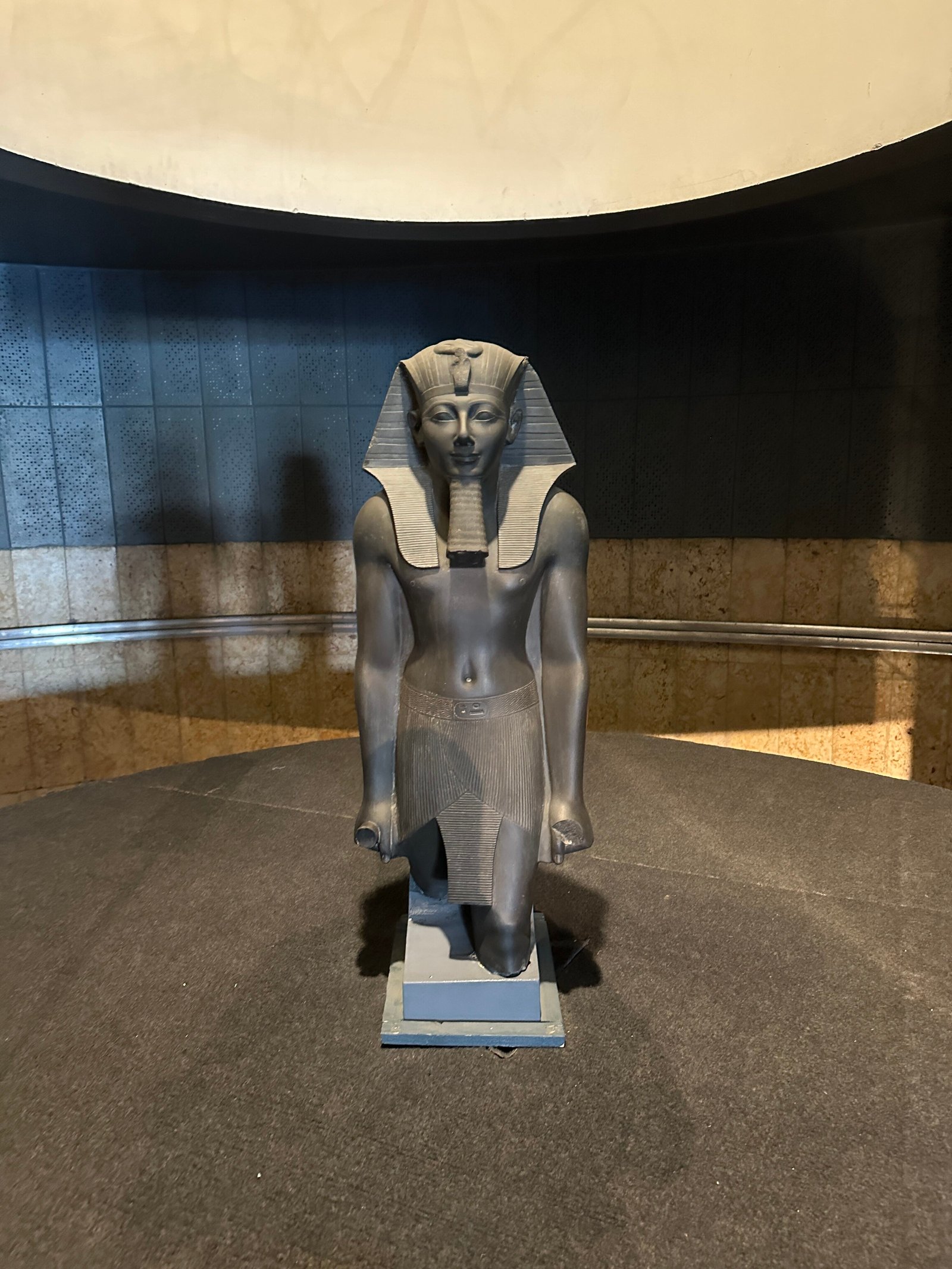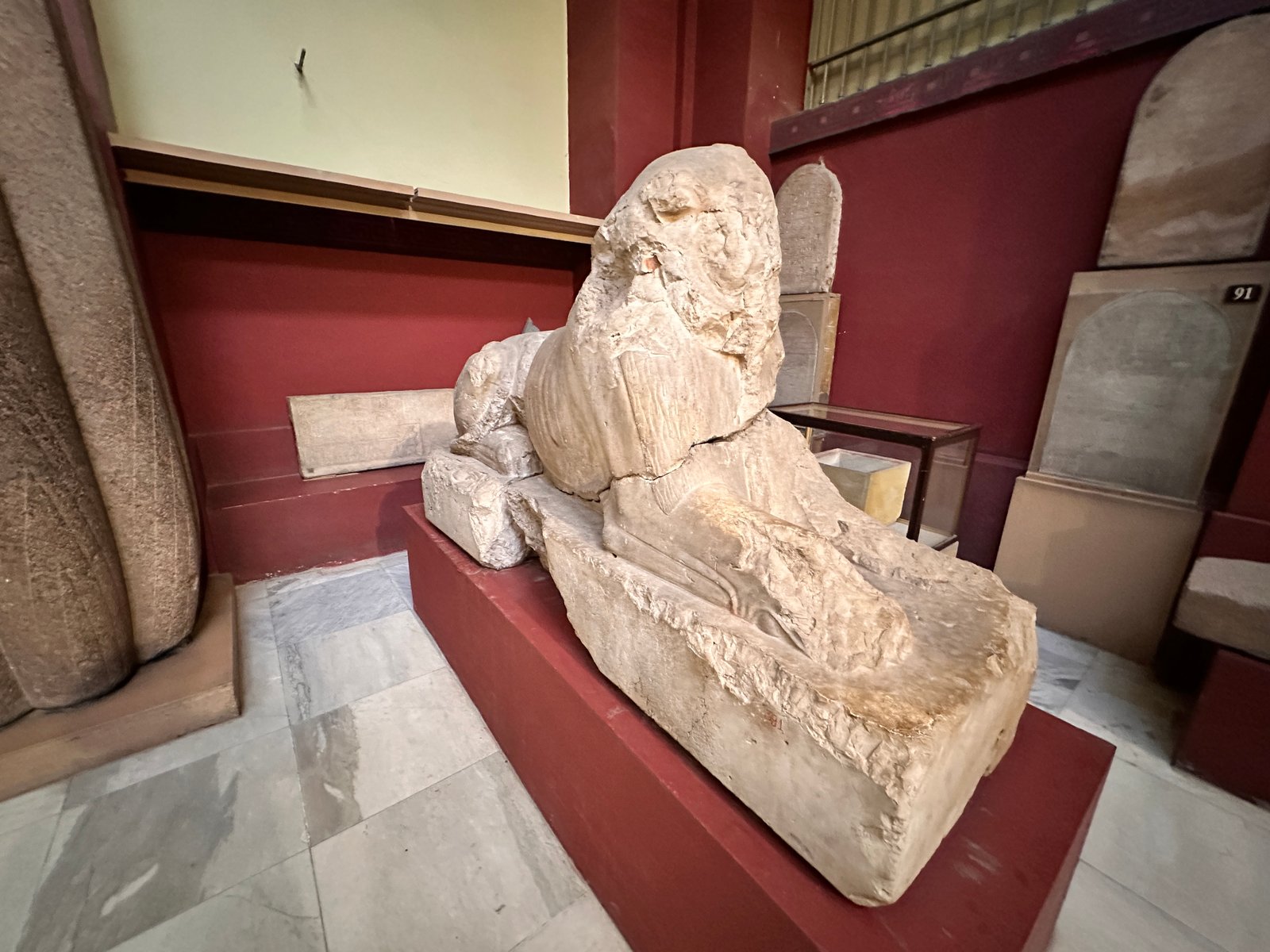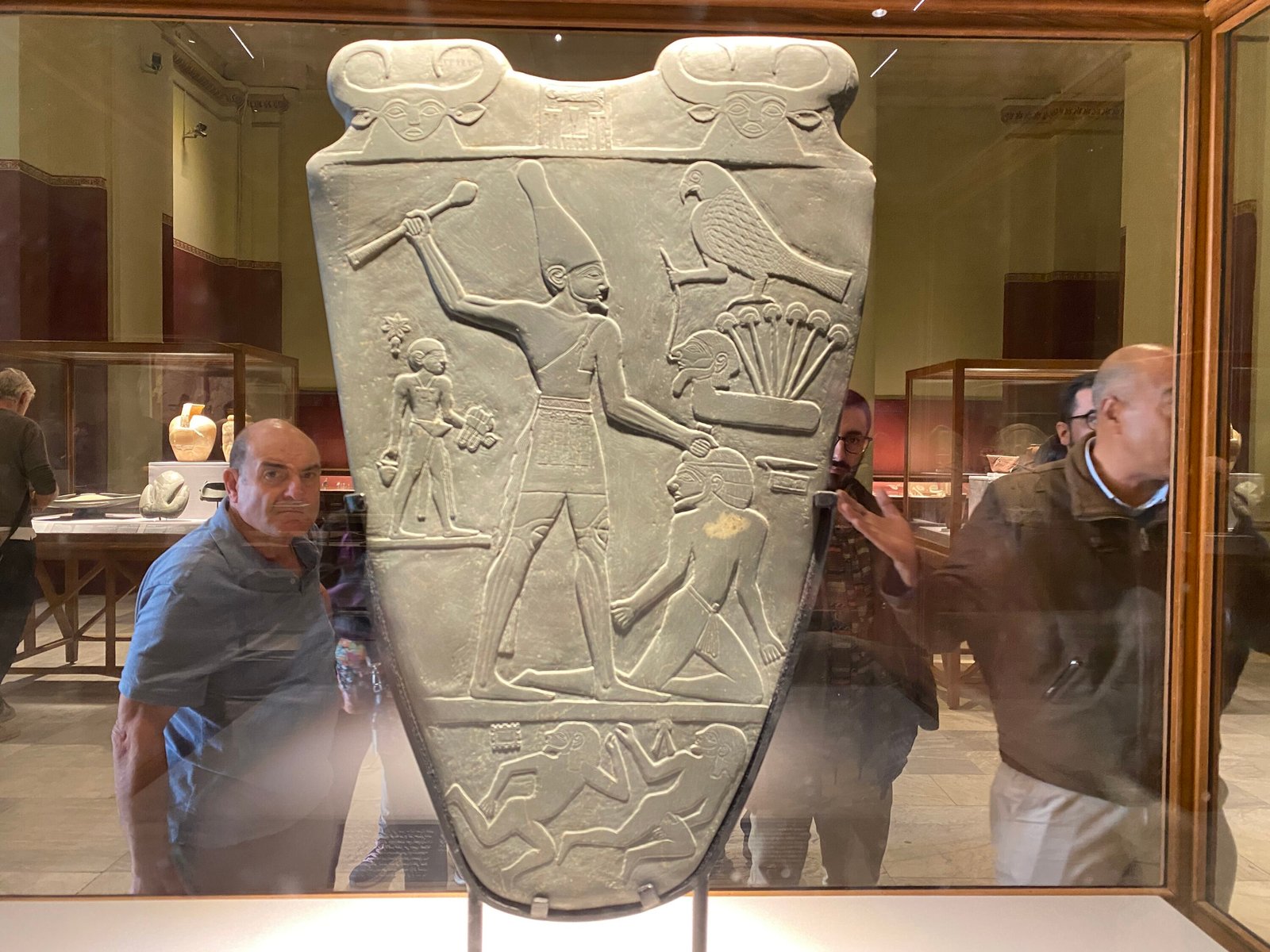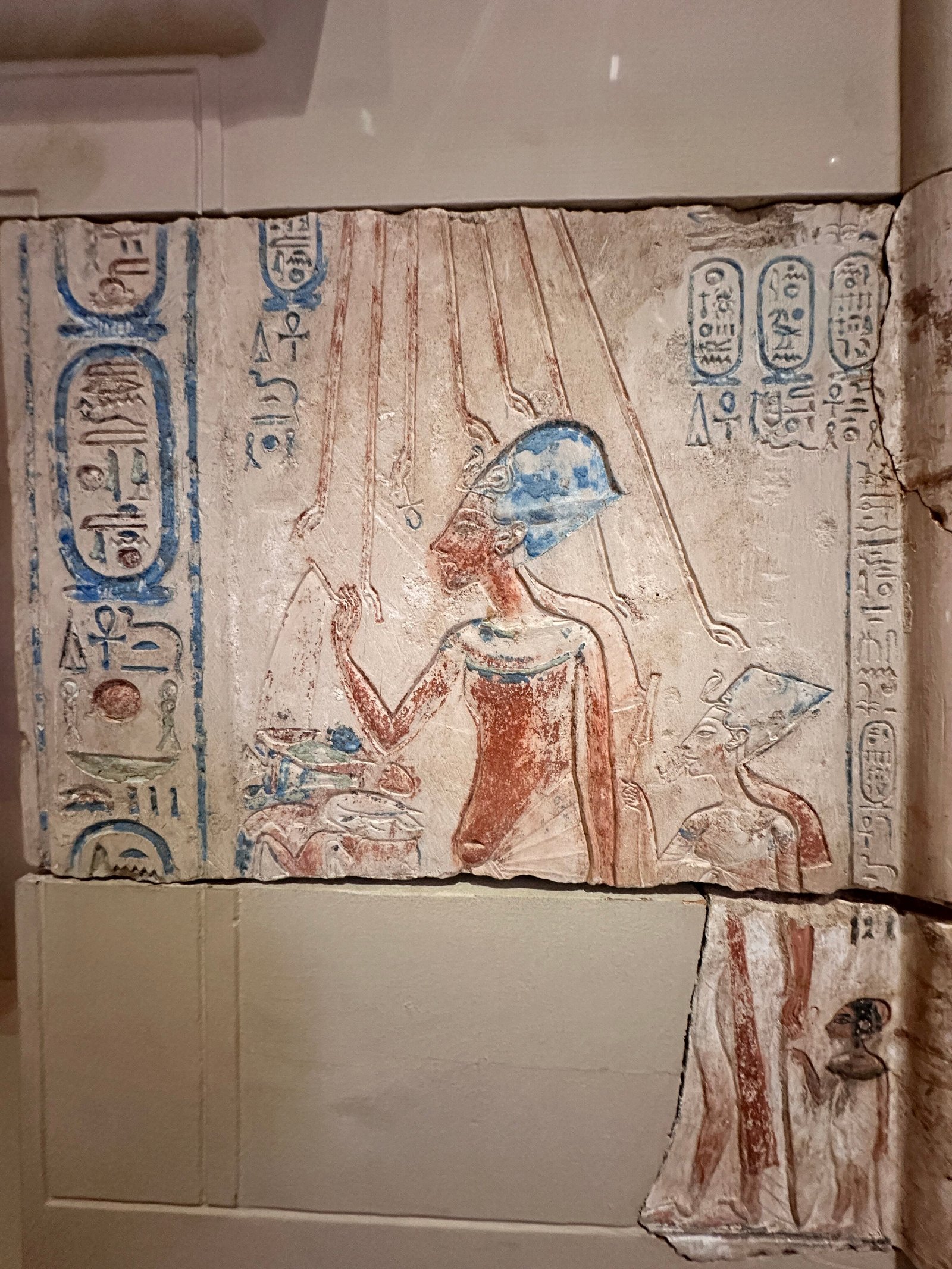
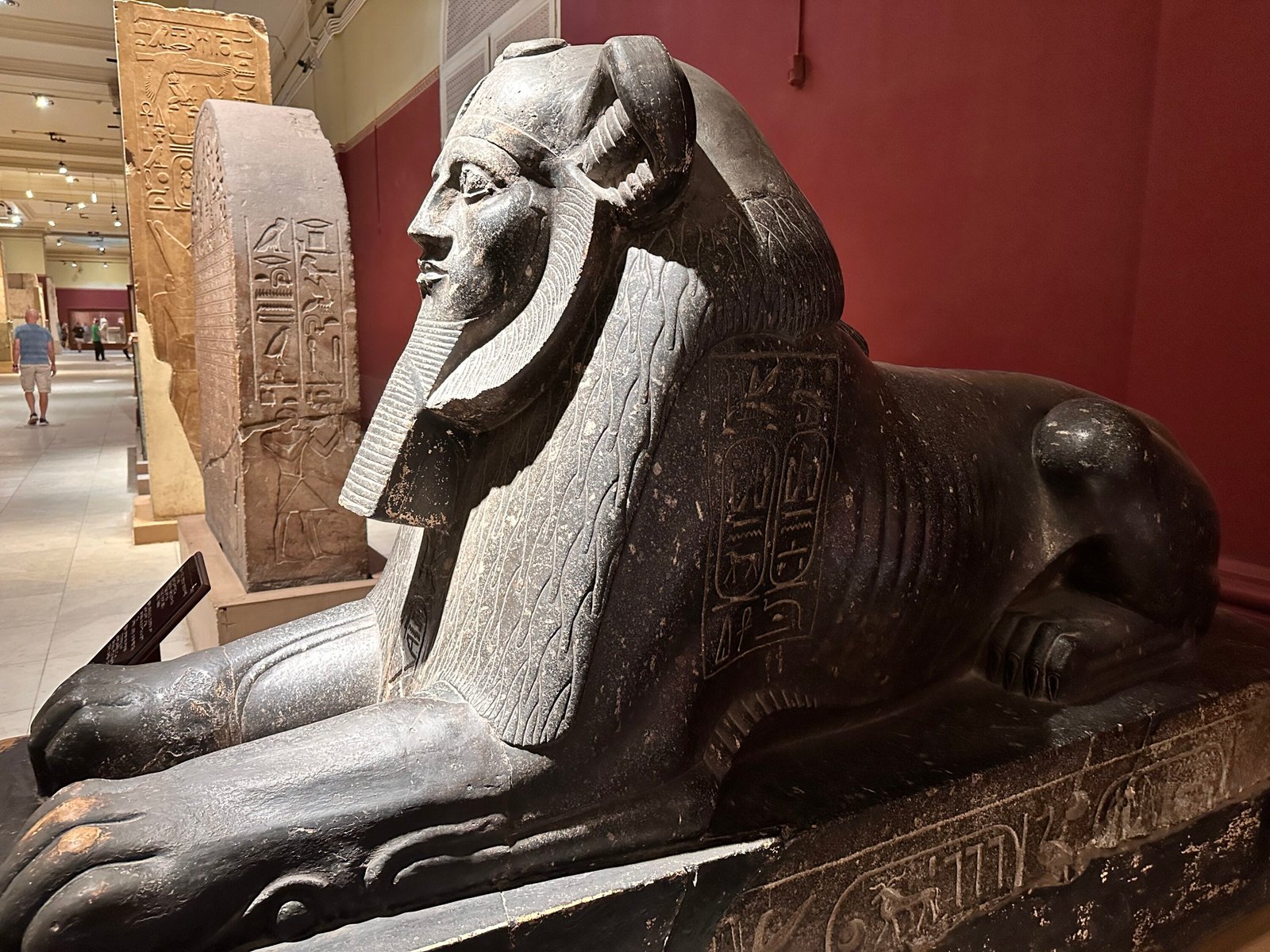
Sphinx of Amenemhat III from Tanis — JE 15210 / CG 394
The grey-granite sphinx cataloged in the Egyptian Museum in Cairo as JE 15210 / CG 394 is one of the most distinctive royal sculptures associated with Egypt’s eastern Nile Delta. Although later inscriptions once contributed to the misleading label “Hyksos sphinx,” the portrait is now identified with 12th-Dynasty Pharaoh Amenemhat III. Its long history of reuse makes it valuable not only as Middle Kingdom sculpture but also as evidence for the repeated appropriation of earlier royal monuments.
Key Facts
- Object: Sphinx of Pharaoh Amenemhat III.
- Inventory numbers: JE 15210 / CG 394.
- Original ruler: Amenemhat III.
- Period: 12th Dynasty, Middle Kingdom.
- Material: Grey granite.
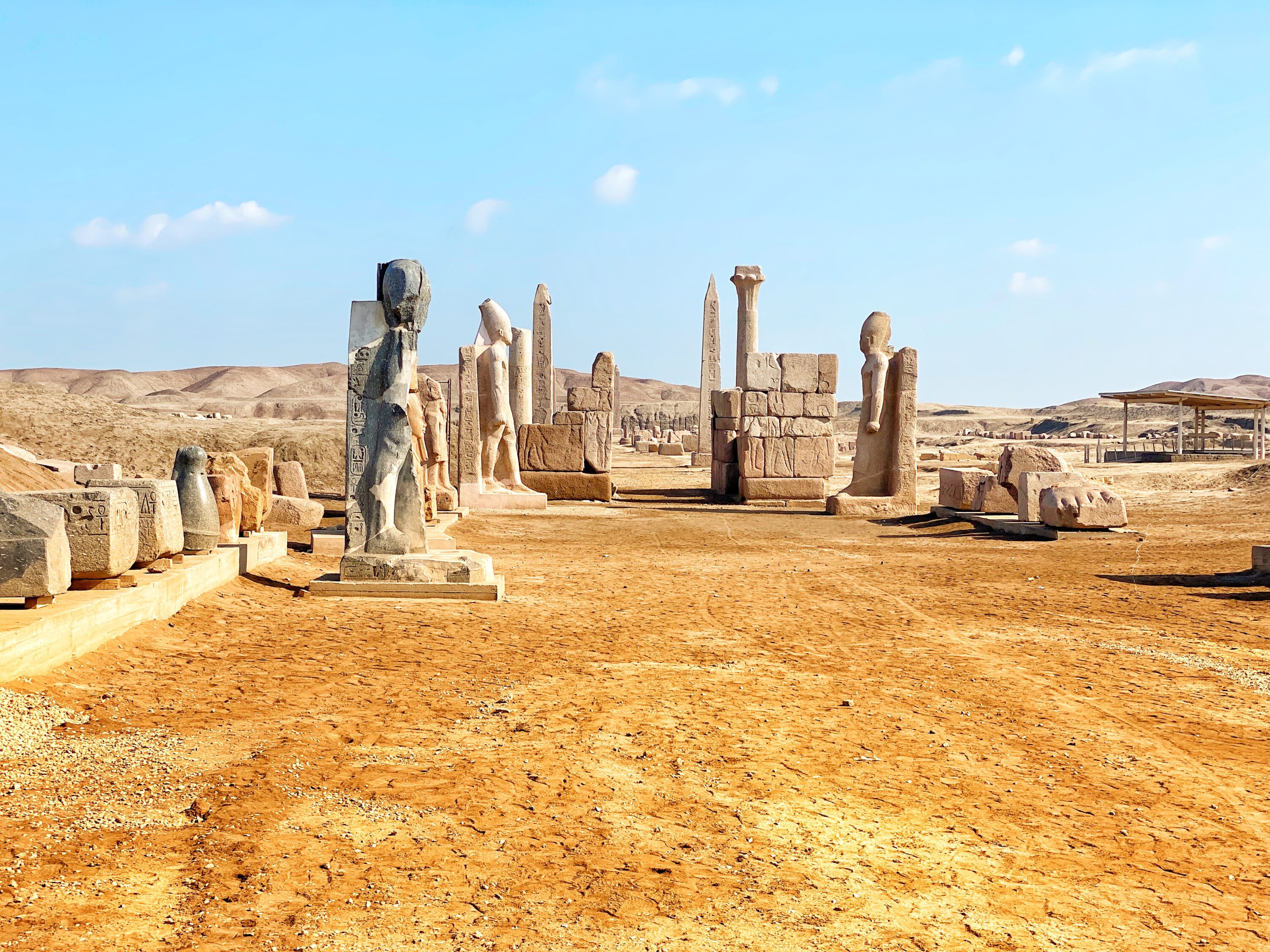
- Findspot: Tanis (San el-Hagar), in the eastern Nile Delta.
- Archaeological context: Great Temple of Amun / northern enclosure at Tanis in published catalog documentation.
- Current location: Egyptian Museum, Cairo.
- Later reuse: The monument received inscriptions from later rulers, including Hyksos king Apophis, Ramesses II, Merenptah, and Psusennes I in published catalog studies.
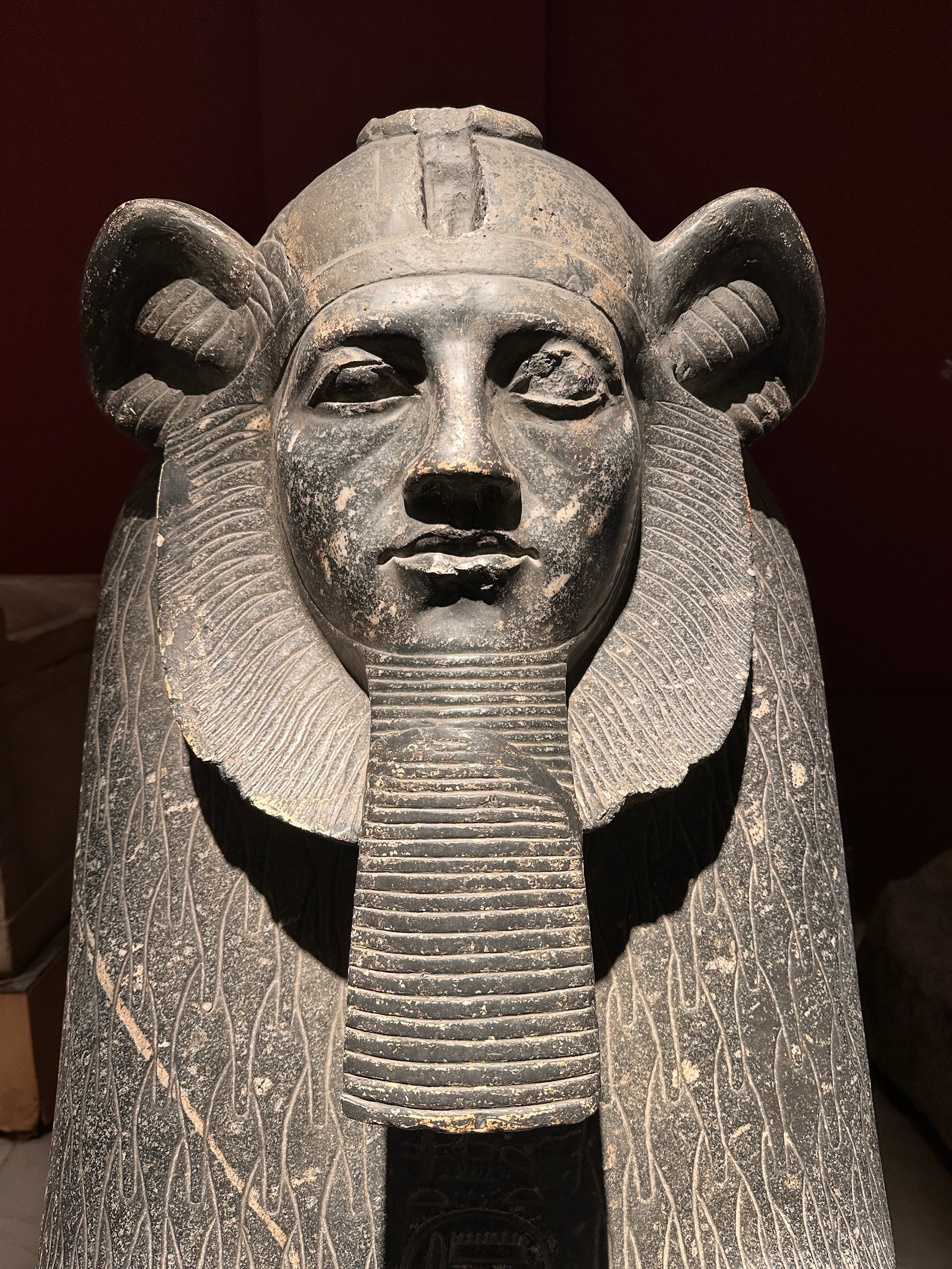
A Middle Kingdom Royal Face in a Lion’s Mane
The sculpture combines the king’s human face with the recumbent body of a lion, but its treatment differs markedly from the more familiar royal sphinx wearing a nemes headdress. Here Amenemhat III’s face is framed by a massive stylized lion mane, with leonine ears and a royal ceremonial beard. The result is one of the most recognizable portrait types of the later Middle Kingdom.
The British Museum, when discussing a later sphinx that deliberately looks back to Middle Kingdom forms, specifically points to the well-known sphinxes of Amenemhat III from Tanis, including Cairo CG 393 and CG 394, as important comparanda.
Why It Was Once Called a “Hyksos Sphinx”
When these unusual Tanite sphinxes were first studied, their powerful facial treatment and the presence of later royal names encouraged attempts to identify them with Hyksos rulers. That interpretation did not survive closer stylistic and historical study. The underlying royal portrait belongs to Amenemhat III of the 12th Dynasty.
The confusion is historically understandable because the monument really was reused. A published catalog study of the sphinx records an inscription added under the Hyksos ruler Apophis, followed by later inscriptions of Ramesses II, Merenptah, and Psusennes I. The UCLA Encyclopedia of Egyptology likewise illustrates CG 394 as a sphinx of Amenemhat III re-inscribed by Ramesses II on the base, Merenptah on the shoulder, and Psusennes I on the chest between the forelegs.
The Face of Amenemhat III
A frontal detail shows the weathered but still forceful Middle Kingdom portrait. The king’s face emerges directly from the heavy lion mane rather than a conventional royal headcloth. Damage to the nose and beard is visible, as are later restorations and the monument’s long history of reuse.
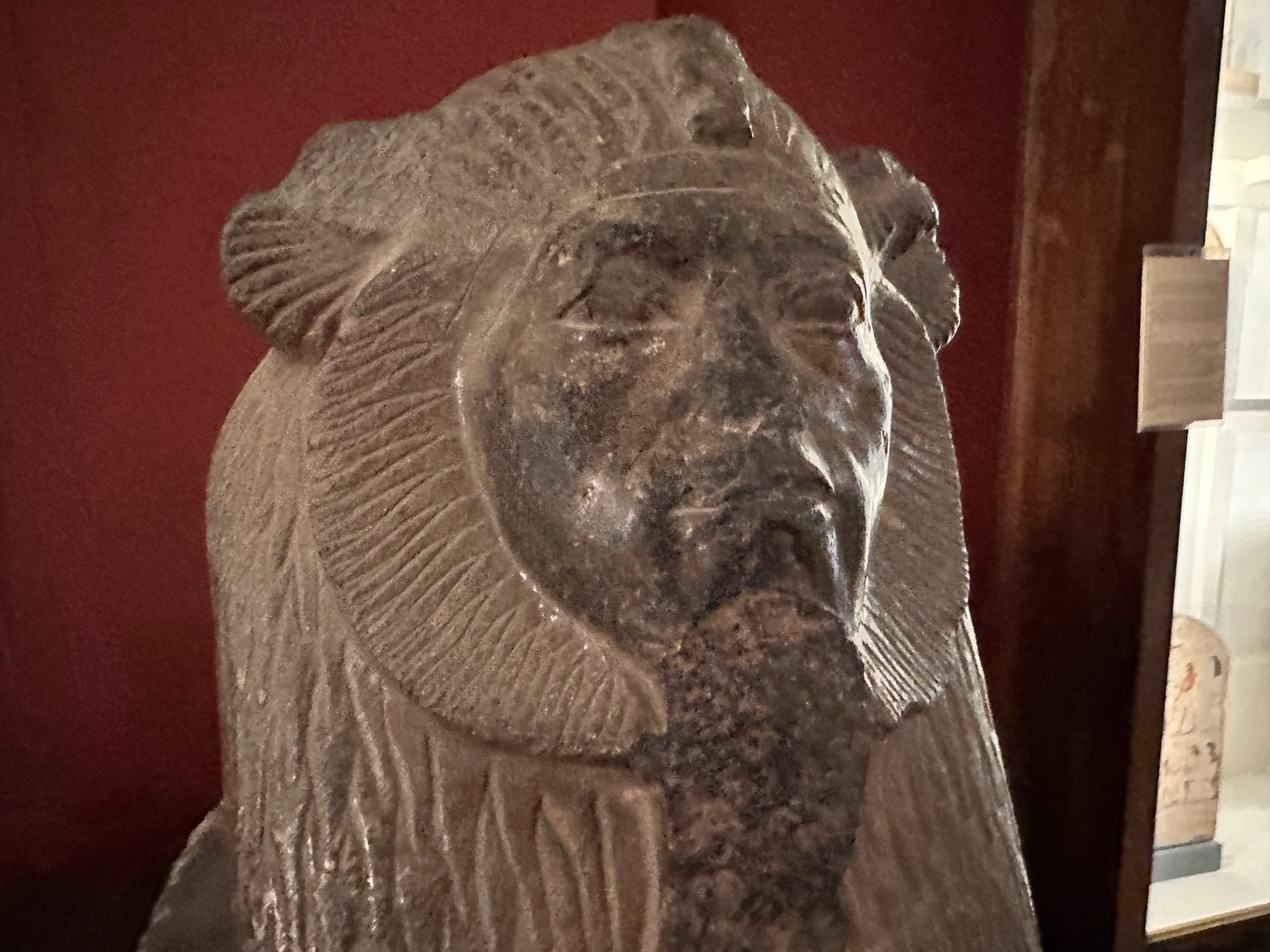
A side view emphasizes the sculptural transition between the human royal portrait and the leonine mane, as well as the weathering accumulated across the monument’s long life.
A Monument with Several Political Lives
The later inscriptions are not merely damage or graffiti. They show how royal monuments could be appropriated by new regimes seeking to place their names and authority onto prestigious older sculpture. In the case of CG 394, the sequence crosses several major political transitions: Middle Kingdom kingship, Hyksos rule, the Ramesside New Kingdom, and the 21st-Dynasty capital at Tanis.
That sequence makes the sphinx especially relevant to the archaeology of the eastern Delta. The object itself is older than the Hyksos, but its later inscriptions show that rulers across very different periods continued to value and reuse Middle Kingdom royal imagery.
Tanis, Avaris, and the Hyksos Context
Because the sphinx carries a later Hyksos inscription, it belongs in discussions of how the 15th-Dynasty rulers interacted with earlier Egyptian monuments. But it should not be treated as a portrait created by the Hyksos. That distinction matters for the site’s broader research on Avaris and Hyksos Egypt.
Likewise, its later Ramesside and Tanite reuse connects naturally with Tanis and the Bible. The monument is a particularly clear example of why archaeologists must distinguish the date of a sculpture from the dates of the names later carved onto it.
Research Sources and Further Reading
- Brand, Peter. “Usurpation of Monuments.” UCLA Encyclopedia of Egyptology 1, no. 1 (2010). Open-access article. Includes CG 394 among examples of reused royal monuments.
- British Museum. “Statue, EA1770.” Collection record. Discusses the Middle Kingdom sculptural tradition and compares the object with Amenemhat III’s Tanis sphinxes, CG 393–394.
- University of Warsaw Repository. “Sphinx of Amenemhat III, Usurped by Ramesses II, Merenptah and Psusennes I.” Catalogue no. 13. Catalog PDF. Catalog documentation for CG 394 / JE 15210 and its later royal inscriptions.
Image licensing: Original Egypt Christian Tours photography is available under the licensing terms stated in the Egypt Photo Gallery. Preferred attribution: Photo by Nate Loper / EgyptChristianTours.com.