The Merneptah Stele and the Earliest Egyptian Reference to Israel
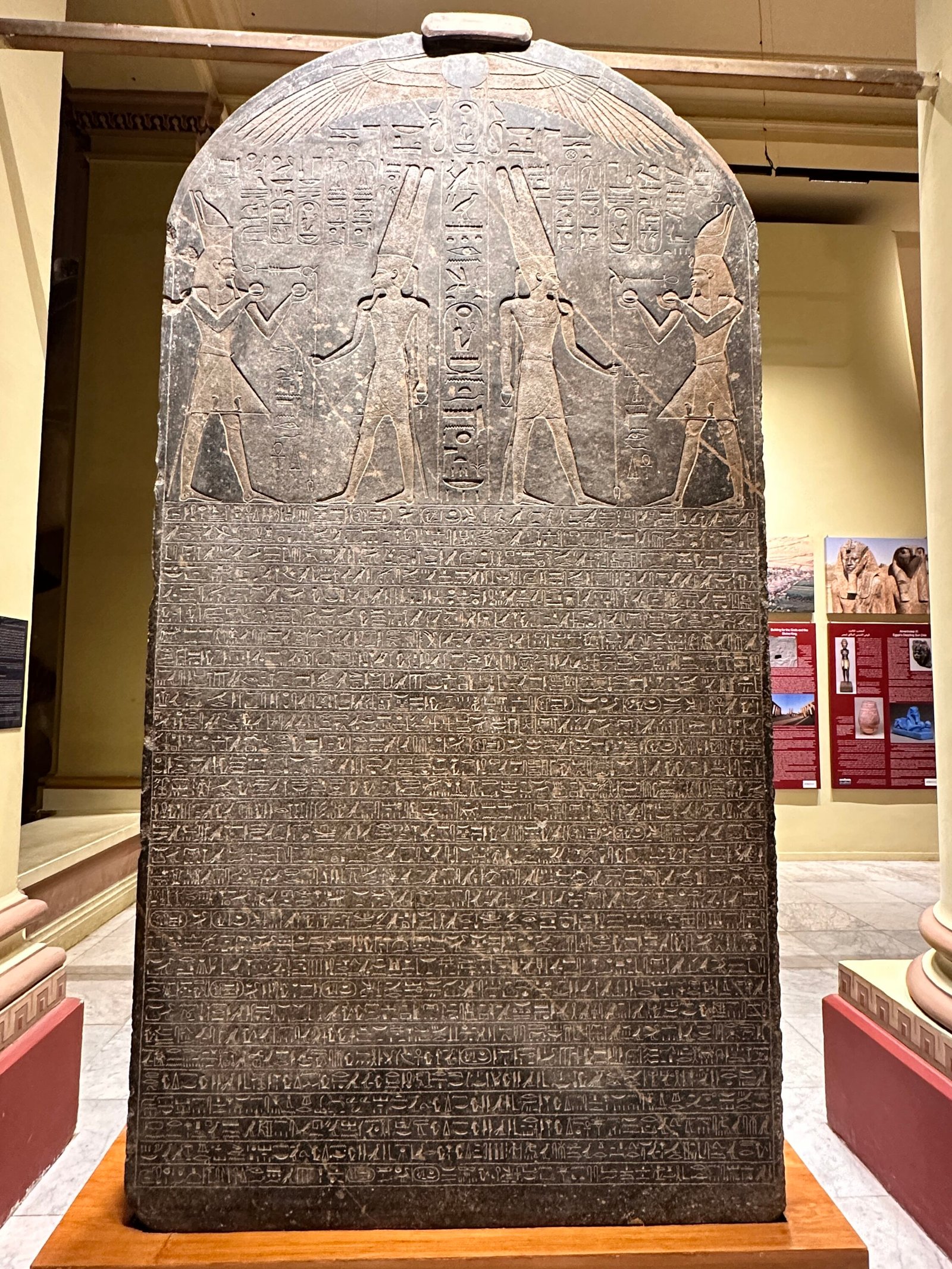
Among the monuments preserved from New Kingdom Egypt, few are as important for the archaeology of the Bible as the victory stele of Pharaoh Merneptah. Better known as the Merneptah Stele or Israel Stele, the monument is cataloged in the Egyptian Museum in Cairo as JE 31408. Its final lines contain the earliest widely accepted Egyptian reference to a people called Israel.
Key Facts
- Object: Victory Stele of Pharaoh Merneptah, often called the Merneptah Stele or Israel Stele.
- Museum number: JE 31408.
- Current location: Egyptian Museum, Cairo.
- Period: 19th Dynasty; the inscription belongs to Merneptah’s fifth regnal year.
- Earlier monument: Merneptah reused a granite stele originally erected for Amenhotep III.
- Findspot: Merneptah’s mortuary temple in western Thebes, discovered by Flinders Petrie in 1896.
- Biblical significance: Line 27 contains a name widely read as Israel and treats it as a people rather than a city-state.
A Reused Royal Monument
The stele did not begin with Merneptah. It was originally erected for Pharaoh Amenhotep III and later reused by Merneptah, son and successor of Ramesses II. On the reused face, Merneptah commemorated victories from his reign in a long hieroglyphic hymn. The upper scene shows the king before major Theban deities, while the inscription below celebrates military success and royal order.
The Global Egyptian Museum record for JE 31408 identifies the monument, its reuse from Amenhotep III, and the appearance of Israel in line 27. The UCL Digital Egypt record likewise identifies the monument as Merneptah’s “Israel stela” and notes the unique Egyptian hieroglyphic reference.
The Name Israel in Line 27
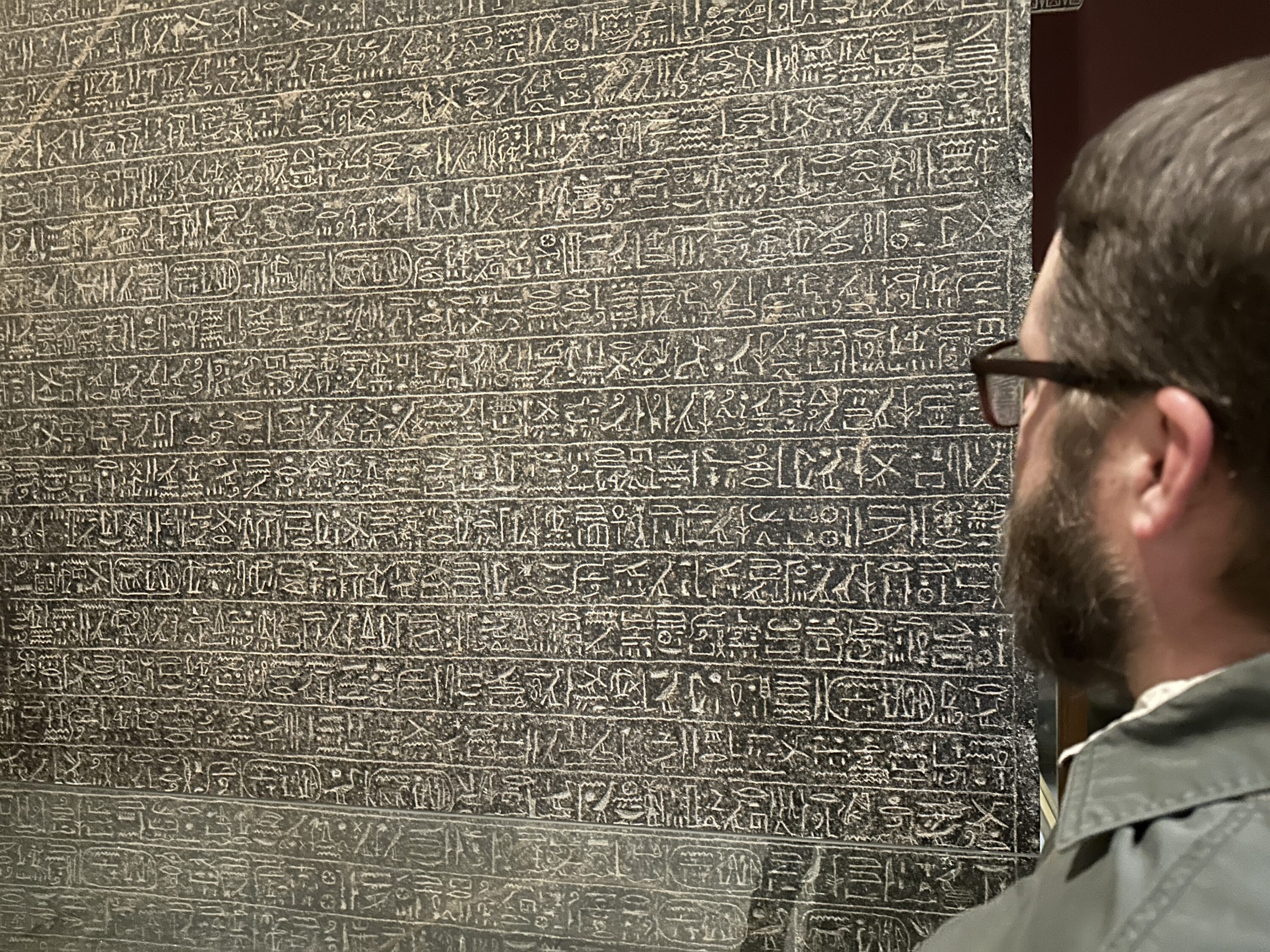
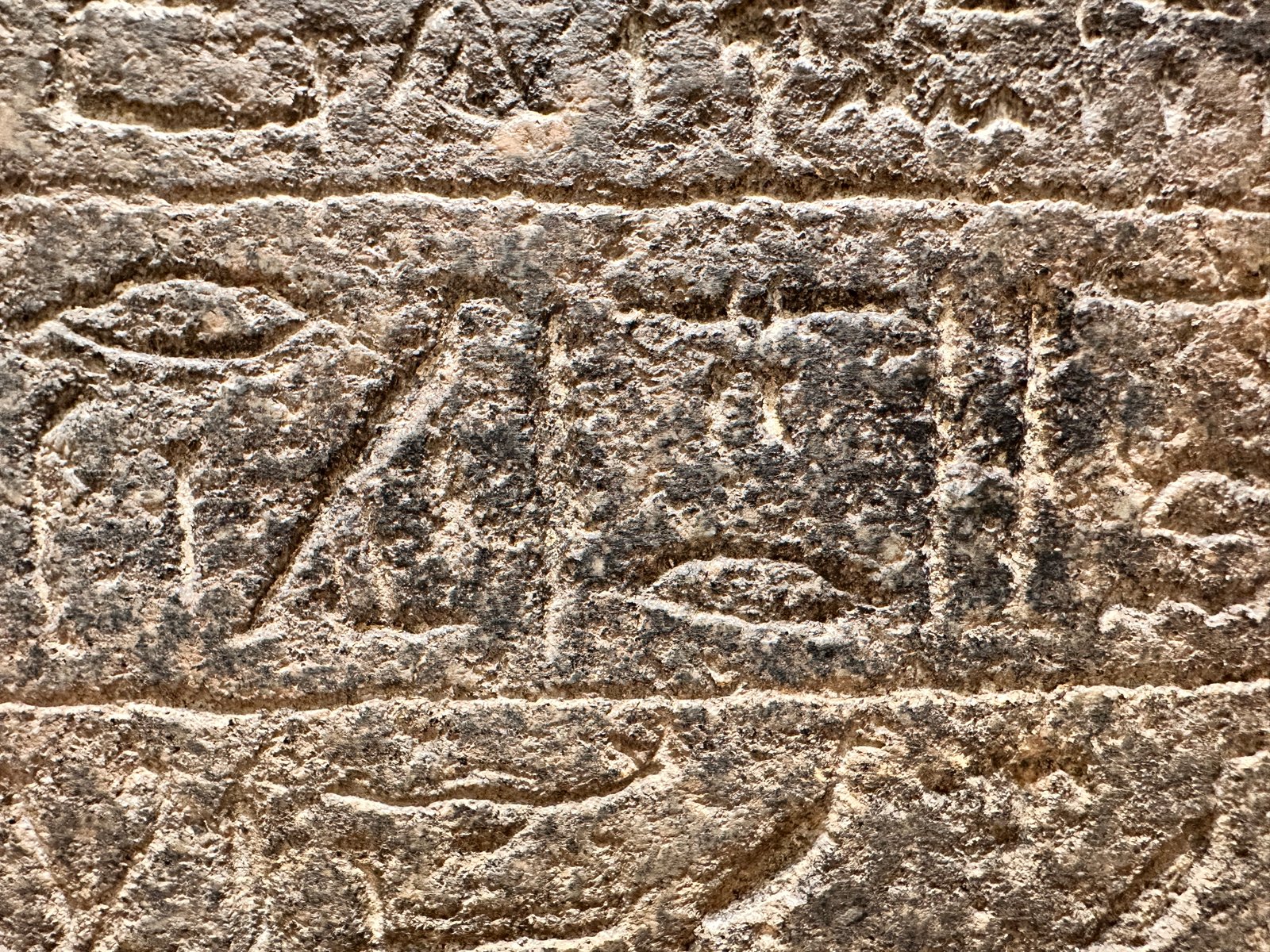
The best-known portion of the monument is near the end of the inscription, where Merneptah lists peoples and places associated with a campaign in Canaan. One group of hieroglyphs in line 27 is widely read as Israel. The spelling is accompanied by determinatives that distinguish the named group from the city-states listed nearby, which is why the reference is commonly understood as describing a people rather than a city or territorial state.
This distinction is historically important. The inscription indicates that a population recognized by the Egyptian scribes as Israel was present in the southern Levant by the late 13th century BC. That makes JE 31408 one of the key external textual witnesses for discussions of early Israel.
A Close View of the Israel Reference
Egypt Christian Tours also preserves a close photograph of the relevant portion of line 27. The image isolates the hieroglyphic group commonly transliterated as ysrỉꜣr and read as Israel. Because the photograph records the inscription itself rather than only a modern transcription, it is particularly useful for teaching, publication, and visual comparison.
What the Stele Establishes
The monument provides unusually firm evidence for several points. Merneptah commissioned the victory inscription in the 19th Dynasty; the stele was discovered at his mortuary temple in western Thebes; and the Canaan section names a group widely identified as Israel. The inscription therefore supplies an independent Egyptian textual reference to Israel outside the biblical text.
What it does not do is identify the pharaoh of the Exodus, date the Exodus by itself, or explain how Israel came to be in Canaan. Those are larger historical questions that require additional textual, archaeological, and chronological arguments. The presence of the name Israel is direct evidence; using that evidence to reconstruct an Exodus chronology is interpretation.
Why This Matters for Biblical Archaeology
For biblical archaeology, the Merneptah Stele is valuable precisely because its importance does not depend on first accepting a particular reconstruction of the Exodus. Whatever model one adopts for earlier events, the inscription demonstrates that an Egyptian royal text near the end of the 13th century BC recognized a people called Israel in Canaan. It therefore provides an external chronological anchor for discussions of Israel’s emergence in the land.
Research Sources and Further Reading
- Global Egyptian Museum. “Victory Stele of Merenptah, JE 31408.” Object record.
- University College London. “Merenptah: Israel Stela.” Digital Egypt for Universities. Object and inscription overview.
Image licensing: Original Egypt Christian Tours photography is available under the licensing terms stated in the Egypt Photo Gallery. Preferred attribution: Photo by Nate Loper / EgyptChristianTours.com.