
A Royal City of Egypt’s Delta
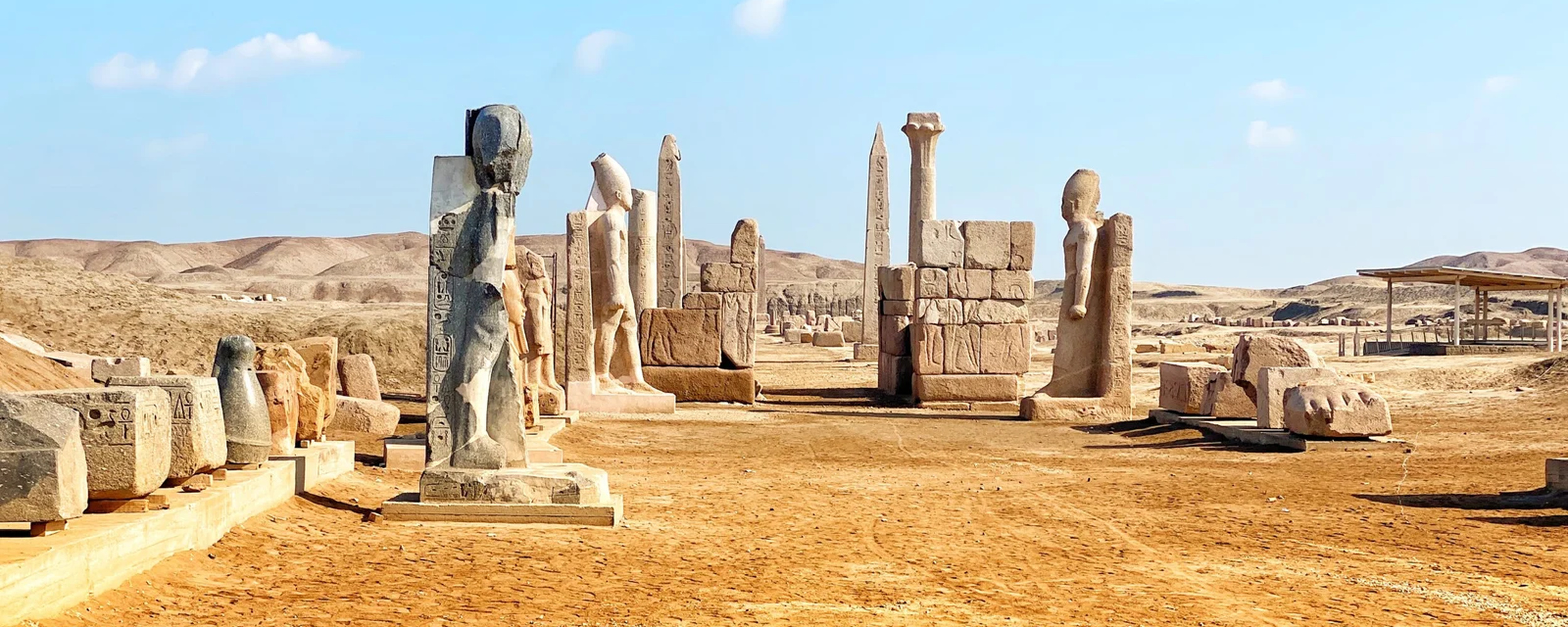
Tanis is one of the most dramatic archaeological sites in Egypt’s eastern Nile Delta. Broken obelisks, colossal royal statues, temple foundations, carved blocks, and royal tombs lie scattered across a vast field of ruins. For travelers interested in biblical Egypt, Tanis is especially valuable because it preserves material from the same northeastern region that forms the setting for Israel’s life in Egypt and the opening stages of the Exodus.
Tanis should not simply be identified with the biblical city of Rameses. The history is more interesting than that. Much of the monumental stone now visible at Tanis was moved there from the earlier Ramesside capital of Pi-Ramesses after branches of the Nile shifted and the older royal center declined.
Key Facts About Tanis
- Location: Eastern Nile Delta.
- Relationship to Pi-Ramesses: Tanis is not the original Ramesside capital. Large quantities of stone from Pi-Ramesses were later moved to Tanis and reused.
- Why the distinction matters: Reused Ramesside statues, obelisks, blocks, and inscriptions once caused early explorers to identify Tanis incorrectly with Pi-Ramesses.
- What survives: Temple foundations, colossal royal sculpture, fallen obelisks, reused architectural blocks, and a royal necropolis of the Third Intermediate Period.
- Biblical relevance: Tanis helps reconstruct the royal culture and eastern-Delta landscape surrounding discussions of Goshen and the Exodus, rather than serving as a direct identification of the biblical city of Rameses.
From Pi-Ramesses to Tanis
Pi-Ramesses was a major royal residence in the eastern Delta during the Ramesside period. Its location near modern Qantir placed it close to important routes leading toward Sinai and Canaan. When the Pelusiac branch of the Nile changed course, the city’s strategic advantages diminished.
Later rulers reused large quantities of stone from the abandoned capital. Statues, obelisks, architectural blocks, and inscriptions were transported north to Tanis, where they became part of new temples and royal monuments. That reuse once led early explorers to think Tanis itself was Pi-Ramesses. Modern archaeology has clarified the distinction.
Why Tanis Matters for Biblical History
The value of Tanis is not that every monument there belongs to a biblical event. Rather, the site preserves an extraordinary collection of royal material from northern Egypt. Visitors can see the scale of pharaonic power, the prominence of royal building programs, and the religious world in which Egyptian kings presented themselves as divinely sanctioned rulers.
That context matters when reading the Exodus narrative. The biblical confrontation between Moses and Pharaoh is not merely a conflict between two individuals. It takes place within a culture in which kingship, temple religion, monumental architecture, military power, and divine claims were deeply intertwined.
Tanis and the Eastern Delta Landscape
Tanis also helps visitors understand the geography of the Delta. The biblical land of Goshen is generally associated with this broader northeastern region. Nearby sites such as Tell el-Dab’a, ancient Avaris, and Qantir, ancient Pi-Ramesses, provide additional pieces of the historical picture.
Because the Nile Delta has changed over time, ancient waterways and settlement patterns cannot always be understood by looking at a modern road map. Archaeology, geological reconstruction, and ancient texts must be used together.
What You See at Tanis
Among the most memorable remains are enormous statues and fragments bearing the names of famous pharaohs, fallen obelisks, temple precincts, reused blocks from earlier monuments, and the royal necropolis of the Third Intermediate Period. Tanis was also the location of spectacular royal tomb discoveries whose treasures are now displayed in Egyptian museums.
The site is much quieter than Egypt’s major attractions. That makes it possible to slow down, examine inscriptions and reused stonework, and discuss how archaeologists reconstruct a city’s history from material that has been moved, recut, and repurposed over centuries.
Visit Tanis on a Biblical Egypt Tour
Tanis is included in several of our private group itineraries because it gives Christian travelers a rare opportunity to explore the eastern Delta rather than limiting an Egypt trip to Cairo and Upper Egypt. See the Biblical Egypt Highlights, Foundations of Faith, Archaeology & the Exodus, and Grand Egypt Experience itineraries.
Return to the Biblical Egypt Travel Guide to explore more sites connected with the history and geography of Scripture.