

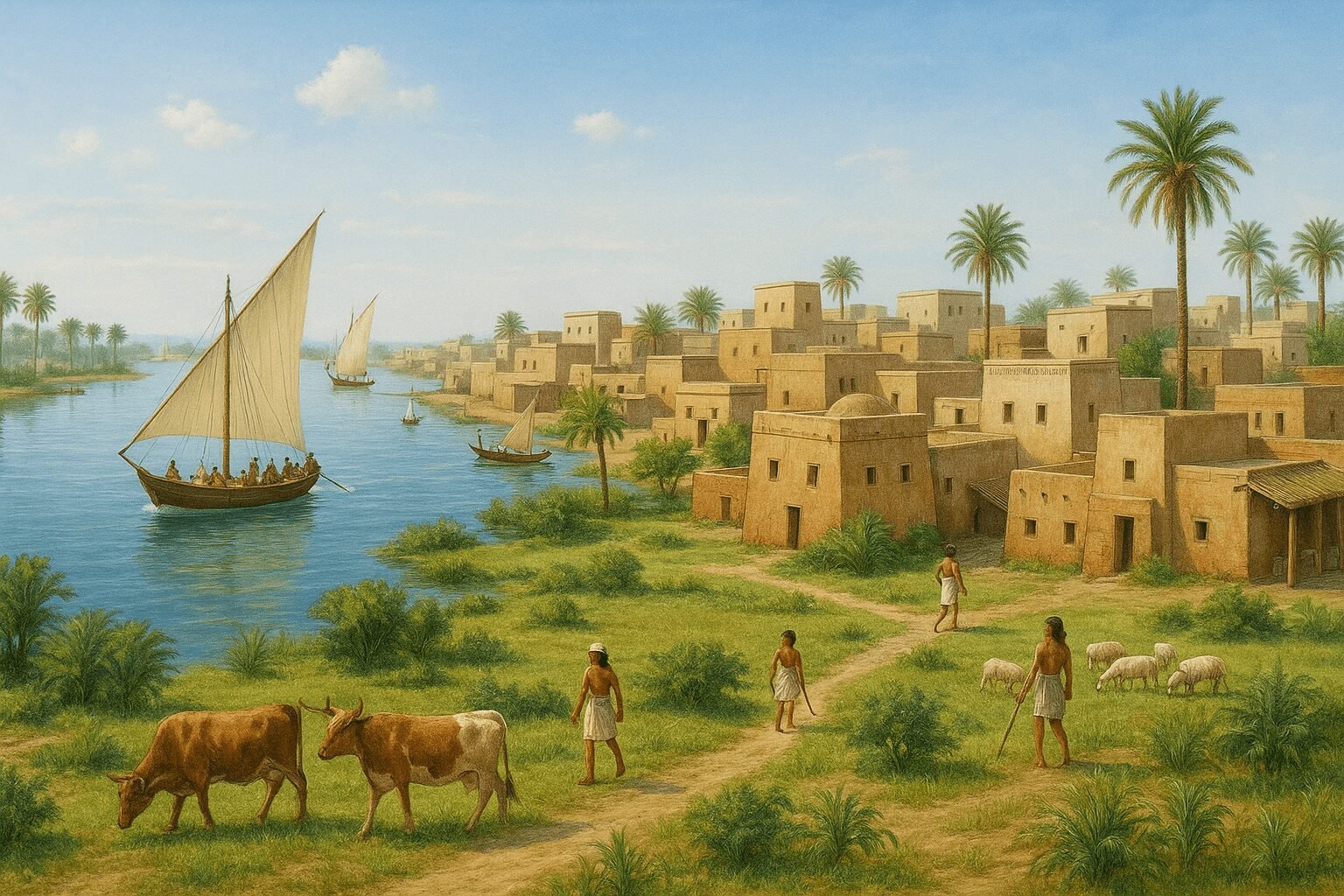
Avaris and the Hebrews in Egypt: Archaeology of the Eastern Delta
Beneath the eastern Nile Delta, Avaris preserves one of the most important archaeological settings for understanding Semitic life in biblical Egypt.
Tucked beneath the layers of Nile Delta soil lies one of the most important archaeological sites for understanding the world of Joseph and Israel in Egypt—Avaris, at modern Tell el-Dab’a in the eastern Delta. Excavations reveal a major settlement with strong Levantine connections, making the site highly relevant to questions surrounding Goshen, migration from Canaan, the growth of an Asiatic population in Egypt, and the later Hyksos capital. That relevance does not by itself identify individual excavated people or buildings as Jacob, Joseph, or specific Israelites.
Excavations at Tell el-Dab‘a have transformed our understanding of Egypt’s eastern Delta. The site documents a substantial population with Levantine connections, changing settlement patterns, and the later development of the Hyksos capital. In our reconstruction, those discoveries form an important archaeological pattern that fits the biblical account of Israel’s growth in the eastern Delta and the development of the Hebrew population that would become the principal formative stream of the Hyksos. Thanks in part to the tireless work of archaeologists like Manfred Bietak, filmmakers like Tim Mahoney, and interpreters of biblical history like Nate Loper, the true story of Avaris is finally being unearthed—both literally and figuratively.
A City with a Hebrew Heart
Avaris, located at the modern site of Tell el-Dab‘a in Egypt’s eastern Nile Delta, became the capital of the Hyksos rulers during the Second Intermediate Period. Before the Hyksos dynasty rose to power, the site was already home to a substantial population with strong Levantine connections. Their presence fits the movement of people from Canaan into Egypt described in Genesis. In our reconstruction, the descendants of Jacob became the dominant formative Hebrew population within this broader Semitic community, while other Semitic peoples were already present and others may have joined them over time.
Archaeologist Manfred Bietak, who led decades of excavations at Tell el-Dab‘a, discovered extensive remains of a Semitic people who settled peacefully in the region. Their material culture—pottery styles, burial practices, and architecture—clearly differs from native Egyptian traditions, instead pointing to a Canaanite origin. Bietak himself remarked that these early settlers were not invaders but immigrants who rose to prominence in Egypt. Excavators also uncovered elite architecture and a substantial tomb associated with a high-status individual of apparent Levantine background. Fragments of a larger-than-life-size statue associated with the complex depict an individual with features and coloring interpreted as non-Egyptian. The monument is sometimes connected with Joseph in popular biblical-archaeology discussions, but no surviving inscription identifies the individual, and the statue should not be presented as Joseph without direct evidence.
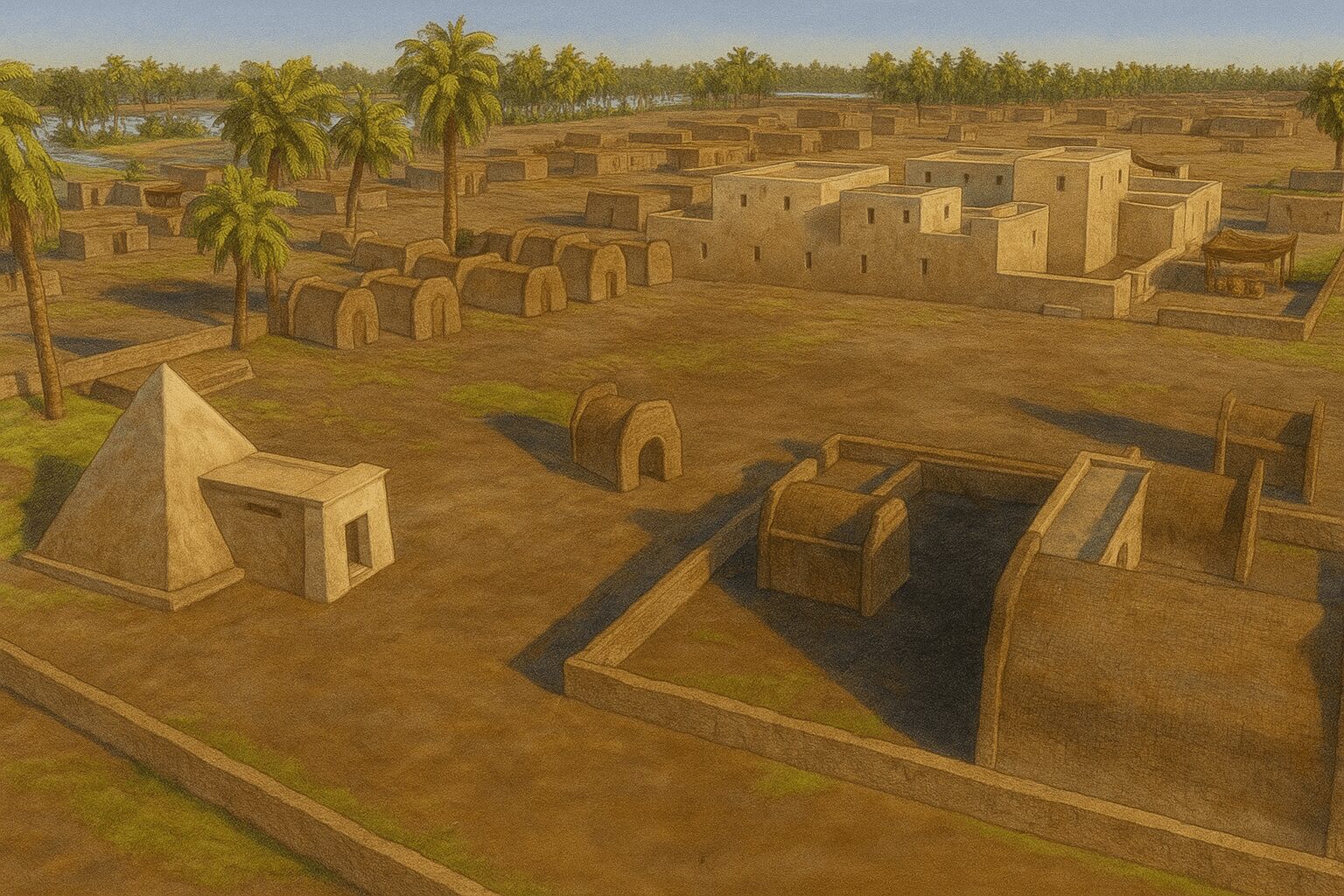
Joseph in Avaris?
The Patterns of Evidence documentary series by Tim Mahoney presents the case that Avaris may preserve the archaeological setting associated with Joseph and his family. That proposal is worth examining, but it remains an interpretation rather than an excavation conclusion. According to Genesis 47, Pharaoh gave the land of Goshen to Jacob and his descendants. Avaris fits the geographical description of Goshen and provides the archaeological context to support it.
Our preferred biblical chronology places Joseph in the late Middle Kingdom, particularly the late 12th- to early 13th-Dynasty environment. Within that reconstruction, Amenemhat III is an especially significant ruler and a leading candidate for the pharaoh under whom Joseph rose to prominence. The archaeological growth of a Levantine-connected population in the eastern Delta belongs in the same broad historical discussion, but no inscription from Avaris currently identifies Joseph or Jacob by name.
Biblical Egyptologist, Nate Loper, has spoken extensively on the evidence supporting the identification of Avaris as the city of settlement for Jacob’s family. In his presentations and tours, Nate draws attention to how Avaris shows the “brotherhood of Egypt and Israel” during this peaceful time of coexistence—a stark contrast to the later oppression described in Exodus under a new Pharaoh who “did not know Joseph.”
From Levantine Settlement to Hyksos Rule
The Asiatic population at Avaris grew substantially over time and developed into the political world later associated with Hyksos rule. Archaeology documents changing settlement patterns, material culture, and political control across the Second Intermediate Period. In our reconstruction, these developments preserve the historical trajectory of the Hebrews in Egypt. The Israelite population grew within a wider Semitic community, became increasingly numerous and influential, and formed the principal stream that emerged in Egyptian memory as the Hyksos. That does not mean every person called Asiatic or every Hyksos individual must have been an Israelite, but we do not treat the Hebrew-Hyksos connection as merely incidental.
The political reversal that followed Hyksos rule provides an important historical backdrop for considering Exodus 1 and the rise of a king who ‘did not know Joseph.’ We regard that connection as a strong historical reconstruction rather than a direct archaeological identification of the oppression itself. The Hyksos expulsion under Ahmose I should not be equated with the biblical Exodus, which our chronology places later, around 1446 BC.

Rediscovering the Roots of the Exodus
The evidence from Avaris is especially important when biblical chronology and Egyptian chronology are compared carefully rather than assuming that every proposed synchronism is already settled. When the biblical narrative is compared not with the standard dating of some modern Egyptologists, but rather with a biblical timeline supported by Scripture (like 1 Kings 6:1 and Judges 11:26), a powerful pattern emerges—one that Tim Mahoney highlights in Patterns of Evidence: Exodus.
This biblically driven “early Exodus” view places the arrival of Joseph and Jacob into Egypt during the Middle Kingdom and the Exodus during the reign of Pharaoh Amenhotep II around 1446 BC. In our preferred reconstruction, the early Exodus chronology is evaluated alongside the archaeological sequences at Avaris and other relevant sites such as Jericho and Hazor. Those comparisons involve debated chronological questions and should be presented as arguments to assess, not as universally accepted matches.
Remembering Avaris
Avaris may not be a household name, but it deserves a central place in the study of biblical Egypt. It is one of the strongest archaeological settings for investigating the eastern-Delta world in which Joseph, Jacob, and the later Israelites would have lived. Rather than claiming that archaeology has identified Joseph’s residence or the precise settlement of Jacob’s family, we use Avaris as a major point of contact between the biblical narrative and the documented history of Semitic life in Egypt.
As more is uncovered, and as storytellers and scholars like Bietak, Mahoney, and Loper continue their work, the evidence for the biblical narrative only grows stronger. Avaris is no myth. It’s a city that once teemed with life, faith, and the unfolding of God’s providential plan.
Avaris remains one of the most compelling places in Egypt for considering the intersection of archaeology, the biblical text, and the long history of Semitic life in the eastern Delta.
And beneath the soil of the Delta, its story still speaks.
Research Sources and Further Reading
- Austrian Archaeological Institute. “Manfred Bietak.” Research profile and publications. Bibliography for Bietak’s excavation reports and related research on Tell el-Dabʿa.
- Austrian Archaeological Institute. “Tell el-Dabʿa / Avaris.” Project page. Official excavation overview and site identification.
- Austrian Archaeological Institute. “Tell el-Dabʿa: Archaeological Remains of Temple Rituals.” Project page. Archaeological evidence for Egyptian and Syrian-Palestinian cult architecture and the site’s mixed population.
- Bietak, Manfred. Avaris: The Capital of the Hyksos: Recent Excavations at Tell el-Dabʿa. London: British Museum Press for the Trustees of the British Museum, 1996. Google Books. A foundational synthesis of the Tell el-Dabʿa excavations and the development of Avaris.

Janet Barker
When is your Winter trip 2026??
Nate Loper
Hi Janet! Our next open public tour is November of 2027, we do not have one for this winter.