Rameses Before Ramesses? Avaris, Pi-Ramesses, and the Place-Name of the Exodus
The name Rameses in Exodus does not require a thirteenth-century Exodus. The history of Avaris, Peru-nefer, and Pi-Ramesses shows why a later place-name update fits both the archaeology and the biblical chronology.
When the book of Exodus describes the oppression of the Israelites in Egypt, it tells us that Pharaoh forced them to build the store cities of “Pithom and Raamses” (Exodus 1:11). Later, when Israel finally departed Egypt, the text says that the people journeyed “from Rameses to Succoth” (Exodus 12:37). Those references have caused many readers to assume that the Exodus must belong to the age of Ramesses II, the powerful Nineteenth-Dynasty king whose name dominates monuments across Egypt.
At first glance, the argument sounds simple. Ramesses II built the great Delta capital of Pi-Ramesses. Exodus mentions Rameses. Therefore, the Exodus must have happened during or after the reign of Ramesses II. But that conclusion assumes that the biblical text is preserving the exact place-name that was in use at the time of the event itself.
The Bible gives us good reason not to make that assumption.
Genesis 47:11 says Joseph settled Jacob and his family “in the land of Rameses.” That scene belongs to the beginning of Israel’s sojourn in Egypt, centuries before the historical reign of Ramesses II and before the city of Pi-Ramesses existed under that name. The name Rameses therefore appears in the biblical story before there was a Ramesside capital to bear it.
That observation changes the question. Instead of asking, “How can Joseph or Moses be in Rameses before Ramesses II?” we should ask, “Could the biblical text be using a later and more familiar geographical name for an older location?” Archaeology in the eastern Nile Delta shows that this is not only possible, but fits the history of the region remarkably well.
Avaris in the Eastern Delta
The story begins at modern Tell el-Dabʿa in Egypt’s eastern Nile Delta. Tell el-Dabʿa is the modern Arabic name of the archaeological site. It should not be confused with the ancient name of the settlement itself. The ancient Egyptian city was known as Hut-waret, a name later rendered in Greek as Avaris.
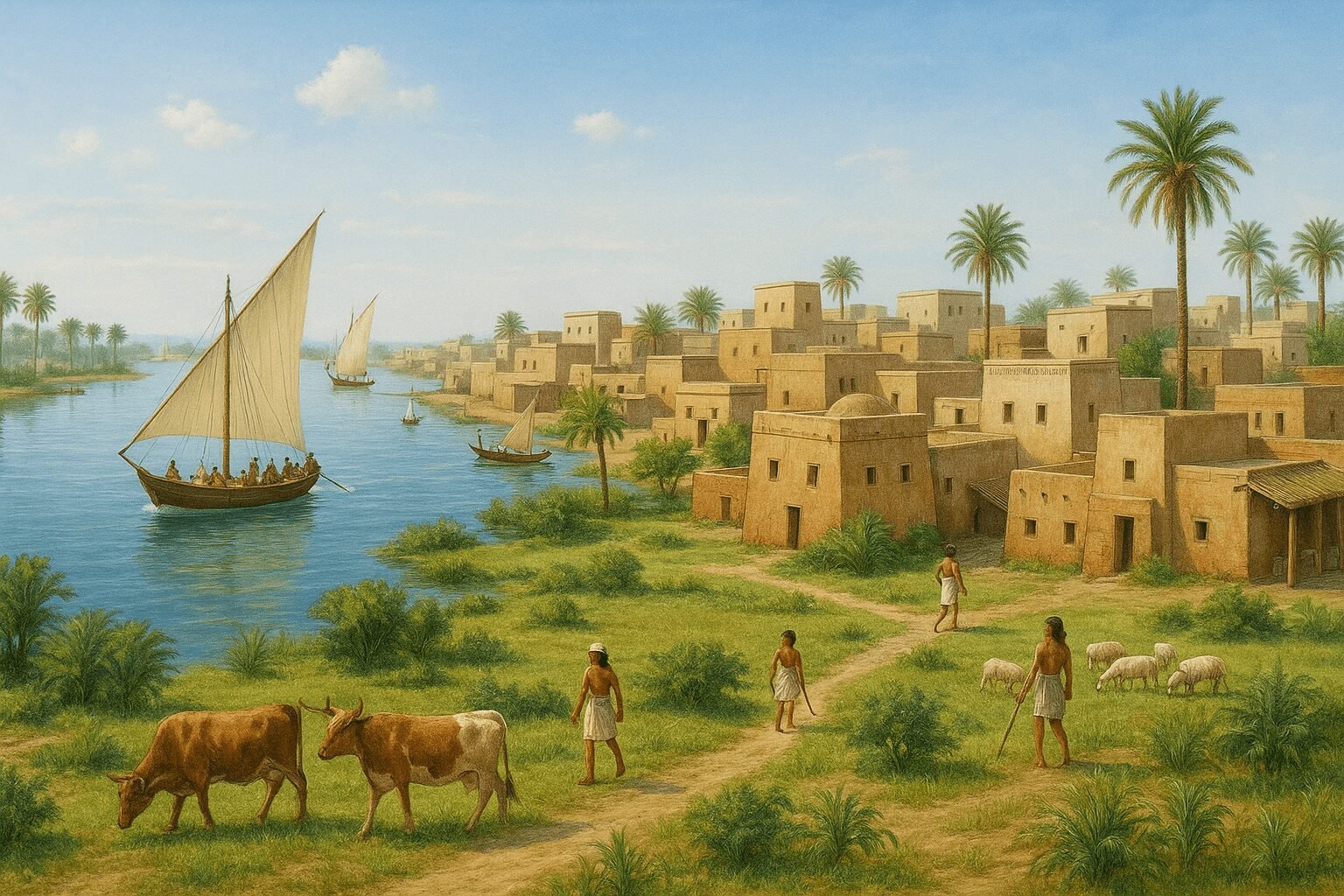
Avaris was ideally placed for trade and communication. It stood near an eastern branch of the Nile where ships could move through the Delta toward the Mediterranean, while overland routes led east toward Sinai and Canaan. This made the region a natural gateway between Egypt and the Levant. For that reason, it became attractive to merchants, soldiers, administrators, and immigrant populations moving into Egypt from the northeast.
Excavations at Tell el-Dabʿa have uncovered a substantial population with strong Levantine connections. Archaeologists have identified Canaanite-style pottery, distinctive burial practices, Near Eastern architectural features, weapons, and other elements of material culture that differ from native Egyptian traditions. These finds do not identify individual biblical figures by name, but they establish beyond question that large numbers of people with origins or cultural ties to Canaan lived in this part of Egypt.
That matters for the biblical story because Genesis places Jacob and his descendants in the eastern Delta, in the region known as Goshen. Avaris therefore sits in exactly the kind of geographical and cultural setting we would expect for a large Semitic population living in Egypt while maintaining connections with the lands to the northeast.
Over time, Avaris grew from an important settlement into the capital of the Hyksos rulers during the Second Intermediate Period. The city became one of the most important political centers in Egypt. Yet the history of Avaris did not end when Hyksos rule ended, and that continuing history is essential for understanding the later name Rameses.
After the Hyksos: Avaris Did Not Disappear
Near the beginning of the Eighteenth Dynasty, Ahmose I defeated the Hyksos rulers and pushed their political power out of the Delta. It is easy to imagine that event as the destruction and abandonment of Avaris, followed by an entirely new Egyptian city somewhere else. The archaeology does not support such a simple picture.
The settlement continued to be occupied. More importantly, the great harbor that had made Avaris so useful under the Hyksos remained one of the most strategically valuable features in the eastern Delta. Egypt’s new rulers had every reason to keep using it. The location was too important for trade, military movement, shipbuilding, and access to Asia to simply be discarded.
This continuity is one of the most important parts of the story. The eastern Delta did not move. The harbor did not move. The strategic corridor into Canaan did not move. Political control changed, royal complexes changed, and the names associated with particular installations changed, but the same broad landscape remained important across multiple dynasties.
That helps us avoid an overly simple sequence in which one city disappears and an unrelated city with a new name suddenly appears. What we actually see is a long-lived urban and harbor zone in which old names could survive even while new royal or administrative names were added.
Peru-nefer and the Eighteenth Dynasty
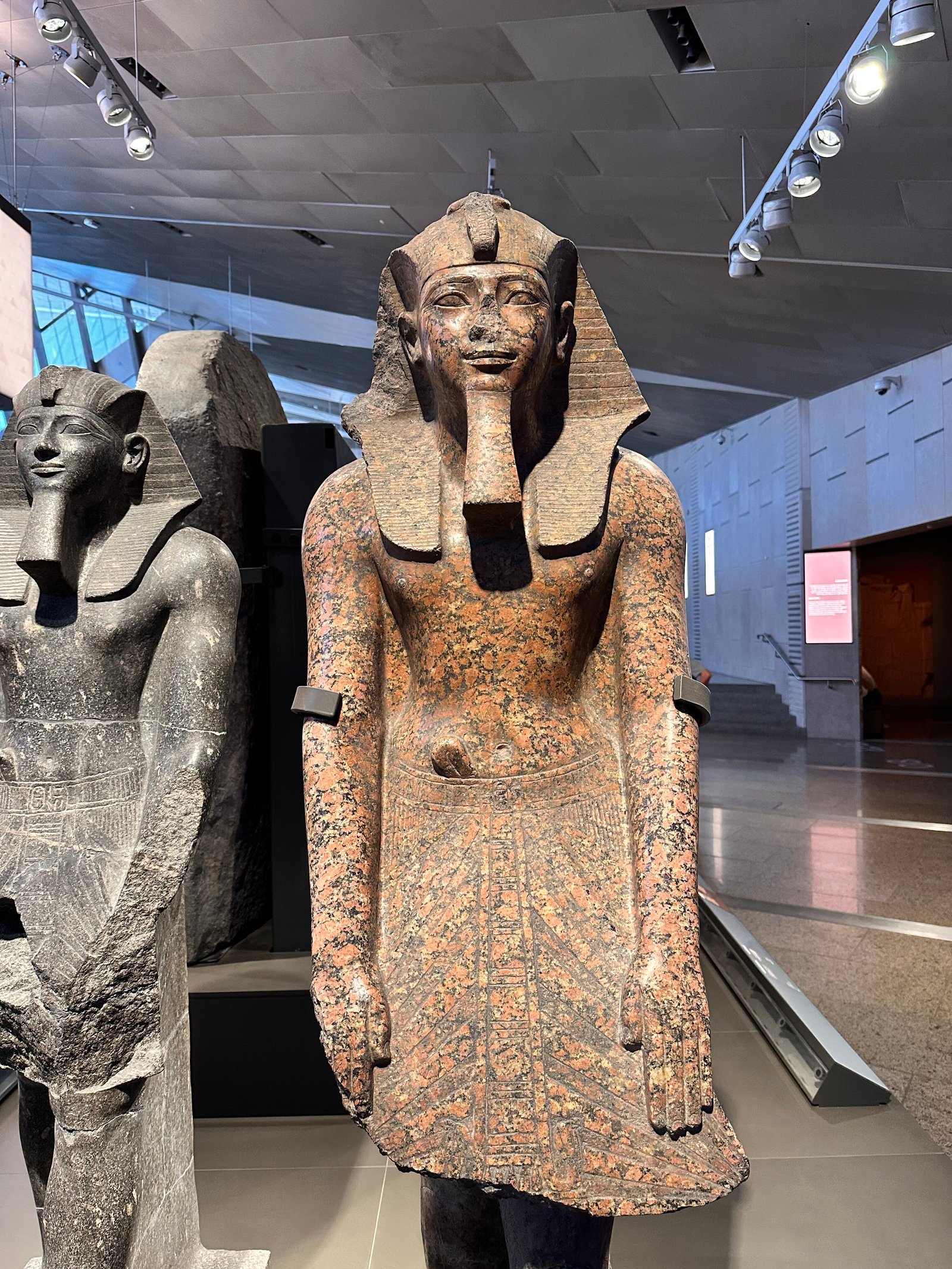
During the Eighteenth Dynasty, the old Avaris region appears to have taken on a major new royal and military role. Manfred Bietak and the Austrian archaeological team have argued that the great harbor and palace district at Tell el-Dabʿa and nearby Ezbet Helmi should be identified with Peru-nefer, a major Egyptian naval base and royal installation known from New Kingdom texts.
That identification is important because Peru-nefer was not a minor provincial outpost. Excavation has revealed a very large harbor basin, military installations, and an extensive royal palace complex dating to the Thutmosid period. The palace area at Ezbet Helmi included monumental architecture and even fragments of Minoan-style wall paintings, evidence that this was a place of international importance connected directly with the royal court.
Rather than thinking of Peru-nefer as simply a new name replacing Avaris, it may be more accurate to understand it as the Eighteenth-Dynasty royal and naval installation built around the existing Avaris harbor zone. In other words, the old city and its harbor remained, but the Egyptian state developed a major military and royal complex there under a new administrative identity.
This becomes especially significant when we compare the archaeology with the biblical chronology. First Kings 6:1 states that the Exodus occurred 480 years before Solomon began construction of the Temple in his fourth year. Solomon’s fourth year is generally placed around 966 BC. Counting backward places the Exodus at approximately 1446 BC.
Judges 11:26 provides an independent chronological marker. Jephthah states that Israel had already occupied the Transjordanian territories for about 300 years by his day. Those lands were taken shortly before Israel entered Canaan, after the forty years of wilderness wandering. The statement fits naturally with an entrance into Canaan around 1406 BC and an Exodus around 1446 BC.
Using the Egyptian high chronology, that places the Exodus within the reign of Amenhotep II. Egyptian records also connect Amenhotep II with Peru-nefer, which makes the site especially relevant to the early Exodus reconstruction. The old Avaris region at this time was not an abandoned Hyksos ruin. It was a functioning Egyptian royal and naval center in the very period in which an early Exodus would occur.
That gives us a much more historically grounded picture of the setting. If Israel departed Egypt around 1446 BC, they could have left from the same eastern Delta region later associated with Pi-Ramesses, but at that time the royal and military complex belonged to the Eighteenth-Dynasty world of Avaris and Peru-nefer.
Then Came Pi-Ramesses
Several generations later, the same eastern Delta landscape entered yet another important phase. During the Nineteenth Dynasty, the Ramesside kings shifted major royal attention back toward the eastern Delta. Ramesses II developed an enormous capital known as Pi-Ramesses, meaning essentially the “House” or “Estate of Ramesses.”
The principal royal center of Pi-Ramesses was located around modern Qantir, only a short distance north of Tell el-Dabʿa. This geographic relationship is crucial. Avaris and Pi-Ramesses were not two cities separated by a great distance. They occupied overlapping parts of the same broader eastern Delta landscape.
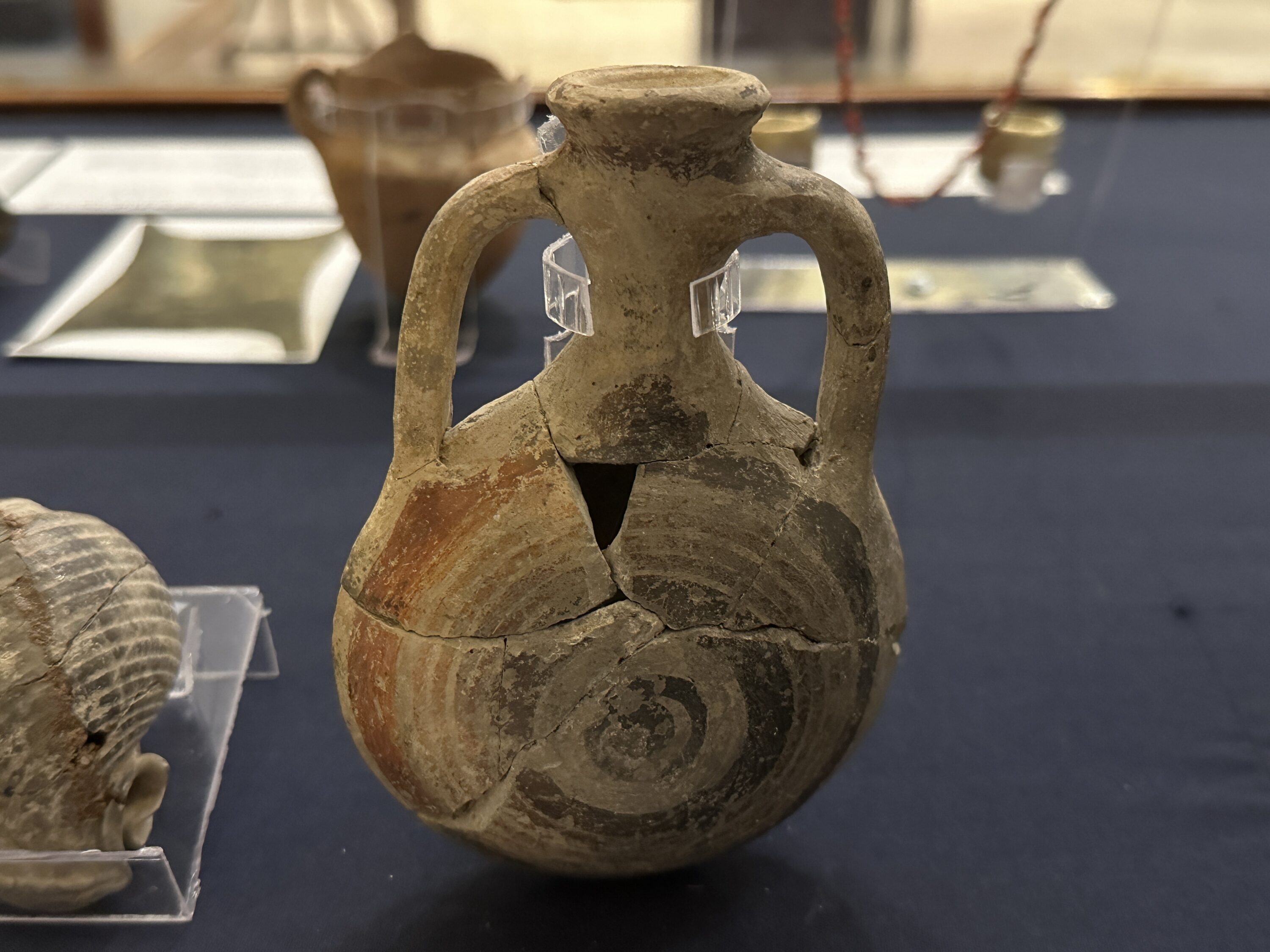
The Austrian Archaeological Institute identifies Tell el-Dabʿa, ancient Avaris, as the southern portion of the later Pi-Ramesses urban complex. The newer Ramesside capital expanded northward and outward across a vast area, while the older Avaris sector remained part of the larger metropolis.
That is exactly the kind of urban development that can produce overlapping place-names. A smaller or older district may keep its traditional name while becoming part of a much larger city with a newer name. Modern cities do the same thing. Historic neighborhoods often retain names that are centuries old even after being absorbed into a modern metropolitan area.
The Egyptian evidence actually preserves that kind of overlap. Even during the Ramesside period, texts could still refer to the “Harbor of Avaris.” In other words, Avaris did not vanish from geographical memory the moment Pi-Ramesses was built. The older name remained useful for identifying a particular district or harbor within the larger Ramesside city.
That fact is especially valuable for understanding how biblical place-name updating could work. If Egyptians themselves could preserve the old name Avaris inside the newer Pi-Ramesses landscape, a later biblical writer could just as naturally use the newer and more recognizable name Rameses when describing earlier events in the same region.
Tell el-Dabʿa, Qantir, Avaris, and Rameses
The terminology surrounding this site can become confusing because modern archaeological names, ancient Egyptian names, and biblical names are often used side by side. It helps to slow down and distinguish them clearly.
Tell el-Dabʿa is the modern archaeological locality over ancient Avaris. It is the name used today for the excavation area, not an ancient Egyptian name.
Avaris, or Hut-waret, was the ancient settlement that grew into the Hyksos capital. This is the principal name associated with the site during the Second Intermediate Period.
Peru-nefer refers to the major Eighteenth-Dynasty royal and naval installation that Bietak identifies with the old Avaris harbor zone and nearby palace complex. The important point is that the same harbor landscape remained in use under Egypt’s native Eighteenth-Dynasty kings.
Pi-Ramesses was the later Ramesside capital built across the broader region during the Nineteenth Dynasty. Its main royal center lay around modern Qantir, while the old Avaris district became part of its southern urban area.
Qantir is the modern village covering much of the principal royal center of Pi-Ramesses, just as Tell el-Dabʿa is the modern archaeological name associated with Avaris.
Once these distinctions are clear, the history stops looking like a list of unrelated cities. Instead, we are looking at one long-lived eastern Delta settlement and harbor zone whose political importance, royal installations, and larger urban identity changed over many centuries.
That continuity is exactly why the biblical use of the later name Rameses is so understandable.
Why Genesis 47:11 Matters
Genesis 47:11 is perhaps the single most important biblical verse for the place-name question because it already shows Rameses being used before the age of Ramesses II.
Joseph settles Jacob and his family “in the land of Rameses.” That event belongs at the beginning of Israel’s time in Egypt, long before the Exodus. Even if someone were to move the Exodus into the thirteenth century BC, Joseph would still have lived generations before Ramesses II. The name therefore cannot simply be treated as proof that the events described occurred during the Ramesside period.
The verse makes much better sense if the biblical text is identifying the old eastern Delta settlement by a later name familiar to its readers. In that case, “the land of Rameses” functions much like a modern writer saying that an ancient event happened “near Cairo,” even though Cairo itself did not yet exist under that name.
The Bible contains other examples of this practice. Genesis 14:14 says Abraham pursued his enemies as far as Dan. Yet Judges 18:29 specifically tells us that the city had previously been called Laish and was renamed Dan much later. The later name appears in the account of Abraham because it tells the reader where the event took place.
The same pattern appears with Bethel. Genesis uses the name Bethel in narratives that precede the statement in Genesis 28:19 that the city had formerly been called Luz. The text is perfectly comfortable using a later familiar place-name in the narration of an earlier event.
That same literary practice provides a straightforward explanation for Rameses. The older setting may have been known at different times as Avaris and, in the Eighteenth Dynasty, associated with Peru-nefer. But when the biblical text reached readers familiar with the great Ramesside city, “Rameses” was the name that most clearly identified the place.
Rameses Does Not Date the Exodus
Once Genesis 47:11 and the archaeology of the eastern Delta are placed together, the argument that the name Rameses requires a thirteenth-century Exodus loses much of its force.
The biblical text does not say that the Israelites built the entire later metropolis exactly as it existed under Ramesses II. It says they built at Rameses. If the name has been updated for later readers, then the statement can refer to construction work carried out in the older settlement zone later incorporated into Pi-Ramesses.
This distinction is important. The problem only exists if we insist that every place-name in the biblical narrative must preserve the exact name in use at the time of the event. Genesis itself shows that this is not how the text always works.
Under an early Exodus chronology, the Israelites could have lived and labored in the older eastern Delta settlement and royal-harbor complex associated with Avaris and Peru-nefer. The place later became part of Pi-Ramesses. A later inspired update to the geographical terminology would then tell readers exactly where that earlier setting was located.
The name Rameses therefore serves as a geographical marker, not necessarily as a chronological marker.
The Early Exodus Fits the Landscape
For me, the biblical chronology should remain the starting point. First Kings 6:1 gives a clear numerical interval between the Exodus and the beginning of Solomon’s Temple. Judges 11:26 provides a second chronological check from a completely different period of Israel’s history. Taken naturally, both point toward an Exodus around 1446 BC.
Once that date is established, the question becomes whether the Egyptian setting makes sense. The eastern Delta evidence says that it does.
Avaris had already been a major Semitic settlement for centuries. The site remained occupied after the Hyksos period. The harbor continued to function. The Eighteenth-Dynasty state built a major royal and military complex there. Peru-nefer is associated with this broader setting, and Amenhotep II is connected with Peru-nefer in Egyptian records.
Then, generations later, Ramesses II built Pi-Ramesses across the same landscape. The old Avaris district became part of the newer metropolis, and even the older name continued in localized use.
That sequence removes the supposed contradiction. An early Exodus does not require Pi-Ramesses to have existed in 1446 BC. It only requires the biblical text to use the later familiar name of a place whose settlement history reaches much farther back.
In fact, once the site history is understood, the place-name update becomes a very natural explanation. It allows the explicit biblical chronology to remain intact while also explaining why later readers encounter the name Rameses in Genesis and Exodus.
A Place Can Be Older Than Its Name
The most important lesson here is simple: places often have histories much older than the names by which later generations know them.
The eastern Delta region later incorporated into Pi-Ramesses had already been occupied for centuries before Ramesses II. It had been a major center of Semitic settlement, the capital of the Hyksos, an important Egyptian harbor, and a royal and military center of the Eighteenth Dynasty.
The land did not suddenly appear when Ramesses II gave his name to the great city. He inherited and expanded a strategic landscape with a long history behind it.
When Genesis and Exodus use the name Rameses, the text can therefore be understood as identifying that older landscape by the later name under which it became famous. That is consistent with the Bible’s own use of later place-names elsewhere, and it fits the archaeology of Avaris and Pi-Ramesses especially well because the two urban zones physically overlap.
Once that is recognized, the name Rameses no longer stands in the way of an early Exodus around 1446 BC. Instead, Avaris, Peru-nefer, Qantir, and Pi-Ramesses together help us follow the history of the same eastern Delta region across centuries and understand why a later place-name could appear in the biblical text.

For the chronological case behind this reconstruction, see When Did the Exodus Happen? For more on the earlier settlement history, see Avaris and the Hebrews in Egypt.
Research Sources and Further Reading
Primary biblical passages: Genesis 14:14; Genesis 28:19; Genesis 47:11; Exodus 1:11; Exodus 12:37; Numbers 33:3–5; Judges 11:26; Judges 18:29; 1 Kings 6:1.
- Austrian Archaeological Institute. “Tell el-Dabʿa / Avaris.” Austrian Academy of Sciences. Project overview.
- Bietak, Manfred. “Harbours and Coastal Military Bases in Egypt in the Second Millennium B.C.: Avaris, Peru-nefer, Pi-Ramesse.” In studies on the harbors and military installations of the eastern Nile Delta.
- Bietak, Manfred. Avaris: The Capital of the Hyksos: Recent Excavations at Tell el-Dabʿa. London: British Museum Press, 1996.
- Forstner-Müller, Irene. Studies of Tell el-Dabʿa and Avaris in The Oxford History of the Ancient Near East. Oxford University Press.
- Qantir-Piramesse Project. Archaeological research on Pi-Ramesses and the Ramesside royal residence at Qantir. Project site.