
When Did the Exodus Happen?
Two independent chronological statements in Scripture point remarkably well toward an Exodus in the middle of the fifteenth century BC.
Few events in biblical history have generated as much discussion as the Exodus from Egypt. Archaeologists, Egyptologists, and biblical scholars have debated everything from the route of the Exodus to the identity of Pharaoh. Underneath many of those discussions, however, lies an even more basic question: When did the Exodus actually happen?
Two dates are commonly proposed. One places the Exodus sometime in the thirteenth century BC, often around 1270–1250 BC and within the era of Ramesses II. The other places it nearly two centuries earlier, around 1446 BC.
The later date is familiar because of the name Rameses in Exodus 1:11 and because Ramesses II became one of Egypt’s most famous pharaohs. But when we begin with the Bible’s own chronological statements rather than attempting to identify Pharaoh first, the evidence points strongly in another direction.
The most straightforward reading of the biblical chronology places the Exodus in the fifteenth century BC, around 1446 BC.
The 480 Years of 1 Kings 6:1
The clearest chronological statement appears almost four centuries later, when Solomon began construction of the Temple in Jerusalem.
First Kings 6:1 tells us that construction began in Solomon’s fourth year, in the month of Ziv, “in the four hundred and eightieth year after the people of Israel came out of the land of Egypt.”
That is an unusually specific chronological marker. The writer does not simply place the event vaguely in Israel’s distant past. He gives us the year of Solomon’s reign, the month in which construction began, and the number of years connecting that event with the Exodus.
Solomon’s fourth regnal year is generally placed around 966 BC. Working backward approximately 480 years brings us to 1446 BC for the Exodus. This calculation has long formed the foundation of what is commonly called the “early date” for the Exodus.
Some scholars have suggested that the 480 years should not be treated chronologically. One common proposal is that it represents twelve symbolic generations of forty years each. If so, the number would be theological or schematic rather than an actual measurement of elapsed time.
That explanation is possible only if we first decide that the number should not be taken at face value. Nothing within 1 Kings 6:1 itself signals that the writer is speaking symbolically. In fact, the precision of the passage points the other direction. We are given a specific regnal year, a specific month, a specific event, and a specific interval from an earlier event.
Taken naturally, the author appears to be telling us when something happened.
And 1 Kings is not the only biblical text pointing in this direction.
Jephthah’s 300 Years

A second chronological marker appears in a very different setting.
During the period of the Judges, the Ammonites claimed that Israel had taken territory belonging to them. Jephthah responded by rehearsing the history of Israel’s arrival in the region. His argument was essentially this: Israel had possessed these territories for generations, so why had the Ammonites waited until now to reclaim them?
Then he gives us a number.
According to Judges 11:26, Israel had occupied Heshbon, Aroer, and the surrounding settlements along the Arnon for 300 years.
That is important because Israel acquired this territory on the eastern side of the Jordan near the end of the wilderness wandering, shortly before entering Canaan.
Jephthah therefore provides a chronological check independent of Solomon’s Temple.
If Israel had already occupied the Transjordan for roughly 300 years by the time of Jephthah, then the conquest cannot comfortably be pushed into the late thirteenth century BC. Jephthah himself belongs within the period of the Judges, centuries before Israel’s monarchy was firmly established.
Working backward from his period places Israel’s arrival east of the Jordan around the beginning of the fourteenth century BC, approximately 1406 BC in a straightforward biblical chronology. Add the forty years of wilderness wandering, and we arrive once again at approximately 1446 BC for the Exodus.
This is what makes Judges 11 so valuable. It is not simply repeating the chronological statement found in Kings. It reaches the same general period through a completely different historical reference.
Two Biblical Clocks Pointing to the Same Period
Put the two passages alongside one another and a remarkably consistent picture emerges.
First Kings looks backward from Solomon and places the Exodus approximately 480 years before the building of the Temple.
Judges looks backward from Jephthah and says Israel had already possessed territory east of the Jordan for about 300 years.
They are different books, different authors, different historical settings, and different chronological reference points. Yet both lead us toward the same basic reconstruction:
Exodus — approximately 1446 BC
Wilderness wandering — approximately 1446–1406 BC
Entry into Canaan — approximately 1406 BC
That agreement deserves significant weight.
It also illustrates an important principle when reconstructing biblical history. Archaeology and Egyptian texts are immensely valuable, but the biblical text itself is also historical evidence. We should not begin by choosing an Egyptian king and then stretch the biblical chronology until it fits him. The better approach is to establish the biblical chronology first and then ask what was happening in Egypt during that period.
What About Ramesses?
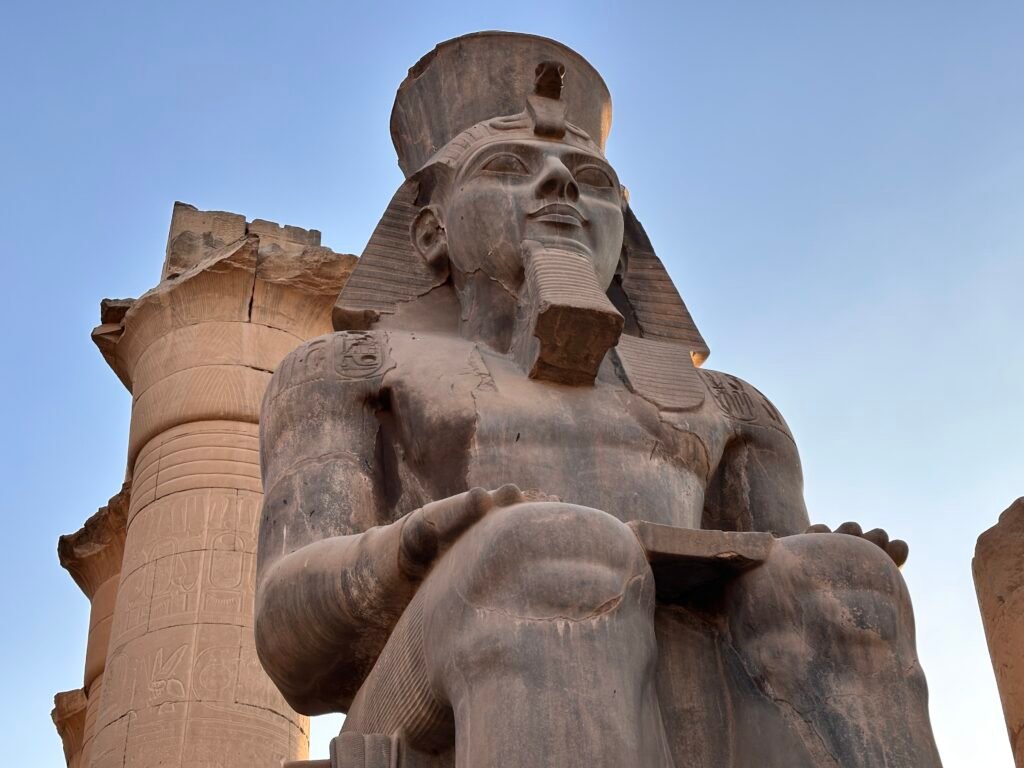
The strongest popular association with a later Exodus is the biblical reference to the store city of Rameses in Exodus 1:11. Since Ramesses II ruled during the thirteenth century BC and built the famous royal city Pi-Ramesses in the eastern Nile Delta, it can seem like an obvious connection.
But place names can survive, change, or be updated by later writers and copyists so that readers recognize an older location. Genesis itself refers to the region where Jacob settled as “the land of Rameses,” even though this occurred centuries before anyone would place the reign of Ramesses II.
The name therefore cannot, by itself, determine the date of the Exodus.
More importantly, using the name Rameses to overturn two explicit chronological statements requires the less explicit evidence to control the more explicit evidence. The biblical chronology deserves to be considered on its own terms.
A Brief Word About Amenhotep II
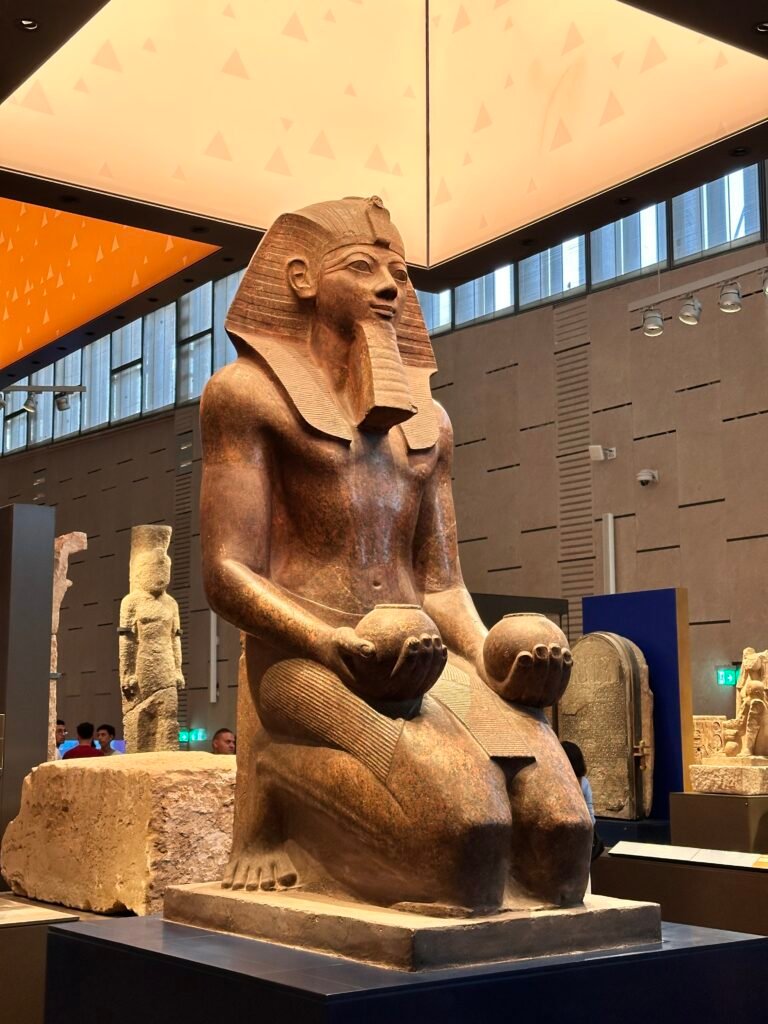
Once the Exodus is placed around 1446 BC, attention naturally shifts toward Egypt’s powerful Eighteenth Dynasty rather than the later Ramesside period.
This is where Amenhotep II becomes particularly interesting.
Several advocates of an early Exodus chronology have proposed Amenhotep II as the Pharaoh of the Exodus, using Egyptian chronologies that place his accession early enough in the fifteenth century BC to intersect with the biblical date. The precise dating of Eighteenth-Dynasty reigns varies according to the Egyptian chronological system being followed, so that identification should remain a historical reconstruction rather than be presented as an established fact.
That discussion deserves its own article.
The point here is simpler. A 1446 BC Exodus moves the historical setting away from Ramesses II and into the world of Egypt’s Eighteenth Dynasty, one of the most powerful periods in Egyptian history.
And that is exactly where the biblical chronology takes us before we ever begin trying to name Pharaoh.
Letting the Chronology Speak
There will continue to be disagreements over the chronology of ancient Egypt, the archaeology of Canaan, the locations mentioned in Exodus, and the identity of the Pharaoh who confronted Moses. Those are worthwhile discussions, and each piece of evidence deserves careful consideration.
But the Bible itself should not be the last source consulted when trying to date a biblical event.
First Kings 6:1 gives us approximately 480 years from the Exodus to Solomon’s Temple.
Judges 11:26 gives us approximately 300 years of Israelite occupation east of the Jordan by Jephthah’s time.
Those two chronological witnesses fit naturally together and point toward an Exodus around 1446 BC, followed forty years later by Israel’s entrance into Canaan around 1406 BC.
For me, that convergence is one of the strongest reasons for favoring the early date. We do not arrive at 1446 BC because we have first chosen a particular Pharaoh and need the Bible to fit him. We arrive there because two separate passages of Scripture lead us there.
Only then do we turn back toward the Nile Valley and ask a fascinating second question:
What was happening in Egypt when Israel walked out?

For the geography that follows this chronological question, see Where Did Israel Cross the Red Sea? and our research overview of Avaris and the Hebrews in Egypt.
Research Sources and Further Reading
- 1 Kings 6:1; Judges 11:12–28; Numbers 21:21–35; Deuteronomy 2:24–37; Joshua 12:1–6 — the primary biblical chronological and historical texts used in the article.
- Edwin R. Thiele, The Mysterious Numbers of the Hebrew Kings — standard study of Hebrew regnal chronology and the dating of Solomon’s reign.
- Bryant G. Wood, “The Biblical Date for the Exodus Is 1446 BC: A Response to James Hoffmeier,” Journal of the Evangelical Theological Society 50.2 (2007), 249–258 — a direct defense of the 1446 BC date.
- James K. Hoffmeier, “What Is the Biblical Date for the Exodus? A Response to Bryant Wood,” Journal of the Evangelical Theological Society 50.2 (2007), 225–247 — a major scholarly argument for the later-date alternative.
- Douglas Petrovich, “Amenhotep II and the Historicity of the Exodus Pharaoh,” The Master’s Seminary Journal 17.1 (2006), 81–110 — argues for Amenhotep II within an early-date Exodus chronology.
- Kenneth A. Kitchen, On the Reliability of the Old Testament — a major treatment of biblical chronology and Egyptian evidence that argues for a later Exodus setting.