The Step Pyramid of Djoser at Saqqara
Egypt’s first monumental stone pyramid marks a turning point in architecture, kingship, and the story of Saqqara.
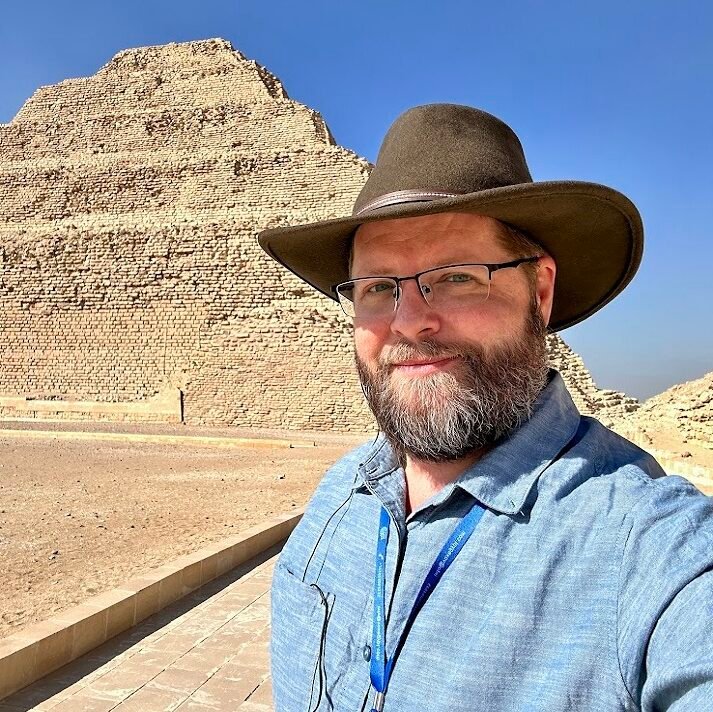 Let me tell you about my favorite pyramid in all of Egypt. Long before the pyramids of Giza rose above the desert plateau, another monument stood at Saqqara that changed the course of Egyptian architecture forever. It was not smooth-sided like the later pyramids, nor as visually perfect as the Great Pyramid. Yet in many ways, the Step Pyramid of Djoser is even more important, because it represents the moment Egyptian royal tomb-building took a massive leap upward.
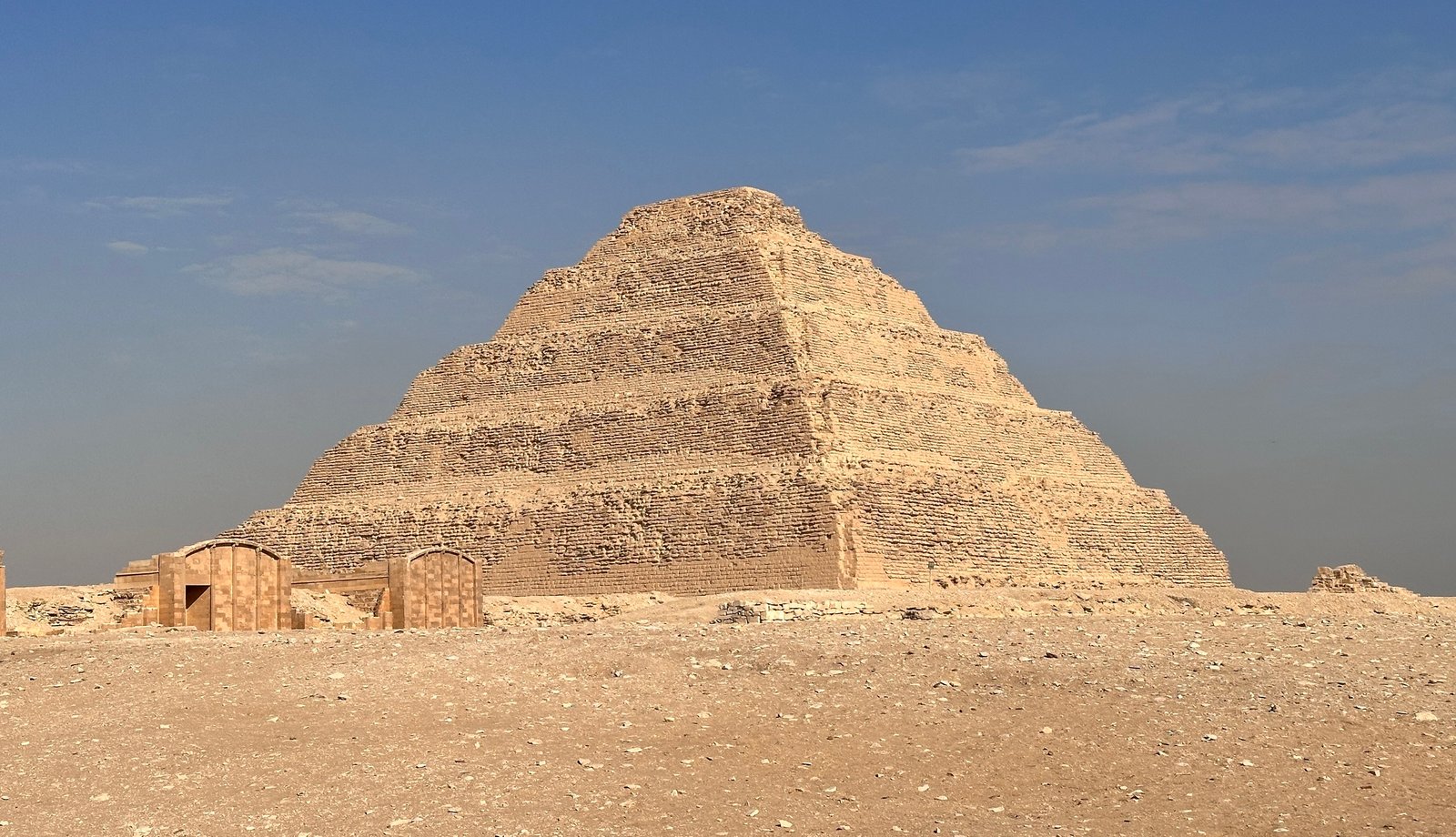
At Saqqara, just south of modern Cairo, the desert is filled with tombs, temples, shafts, causeways, and ruins from many periods of Egyptian history. This was the great cemetery of Memphis, one of Egypt’s most important early capitals. Here, kings, nobles, priests, officials, and sacred animals were buried across a wide stretch of desert overlooking the Nile Valley. But among all these monuments, one structure dominates the landscape. Rising in six great steps from the sand, the Step Pyramid of Djoser still commands attention after all these centuries.
It is usually identified as the tomb complex of King Djoser, a ruler of Egypt’s Third Dynasty. Djoser’s name is closely connected with one of the most famous figures in Egyptian history: Imhotep. Later generations remembered Imhotep as a brilliant architect, priest, administrator, and wise man. In time, he became so admired that he was even honored as a figure of healing and wisdom. While legends grew around his memory, his greatest known achievement remained the design and planning of Djoser’s pyramid complex at Saqqara.
The Step Pyramid began with an older and simpler Egyptian tomb form called a mastaba. A mastaba was a rectangular, flat-roofed structure with sloping sides, built above underground burial chambers. These were common elite tombs in early Egypt. Djoser’s monument appears to have developed in stages, beginning as a large mastaba and then expanding upward and outward until it became a six-tiered pyramid. That transformation was revolutionary. Instead of building only a low tomb above the desert, Djoser’s builders created a towering monument that reached toward the sky.
This was not only a larger tomb. It was a new architectural idea.
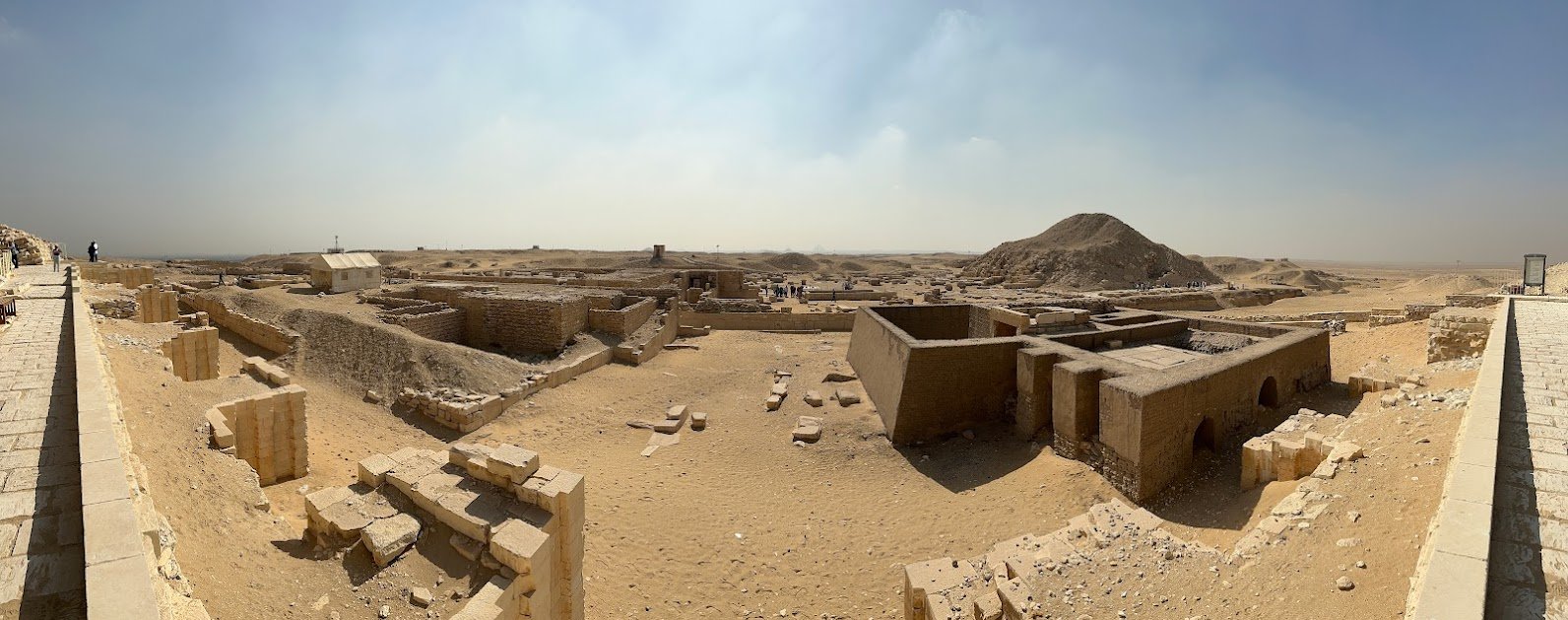
The pyramid stands within a vast ceremonial enclosure surrounded by a massive limestone wall. The enclosure itself is part of what makes the site so remarkable. Djoser’s pyramid was not built as an isolated monument, but as the centerpiece of an entire royal complex. The surrounding structures include courtyards, chapels, dummy buildings, ceremonial spaces, and passageways. Many of these buildings were carved in stone to imitate earlier forms made from reeds, wood, mudbrick, and other temporary materials. In that sense, Saqqara preserves a stone version of a much older architectural world.
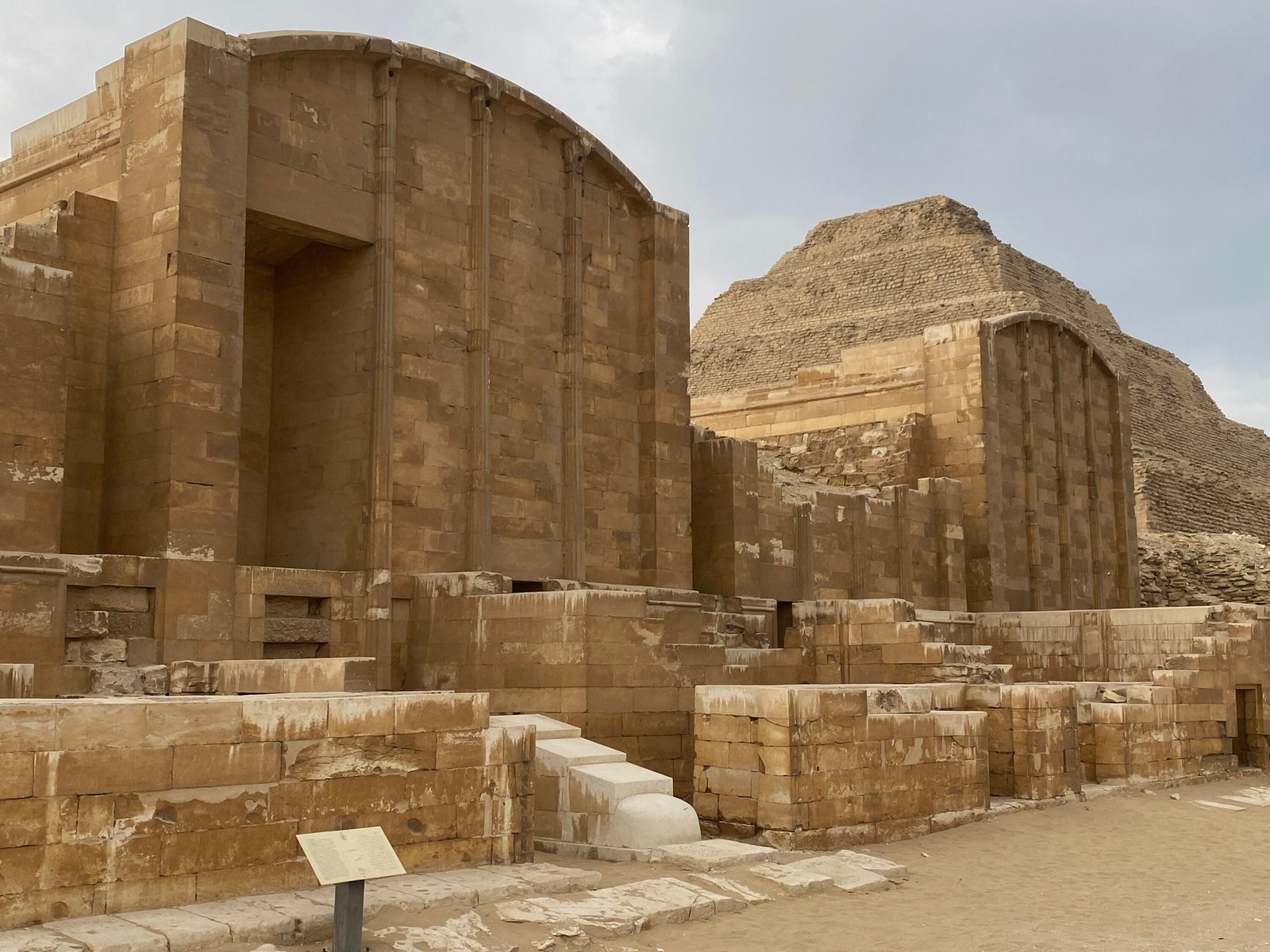
Walking through the complex today, one of the most striking features is the entrance colonnade. Its tall stone columns are attached to side walls rather than standing fully free, giving the space a powerful and almost processional feel. The columns resemble bundled reeds or plant stems, but they are made from limestone. This is one of the marvels of the site. The builders were not merely stacking stone. They were translating familiar Egyptian forms into permanent architecture.
That shift from mudbrick and organic materials to large-scale stone construction was one of the great achievements of the Step Pyramid complex. Later Egyptian monuments would continue this tradition on a larger and more refined scale, but Saqqara shows the early breakthrough. Here, stone became the language of kingship, memory, ritual, and power.
Beneath the pyramid lies an extensive network of tunnels, chambers, magazines, and galleries. These underground spaces form one of the most complex parts of the monument. The burial chamber itself was placed deep below the pyramid, and the surrounding galleries held thousands of stone vessels, many of which seem to have been connected with earlier royal names and traditions. This suggests that Djoser’s complex was not only about one king’s burial, but also about royal continuity and Egypt’s developing sense of sacred kingship.
The Step Pyramid also tells us something about the Egyptian view of the king. To the Egyptians, the king was not merely a political ruler. He stood at the center of the nation’s religious and cosmic order. His tomb was not only a place of burial, but a stage for royal identity, ritual renewal, and the hope of continued existence beyond death. The pyramid form, reaching upward from the desert, expressed more than engineering ambition. It communicated theology, authority, and permanence.
At the same time, the Step Pyramid is deeply human. It reflects planning, labor, administration, craftsmanship, and experimentation. Before the polished geometry of later pyramids, we find here a project still in motion, still discovering what was possible. The steps themselves feel like a visible record of architectural development. It is as though Egypt was learning to build upward in stone, one stage at a time.
 Saqqara also helps place the pyramids of Giza in context. Giza did not appear out of nowhere. The Great Pyramid, the Pyramid of Khafre, and the Pyramid of Menkaure belong to a later stage in a tradition that had already been tested and transformed at Saqqara. Djoser’s Step Pyramid stands near the beginning of that story. It is the architectural ancestor of the great pyramid age.
For visitors, the site offers a very different experience from Giza. Giza overwhelms with scale and precision. Saqqara invites closer observation. Its courtyards, columns, chapels, walls, shafts, and subsidiary structures reveal the complexity of early Egyptian royal ideology. It is not just a pyramid to look at from the outside. It is a whole world of stone.
That landscape is still producing new discoveries. In 2026, archaeologists announced the Old Kingdom tomb of Sekhentyu-Ptah at Saqqara, preserving an inscribed false door, ritual objects, and evidence for later reuse of the necropolis.
The Step Pyramid of Djoser remains one of Egypt’s most important monuments because it marks a turning point. It stands at the boundary between older burial customs and the pyramid-building age that would follow. It preserves the genius of Imhotep, the ambition of Djoser, and the organizational power of early Egypt. More than that, it shows how a tomb could become a monument, how architecture could become theology, and how stone could be shaped into a statement of kingship that still speaks across the desert today. That is one of the reasons I never get tired of coming back to Saqqara, and why Djoser’s pyramid remains my favorite pyramid in Egypt.

Research Sources and Further Reading
- Egyptian Ministry of Tourism and Antiquities. “The Step Pyramid Complex of Djoser.” Official monument page. Overview of the complex, Third-Dynasty context, six-step development, and Sed Festival features.
- Prakash, Tara. “Egypt in the Old Kingdom (ca. 2649–2130 B.C.).” Heilbrunn Timeline of Art History. New York: The Metropolitan Museum of Art, February 1, 2019. The Met. Historical and architectural context for Djoser’s complex and the beginning of the pyramid age.
- University College London. “King Djoser.” Digital Egypt for Universities. UCL Digital Egypt. Attestations, naming history, and bibliography for Djoser/Netjerikhet.