Shasu of Yahweh: The Soleb Inscription and the Name of Israel’s God
An Egyptian temple built by Amenhotep III preserves one of the earliest known references to a people associated with the name of Yahweh — the Shasu of Yahuwa.
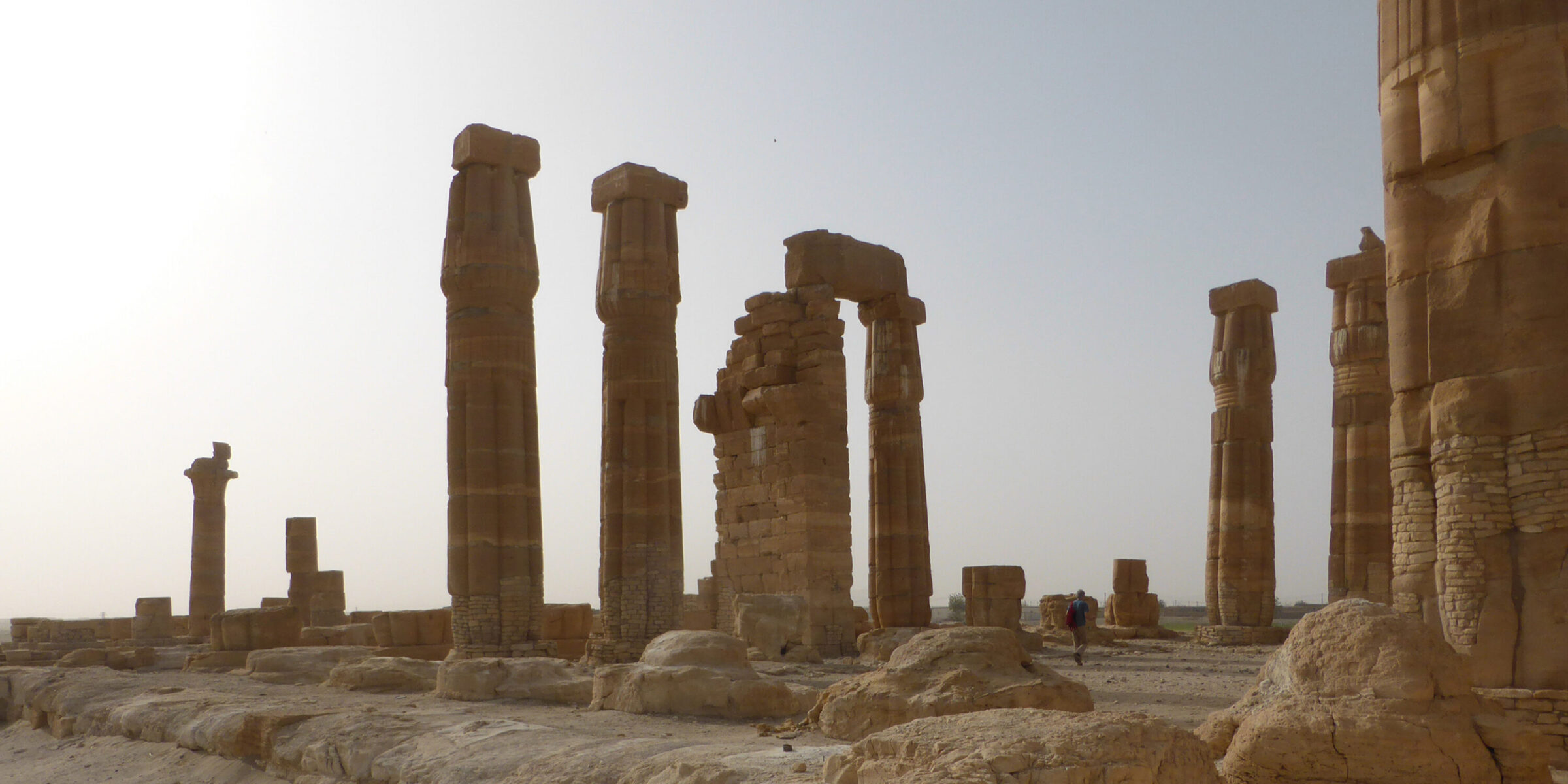
Along the west bank of the Nile in northern Sudan, between Egypt’s Second and Third Cataracts, stand the ruins of the great temple at Soleb. Built during the reign of Amenhotep III in Egypt’s Eighteenth Dynasty, the temple was one of the most impressive Egyptian monuments ever constructed in Nubia. Its surviving columns, reliefs, inscriptions, and captive figures reflect a period when Egyptian influence extended far beyond the borders of Egypt itself.
Among those carved figures is one of the most intriguing inscriptions connected with the biblical world. It identifies a group of people known as the Shasu, and beside them appears a name that bears a remarkable resemblance to the personal name of the God of Israel.
That name can be read approximately as Yahuwa. For students of the Bible, the Soleb Inscription is important because it places a form of the name Yahweh within an Egyptian inscription from the New Kingdom, during the broad historical period in which the biblical account places Israel’s emergence from Egypt and its movement through the wilderness toward Canaan.
Amenhotep III and the Temple at Soleb
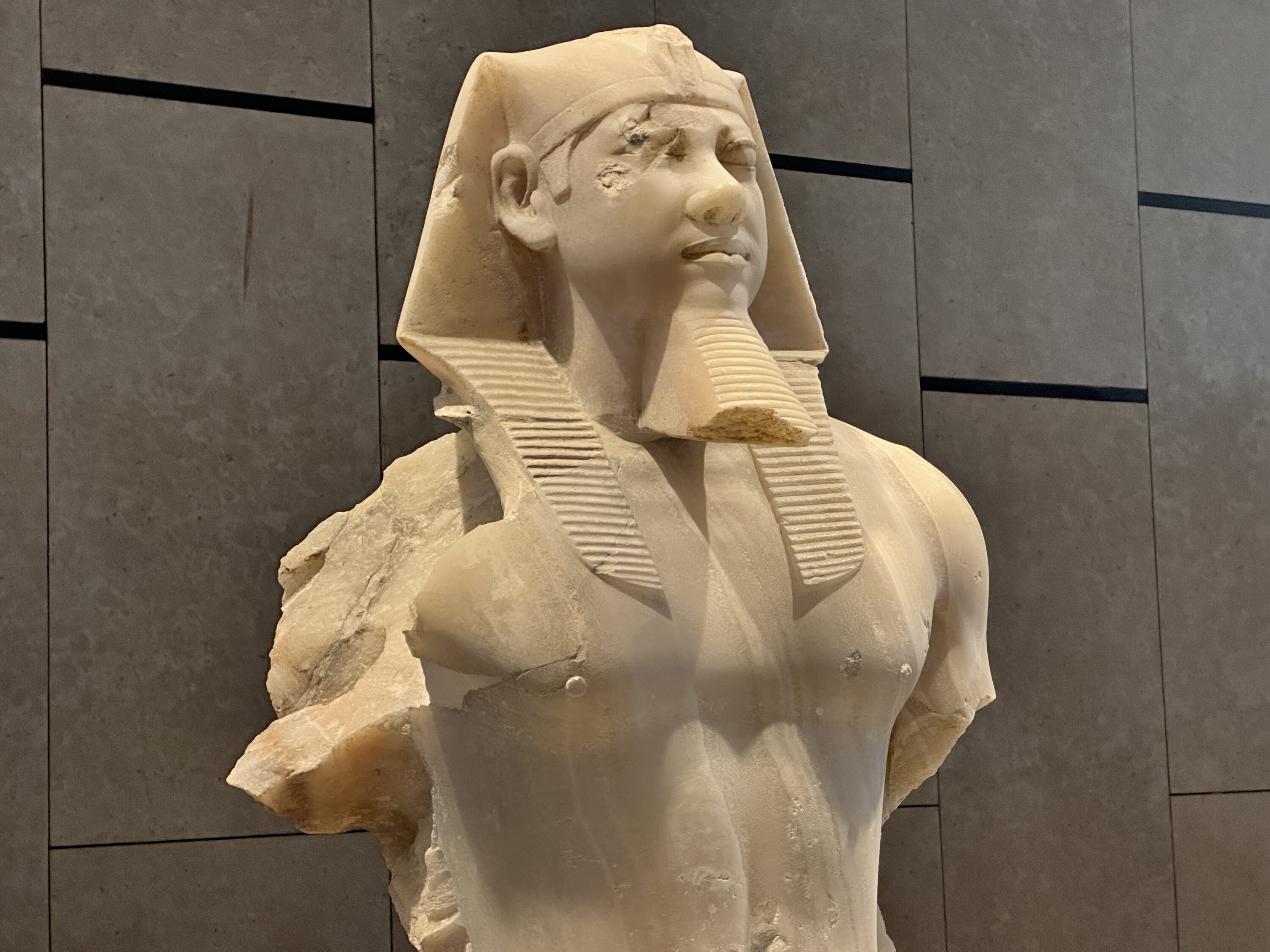
Amenhotep III ruled Egypt during one of the most prosperous and powerful periods of the New Kingdom. Egyptian authority extended deep into Nubia, where the Nile corridor, gold resources, trade routes, and strategic settlements made the region highly important to the Egyptian state.
The temple at Soleb was built within that larger setting of Egyptian control and royal influence. It was dedicated to Amun-Re and to Amenhotep III, and part of its decorative program commemorated the king’s Heb-Sed festival, the royal jubilee traditionally celebrated after thirty years on the throne. The festival marked the continued strength and vitality of the king and reaffirmed his ability to rule.
Elsewhere in the temple, the message of royal authority was expressed through images of bound foreign captives. These figures represented peoples or regions that Egypt claimed to have subdued, and they were accompanied by name-rings identifying the groups or places associated with them. Among those names are several groups called Shasu, and one of them is associated with a name that immediately stands out.
Who Were the Shasu?
The term Shasu was used by the Egyptians for mobile or semi-nomadic peoples who lived largely outside the settled agricultural centers of Egypt. They are often described as pastoral nomads, herders, or wilderness peoples, and Egyptian texts associate them with areas stretching through the Sinai, Negev, Edom, Seir, Transjordan, and other regions east and northeast of Egypt.
Shasu was not necessarily the name of one ethnic group or nation. It functioned more as a broad description of people who lived a mobile lifestyle, often moving with livestock through desert and semi-desert regions. Because there were different groups of Shasu, Egyptian scribes distinguished between them by attaching additional names or geographical references. The Soleb temple preserves several such designations.
One of them can be understood as “The land of the Shasu of Yahuwa.” That is where the inscription becomes especially significant.
Reading the Name
The name at Soleb is written in a compact vertical arrangement rather than in a simple horizontal line, so the direction in which the signs are read matters. Egyptian hieroglyphs are normally read toward the faces of people and animals. When the signs face to the right, the text is read from right to left, and when the writing is arranged vertically, the reader continues downward through the grouped signs.
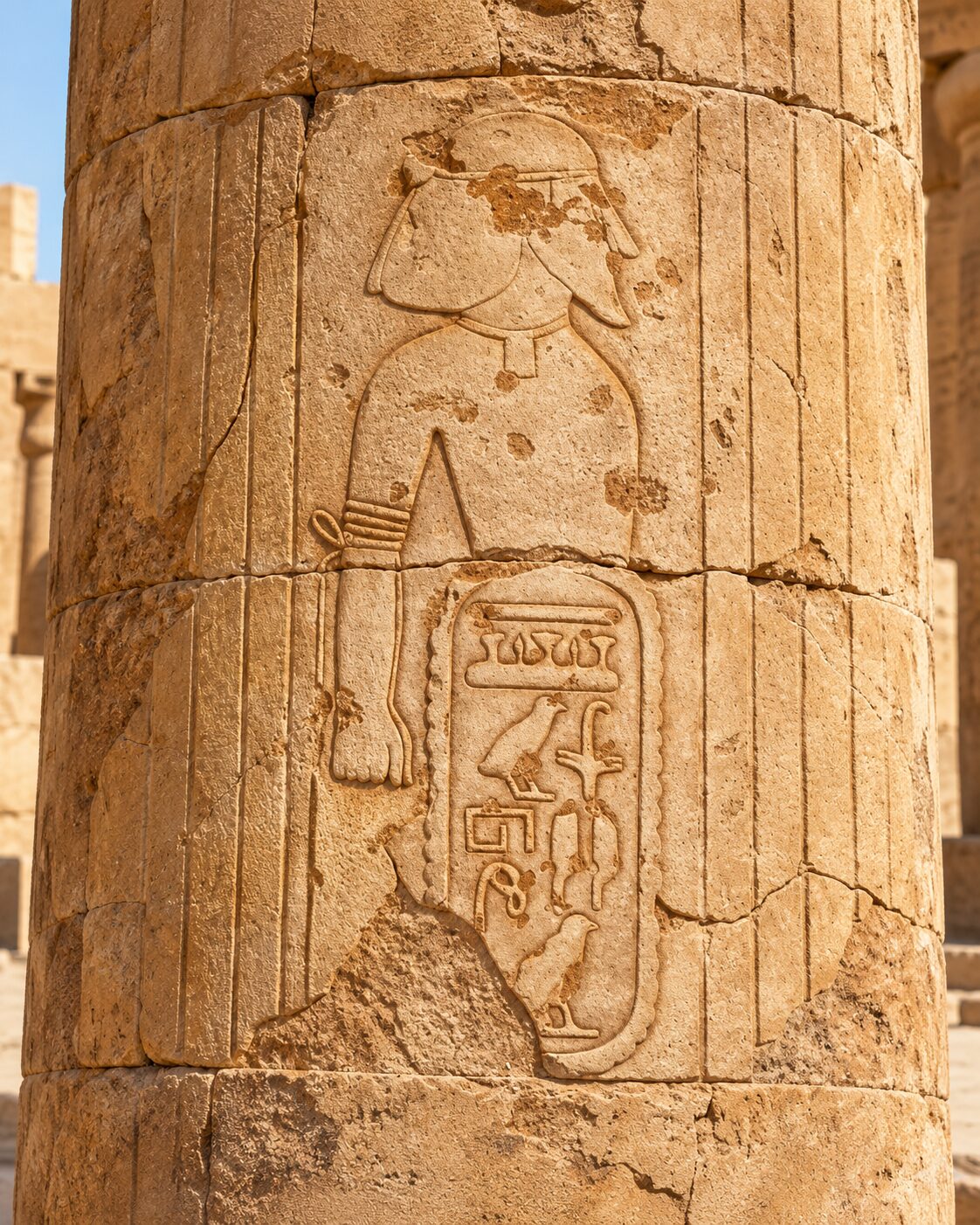
In this name ring, the signs can be represented as:
𓇋 𓇋 𓉔 𓅱 𓍯
Following the normal right-to-left sequence of the grouped signs, the first two reed signs, 𓇋 𓇋, work together to provide the initial Y sound. The next sign, 𓉔, gives the H sound. Below that is the quail chick, 𓅱, which carries the phonetic value w. In sounding the name for an English reader, that w naturally produces a u or oo quality. The final sign is the lasso, 𓍯, which carries the value w3 (3 representing the Egyptological aleph), approximately wa.1
Put together, the signs can be sounded as YA – HU – WA, or Yahuwa. This does not mean that Egyptian hieroglyphs preserve every vowel with the precision of a modern alphabet. Egyptian writing often records foreign names through consonantal values and approximations rather than exact vowel-by-vowel spelling. Even so, the sequence represented in the Soleb inscription is striking.
Yahuwa and Yahweh
In the Hebrew Bible, the personal name of God is written with four consonants: יהוה — YHWH. This four-letter divine name is often called the Tetragrammaton. In English scholarship it is usually vocalized as Yahweh, while the familiar English form Jehovah reflects a later tradition of vocalizing the same divine name.
The Egyptians at Soleb were not writing Hebrew, of course. They were rendering a foreign name through the Egyptian writing system available to them. What they recorded can be sounded approximately as Yahuwa, and the similarity to Yahweh or Ya-hw-eh is difficult to overlook.
This makes the inscription especially important because the Egyptians were not simply listing an anonymous group of nomads. They associated a particular group of Shasu with a name closely corresponding to the personal name of Israel’s God.
Were the Shasu of Yahuwa Israelites?
The Soleb Inscription does not contain the word Israel, so it would go too far to simply equate every Shasu with Israelites. Egyptian scribes used the term broadly, and there is no reason to assume that all Shasu belonged to the same people.
The particular group at Soleb, however, deserves closer attention because they were not merely called Shasu. They were Shasu associated with Yahuwa. The description also fits remarkably well with the biblical picture of Israel during and after the Exodus. According to Exodus and Numbers, Israel left Egypt and spent decades living as a mobile population in the wilderness. Families traveled with tents, herds, and flocks through the same broad regions in which Egyptian texts place various Shasu groups.
From an Egyptian perspective, such a population could naturally have been described as Shasu. The term itself does not prove that this particular group was Israelite, but the combination of a mobile wilderness population and the name Yahuwa makes the connection difficult to dismiss.
Yahweh, Seir, and the Southern Wilderness
Several passages in the Bible preserve a strong geographical association between Yahweh and the wilderness regions south and southeast of Canaan. Deuteronomy 33:2 says that the LORD came from Sinai, rose from Seir, and shone forth from Mount Paran. Judges 5 similarly describes Yahweh going out from Seir and marching from the fields of Edom.
These passages have sometimes been used to suggest that Yahweh originated as a local deity of Edom or Midian and was later adopted by Israel. That conclusion is not required by the biblical text. Within the biblical narrative, Yahweh was already the God of Abraham, Isaac, and Jacob long before Israel reached Sinai. What these passages do preserve is the memory of Yahweh’s revelation to Israel in the southern wilderness.
At Sinai, Yahweh entered into covenant with the nation. Israel then spent decades moving through wilderness regions before approaching Canaan through areas associated with Edom, Moab, and Transjordan. Egyptian texts independently place Shasu populations throughout that same broad geographic world, and at Soleb one of those groups is associated with Yahuwa.
“Who Is Yahweh?”
One of the most interesting connections appears in Pharaoh’s response when Moses first demanded that Israel be released. In Exodus 5:2, Pharaoh asks, “Who is the LORD, that I should obey his voice to let Israel go? I know not the LORD.” The word represented by LORD in capital letters is the Hebrew divine name YHWH. Pharaoh’s question is therefore essentially, “Who is Yahweh?”
According to the chronology given in 1 Kings 6:1, the Exodus occurred around 1446 BC, placing it within Egypt’s Eighteenth Dynasty. The biblical account describes Israel leaving Egypt in the name of Yahweh and then spending forty years as a mobile people in the wilderness.
Within the generations that followed, an Egyptian royal monument at Soleb records a group of Shasu associated with Yahuwa. The inscription does not describe the Exodus, and it does not need to be forced into saying more than it actually says. Its value lies in the historical setting it preserves. If Israel left Egypt in the fifteenth century BC, as the biblical chronology indicates, then an Egyptian record of nomadic people associated with a name corresponding to Yahweh during the same broad period is exactly the kind of evidence we might expect to find.
I discuss the Soleb Inscription along with other archaeological evidence connected with Israel in Egypt in my presentation “Israel in Egypt: Archaeology that Supports the Biblical Record.”
Before the Merneptah Stele
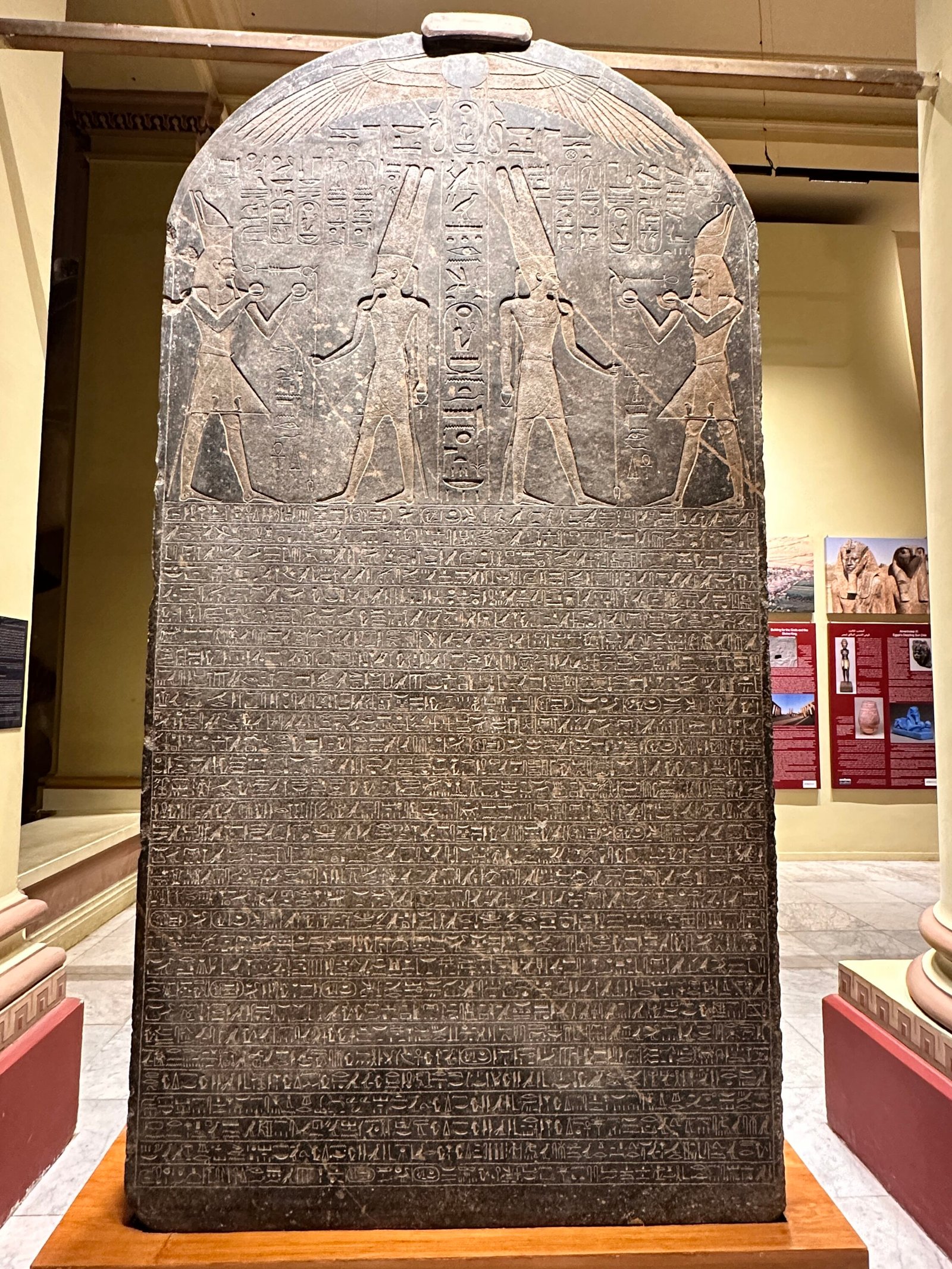
More than a century later, Pharaoh Merneptah erected his famous victory stele containing the earliest undisputed Egyptian reference to Israel by name. The Merneptah Stele is important because it shows that a people called Israel were already established in Canaan by the late thirteenth century BC.
Soleb reaches farther back. The inscription does not use the national name Israel, but it appears to preserve the name of Israel’s God during the Eighteenth Dynasty, long before Merneptah’s inscription. This places the Soleb Inscription among the earliest pieces of Egyptian evidence that can reasonably be connected with the world of early Israel.
What Does the Soleb Inscription Tell Us?
The Soleb Inscription does not mention Moses, describe the plagues, recount the crossing of the sea, or explicitly identify the Shasu of Yahuwa as Israelites. Good archaeology requires us to recognize those limitations rather than asking one inscription to prove the entire Exodus account by itself.
What the inscription does preserve is significant enough. During Egypt’s New Kingdom, Egyptian scribes knew of a nomadic people associated with the name Yahuwa. These people belonged to the broad geographic world east and northeast of Egypt in which the Bible places Israel during and after the Exodus. The name associated with them closely resembles YHWH, Yahweh, the distinctive personal name of Israel’s God, and the inscription comes from the historical period that follows the biblical date for Israel’s departure from Egypt.
Archaeology rarely preserves an entire historical event in a single artifact. More often, it gives us points of contact: names, places, peoples, customs, titles, geographical references, and fragments of political history. One piece of evidence connects with another until the world described in an ancient text can be compared with the world preserved in stone.
The Soleb Inscription provides one of those striking points of contact. More than three thousand years ago, Egyptian craftsmen carved the names of foreign peoples into a temple built during the reign of Amenhotep III. Among those names was a group of nomadic Shasu associated with a name that can still be sounded from the hieroglyphs themselves:
𓇋 𓇋 𓉔 𓅱 𓍯
YA – HU – WA
Yahuwa.
The Shasu of Yahweh.

Research Sources and Further Reading
- Cox, Gavin. “Biblical Chronology and the Oldest ‘Yahweh’ and ‘Israel’ Inscriptions.” Journal of Creation 37, no. 1 (2023): 45–54. Read online.
- Kennedy, Titus. “The Land of the Šȝsw (Nomads) of yhwȝ at Soleb.” Dotawo: A Journal of Nubian Studies 6 (2019): 175–192. Read online.
- The Metropolitan Museum of Art. Materials on Amenhotep III and the royal Heb-Sed jubilee. Read online.
- University College London, Digital Egypt for Universities. Resources on the orientation and reading direction of Egyptian hieroglyphs. Read online.
Image Credits
- Featured image: Temple of Soleb, photograph by Hans Birger Nilsen, via Wikimedia Commons, CC BY-SA 2.0.
1 Technical note on the final signs: Titus Kennedy has argued that the final bird in the Soleb name ring should be identified as Gardiner G1, the Egyptian vulture representing aleph, rather than the G43 quail chick (w) given in the original publication by Michela Schiff Giorgini and followed in earlier readings. I do not find that identification convincing. On close examination of the surviving sign, the top of the head slopes downward rather than presenting the flatter crown expected of G1; the rear of the head is rounded and convex rather than slightly concave; the characteristic wing line extending from the neck into the body is absent; and the foreleg is visibly bare rather than covered by the longer skirt-like feathers expected on the vulture sign. Taken together, these diagnostic features are more consistent with the G43 quail chick, 𓅱.
Gavin Cox has likewise questioned Kennedy’s G1 identification and favors the original quail-chick reading preserved by Schiff Giorgini. My reading also differs in the order of the lower pair. The name ring is arranged in stacked groups and is read from right to left and downward. The paired registers above follow that right-to-left sequence consistently, so I read the lower pair the same way: the right-hand quail chick first, followed by the left-hand lasso. The lasso would originally have extended farther downward than the damaged surviving surface now preserves, which helps explain why a flattened transcription can make its position appear earlier than it should be read. This yields the sequence 𓇋 𓇋 𓉔 𓅱 𓍯, sounded approximately YA-HU-WA. ↩