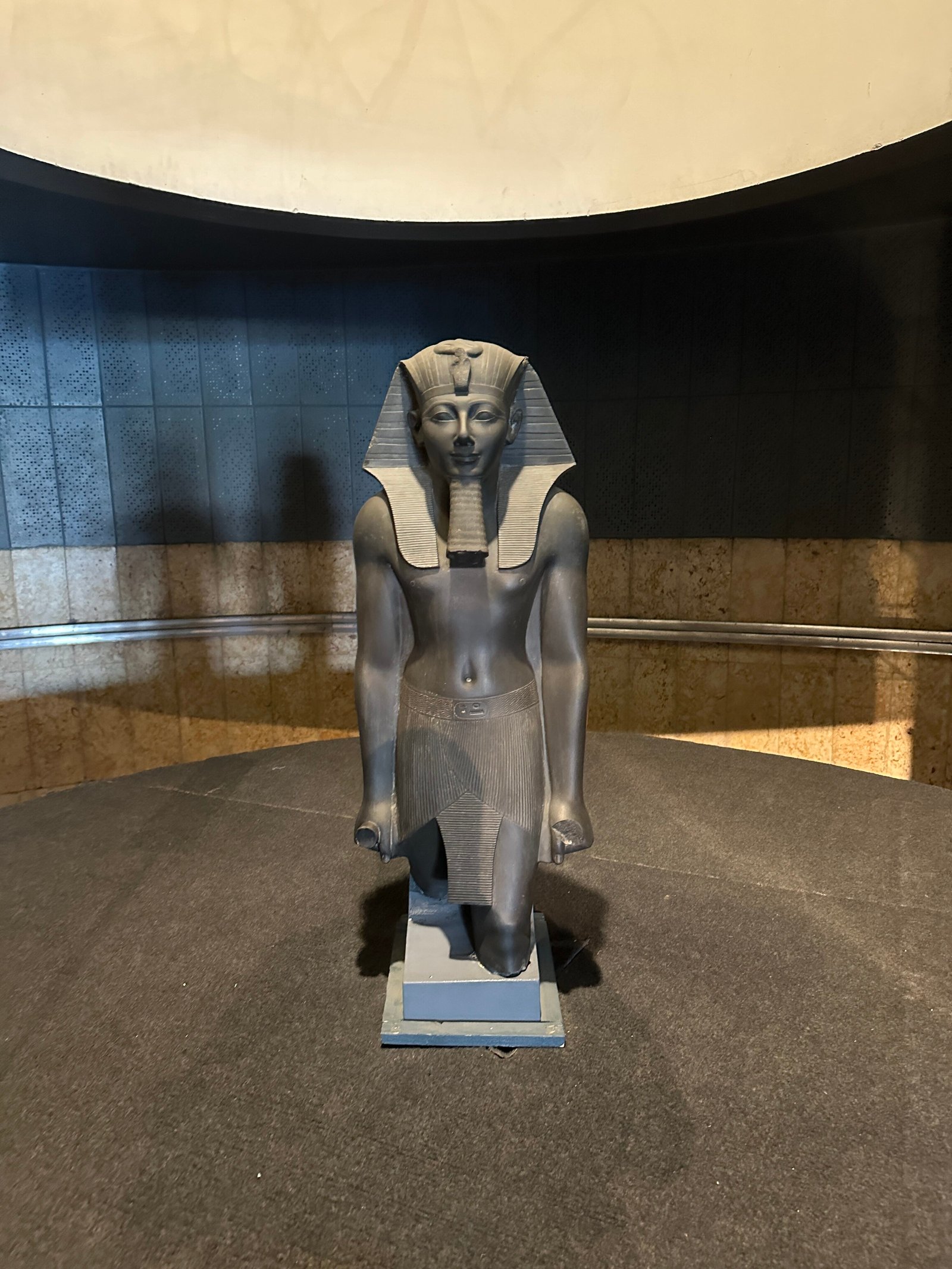
Thutmose III: Karnak Statue J.2 and Deir el-Bahari Face JE 90237
Two museum sculptures preserve very different views of Pharaoh Thutmose III. The first is a greywacke striding statue from the Karnak Cachette, now Luxor Museum J.2 and formerly cataloged in Cairo as CG 42054 / JE 36927. The second is the painted royal face JE 90237 from Deir el-Bahari, now displayed in the Egyptian Museum in Cairo with a cast of the matching original torso held by The Metropolitan Museum of Art.
Key Facts
- Ruler: Thutmose III, 18th Dynasty.
- Karnak statue: Karnak Cachette CK 271 / K 304; Luxor Museum J.2; formerly Cairo CG 42054 / JE 36927.
- Karnak statue material: Greywacke.
- Discovery: Georges Legrain, May 8, 1904.
- Original pose: Striding; the feet are missing.
- Deir el-Bahari face: Egyptian Museum JE 90237.
- Matching torso: The Metropolitan Museum of Art 07.230.3.
- Material of face/torso: Indurated limestone with surviving paint.
- Display note: Cairo displays the original face with a cast torso; The Met displays the original torso with a cast face.
The Karnak Cachette Statue — Luxor Museum J.2
The IFAO Karnak Cachette database identifies this sculpture as CK 271, a striding statue of Thutmose III. It records the excavation number K 304, discovery date May 8, 1904, greywacke material, and the object’s earlier Cairo numbers JE 36927 and CG 42054. Its current Luxor Museum inventory is J.2.
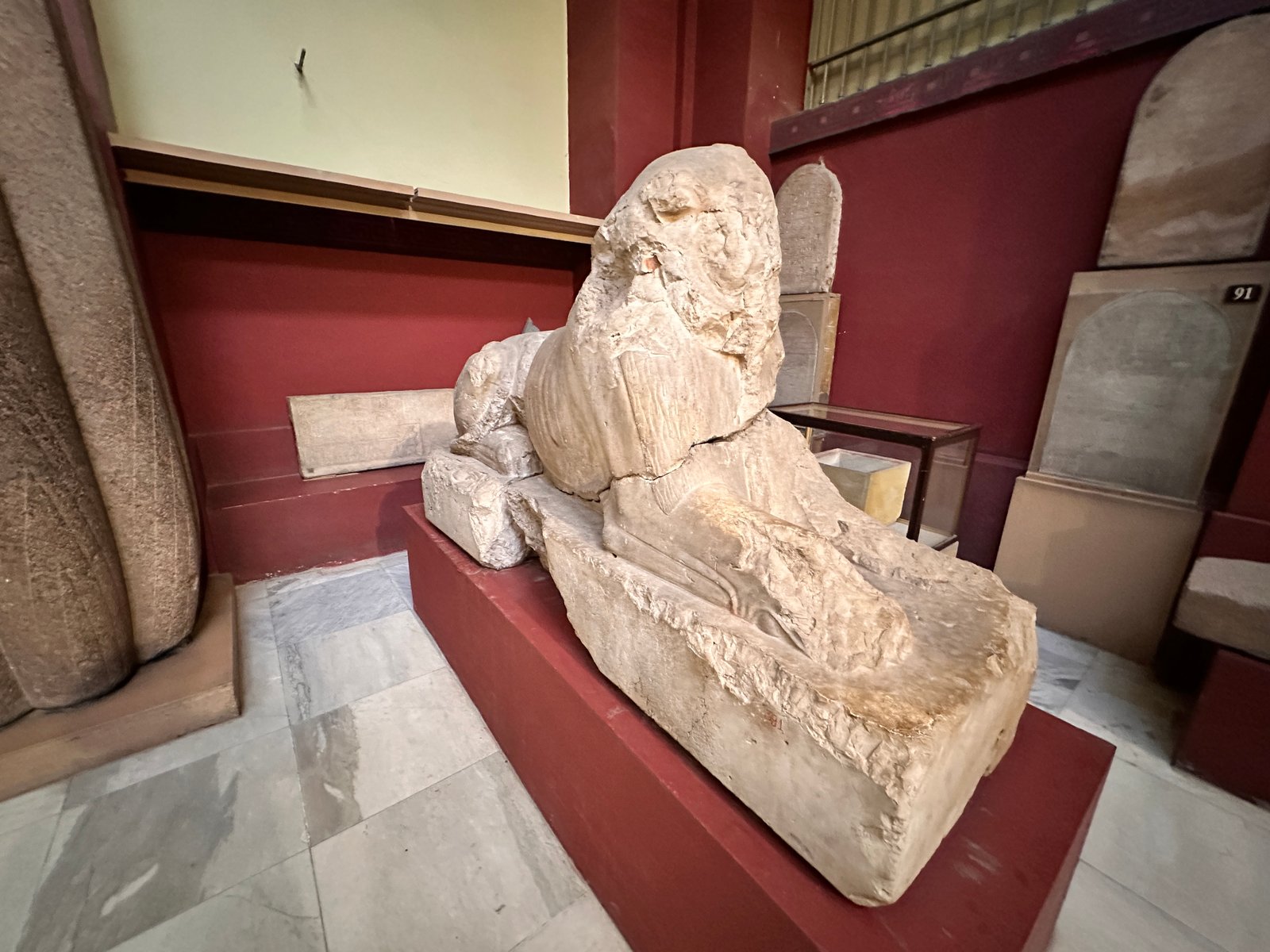
The feet are broken away. In a frontal museum photograph, the surviving lower body and support can therefore create the impression of a kneeling pose. The excavation catalog resolves that ambiguity: the original statue was striding, not kneeling.
Royal Portrait on the Karnak Statue
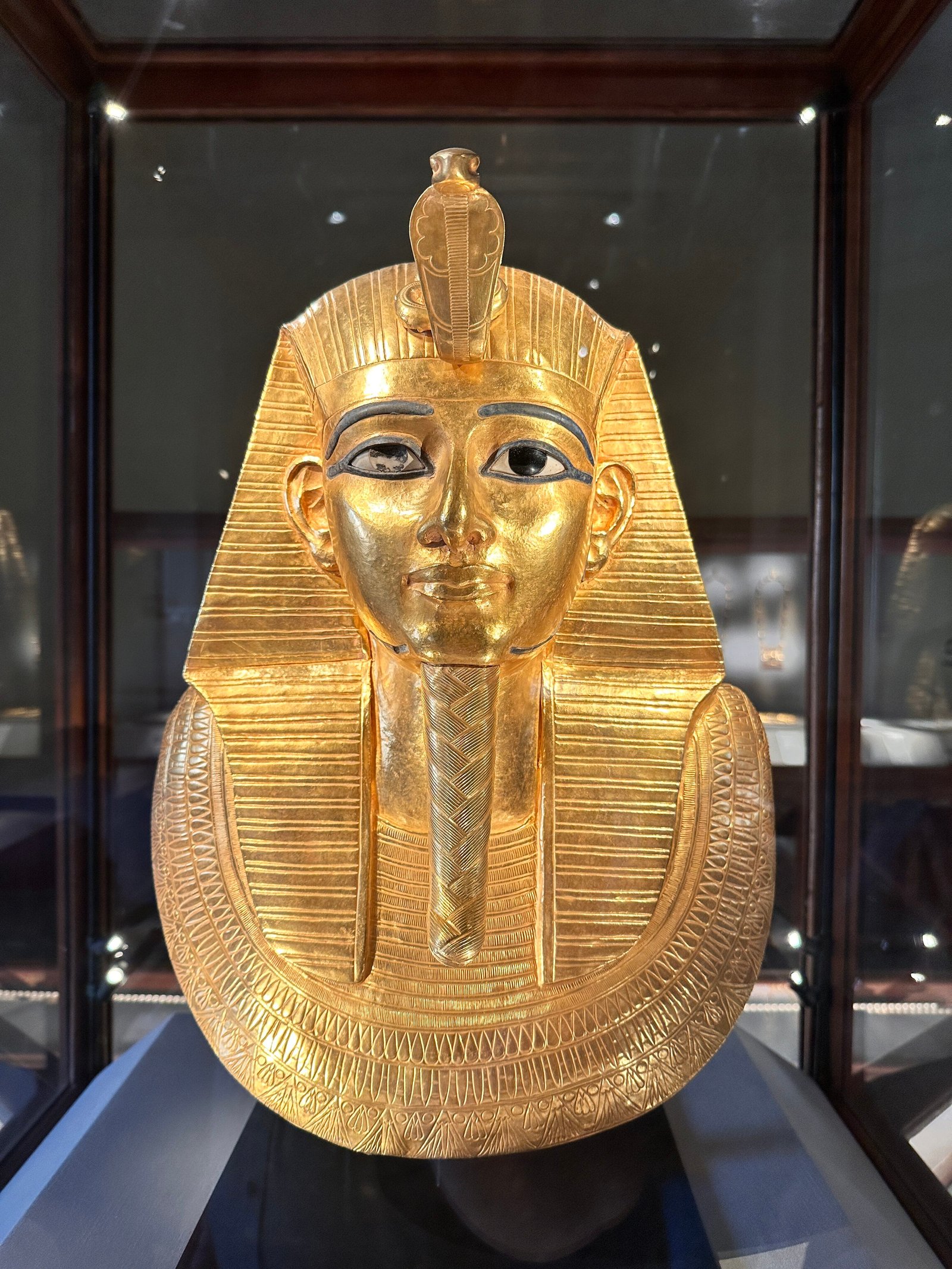
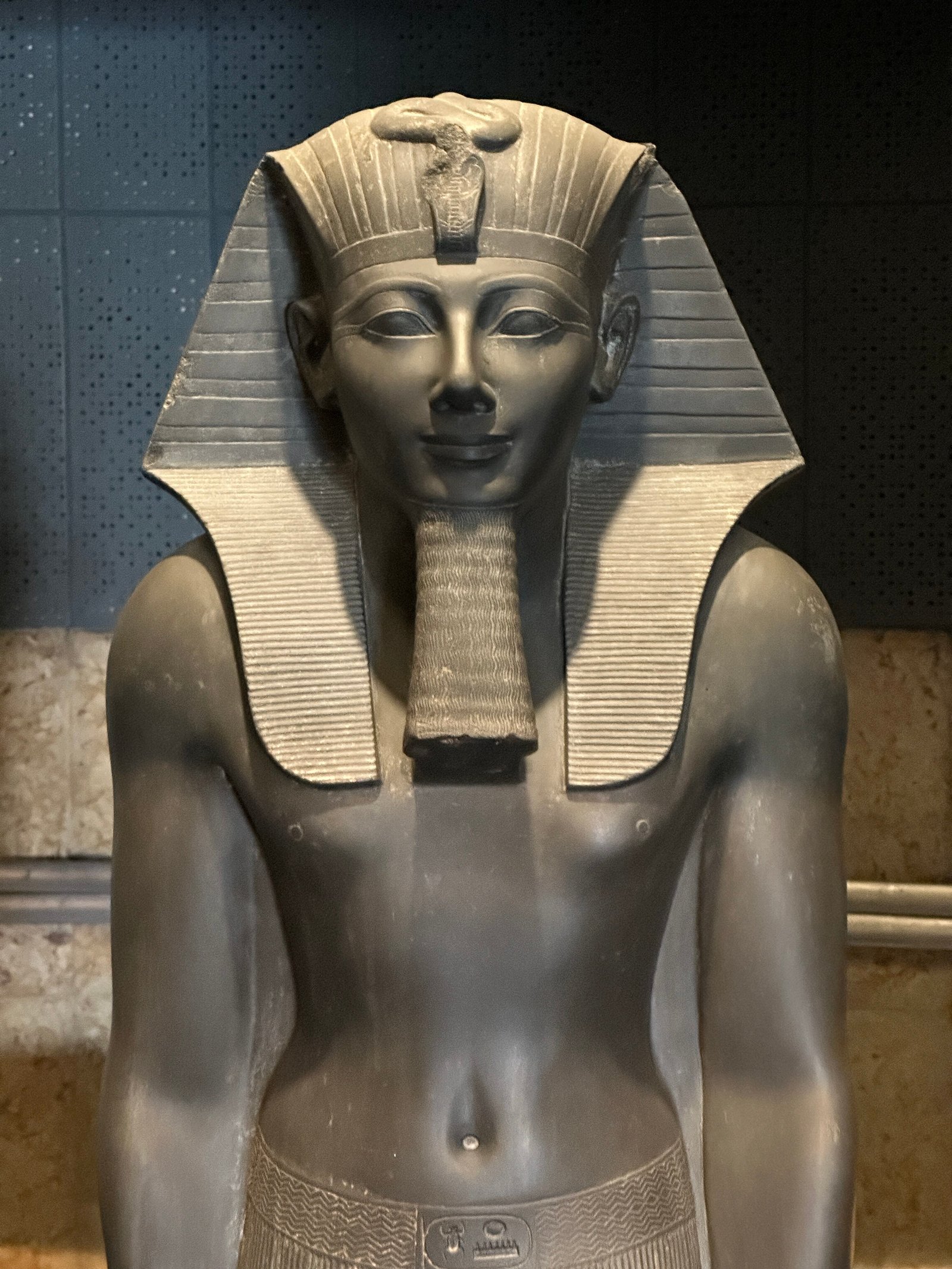
A closer photograph emphasizes the idealized royal face, striped nemes, uraeus, ceremonial beard, and upper body. These formal elements place the king within an established vocabulary of divine and royal authority rather than functioning as a modern naturalistic portrait.
The Deir el-Bahari Face — JE 90237
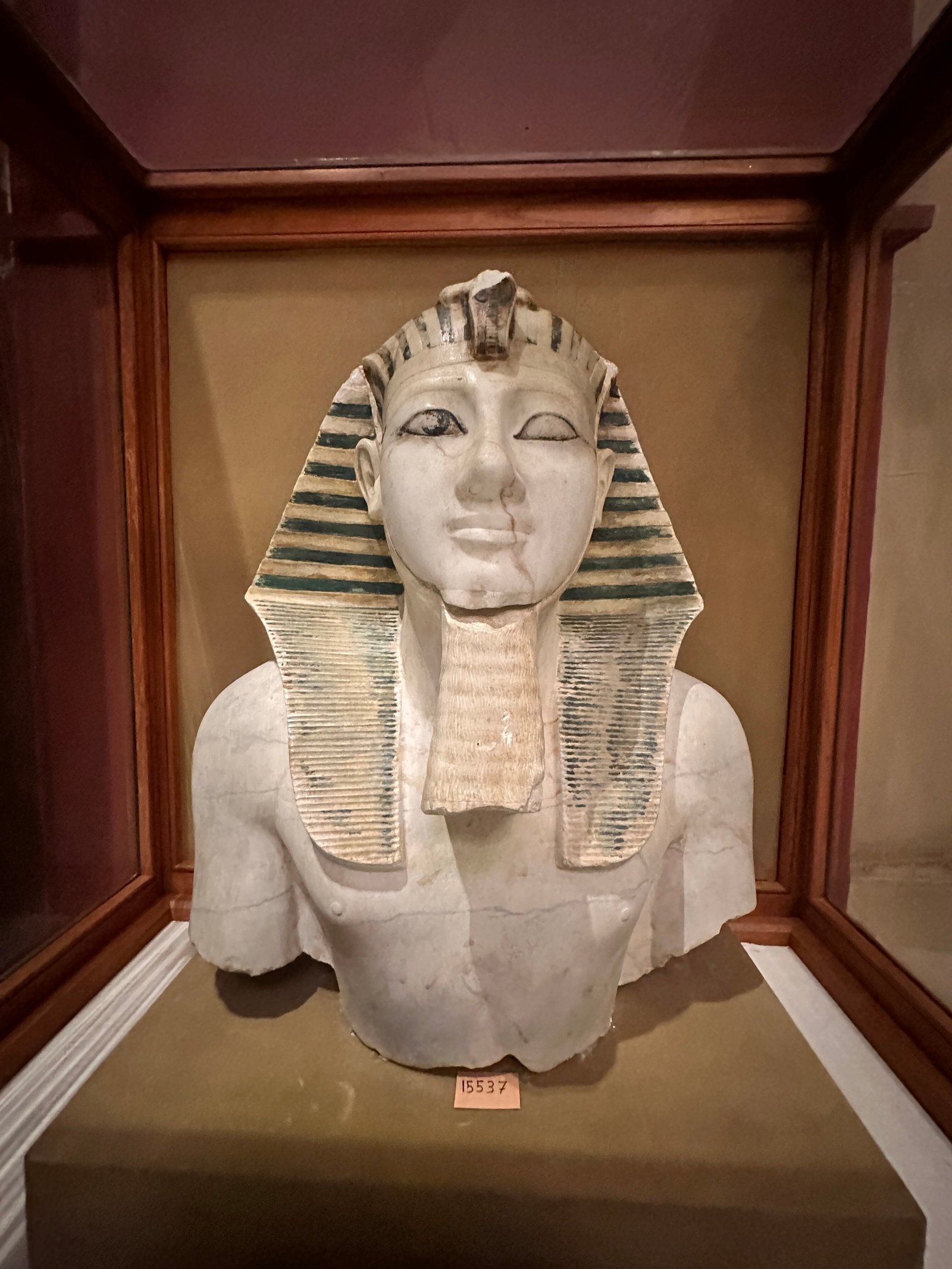
The second object has a more complicated modern history. The Metropolitan Museum of Art’s record for the matching torso, 07.230.3, explains that the original upper body was found by Edouard Naville during early twentieth-century excavations at Deir el-Bahari. The face had broken away in antiquity and was discovered only in the 1960s by Polish excavators clearing the adjacent temple of Thutmose III.
The original face is now in the Egyptian Museum in Cairo as JE 90237. The Met retains the original torso. In the 1990s the museums exchanged casts so each could display a reconstructed whole: Cairo’s exhibit combines the original face with a cast torso, while New York combines the original torso with a cast of the Cairo face.
Paint and Material
The Met identifies the original torso as indurated limestone, not marble. Surviving color is an important part of the sculpture’s appearance: blue and other pigments remain on the royal headdress and black paint emphasizes the eyes. The modern reconstructed displays were painted so that the casts visually match their ancient originals.
Two Archaeological Contexts, One King
The two objects should not be conflated. Luxor J.2 comes from the Karnak Cachette, a major deposit of royal and divine statuary. JE 90237 belongs to a statue associated with Deir el-Bahari. Together they demonstrate how a single ruler’s image circulated through different temple contexts and how later excavation, museum transfer, and reconstruction can complicate the modern identity of an ancient object.
Why Thutmose III Matters for Biblical-Egypt Context
Thutmose III belongs to the New Kingdom, a period central to many discussions of Egyptian imperial power in the Levant and to competing chronological models for biblical history. These statues do not identify a biblical event or person. Their value is firmer and more direct: they document the royal ideology, temple culture, material craftsmanship, and historical king at the center of Egypt’s 18th-Dynasty expansion.
For additional object-level records, see the Egypt Museum Artifact Index and the broader Biblical Egypt Research Index.
Research Sources and Further Reading
- Institut français d’archéologie orientale and Supreme Council of Antiquities. “Karnak Cachette CK 271.” Karnak Cachette Database. Object record.
- Metropolitan Museum of Art. “Upper Part of a Statue of Thutmose III.” Object 07.230.3. Collection record.