Shrine of Panehsy (JE 65041): Akhenaten, Nefertiti, and the Aten
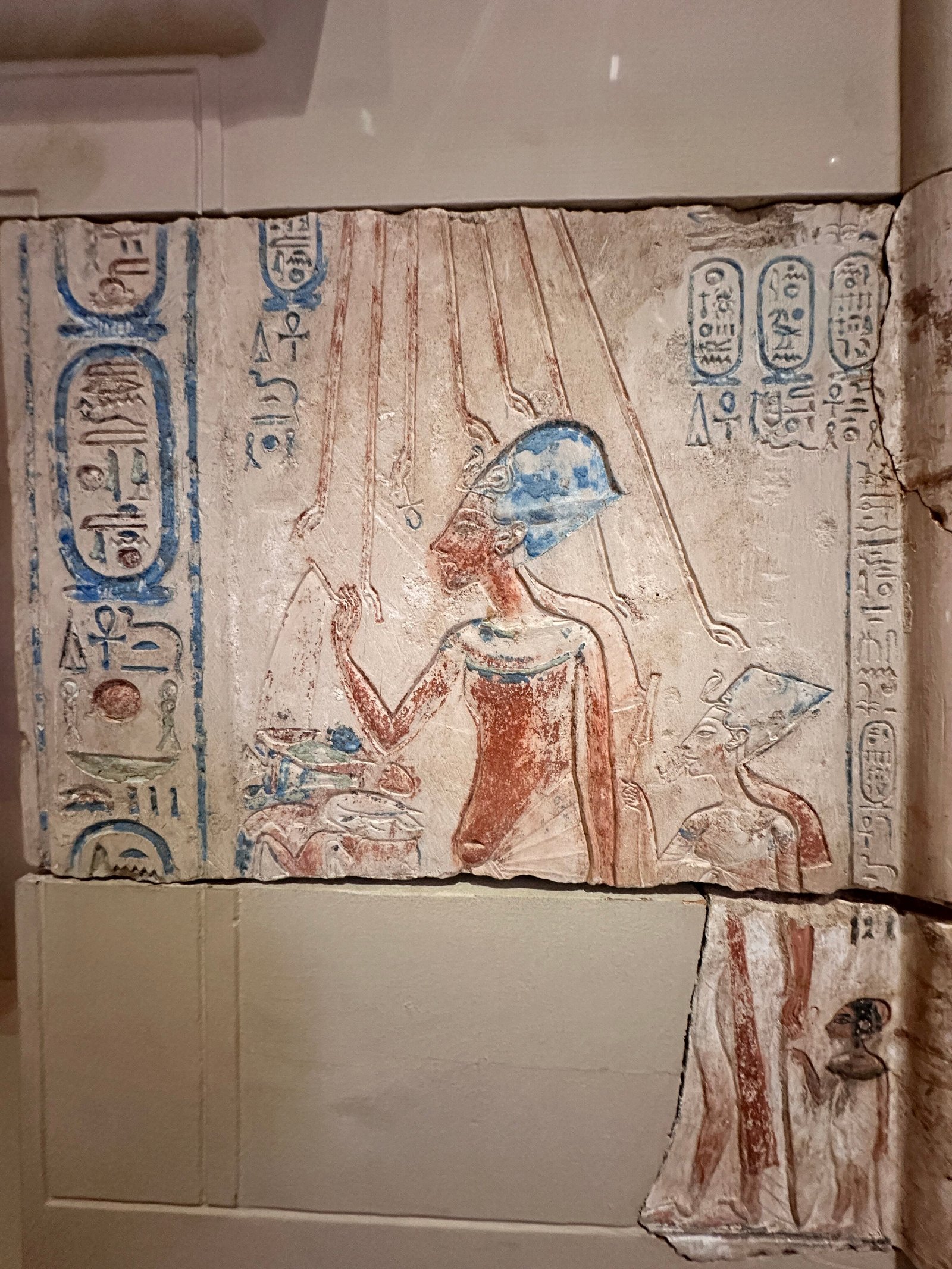
The painted limestone monument cataloged in the Egyptian Museum as JE 65041 is more precisely identified as the Shrine of Panehsy, a small domestic shrine façade excavated at Akhetaten, modern Tell el-Amarna. Its surviving reliefs depict Pharaoh Akhenaten, Queen Nefertiti, and a royal daughter performing ritual acts beneath the rays of the Aten.
Key Facts
- Object: Shrine of Panehsy / painted limestone house shrine.
- Primary inventory number: JE 65041.
- Additional catalog numbers: TR 14/2/27/1; SR 4/13255.
- Period: 18th Dynasty, Amarna Period.
- Ruler: Akhenaten (Amenhotep IV).
- Royal figures: Akhenaten, Nefertiti, and a royal daughter.
- Deity: Aten.
- Findspot: House R44.2 at Akhetaten (Tell el-Amarna).
- Excavation: Egypt Exploration Society, 1926–1927 season.
- Material: Painted limestone.
- Current collection: Egyptian Museum, Cairo.
A Domestic Shrine from Akhetaten
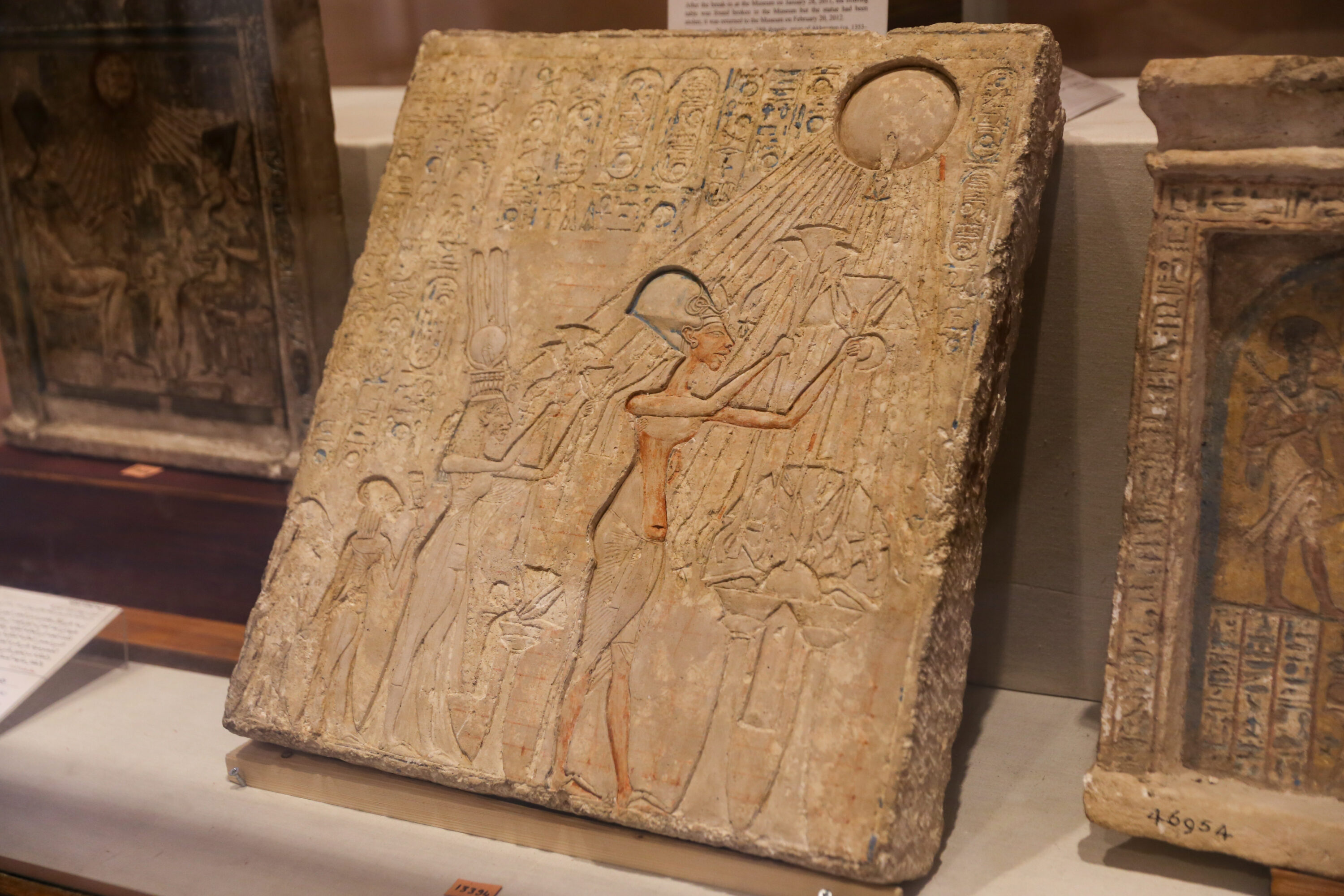
The Egypt Exploration Society’s documentation of the Shrine of Panehsy identifies the object as coming from house R44.2 at Akhetaten and records its excavation during the Society’s 1926–1927 work. The EES gives the monument’s dimensions as approximately 118 cm high by 98 cm wide and cross-references the Egyptian Museum numbers JE 65041, TR 14/2/27/1, and SR 4/13255.
This context is important because the object was not simply a detached temple relief. It belonged to a shrine installed within an Amarna house, showing how the visual language of Aten worship entered domestic or private ritual space.
Akhenaten and Nefertiti Beneath the Aten
The surviving scene shows the royal couple engaged in offerings beneath the Aten, represented as the solar disk whose rays terminate in hands. Akhenaten wears the blue khepresh crown, while Nefertiti accompanies him in the ritual. Getty scholarship identifies a royal daughter with the couple on the painted shrine façade and catalogs the same object as Cairo JE 65041.
The Hand-Ended Rays of the Aten
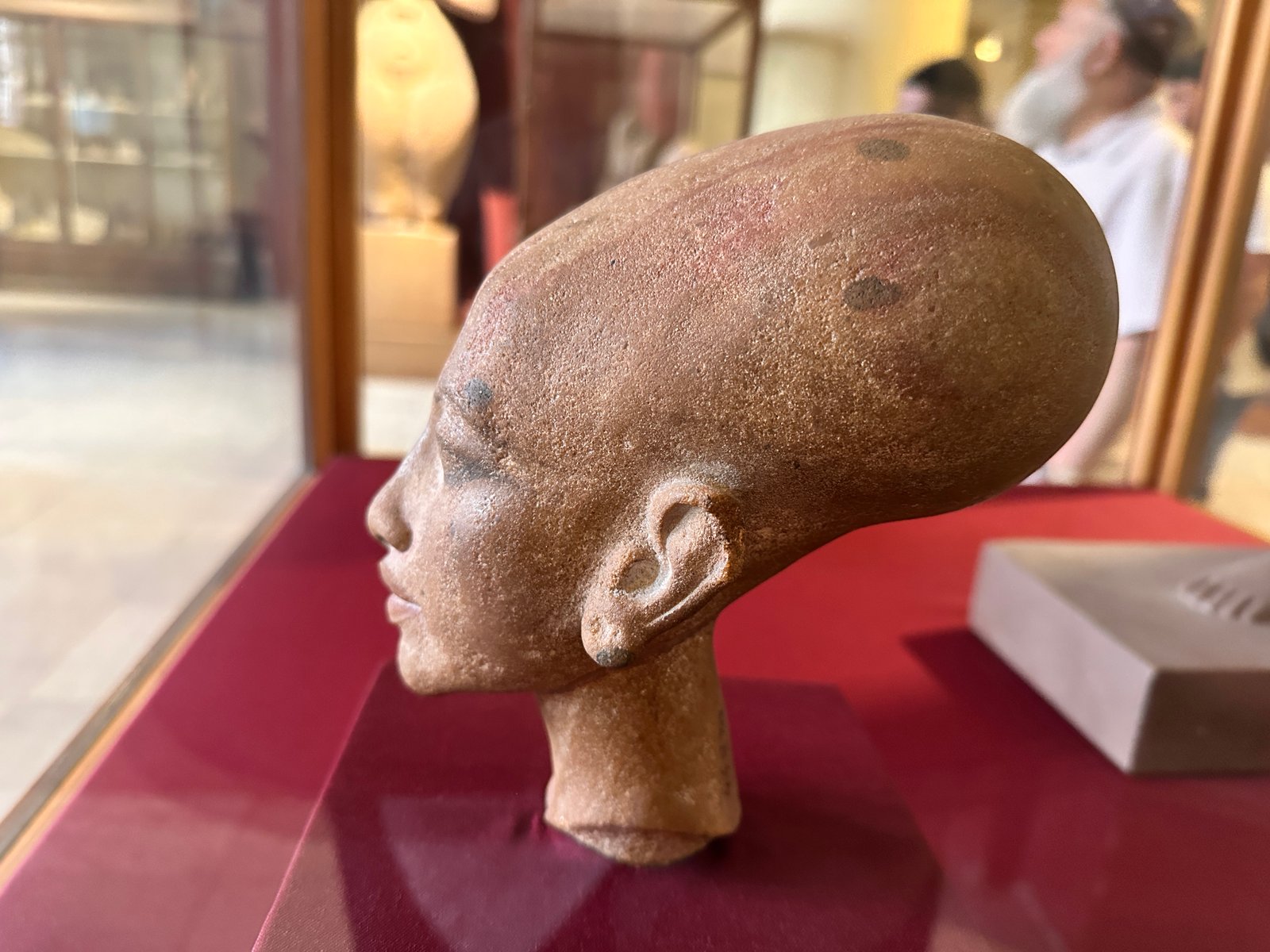
The imagery belongs to one of the defining visual conventions of the Amarna Period. Instead of representing the god in a conventional human or animal form, the Aten appears as the visible solar disk. Rays descend from the disk and terminate in hands, some presenting the ankh sign of life toward members of the royal family.
The Global Egyptian Museum’s overview of the Aten notes that this ray-and-hand form became characteristic under Akhenaten. The royal family occupies a central role within that visual theology.
Why JE 65041 Matters
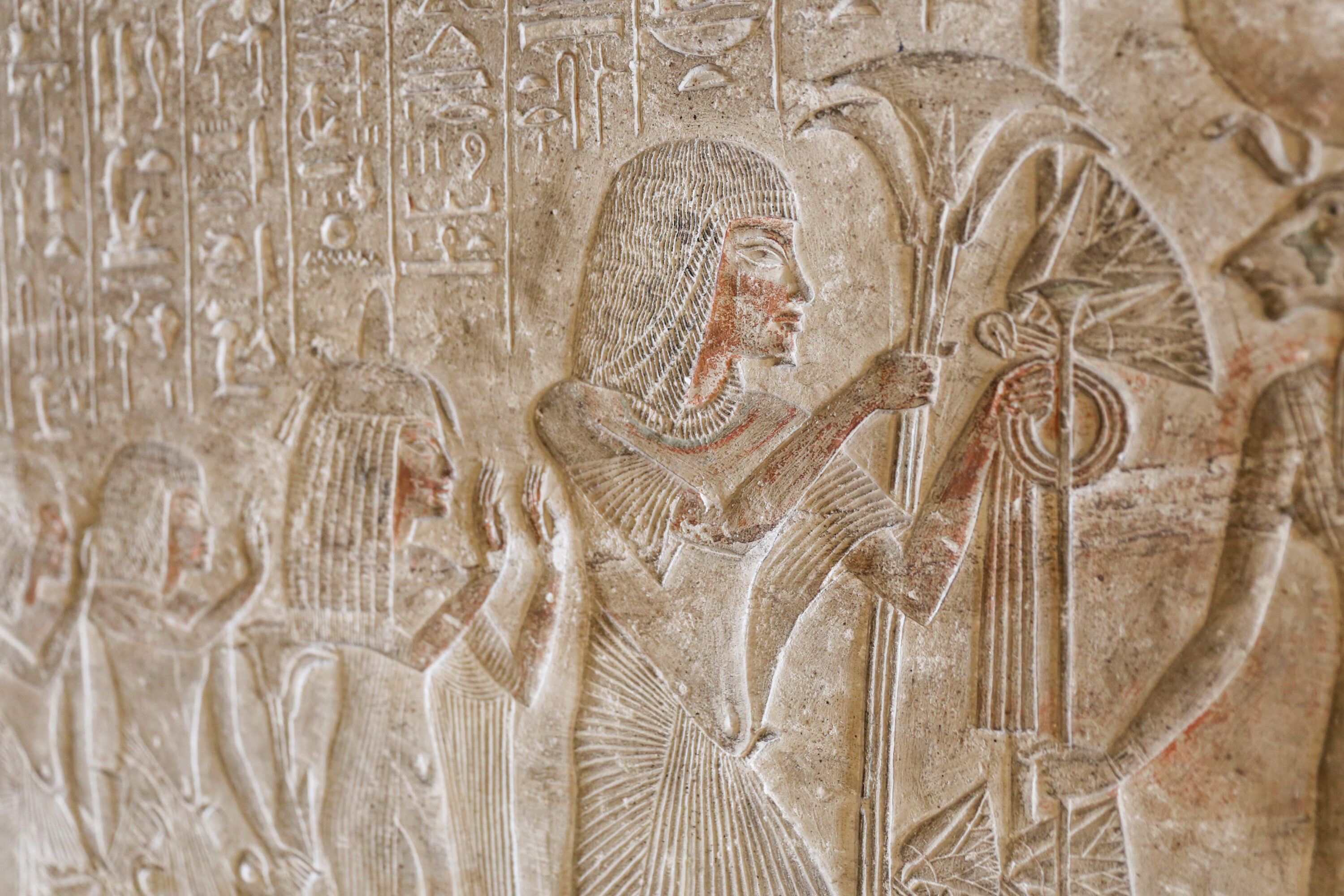
JE 65041 is valuable because it combines several kinds of evidence in one object: secure excavation context, a known private-house setting, preserved paint, royal iconography, and the distinctive theology of Akhenaten’s new capital. It helps move discussion of Amarna religion beyond the monumental temples and boundary stelae by showing how royal Aten imagery was reproduced in the built environment of the city itself.
The object should also be distinguished from other famous Amarna family scenes, including the separate limestone family stela cataloged as JE 44865. Similar subject matter does not mean identical object identity.
Akhetaten and the Amarna Revolution
Akhenaten established Akhetaten, “Horizon of the Aten,” as his royal residence. The city’s temples, palaces, elite houses, workshops, and tombs preserve the archaeological setting for the religious and artistic changes of his reign. The Global Egyptian Museum’s Akhetaten overview summarizes the foundation and short life of the city.
For Christian and biblical-history readers, the importance of JE 65041 is contextual rather than a proposed direct biblical identification. It is primary material evidence for Egyptian royal religion, divine kingship, household ritual, and the religious experimentation of the 18th Dynasty.
Related Egypt Christian Tours Research
See the Egypt Museum Artifact Index for other securely identified museum objects and the Biblical Egypt Research Index for the broader archaeology and history collection.
Research Sources and Further Reading
- Bianchi, Robert Steven, and John K. McDonald. In the Tomb of Nefertari: Conservation of the Wall Paintings. Malibu, CA: J. Paul Getty Museum, 1992. Getty PDF. Includes comparative discussion and illustration relevant to Cairo JE 65041.
- Egypt Exploration Society. “Shrine of Panehsy.” House R44.2, Akhet-Aten, JE 65041. Object sheet.
- Global Egyptian Museum. “Akhetaten.” Glossary entry.
- Global Egyptian Museum. “Aten.” Glossary entry.