The Second Stela of Kamose: Hyksos, Avaris, and Egypt’s Reunification
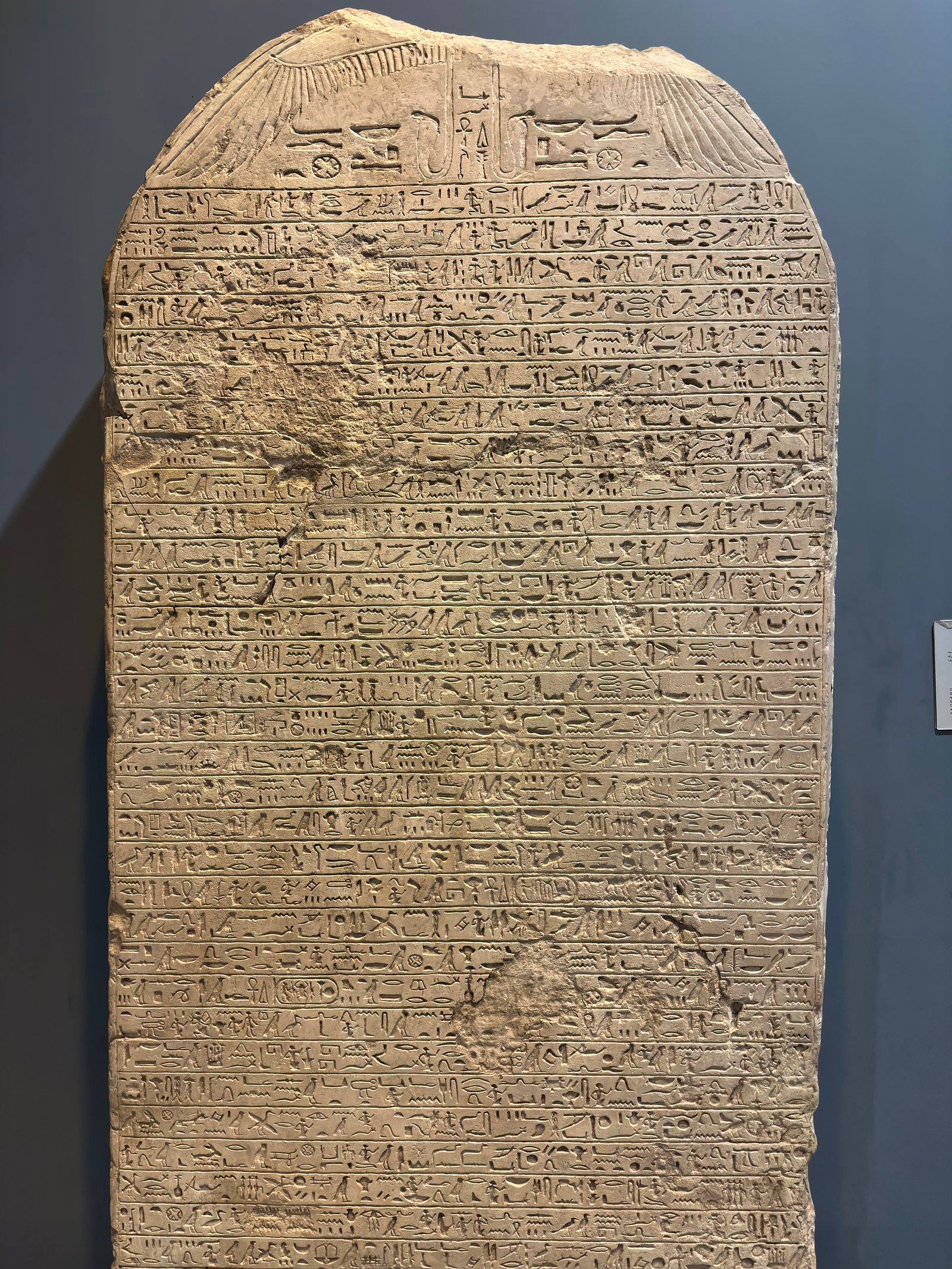
The Second Stela of Kamose, now displayed in Luxor Museum as J.43, is one of the most important Egyptian primary sources for the final phase of the Second Intermediate Period. Erected for the Theban ruler Kamose, the limestone monument celebrates his campaign against the Hyksos king Apophis and preserves unusually direct testimony about the political struggle between Thebes, the Hyksos capital at Avaris, and the kingdom of Kush.
Key Facts
- Object: Second Stela of King Kamose.
- Inventory number: Luxor Museum J.43.
- Ruler: Kamose, late 17th Dynasty.
- Period: Second Intermediate Period.
- Material: Limestone.
- Findspot: Karnak, in the Amun temple complex.
- Current location: Luxor Museum of Egyptian Art.
- Historical subject: Kamose’s war against the Hyksos ruler Apophis and the political world centered on Avaris.
A Royal Victory Text from Karnak
The stela is a round-topped limestone monument covered with hieroglyphic text. The Thesaurus Linguae Aegyptiae object record identifies the monument as Kamose-Stele II, gives its Luxor Museum inventory number J.43, and records its find at Karnak. The Egyptian Inscriptions Database likewise catalogs J.43, its Karnak findspot, repository, and hieroglyphic transcription.
Like other royal memorial texts, the inscription was created to present Kamose’s actions in an idealized royal framework. It is therefore a primary historical source, but not a neutral modern campaign report. Its claims should be read with the same care applied to other ancient victory inscriptions.
Kamose, Apophis, and the Hyksos
Kamose ruled from Thebes near the end of the 17th Dynasty, when Egypt was divided among competing political powers. The Hyksos rulers of the 15th Dynasty controlled the eastern Delta from their capital at Avaris, while Theban rulers held power in the south.
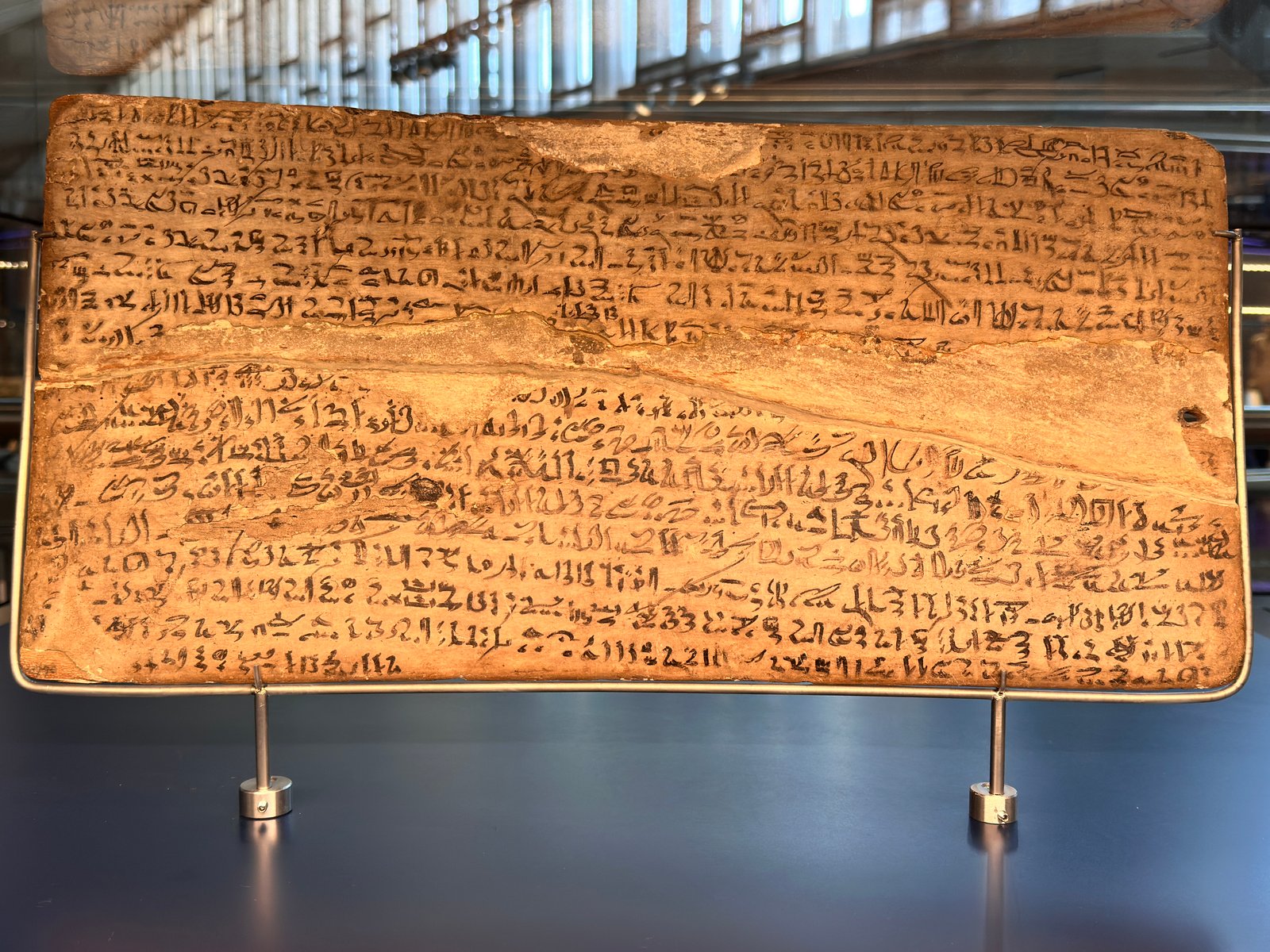
The Digital Karnak project summarizes the Second Stela as a commemoration of Kamose’s triumph over the Hyksos ruler Apophis. The text begins with an intercepted communication from Apophis to the ruler of Kush requesting assistance against Kamose, then continues with Kamose’s account of his campaign.
Avaris and the Eastern Nile Delta
The Hyksos capital named in this political world is Avaris. Modern archaeology securely identifies Avaris with Tell el-Dab’a in Egypt’s eastern Nile Delta. The Austrian Archaeological Institute, which has excavated Tell el-Dab’a for decades, identifies the site with certainty as Avaris, capital of the Hyksos, and documents its later incorporation into the Ramesside city of Pi-Ramesses.
This makes the Kamose inscription especially valuable when paired with archaeology from the Delta. The stela supplies the royal Theban voice of the conflict, while Tell el-Dab’a preserves the physical remains of the city and population against which that campaign was directed.
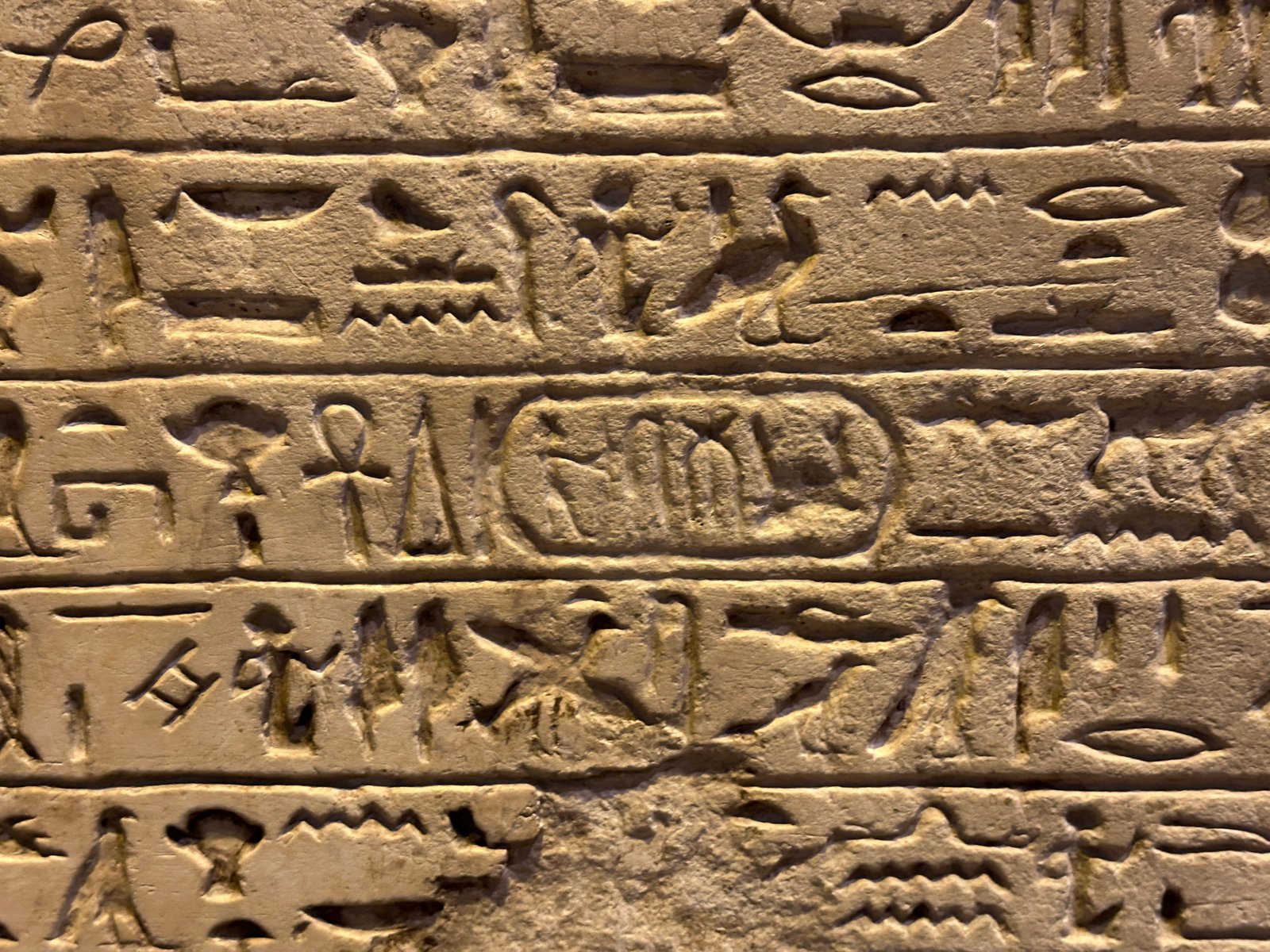
Kamose’s Cartouche on J.43
A close photograph from the same monument isolates Kamose’s royal cartouche within the dense hieroglyphic inscription. The preserved royal names are part of what securely anchors the monument to Kamose’s reign.
The Museum Identification
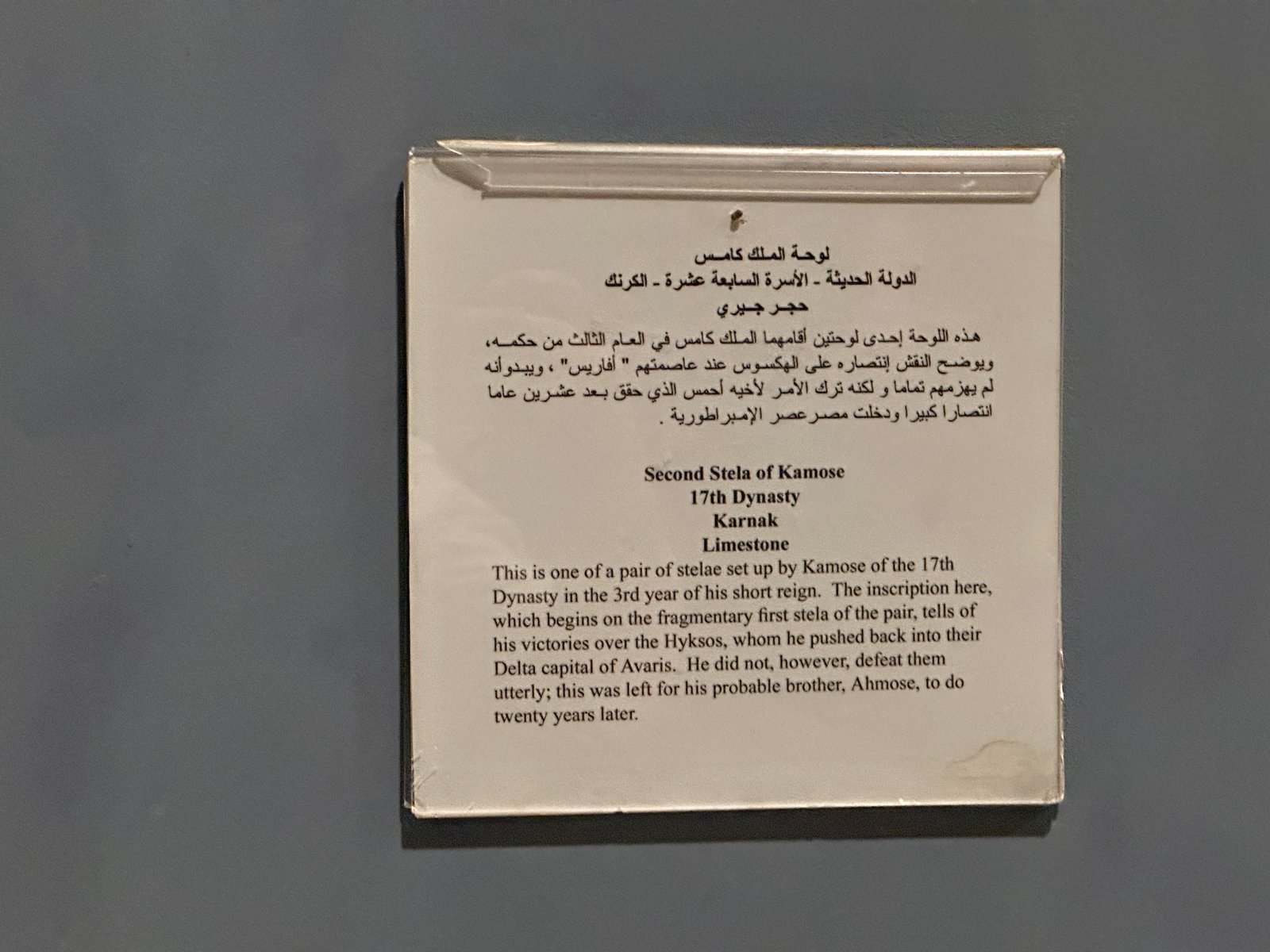
The Luxor Museum exhibit label identifies the object as the Second Stela of Kamose and places it within the struggle against Hyksos rule. Preserving a photograph of the museum label alongside the monument and inscription detail provides an additional layer of documentation for the object’s modern display context.
What the Stela Establishes — and What It Does Not
J.43 directly documents the royal conflict between Kamose and the Hyksos regime and is a major textual source for the political conditions immediately before the New Kingdom. Combined with excavations at Tell el-Dab’a, it helps reconstruct the historical setting of Avaris and the eastern Delta.
The stela does not name Joseph, the Hebrews, Moses, or the Exodus. Its relevance to biblical Egypt is therefore contextual. It helps establish the political and geographical world of the Second Intermediate Period and the transition from Hyksos rule to the reunified New Kingdom, but proposed correlations with biblical chronology require separate arguments.
Why It Matters for Biblical Egypt
Avaris is central to discussions of Semitic populations in the eastern Nile Delta and to proposed reconstructions of the biblical land of Goshen. The Kamose stela gives us an Egyptian primary text from the period when the Hyksos state centered there was being challenged by the Theban dynasty. For readers studying the historical world behind Genesis and Exodus, it is valuable evidence for the real cities, rulers, political divisions, and military struggles of the Delta—without requiring the inscription itself to be treated as a biblical text.
Research Sources and Further Reading
- Austrian Archaeological Institute. “Tell el-Dabʿa / Avaris.” Project page.
- Digital Karnak. “Victory Stela of Kamose.” University of California, Los Angeles. Project page.
- Egyptian Inscriptions Database. “Second Stela of Kamose, J.43.” Object record and transcription.
- Thesaurus Linguae Aegyptiae. “Kamose-Stele II, J.43.” Object record.
Image licensing: Original Egypt Christian Tours photography is available under the licensing terms stated in the Egypt Photo Gallery. Preferred attribution: Photo by Nate Loper / EgyptChristianTours.com.