Where Was the Heliacal Rise of Sothis Observed?
Rethinking the Case for Memphis and Heliopolis
Among the many tools used to reconstruct the chronology of ancient Egypt, few have had a greater influence than an astronomical event known as the heliacal rising of Sothis. While the subject may sound highly technical, it plays a surprisingly important role in determining the dates of some of Egypt’s most famous pharaohs. The chronology of rulers such as Amenhotep I, Thutmose III, and Amenhotep II is tied, at least in part, to the interpretation of a single observation recorded over 3,500 years ago.
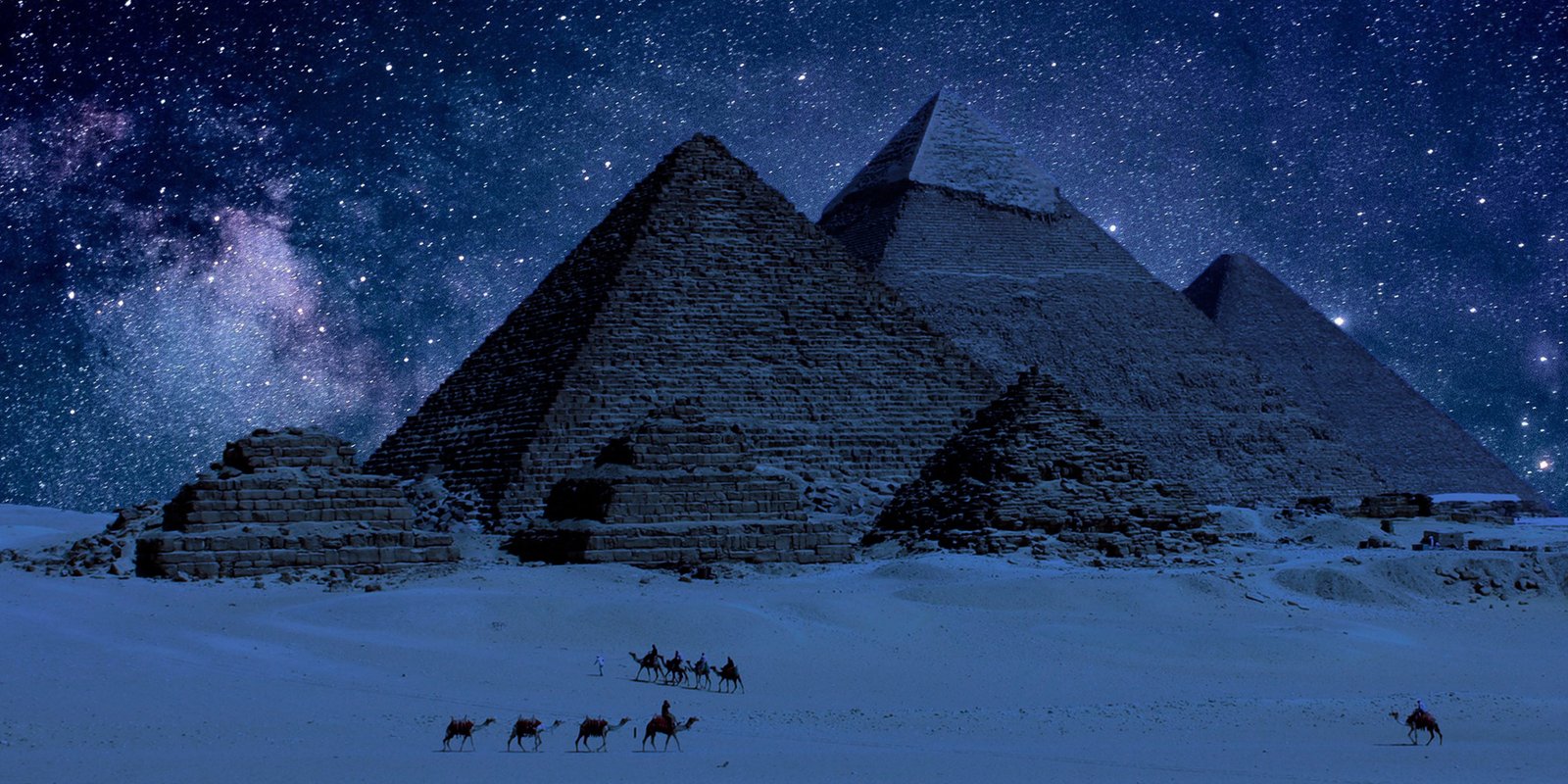
The star known to the Egyptians as Sothis is the same star we call Sirius today. As the brightest star in the night sky, Sothis held great significance in Egyptian culture and religion. Each year, after disappearing from view for a period of time as it passed behind the sun, Sothis would make its first visible appearance just before sunrise. This event, known as its heliacal rising, became closely associated with the annual Nile inundation and the Egyptian calendar.
Because the Egyptian civil calendar consisted of 365 days and did not include a leap year, it gradually drifted relative to the solar year. Over long periods of time, the date on which Sothis first appeared would slowly move through the calendar. This predictable drift provides historians with a valuable chronological tool. If an ancient document records the heliacal rising of Sothis on a particular calendar date, astronomers can work backward and estimate when that observation took place.
 One of the most famous references occurs in the Ebers Papyrus, a document containing a brief note that records the heliacal rising of Sothis during Year 9 of Pharaoh Amenhotep I. Although the entry itself is short, its implications are enormous. Because the reign of Amenhotep I can be anchored using this observation, the reigns of later pharaohs in the 18th Dynasty can also be estimated. As a result, a single astronomical observation influences the dating of some of the most important rulers in Egyptian history.
Yet there is a problem that often receives far less attention than it deserves. The ancient text records the date of the observation, but it never tells us where the observation was made.
At first glance this may seem like a minor detail, but it is anything but minor. The heliacal rising of Sothis is not observed on the same day throughout Egypt. An observer at Elephantine in southern Egypt would see Sothis before an observer at Thebes. Likewise, an observer at Thebes would see it before an observer at Memphis or Heliopolis. The Egyptians were careful observers of the heavens and would certainly have been aware of these differences.
This means that the location chosen for the observation directly affects the resulting chronology. Depending upon whether the observation is calculated from the latitude of Thebes or from the latitude of Memphis and Heliopolis, the dates assigned to the reign of Amenhotep I—and consequently to later pharaohs such as Thutmose III and Amenhotep II—can shift by approximately twenty years. For an event that plays such an important role in Egyptian chronology, the location of the observation becomes a question of considerable significance.
While most scholars traditionally favored Heliopolis/Memphis, today some scholars favor Thebes as the observation site. This is understandable. Amenhotep I belonged to a Theban dynasty, his mortuary cult was centered at Thebes, and the Ebers Papyrus itself was discovered in the Theban region. These are reasonable considerations. Yet none of them actually demonstrate that the observation was made there. The text itself never identifies Thebes as the location, nor does it mention Memphis, Heliopolis, or any other city. The observation site must therefore be inferred.
The distinction is important because finding a document in a particular location does not necessarily reveal where the information originated. Ancient Egyptian scribes copied and recopied texts for centuries. Records were transmitted between temples, archives, and administrative centers across the country. The Ebers Papyrus itself is not an original Year 9 document from the reign of Amenhotep I but a later copy preserving older material. Its discovery in Thebes tells us where one copy was preserved, not necessarily where the original observation was made.
When we begin to consider the broader context of Egyptian administration, Memphis emerges as a location worthy of serious consideration. For much of Egyptian history, Memphis functioned as one of the kingdom’s principal centers of government, commerce, military organization, and record keeping. Even during periods when royal residences shifted elsewhere, Memphis retained its importance as a hub connecting Upper Egypt, Lower Egypt, the Delta, Sinai, Libya, and the trade routes of the ancient Near East.
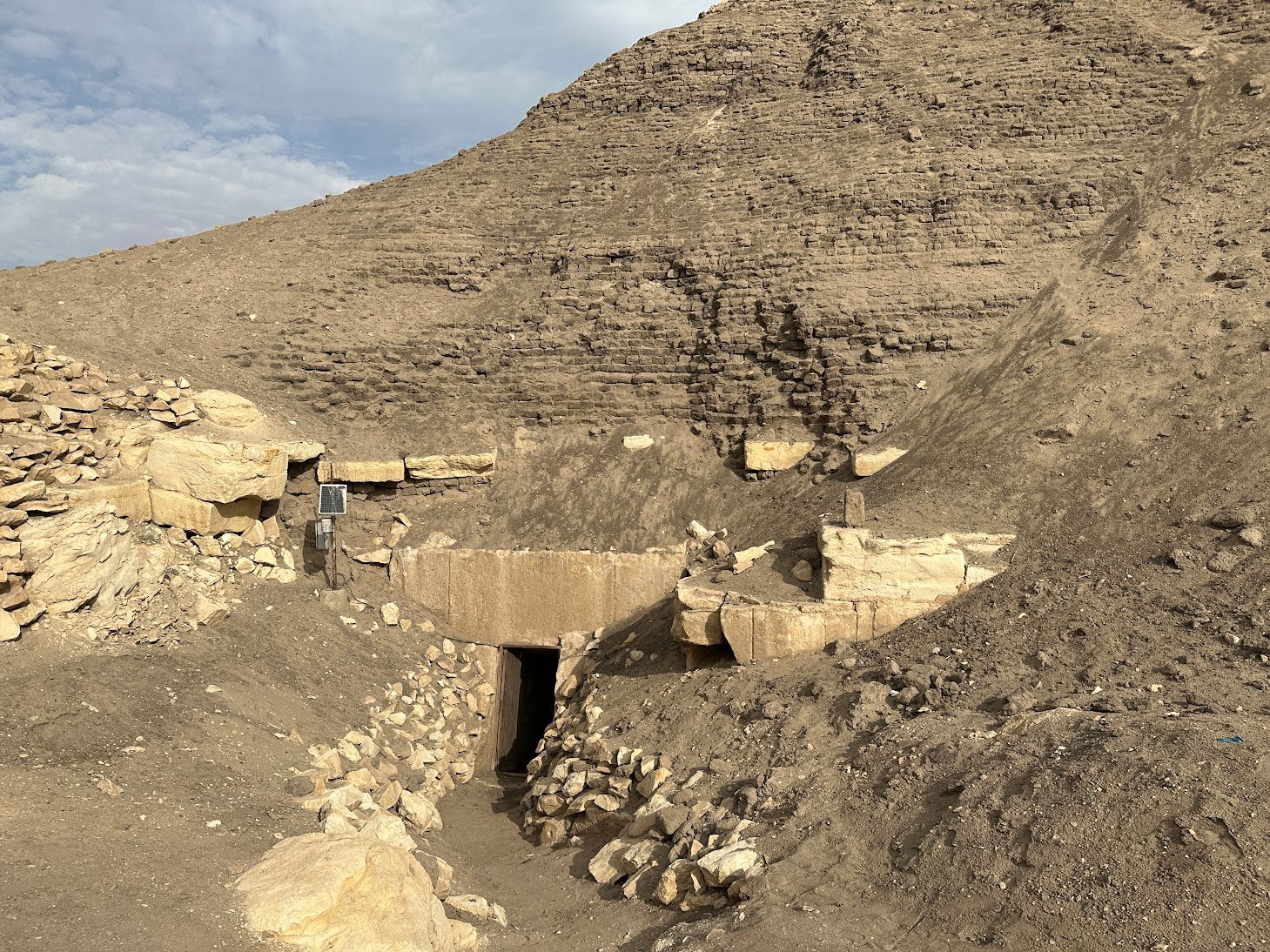
Pyramid of Amenemhat III at Hawara in the Faiyum – Nate Loper
This was true even during the Middle Kingdom, when the royal capital was established near the Faiyum at Itjtawy. Although the king resided elsewhere, Memphis continued to serve as one of the most important administrative centers in the country. A similar situation may have existed during the early 18th Dynasty. While the royal family was closely associated with Thebes, it does not necessarily follow that every national institution, archive, or astronomical tradition moved there as well.
The neighboring city of Heliopolis adds another layer to the discussion. Long associated with solar worship, priestly scholarship, and astronomical knowledge, Heliopolis was one of the intellectual centers of ancient Egypt. If Egypt maintained a long-standing tradition of astronomical observations for calendrical purposes, Heliopolis would seem a natural candidate. Its proximity to Memphis further strengthens the possibility that the two cities functioned together as an administrative and astronomical center for the kingdom.
Perhaps the strongest argument for Memphis and Heliopolis is not archaeological but practical. A unified kingdom requires consistency. The Egyptians understood that Sothis would become visible on different days depending on where one stood in the country. If the heliacal rising was important enough to be recorded and used for calendrical purposes, it would make sense for Egypt to establish a standard observation point rather than allowing the official date to change whenever the royal residence moved and thereby throwing off the entire calendar of accounting for thousands of years. Memphis and Heliopolis, with their long-standing institutional importance, would have been logical locations for such a fixed reference point.
The Hyksos and the Question of Continuity
One of the reasons Memphis and Heliopolis are often overlooked in discussions of the Sothic observation is the lingering influence of older views regarding the Hyksos period. For much of the twentieth century, historians commonly described the Hyksos as foreign invaders who swept into Egypt, conquered the Delta through military superiority, and established control over Lower Egypt while native Egyptian rulers were pushed into the south.
Within that framework, it was easy to imagine a sharp division between north and south. If the Hyksos controlled the Delta and the Theban rulers controlled Upper Egypt, then it seemed reasonable to assume that important Egyptian institutions had retreated southward as well. Under such a model, a Theban observation of Sothis appeared not only plausible, but perhaps inevitable.
Over the past several decades, however, archaeological discoveries have painted a much more nuanced picture.
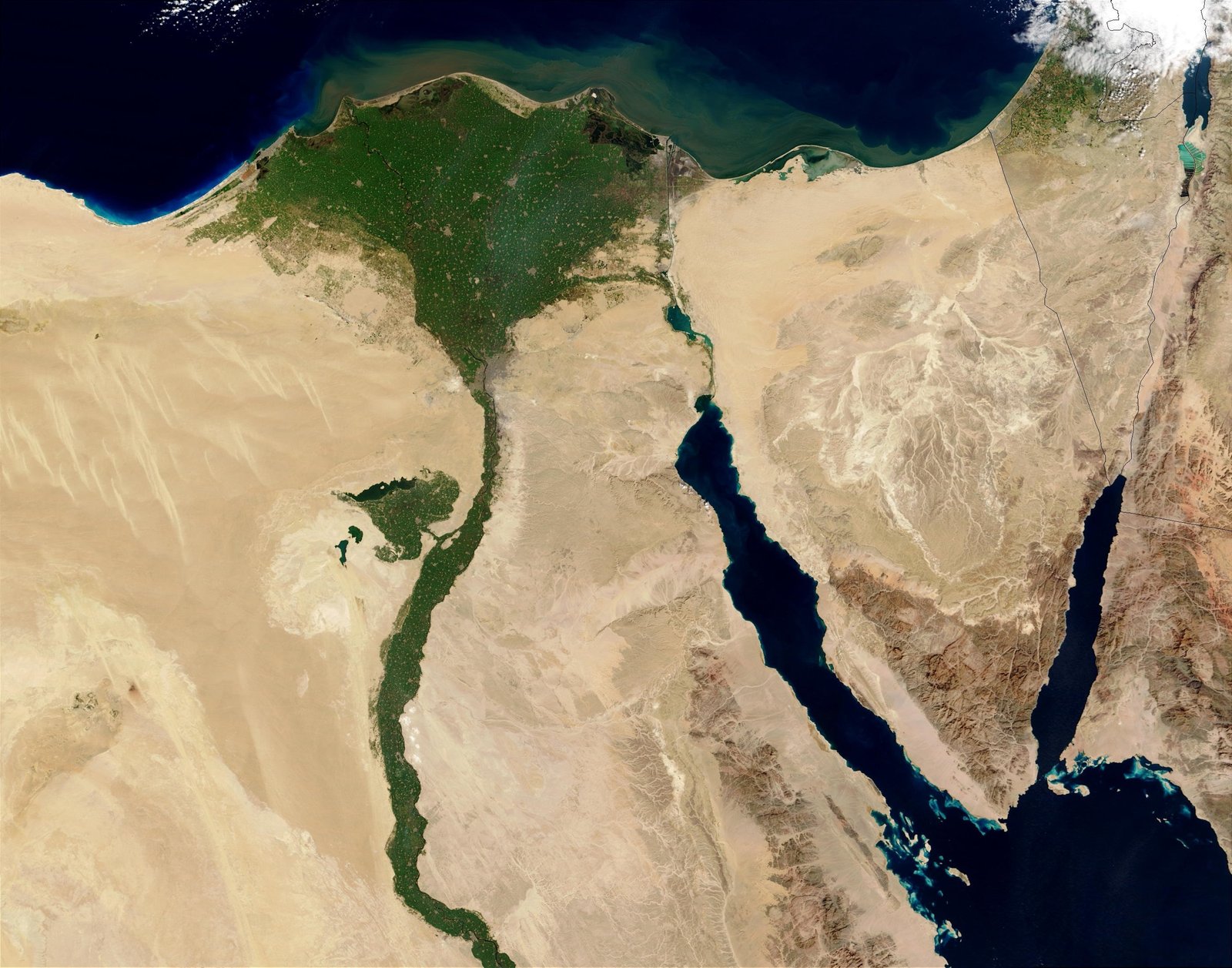 Excavations by Manfred Bietak at Avaris, the Hyksos capital in the eastern Delta, have revealed evidence of a gradual influx of people from the Levant rather than a sudden military conquest. The material culture of the site shows centuries of interaction, settlement, and cultural blending. Egyptian and Near Eastern traditions existed side by side, and the archaeological record lacks the widespread destruction one might expect from a dramatic invasion that displaced Egyptian civilization from the north.
Even the written sources from the period suggest a more complicated relationship than outright occupation. The famous Kamose Stela portrays political tensions between the Theban rulers and the Hyksos kings, yet it also indicates ongoing economic interaction. Kamose complains that Egypt was divided between rival powers, but he does not describe a north that had become devoid of Egyptian life, administration, or influence. In fact, the text implies that trade and agriculture continued across political boundaries. One passage even refers to cattle being raised under Hyksos husbandry to be sent to Thebes in Upper Egypt, suggesting a level of economic normalcy that does not fit the image of a devastated or abandoned northern Egypt.
This matters because many assumptions regarding the location of the Sothic observation rest upon an older historical framework. If one imagines the Hyksos period as a complete break in Egyptian administration and institutional continuity, then it becomes easier to argue that traditional centers such as Memphis and Heliopolis lost their importance. Yet the archaeological evidence increasingly points toward continuity rather than collapse.
Memphis, in particular, presents an interesting case. As one of the oldest and most important cities in Egypt, it had served for centuries as a center of administration, trade, religion, and royal authority. Despite its significance, our evidence for Memphis during the Second Intermediate Period is frustratingly incomplete. What is often overlooked, however, is that a lack of evidence is not evidence of absence. There is no clear archaeological or textual record indicating that Memphis ceased to function as an important Egyptian center during this period. Nor is there evidence that its scribal, religious, or administrative traditions disappeared.
Indeed, it may be more reasonable to assume the opposite. Institutions that had developed over many centuries tend to exhibit remarkable continuity, even during periods of political instability. Throughout history, governments have risen and fallen while archives, temples, priesthoods, and administrative systems have continued to operate. Ancient Egypt was no exception.
By the time of Amenhotep I, the situation becomes even more significant. The Hyksos had already been expelled by Ahmose, Egypt was once again unified, and the early 18th Dynasty had established itself as the dominant power in the Nile Valley. Whatever political divisions had existed during the Second Intermediate Period no longer prevented communication between Upper and Lower Egypt. Memphis was fully integrated into the kingdom, and there is little reason to assume that northern centers would have been excluded from administrative or astronomical activities.
For this reason, the question should not be framed as whether Memphis can be proven to have served as the observation site. Rather, the question is whether there is sufficient reason to exclude it. Once the older invasion narrative is reconsidered in light of modern archaeology, many of the traditional objections begin to lose their force. Memphis and Heliopolis emerge not as unlikely alternatives, but as historically plausible candidates that remained connected to the institutions and traditions of the Egyptian state throughout the transition from the Hyksos period into the rise of the 18th Dynasty.
A Kingdom-Wide Calendar Standard
Beyond questions of archaeology and political history lies a simpler and perhaps more practical consideration. If the heliacal rising of Sothis was important enough to be recorded and used as a chronological reference point, how would a unified kingdom ensure that everyone was referring to the same event?
The problem is straightforward. Sothis does not become visible on the same morning throughout Egypt. Because of the country’s considerable north-south length, observers at Elephantine, Thebes, Memphis, and the Delta would not all witness the star’s first appearance on the same date. The difference may only amount to a few days, but when modern scholars use these observations to reconstruct ancient chronology, those few days can translate into decades.
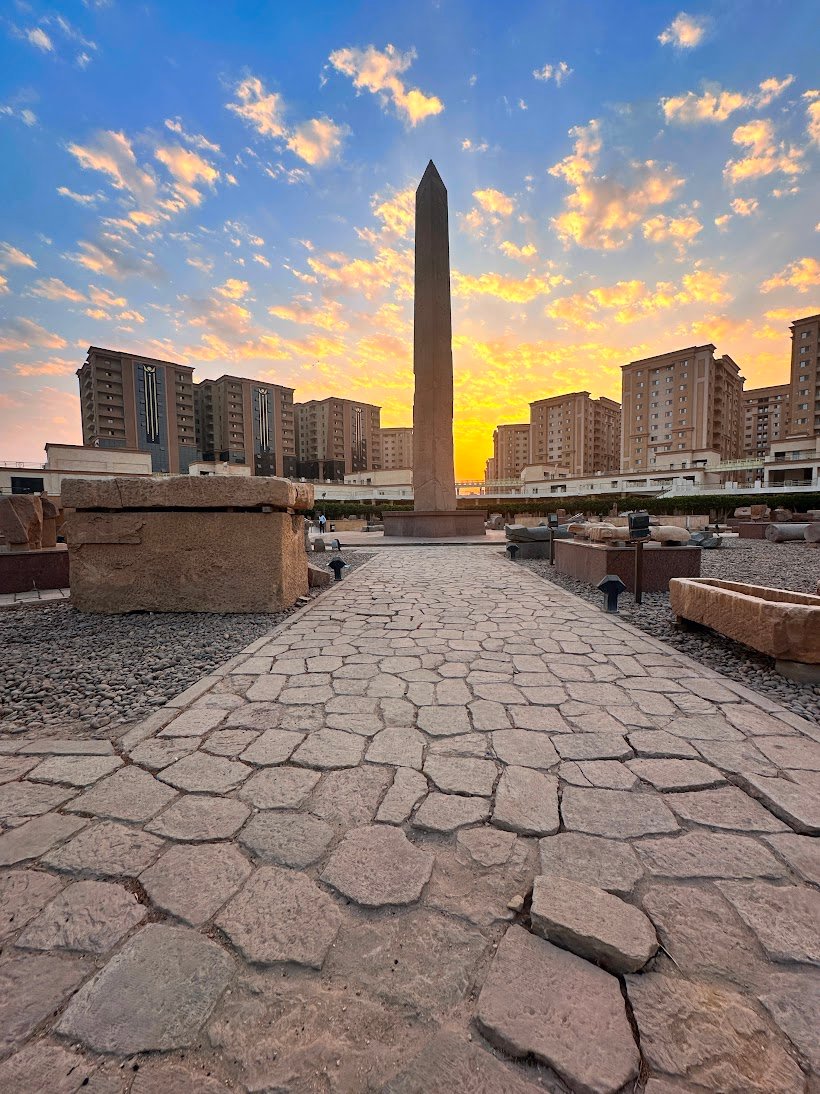
Obelisk of Amenemhat I at Heliopolis – Nate Loper
The Egyptians were among the most careful sky-watchers of the ancient world. They tracked the motions of stars, regulated religious festivals, and developed calendars that remained in use for centuries. It is difficult to imagine that they were unaware of the fact that Sothis rose at different times depending on where one stood in the country. If modern historians recognize this problem, surely the ancient Egyptians did as well.
This raises an important question. Would Egypt have allowed the official date of the heliacal rising to shift whenever the royal residence changed locations? If a pharaoh spent more time in Thebes, would the kingdom suddenly begin observing Sothis from Thebes? If a later king preferred Memphis, would the official observation move north again? Such a system could introduce unnecessary inconsistency into a calendrical framework used across the kingdom. This makes the possibility of a maintained reference point worth considering, even though the surviving evidence does not identify one for Amenhotep I’s observation.
A more natural solution would have been to establish a fixed reference point from which official observations were made and recorded. Once determined, that date could then be communicated throughout the kingdom regardless of where the pharaoh happened to reside. Such a system would provide continuity from one reign to the next and would avoid the confusion that would arise from constantly changing observation latitudes.
When viewed from this perspective, Memphis and Heliopolis become particularly attractive candidates. Both cities occupied a central position within Egypt’s administrative and religious life. Memphis remained one of the kingdom’s principal governmental centers for much of Egyptian history, while Heliopolis was renowned for its priesthood and scholarly traditions. Together they formed an institutional heartland that endured through changes in dynasties, capitals, and royal residences.
This distinction between a royal residence and an administrative center is often overlooked. Ancient capitals were not always chosen because they occupied the most practical geographic location. They frequently reflected dynastic origins, religious significance, or political symbolism. Thebes rose to prominence because it was the homeland of the rulers who expelled the Hyksos and reunified Egypt. Its importance to the 18th Dynasty is beyond question. Yet symbolic importance does not necessarily mean that every function of government was concentrated there.
The Middle Kingdom provides a useful example. During that period the royal residence was established at Itjtawy near the Faiyum, yet Memphis, a day’s journey away, continued to function as a major administrative center. The location of the king and the location of long-standing institutions were not always the same thing. A similar distinction may have existed during the New Kingdom.
This possibility becomes even more intriguing when we consider later evidence. Although separated from the reign of Amenhotep I by many centuries, ancient testimony from the Greco-Roman period indicates that Memphis served as the reference point for determining the heliacal rising of Sothis. This does not conclusively prove that the same practice existed during the 18th Dynasty, but it does support it and demonstrates that the concept of a fixed Memphite observation tradition was known in antiquity.
The significance of this later testimony lies not in what it proves, but in what it suggests. If Memphis served as the recognized reference point during later periods of Egyptian history, then the idea of a centralized observation system was neither unusual nor unprecedented. Rather than inventing a new tradition, later Egyptian astronomers may have been preserving one that stretched much further into the past.
The likelihood of a Memphite locus for official observation is entirely consistent with what we know about Egyptian administration, astronomy, and the need for standardized calendrical observations. Far from being an unlikely alternative, a Memphite or Heliopolitan observation point may represent the kind of practical solution one would expect from a civilization renowned for its organization, continuity, and attention to detail.
The Challenge of Proving a Theban Observation
The observations outlined help us to see that the commonly accepted Theban observation is not as firmly established as it is sometimes presented.
Many discussions of Egyptian chronology proceed as though the observation site is known. Yet when we examine the evidence closely, we discover that the critical assumption is rarely stated. The Ebers Papyrus does not identify Thebes. No surviving text from the reign of Amenhotep I states that official astronomical observations were made there. Nor do we possess a royal decree establishing Thebes as the kingdom’s reference point for determining the heliacal rising of Sothis.
 Instead, the argument is largely circumstantial. Amenhotep I belonged to a Theban dynasty. His tomb and mortuary cult were located in the Theban region. The surviving copy of the Ebers Papyrus was discovered there. From these facts, many scholars conclude that the observation itself was made at Thebes.
The difficulty is that none of these facts necessarily lead to that conclusion.
A king’s burial place does not automatically reveal where administrative records originated. Likewise, the discovery location of a manuscript tells us where a copy was preserved, not where the information was first recorded. Ancient Egyptian texts were copied, transported, archived, and recopied over generations. The original source behind a document and the place where a surviving copy is found are often two very different things.
An analogy may help illustrate the point. Imagine a future historian attempting to reconstruct the history of the United States from documents preserved in the Library of Congress. The fact that many records are housed in Washington, D.C., would not mean that every author lived there, that every event took place there, or that all information originated there. The archive preserves the records, but it does not necessarily reveal their place of origin.
A similar caution applies to the Ebers Papyrus. The manuscript’s discovery in the Theban region demonstrates that the text was known and preserved there. It does not demonstrate that the original observation occurred there.
This distinction becomes particularly important because the latitude chosen for the observation has such a significant effect on chronology. A difference of only a few degrees between Thebes and Memphis can shift the resulting dates by approximately twenty years. Such a substantial chronological consequence deserves careful scrutiny, especially when the underlying assumption is not explicitly stated in the ancient source.
The issue is not whether a Theban observation is possible. The question is whether the evidence requires a Theban observation to the exclusion of all other possibilities.
At present, the answer appears to be no.
When the text itself remains silent regarding location, historians must rely upon broader considerations of administration, geography, institutional continuity, and historical context. Once these factors are taken into account, Memphis and Heliopolis remain viable and I would even suggest more likely candidates. The question is no longer whether a northern observation can be proven, but whether the modern Theban interpretation should continue to be regarded as the only reasonable reconstruction.
The evidence suggests that it should not, and that the more classical interpretation by Egyptologists in the early days of an observation location at or around Memphis remains viable and plausible. While certainty remains elusive, the continued importance of Memphis and Heliopolis within Egyptian civilization provides a credible and historically grounded model that deserves a place in the discussion of history and chronology.

For the wider chronological model used across Egypt Christian Tours, see our Biblical Egypt Research & Editorial Framework and the related study When Did the Exodus Happen?
Research Sources and Further Reading
- “Der Stern Sirius im Alten Ägypten” — Zeitschrift für Ägyptische Sprache und Altertumskunde: modern astronomical calculations of Sirius heliacal risings at different Egyptian locations and the chronological uncertainty introduced by the assumed observation site.
- The Cambridge Ancient History — Chronology: broader historical discussion of Sothic evidence and Egyptian absolute chronology.
- The Global Egyptian Museum — Sothis: reference overview of Sothis/Sopdet, Sirius, the heliacal rising, and its calendrical significance.
- Austrian Archaeological Institute — Tell el-Dab’a / Avaris: excavation context for the article’s discussion of the Hyksos period and northern Egypt.