

Biblical Egypt Research Framework
This page summarizes the historical model behind our work on biblical Egypt. It brings together the chronology, proposed historical identities, geography, archaeology, and major lines of evidence that shape how Egypt Christian Tours understands the world of Abraham, Joseph, Jacob, Moses, and the Exodus.
The purpose is not to repeat every argument developed in our individual articles. It is to give readers the who, what, when, where, and why of the larger reconstruction, with links to deeper research where appropriate.
Our Historical Model at a Glance
We place Joseph’s rise in the late 12th Dynasty, with Senusret III as our leading candidate for the pharaoh who elevated him.
We understand the Egyptian sojourn as approximately 215 years, with Goshen located broadly in the eastern Nile Delta and Wadi Tumilat region.
We favor an Exodus around c. 1446 BC and identify Amenhotep II as our preferred candidate for the Pharaoh of the Exodus.
We favor a first Yam Suph crossing in the northern Gulf of Suez, especially the Adabiya area within the Suez-Bitter Lakes corridor.
How We Build the Reconstruction
Biblical Chronology
Chronological statements in Scripture are treated as historical data and provide the starting structure for the reconstruction. Egyptian dates are then evaluated in relation to those biblical anchors.
Egyptian History and Archaeology
Royal chronology, inscriptions, settlement archaeology, political change, geography, population movements, and material culture are then compared with that biblical framework.
Convergence of Evidence
We look for several lines of evidence pointing in the same direction rather than depending on a single proposed artifact, name, or correlation. Agreement across multiple categories strengthens the reconstruction.
A direct inscription naming a biblical person would be powerful evidence, but it is not the only kind of historical evidence available. Geography, chronology, administrative change, settlement history, and population movement can all contribute to a reconstruction even when a person’s name has not survived archaeologically.
Working Biblical Chronology
Our preferred reading of the 430 years connects the Abrahamic covenant with the giving of the law at Sinai, consistent with the chronological argument of Galatians 3:17 and the textual tradition reflected in Exodus 12:40–41. On this reconstruction, Israel’s residence in Egypt was approximately 215 years.
Joseph and Senusret III
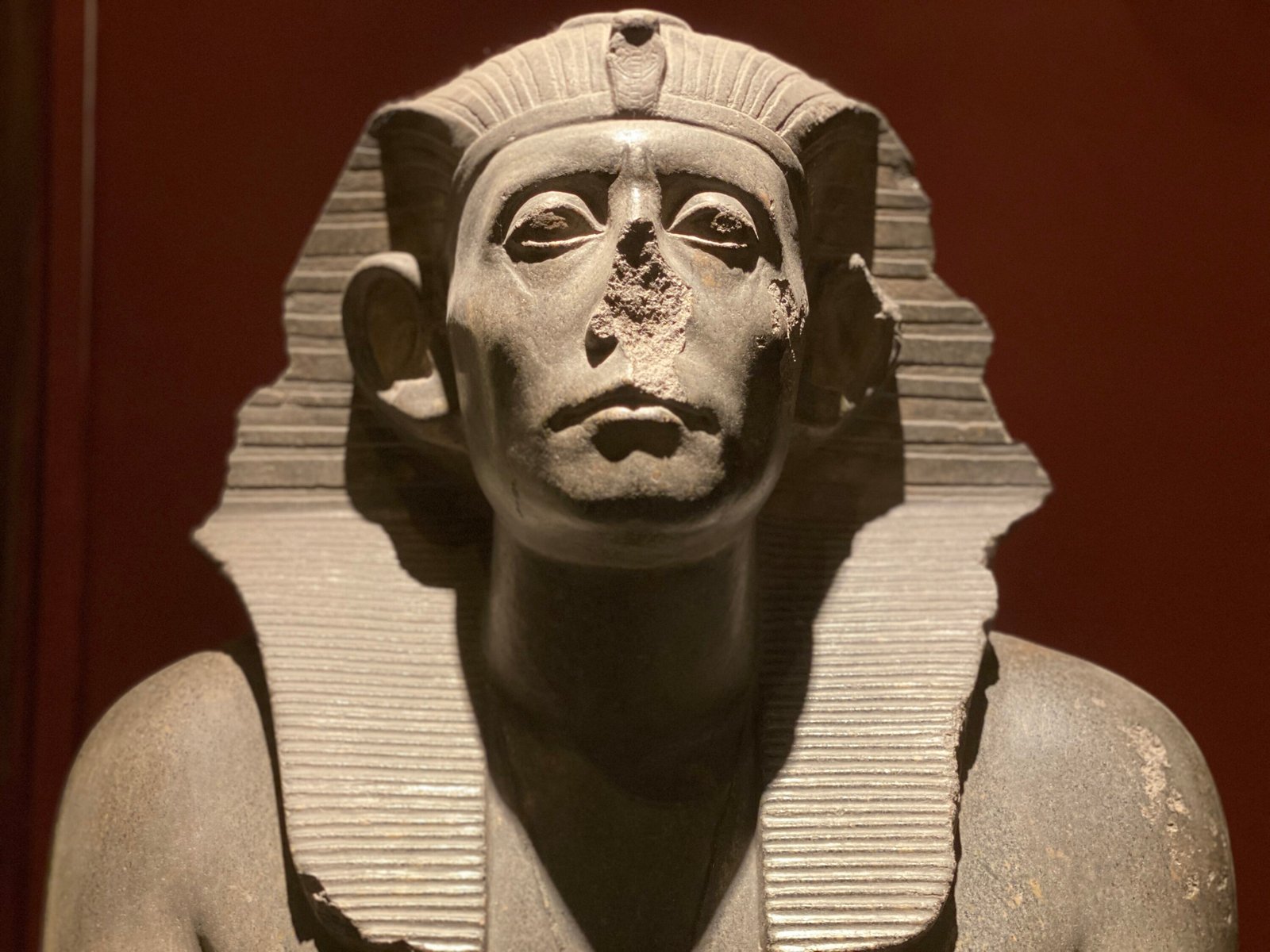
Our preferred reconstruction places Joseph’s rise in Egypt in the late 12th Dynasty. Senusret III is our leading candidate for the pharaoh under whom Joseph rose to prominence.
Joseph may then have continued serving into the reign of Senusret III’s son and successor, Amenemhat III. His long and prosperous reign fits naturally as the continuation of a strong, centralized state inherited from his father.
This is a historical reconstruction rather than a direct inscriptional identification of Joseph.
Royal Centralization
Senusret III’s reign is closely associated with the strengthening of royal authority and the decline of the powerful provincial nomarchs. That political transition is especially interesting alongside the concentration of land, resources, and authority under Pharaoh described in Genesis 47.
Late 12th-Dynasty Prosperity
Amenemhat III follows Senusret III and presides over a long period of strength and prosperity. In our model, Joseph could have continued in office into this reign after the administrative changes associated with his rise and the famine years.
Eastern Connections
Middle Kingdom Egypt already had substantial interaction with western Asiatic populations, while the eastern Delta and Wadi Tumilat formed a natural corridor toward Sinai and Canaan. Ancient traditions associating Sesostris with canal work in this broader corridor are supporting context, though not proof of the Joseph identification.
Goshen, Avaris, and the Eastern Delta
Where We Place Goshen
We understand Goshen as a broad region of the eastern and northeastern Nile Delta, extending into the Wadi Tumilat corridor rather than being limited to a single town. Its agricultural land, pasture, waterways, and direct routes toward Sinai and Canaan make this landscape the strongest geographical setting for the settlement of Jacob’s family and the later growth of the Israelites in Egypt.
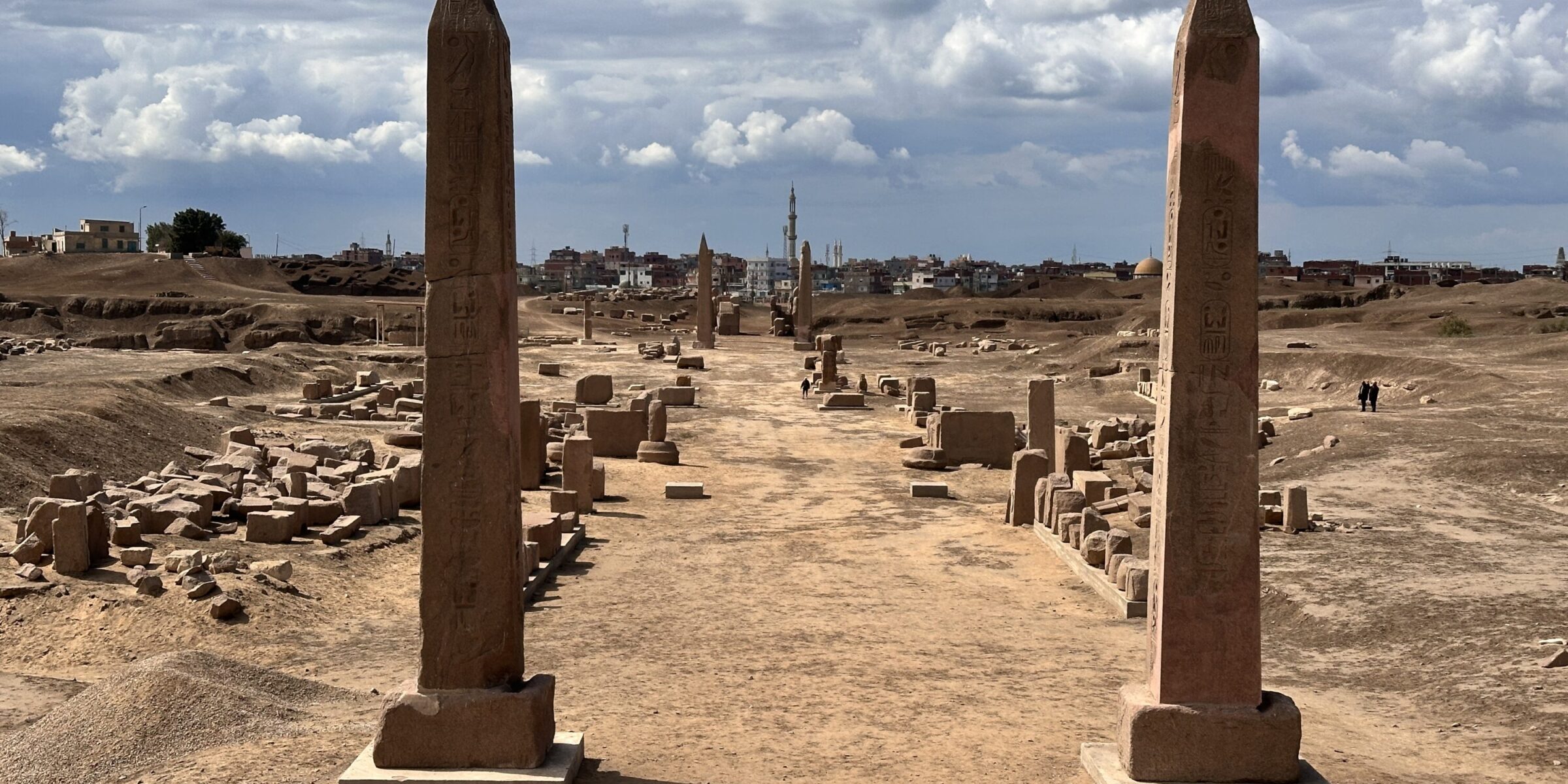
Within that larger region, we regard Avaris, modern Tell el-Dabʿa, as the principal urban center and the best geographical anchor for reconstructing biblical Goshen. Its position in the eastern Delta places it within the wider network of waterways, agricultural land, settlements, and routes leading eastward toward Wadi Tumilat, Sinai, and Canaan.
Other sites such as Tell el-Retaba and Tell el-Maskhuta help define the broader eastern corridor, but we do not equate Goshen with any single archaeological mound. In our model, Avaris is the central urban focal point within a larger regional Goshen, allowing the biblical references to land, pasture, settlements, and population growth to be understood within a wider Delta landscape.
Avaris, the Hebrews, and the Hyksos
Tell el-Dab’a, ancient Avaris, preserves extensive evidence for a population with Levantine and Asiatic connections. We regard this population history as highly relevant to the biblical account of Israel in Egypt and to the later development of the Hyksos period.
Our working model identifies the biblical Hebrews as the foundational population behind the Hyksos. We do not suggest that every Asiatic inhabitant of Avaris was an Israelite, and the population likely became increasingly mixed as other Semitic and Levantine groups were incorporated.
We identify Ahmose I, founder of the 18th Dynasty, as the leading candidate for the “new king” who did not know Joseph in Exodus 1. In this reconstruction, his defeat of Avaris and the pursuit of the Hyksos to Sharuhen mark the political collapse of the formerly powerful Hebrew-Hyksos population. The new Theban regime then reduced that population to subjection, providing the historical setting for the oppression and enslavement described at the beginning of Exodus. This Hyksos defeat is therefore not the biblical Exodus itself, but the beginning of the period of oppression that precedes it.
The Exodus in Our Historical Framework
When and Under Whom?
Our preferred date for the Exodus is approximately c. 1446 BC, based primarily on the biblical chronological framework, especially the 480 years of 1 Kings 6:1.
Within that framework, our preferred candidate for the Pharaoh of the Exodus is Amenhotep II. The oppression begins much earlier in our model with Ahmose I, whom we identify as the “new king” of Exodus 1. His overthrow of Hyksos power at Avaris and the establishment of 18th-Dynasty rule provide the political setting for the enslavement of the Hebrew population, while Amenhotep II belongs to the later generation in which Moses confronts Pharaoh and the Exodus occurs.
Where Did Israel Cross?
We understand Yam Suph as terminology that can refer to the connected Red Sea system. Our preferred location for the first Exodus sea crossing is in the northern Gulf of Suez, within the Suez-Bitter Lakes corridor.
More specifically, we currently favor the Adabiya / Al Adabiyah area on the western side of the northern Gulf of Suez.
Raamses and the Question of Place-Names
The biblical use of the place-name Raamses does not require Jacob or Joseph to have lived during the reign of Ramesses II. Ancient texts can use a later familiar place-name to describe an earlier landscape. Pi-Ramesses and Qantir therefore remain important for reconstructing the geography of the eastern Delta without forcing a Ramesside date for Joseph or the Exodus.
Evidence That Shapes the Model
Our reconstruction is cumulative. Different kinds of evidence illuminate different parts of the historical picture.
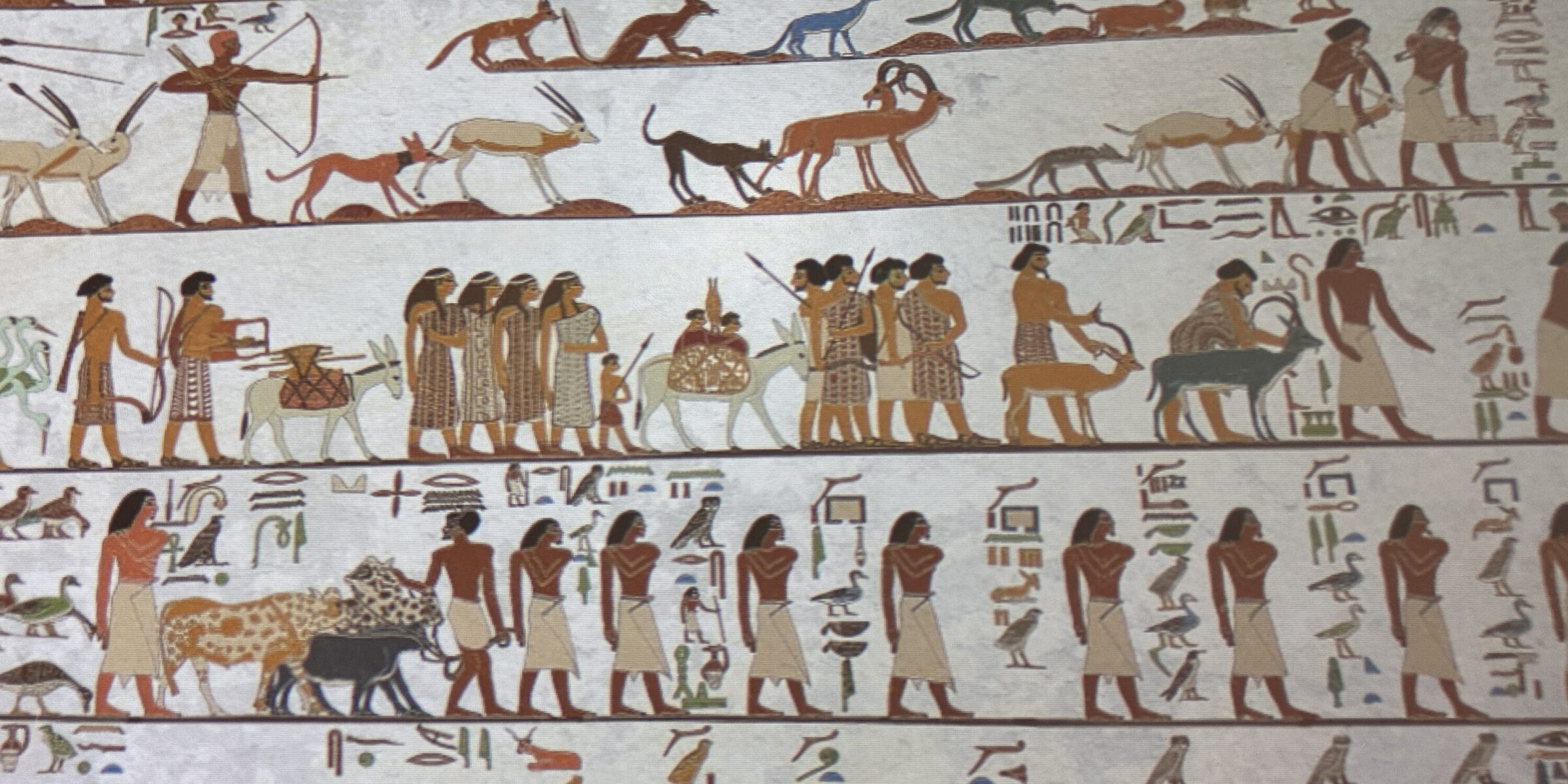
The Aamu procession at Beni Hasan documents western Asiatic movement into Middle Kingdom Egypt. The archaeology of Avaris documents a substantial Asiatic population in the eastern Delta. Middle Kingdom royal history helps frame the political setting of Joseph, while the Kamose texts and early New Kingdom evidence illuminate the later transition into the world of Exodus.
The Merneptah Stele, much later in date, independently confirms Israel as an established people in Canaan by the late 13th century BC. It does not establish the date of the Exodus itself, but it provides an important external chronological anchor for Israel’s presence in the land by Merneptah’s reign.

What This Framework Is For
The Research Framework is the foundation page for our historical reconstruction of biblical Egypt. It explains who we identify, when we place the events, where we locate them, what evidence informs those conclusions, and why we favor this model.
For the place-based side of the story—what travelers can actually see, visit, and explore in Egypt—use the Biblical Egypt Travel Guide. For deeper articles and individual lines of evidence, use the Biblical Egypt Research Index.