What to Wear in Egypt: A Practical Guide for Christian Travelers
How to Dress for Archaeological Sites, Churches, Desert Heat, and Everyday Travel
One of the easiest ways I have seen travelers make an Egypt trip harder than it needs to be is to pack for the temperature and forget about everything else. Yes, Egypt can be hot. But you may also spend a cool morning beside the Nile, walk across uneven archaeological ground, step inside a conservative church or monastery, sit in an air-conditioned museum, and finish the day on a breezy hotel terrace.
What you wear has to handle all of that.
The good news is that dressing for Egypt is not complicated. The goal is to combine three things: comfort, sun protection, and cultural awareness. Lightweight clothing that covers a little more skin than you might wear on a beach vacation usually works better anyway. It protects you from the sun, keeps dust off your skin, and helps you feel at ease in places where local dress is more conservative.
You do not need a completely different wardrobe for Egypt. You just need to choose the right version of the clothes you already wear.
Dress for the Sun, Not Just the Heat
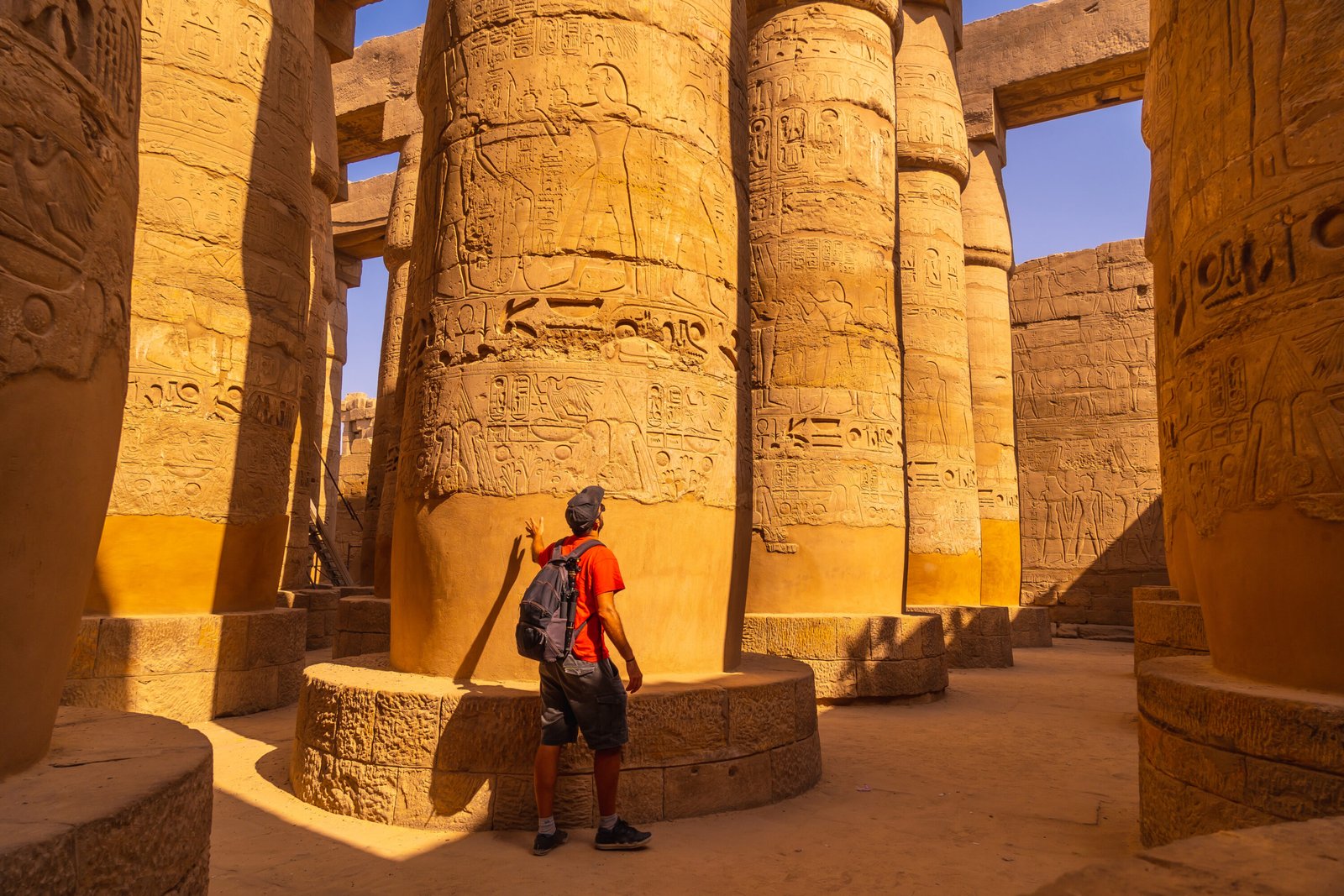
The first thing I notice again and again when guiding in Egypt is not simply the temperature. It is the intensity of the sun. A day walking through Karnak, Saqqara, Giza, or the Valley of the Kings can mean hours of direct exposure with very little shade.
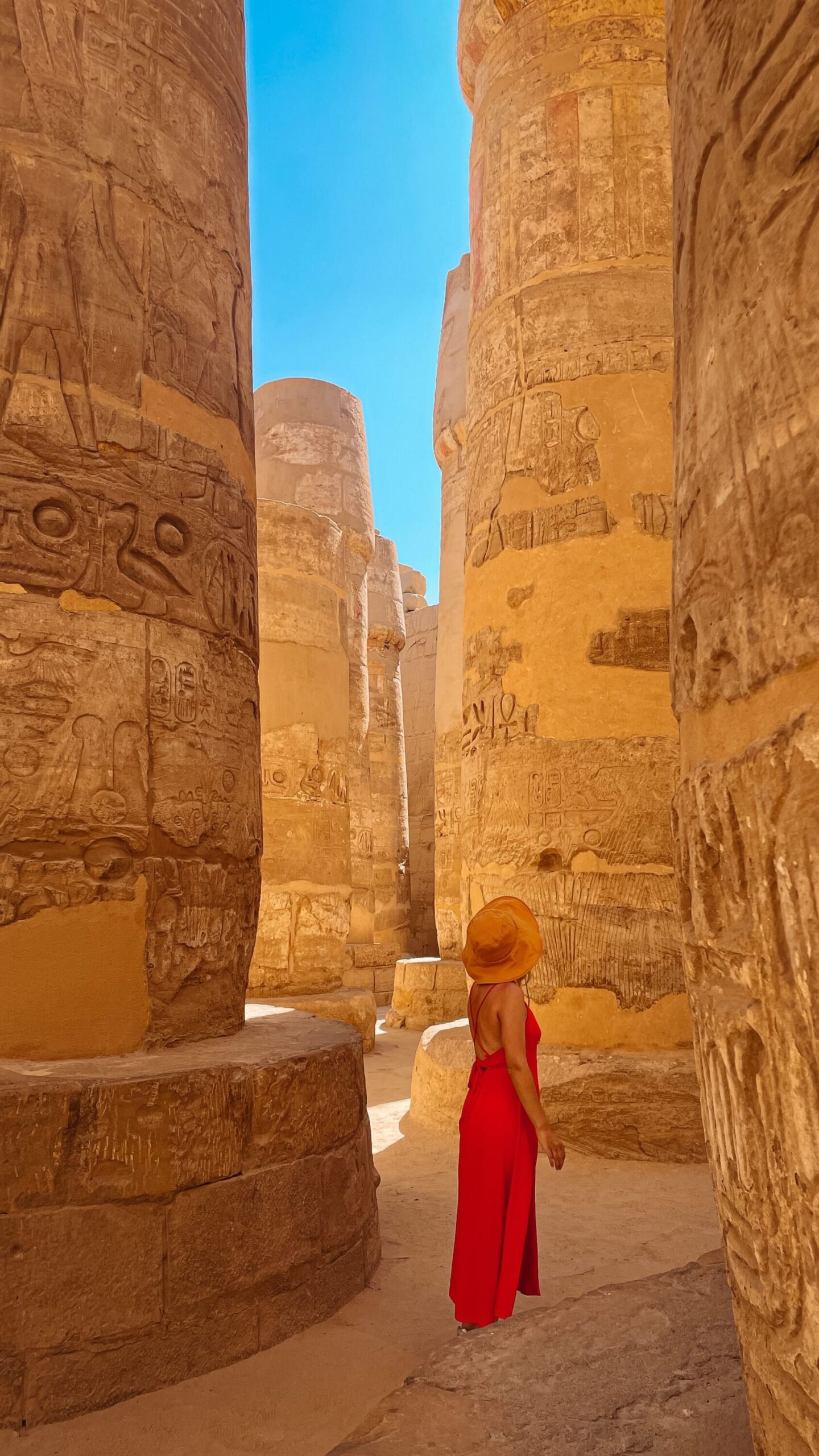
That is why lightweight long sleeves can often be more comfortable than a sleeveless shirt. A loose linen, cotton, or moisture-wicking shirt protects your shoulders and arms while still allowing air to move. The same principle applies to pants. Lightweight trousers or travel pants can feel cooler over the course of a long day than shorts that leave your legs exposed to constant sun.
A wide-brimmed hat is one of the most useful things you can pack. Sunglasses are equally important. If you burn easily, think of clothing as part of your sun protection rather than relying on sunscreen alone.
This is especially true at archaeological sites. Shade can be scarce, distances can be deceptive, and you may spend far longer outside than you expected because there is always one more wall, tomb, relief, or column worth seeing.
How Modest Do You Need to Dress in Egypt?
Egypt is accustomed to international visitors, especially in Cairo, Luxor, Aswan, and the major archaeological areas. You will see tourists dressed in many different ways. At the same time, Egyptian society is generally more conservative in dress than many parts of the United States and Europe.
You do not need to dress as an Egyptian, and you do not need to be anxious about getting every detail right. A good rule is simply to avoid clothing that is extremely revealing. Shirts that cover the shoulders and shorts, skirts, or dresses that come reasonably close to the knee make travel easier in a wide variety of settings.
For women, loose pants, longer skirts, casual dresses, and tops that are not especially low-cut are easy choices. For men, lightweight pants and ordinary shirts work almost everywhere. Shorts are common at tourist sites, but longer pants are often more versatile because you can move from an archaeological site to a church, restaurant, hotel, or local neighborhood without thinking about changing.
This is less about a list of rules and more about reading the room. When you are visiting someone else’s country, a little cultural awareness goes a long way.
Churches and Monasteries
Christian travelers to Egypt often spend time in places that are not part of a standard sightseeing itinerary. Coptic churches, desert monasteries, ancient Christian sites, and active places of worship are part of the story of Egypt, and they deserve a different level of awareness than a hotel lobby or open-air temple complex.
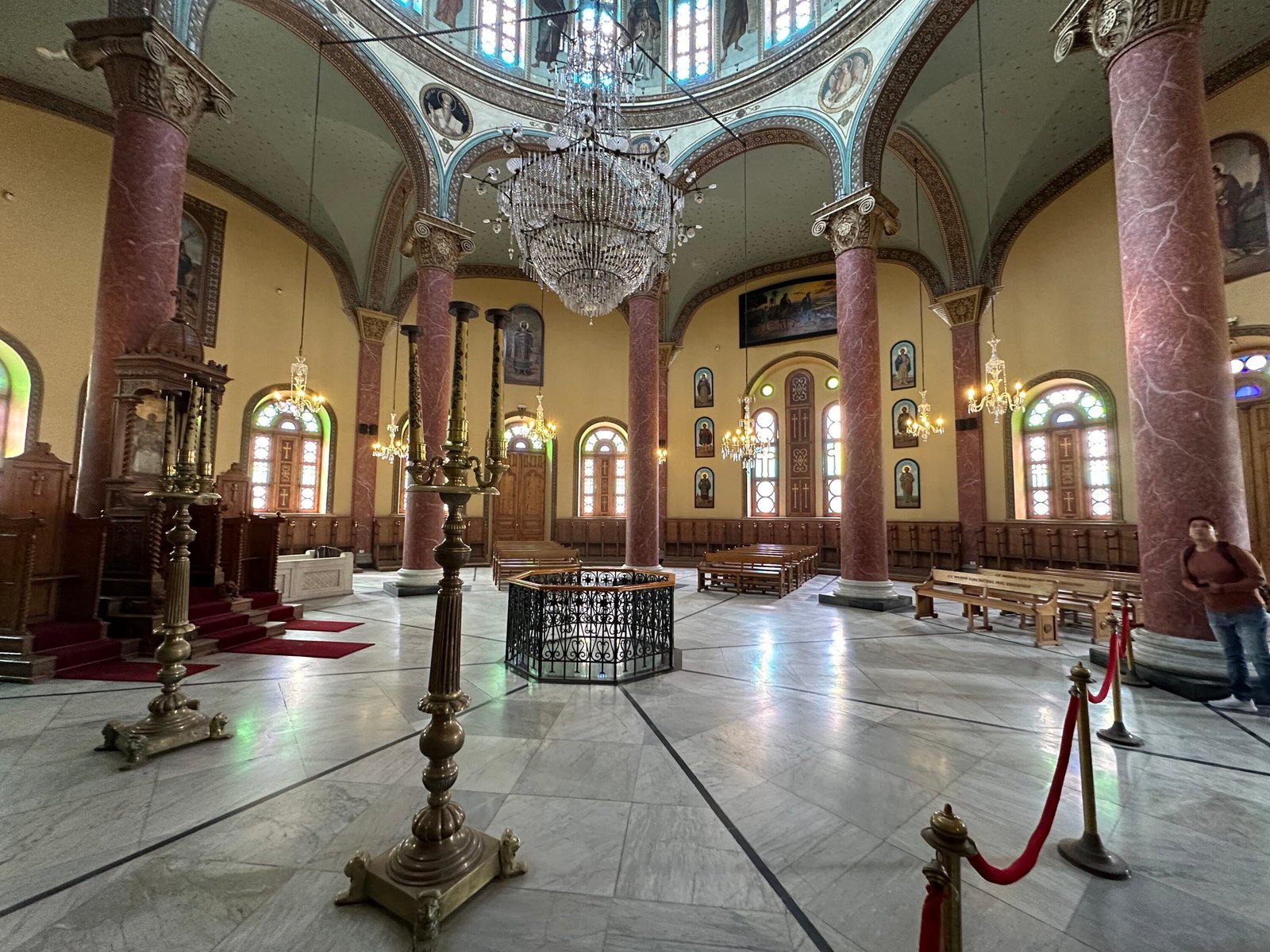
For these visits, modest dress is the safest and most respectful choice. Shoulders should be covered, and very short shorts or skirts are best avoided. Lightweight pants, a longer skirt, or a modest dress work well.
Women do not generally need to cover their hair when entering a Coptic church or monastery, though local customs can vary from place to place. If you also plan to visit a mosque independently during your travels, expectations may be different, and women may be asked to cover their hair. Carrying a lightweight scarf is an easy solution because it takes almost no room in a day bag and can be useful for more than one purpose.
The same scarf can help with sun, dust, wind, an unexpectedly cool evening, or an air-conditioned interior. It is one of the most versatile things you can bring.
Your Shoes Matter More Than You Think
Egypt is not a destination where I recommend choosing shoes primarily for appearance.
At major sites you may walk over sand, polished stone, broken limestone, uneven pavement, gravel, stairs, and surfaces that have been worn smooth by thousands of years of history and millions of modern visitors. Even when the distance does not look far on a map, the ground itself can make the walking more tiring.
In my experience, a comfortable walking shoe or light hiking shoe is ideal for most travelers. It should already be broken in before you arrive. This is not the trip to test a brand-new pair of shoes on your first morning at Giza.
Sandals can be useful around hotels, on a Nile cruise, or for casual evenings, but they are not always the best choice for a full day at archaeological sites. Open shoes collect sand and dust quickly, offer less protection on rough ground, and can become slippery on stone.
If you know you will be doing significant hiking or exploring rougher terrain, bring footwear appropriate for that. For a standard archaeology-focused itinerary, a sturdy and comfortable walking shoe is usually enough.
What About Shorts?
This is one of the most common packing questions, especially for men.
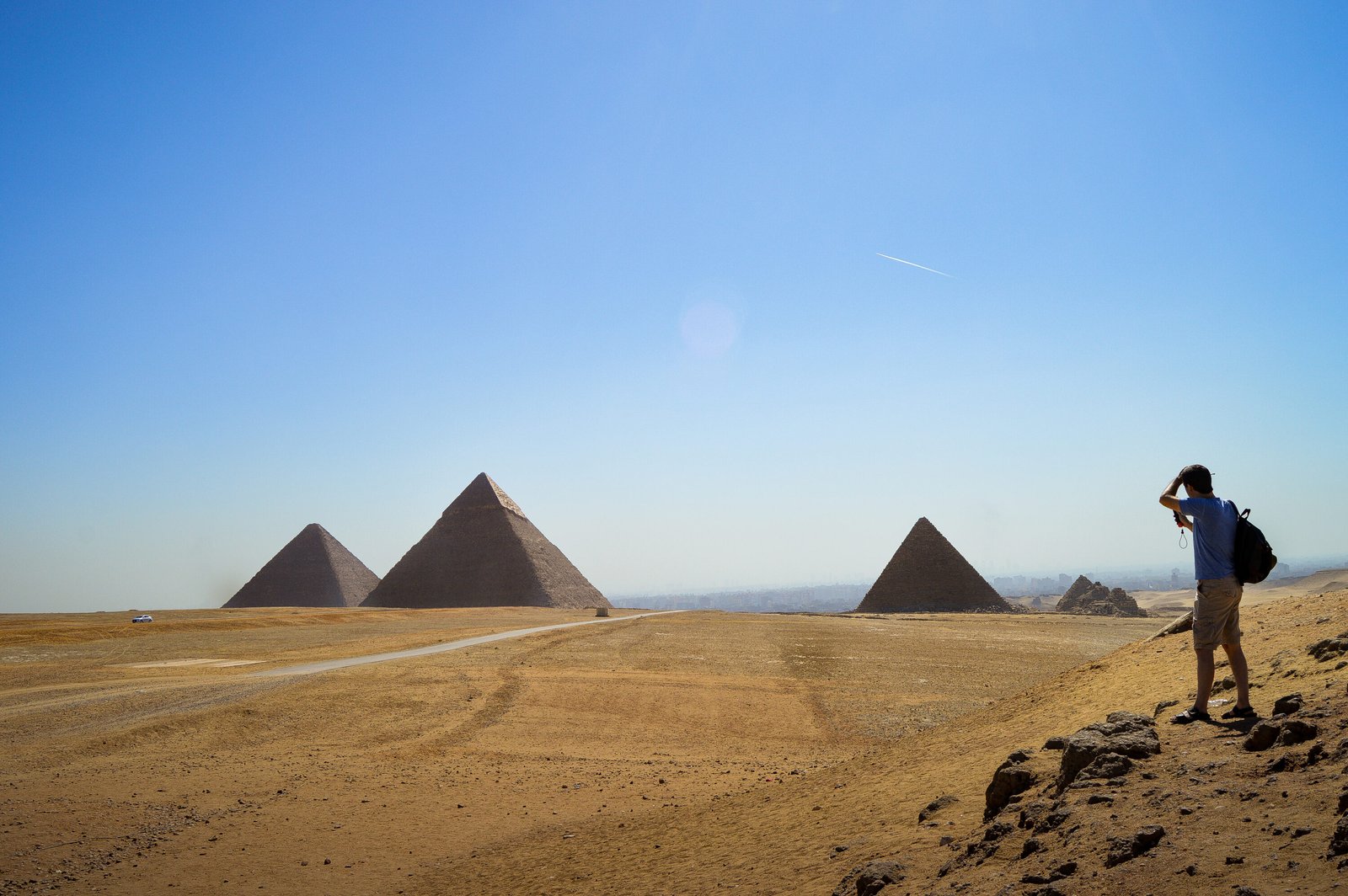
Yes, tourists wear shorts in Egypt, particularly at major archaeological sites and resorts. You are not going to cause a national incident by wearing them at the pyramids. But there is a practical reason I still prefer lightweight pants for many travel days: they work everywhere.
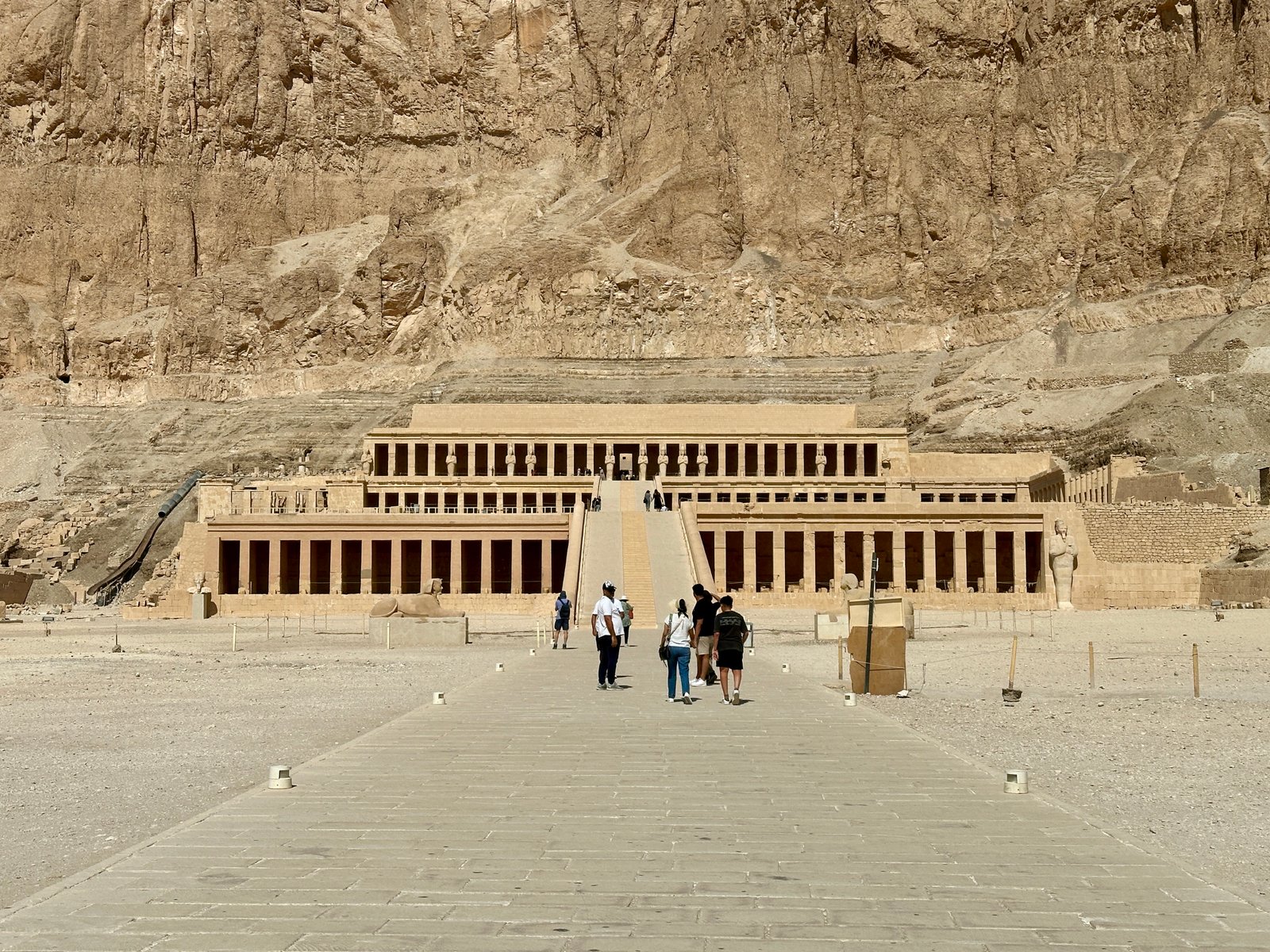
A pair of breathable travel pants protects your legs from sun, dust, mosquitoes in some areas, and rough surfaces. You can wear them into a church, through a museum, at dinner, or while walking through a local neighborhood without needing to think about whether your clothing fits the setting.
If you love shorts, bring them. Just do not make them your only option.
Egypt Is Not Always Hot
This surprises people.
Winter travel in Egypt can include beautiful daytime weather and surprisingly cool mornings and evenings. Cairo can feel chilly before the sun is fully up. Luxor and Aswan warm quickly during the day, but an early departure, a sunrise balloon flight, time on the Nile, or an evening outdoors can be much cooler than visitors expect.
A lightweight jacket, fleece, or packable layer is worth bringing during the cooler months. Even in warmer seasons, a thin outer layer can be useful inside heavily air-conditioned buses, hotels, museums, and restaurants.
Layers work better than one heavy garment. You may start the morning in a jacket, remove it by 9:00, spend the afternoon in intense sun, and want it again after dinner.
What to Wear on a Nile Cruise
A Nile cruise does not require formal clothing. During the day, most travelers wear the same comfortable clothes they would use for sightseeing because cruise itineraries usually involve getting on and off the boat for temple visits.
Evenings tend to be relaxed. A clean shirt, casual dress, or slightly nicer version of your daytime clothes is usually enough. You do not need to pack a separate wardrobe unless your particular cruise program specifies something different.
The bigger issue is temperature. Being on the river can feel cooler than standing in a temple courtyard, especially after sunset. Keep a light layer handy.
Fabrics That Work Well in Egypt
Think breathable, lightweight, and quick to dry.
Linen is excellent in hot weather, though it wrinkles quickly. Lightweight cotton is comfortable, especially in loose-fitting shirts. Modern travel fabrics can be extremely practical because they dry fast and can often be washed in a hotel sink if necessary.
Heavy denim is less useful in the heat. Thick fabrics take longer to dry and become uncomfortable during long outdoor days. Very tight clothing can also feel hotter than loose clothing because it reduces airflow.
Neutral and earth-tone clothing has one additional advantage: Egypt can be dusty. White shirts look wonderful for about eleven minutes at an archaeological site. You can absolutely wear them, but do not be surprised when Egypt leaves a little evidence on them.
A Simple Packing Formula
You do not need to pack two weeks of completely different outfits. A small rotation of versatile pieces works better.
Bring several lightweight shirts, a few pairs of breathable pants, a comfortable pair of walking shoes, a hat, sunglasses, and one light outer layer. Women may also want a longer skirt or casual dress and a lightweight scarf. Add sandals or casual shoes for evenings if you like.
Choose pieces that can be mixed, reworn, and washed easily. If you are traveling on a longer itinerary, laundry service is available at many hotels and cruise boats, and hand-washing a lightweight shirt is far easier than hauling an oversized suitcase through airports and hotels.
The best Egypt wardrobe is not the one with the most options. It is the one where almost everything works almost everywhere.
Comfortable, Respectful, and Ready to Explore
Dressing well for Egypt is really about removing distractions. You do not want to spend the day thinking about sunburned shoulders, blistered feet, whether your clothes are appropriate for the next stop, or why you packed three pairs of heavy jeans.
Wear breathable clothing. Cover a little more skin than you might at home in midsummer. Bring good shoes. Keep a hat, sunglasses, and a light layer close at hand. If your itinerary includes churches or monasteries, choose clothes that let you enter respectfully without needing to change.
Then forget about your clothes and pay attention to Egypt.
That is ultimately what I want for the people I travel with. Good clothing should disappear into the background while the pyramids, temples, tombs, churches, landscapes, and people become the things you remember. If you finish the day thinking about what you saw rather than what you were wearing, you packed well.

For more practical planning advice, visit our Egypt Travel Tips or explore the broader Biblical Egypt Travel Guide.