
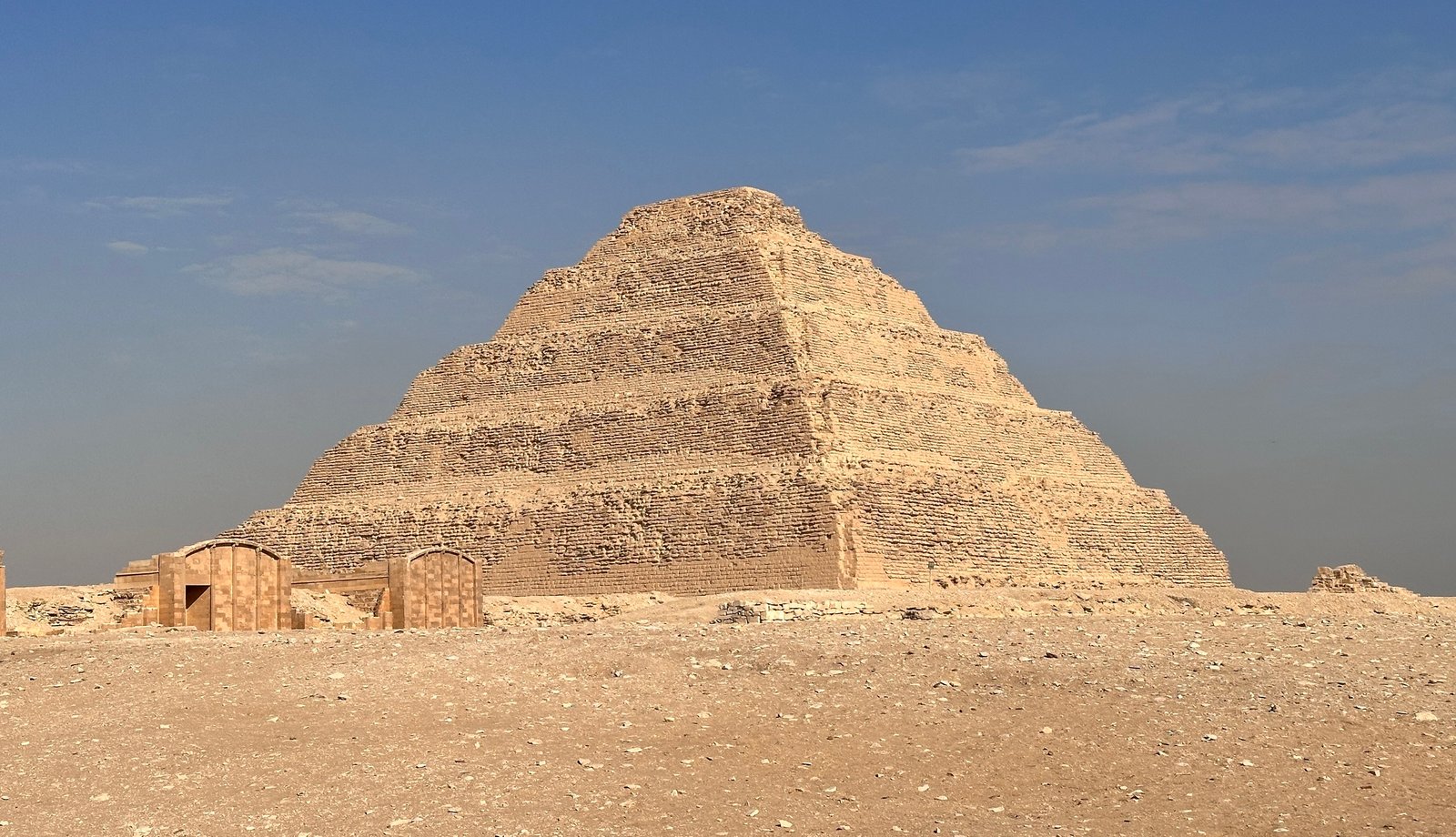
Walking Through the World of Ancient Egypt at Saqqara
Saqqara is one of the richest archaeological landscapes in Egypt. Stretching along the desert edge west of the ancient capital of Memphis, the site preserves pyramids, temples, mastaba tombs, shafts, animal catacombs, inscriptions, and burials spanning thousands of years.
Saqqara is not a place that can be tied to one specific event in Scripture. Its importance for biblical travelers is broader: it provides an extraordinary window into the civilization of ancient Egypt. The art, religion, architecture, administration, burial practices, writing, agriculture, and social hierarchy preserved here help reconstruct the world in which the biblical accounts of Egypt took place.
Key Facts About Saqqara
- Site type: Major necropolis along the desert edge west of ancient Memphis.
- Time span: Saqqara preserves monuments, tombs, burials, and inscriptions from multiple periods across thousands of years of Egyptian history.
- Best-known monument: The Step Pyramid complex of King Djoser, built in the Third Dynasty and representing a major development in monumental stone architecture.
- Important evidence: Private tomb scenes preserve farming, livestock, food production, craftwork, scribal activity, transportation, and other aspects of daily life; royal pyramids preserve early Egyptian religious texts.
- Biblical relevance: Saqqara provides cultural and archaeological background for ancient Egypt rather than a direct identification with one specific biblical event.
The Step Pyramid of Djoser
The most famous monument at Saqqara is the Step Pyramid complex of King Djoser. Built during Egypt’s Third Dynasty, it marks a major development in monumental stone architecture. The complex includes courtyards, ceremonial structures, enclosure walls, underground passages, and the towering stepped pyramid itself.
Its importance goes far beyond its appearance. The complex demonstrates the organization, engineering, labor, administration, and royal ideology of early Egypt. For a closer look, read our article on the Step Pyramid of Djoser.
Tombs That Preserve Daily Life
Some of Saqqara’s most valuable evidence comes from private tombs. Their walls preserve detailed scenes of farming, fishing, food production, livestock, craftwork, scribal activity, transportation, and family life. These are precisely the kinds of details that help biblical readers move beyond a simplified image of ancient Egypt.
Scenes of grain production, mudbrick work, livestock management, and state administration provide cultural background for many passages of Genesis and Exodus. They do not identify Joseph or Moses, but they show the systems and activities described by the biblical texts operating in an Egyptian setting.
Pyramid Texts and Egyptian Religion
Saqqara also preserves some of the earliest extensive collections of Egyptian religious texts. The Pyramid Texts, inscribed inside royal pyramids beginning in the Old Kingdom, contain prayers, spells, divine names, and descriptions of the king’s hoped-for journey into the afterlife.
For Christian travelers, these texts provide a striking contrast with the biblical worldview. Egyptian religion centered on a complex divine world, sacred kingship, ritual purity, temple service, and elaborate beliefs about death and the afterlife. Understanding that religious environment gives greater depth to the Bible’s repeated confrontations with Egyptian power and theology.
Saqqara, Memphis, and the Nile Valley
Saqqara served as a principal cemetery for Memphis, one of ancient Egypt’s most important cities. Its location helps explain the relationship between the fertile Nile Valley and the desert necropolis beyond it. The living occupied settlements and agricultural land near the river, while monumental tombs and cemeteries were built along the dry desert margin.
That landscape is one of the best places in Egypt to see how geography shaped Egyptian civilization.
Visit Saqqara on a Christian Egypt Tour
Saqqara is included in several of our private group itineraries because it helps travelers understand Egypt before they ever reach the later temples of Luxor. Explore the Biblical Egypt Highlights, Foundations of Faith, and Grand Egypt Experience itineraries.
Return to the Biblical Egypt Travel Guide for more resources connecting archaeology, history, geography, and Scripture.