
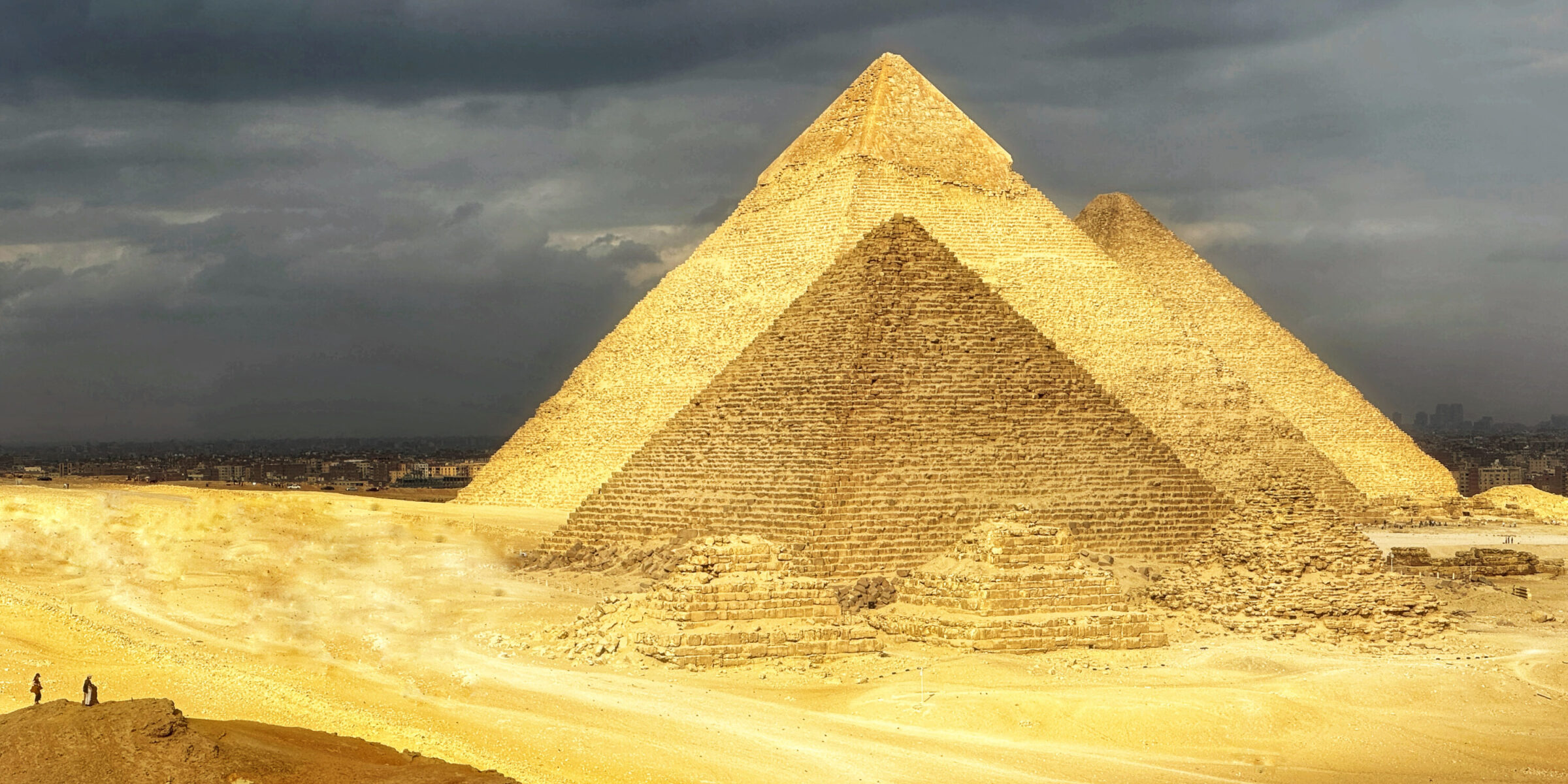
Khufu, Khafre, and Menkaure: The Egyptian Names Behind the Great Pyramids
Khufu, Khafre, and Menkaure are the Egyptian names behind the three great pyramids of Giza. Cheops, Chephren, and Mycerinus are the later Greek forms that became familiar in Western literature.
When people first learn the names of the pharaohs who built the three great pyramids of Giza, they often encounter two different sets of names. The Great Pyramid may be called the Pyramid of Khufu or the Pyramid of Cheops. The second may belong to Khafre or Chephren, while the third is attributed to Menkaure, sometimes called Mycerinus.
These are not different kings. They are different forms of the same kings’ names, separated by language and by nearly two thousand years of history.
My own preference is to use Khufu, Khafre, and Menkaure. These are the conventional Egyptological forms based on the names the Egyptians themselves wrote in hieroglyphs and preserved on monuments, statues, seals, inscriptions, and other ancient records. Because the Egyptian writing system did not normally record vowels in the same way a modern alphabet does, we cannot reconstruct every detail of their original pronunciation with certainty. Even so, these forms take us back to the Egyptian evidence itself rather than beginning with much later Greek renderings.
The Three Pyramid Builders
| Pyramid | Egyptian name | Greek form |
|---|---|---|
| Great Pyramid | Khufu | Cheops / Kheops |
| Second Pyramid | Khafre | Chephren / Khephren |
| Third Pyramid | Menkaure | Mykerinos / Mycerinus |
This distinction is easy to see in current Egyptian and Egyptological usage. Egypt’s Ministry of Tourism and Antiquities identifies the builders as Khufu, Khafre, and Menkaure, while often supplying the familiar Greek forms secondarily. Harvard’s Digital Giza project follows the same approach, listing Khufu/Cheops, Khafre/Chephren, and Menkaure/Mycerinus.
Khufu and Cheops
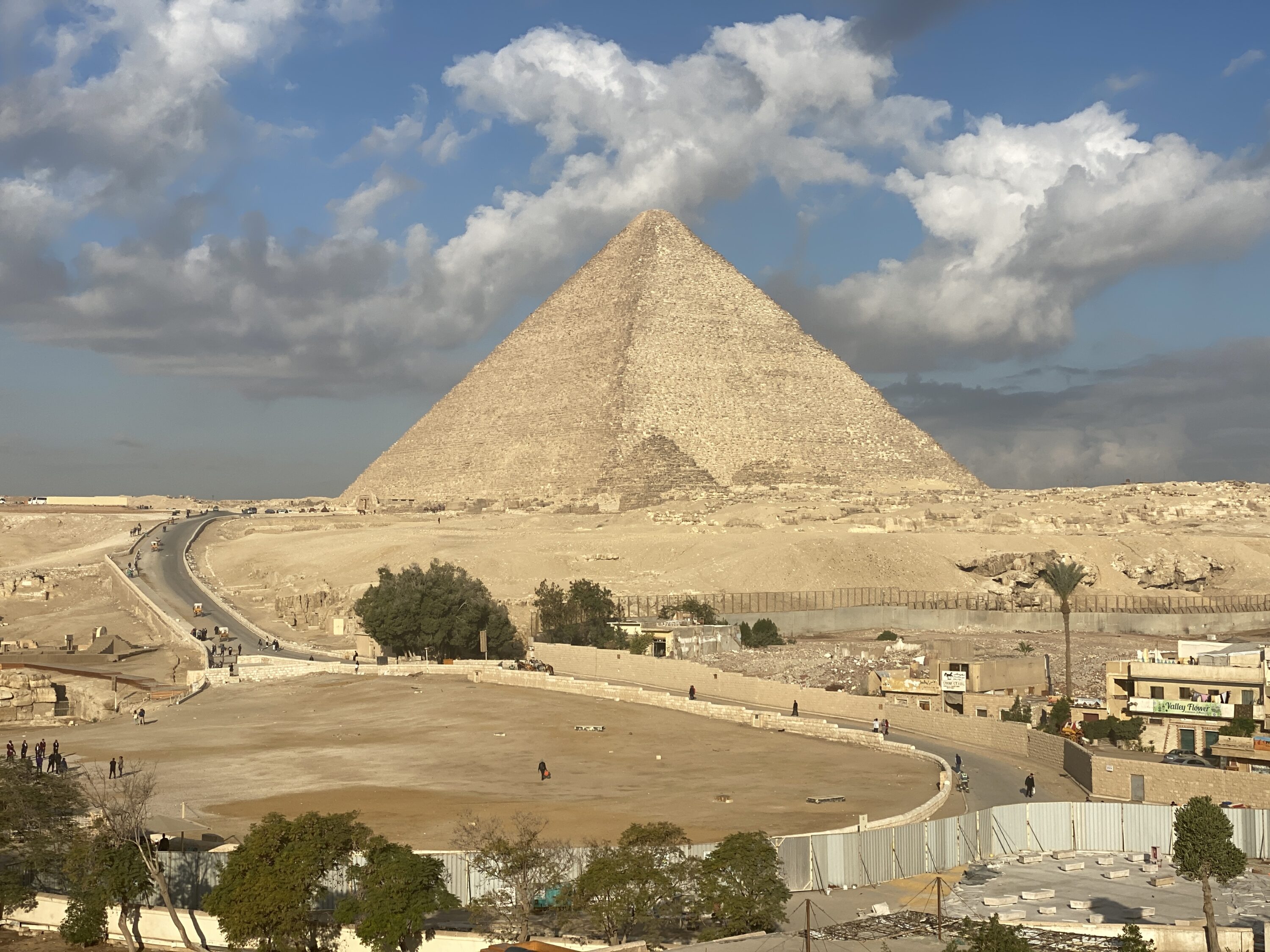
The king we call Khufu ruled during Egypt’s Fourth Dynasty and built the Great Pyramid. His Egyptian birth name was written Ḫwfw, conventionally vocalized as Khufu. A fuller form preserved in Egyptian sources is Khnum-Khufu, incorporating the name of Khnum, an Egyptian creator god associated especially with Elephantine.
Khufu’s name is not known only from later historians. It is preserved in Egyptian material connected with his reign. Most famously, the tiny ivory statuette from Abydos bears his name and remains the only confirmed contemporary three-dimensional representation of the king. His name also occurs in inscriptions associated with the Great Pyramid, including work-gang markings in the relieving chambers above the King’s Chamber.
Cheops, by contrast, is the Greek form. When Herodotus wrote about Egypt in the fifth century BC, the Great Pyramid had already been standing for roughly two thousand years. In Book II of his Histories, he calls the king Kheops, the form that became Cheops in later English usage.
That distinction helps explain why both names appear in books today. Cheops is historically important because it belongs to the classical tradition through which Europeans discussed Egypt for centuries. Khufu is preferable when our goal is to refer to the king by the name derived from Egyptian sources.
Khafre and Chephren
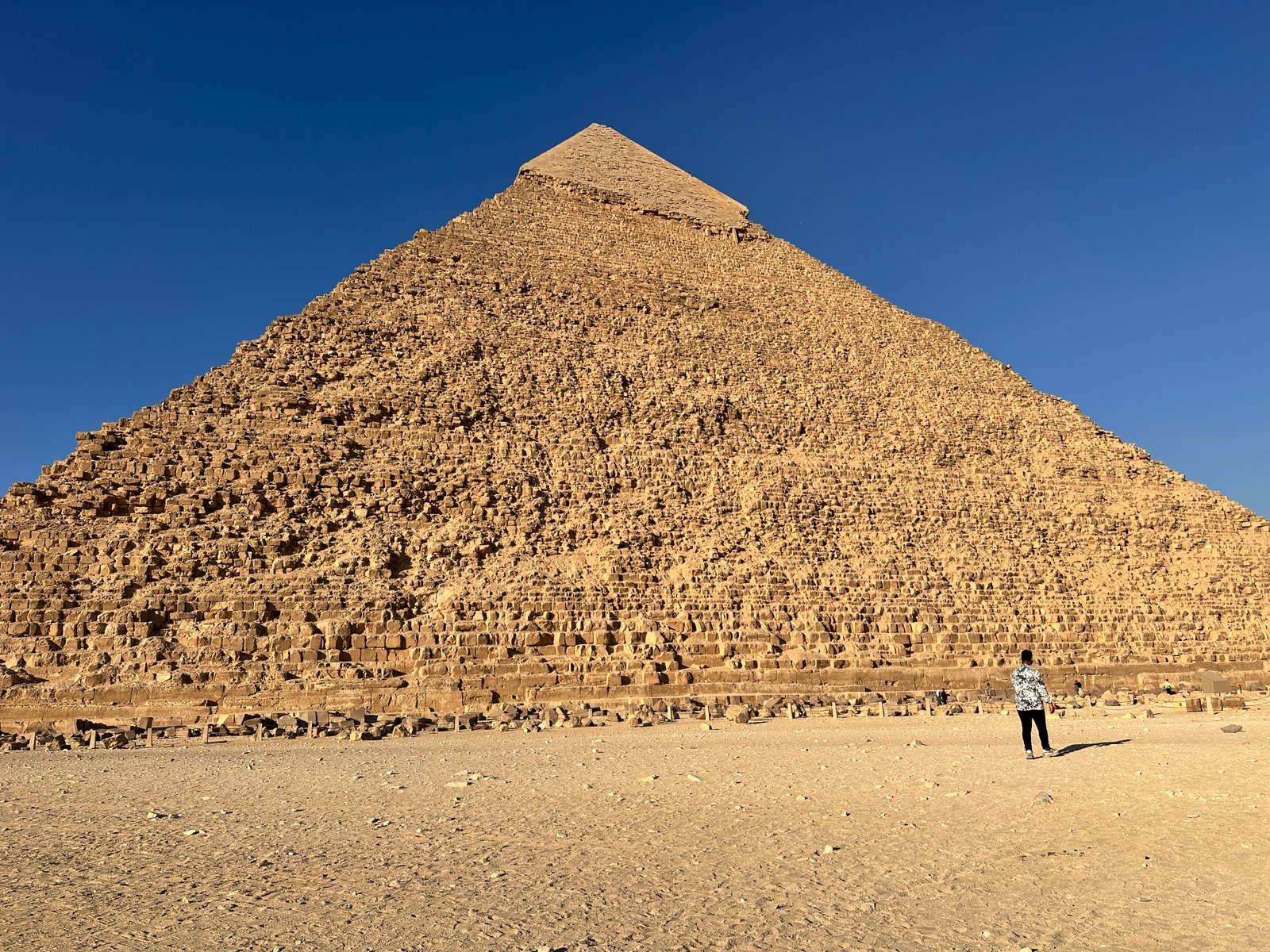
The builder of the second great pyramid was Khafre, a son of Khufu. His Egyptian name incorporates Ra, the Egyptian sun god. Depending on how the grammatical form is understood, the name is commonly translated along the lines of “Ra appears” or “Appearing like Ra.”
Khafre is especially well represented in surviving sculpture. A number of statues and fragments were discovered in his valley temple. The most famous is the dark granodiorite seated statue now in the Egyptian Museum in Cairo, in which the falcon associated with Horus, an Egyptian god of kingship, spreads its wings protectively behind the king’s head.
The Greek tradition rendered his name as Khephren or Chephren. Herodotus uses this form when describing the builder of the second pyramid, and it remained common in Western literature for centuries. Variants such as Khefren are still encountered on maps, signs, older publications, and even modern material intended for audiences accustomed to the classical spelling.
Modern Egyptology, however, normally uses Khafre, and Egypt’s own Ministry of Tourism and Antiquities leads with that Egyptian form while noting Khefren in parentheses.
Menkaure and Mycerinus
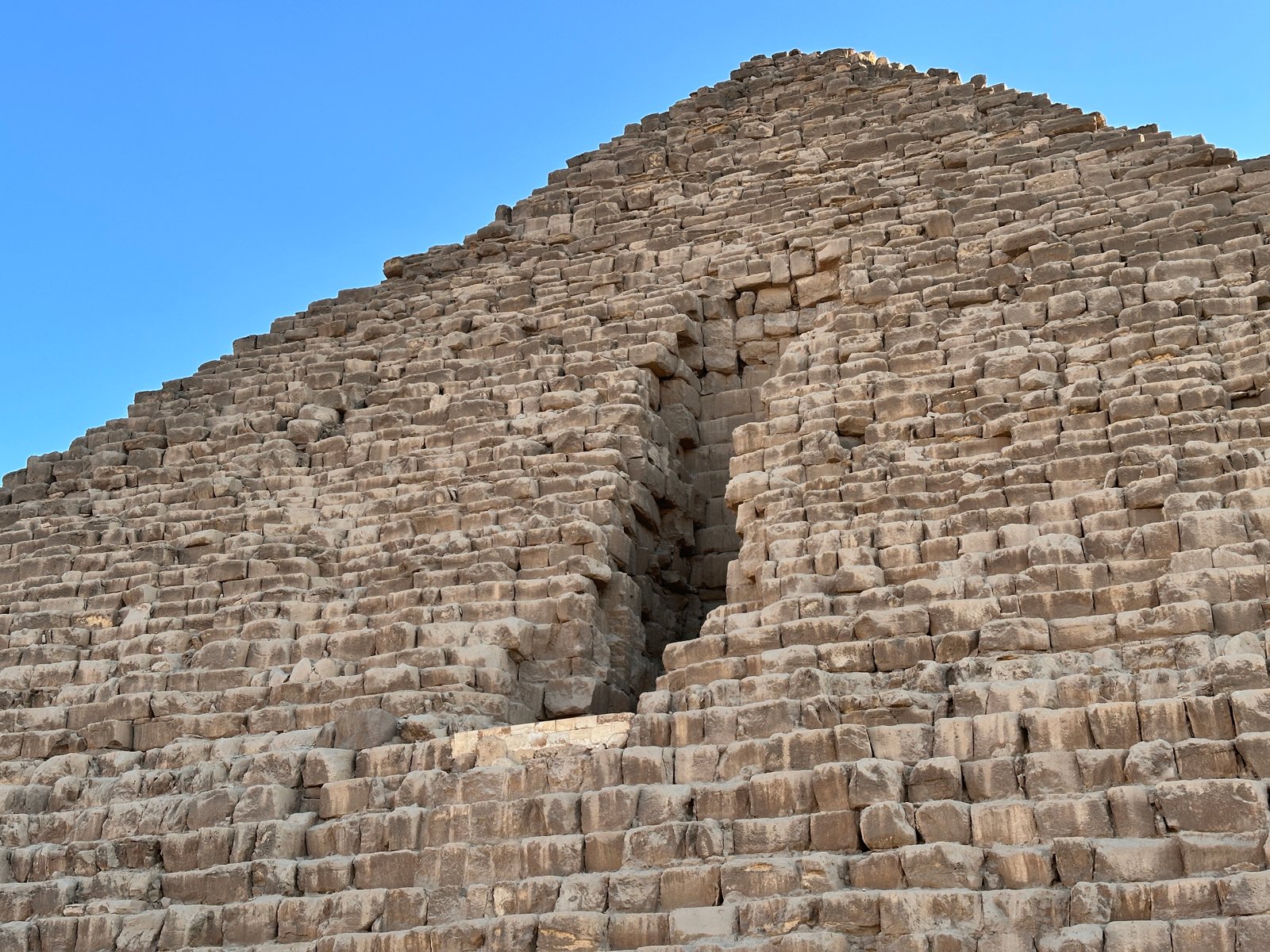
The third great pyramid was built for Menkaure. His Egyptian throne name was written Mn-kꜣw-Rꜥ, conventionally vocalized Menkaure. It again incorporates Ra, the Egyptian sun god. The name is often translated along the lines of “The kas of Ra endure,” although exact renderings differ because Egyptian royal names can carry grammatical and theological nuances that do not map neatly into English.
Menkaure is known from some of the finest royal sculpture of the Old Kingdom. The famous group statues from his pyramid complex show the king accompanied by figures representing Hathor, an Egyptian goddess, and personifications of Egyptian nomes. These monuments preserve Menkaure’s identity in the artistic and written world of Fourth Dynasty Egypt itself.
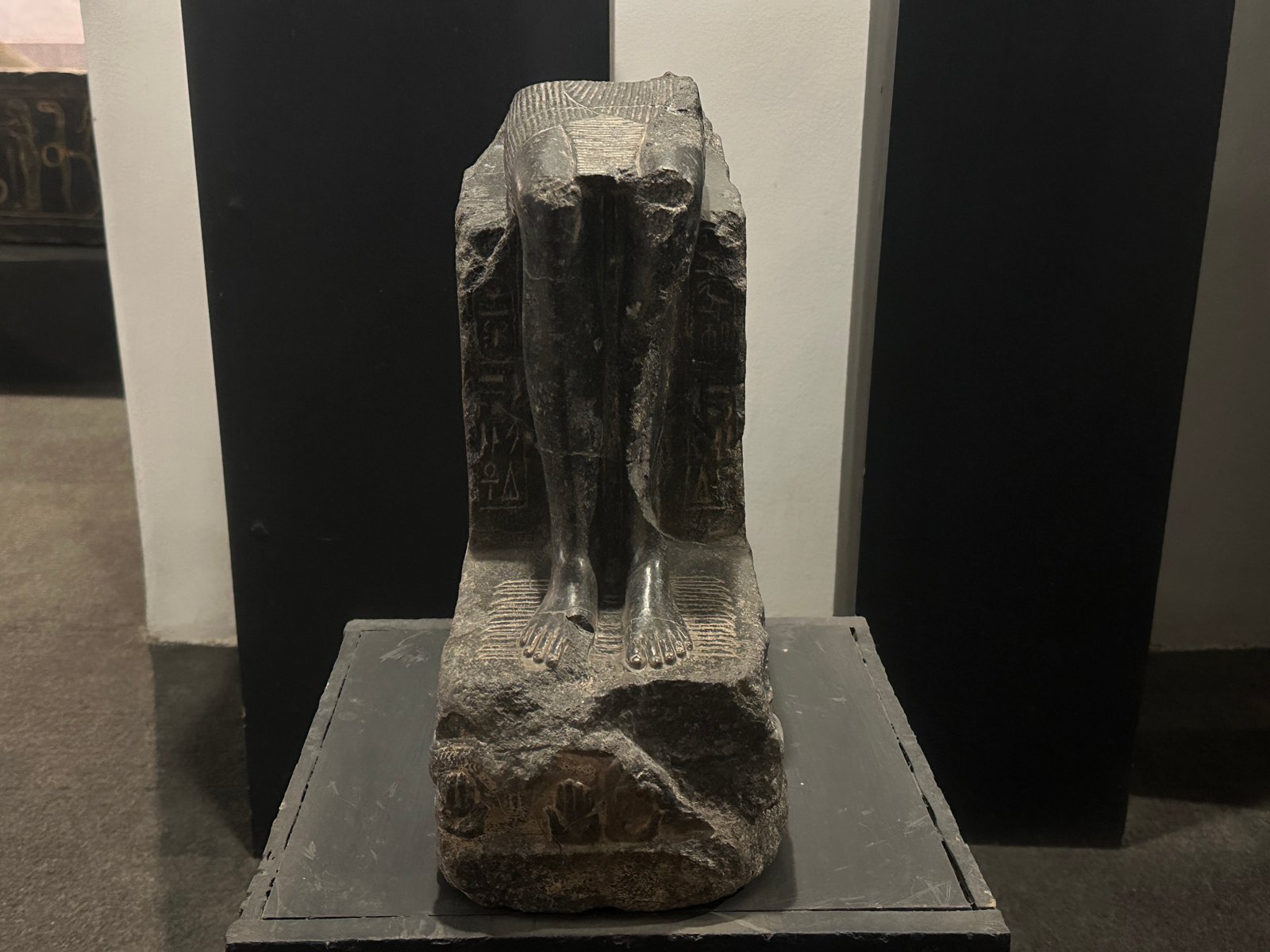
The Greeks knew this king as Mykerinos. In Latinized and English usage, that became Mycerinus. Herodotus uses Mycerinus when recounting traditions about the king and his pyramid. As with Cheops and Chephren, the Greek form became deeply embedded in older European writing about Egypt.
Today, Menkaure is the normal Egyptological form. Egypt’s Ministry of Tourism and Antiquities identifies him as Menkaure and explicitly notes that he was Mykerinos to the ancient Greeks.
Why the Greek Names Became So Familiar
For much of European history, Egyptian hieroglyphs could no longer be read. Greek and Roman authors therefore became some of the principal literary sources available to scholars trying to reconstruct ancient Egyptian history. Names transmitted by writers such as Herodotus and, later, Manetho naturally became embedded in European languages and scholarship.
That changed after the decipherment of Egyptian hieroglyphs in the nineteenth century. Scholars could once again read royal names directly from Egyptian monuments, statues, king lists, tombs, papyri, seals, and inscriptions. The Greek forms did not disappear, because centuries of historical literature had already made them familiar, but they were no longer our only route to the names of these kings.
That is the fundamental difference. Cheops, Chephren, and Mycerinus tell us how Greek writers transmitted the names of these ancient Egyptian kings. Khufu, Khafre, and Menkaure take us back to the names preserved in Egyptian writing itself.
The Names I Prefer to Use
This is why, when I am teaching about Giza, I prefer Khufu, Khafre, and Menkaure.
There is nothing inherently wrong with saying Cheops, Chephren, or Mycerinus. They are historically important forms, and knowing them is useful because they appear throughout older archaeological literature. If you pick up a nineteenth- or early twentieth-century book about the pyramids, you will encounter them constantly.
But those are not the forms preserved by the Fourth Dynasty Egyptians themselves. When discussing the Great Pyramid, I would rather call its builder Khufu, the name reconstructed from Egyptian inscriptions associated with the king, than Cheops, the form transmitted by a Greek historian roughly two millennia later. The same applies to Khafre rather than Chephren and Menkaure rather than Mycerinus.
That approach also matches the direction of modern Egyptological and Egyptian institutional usage. Egypt’s Ministry of Tourism and Antiquities consistently places Khufu, Khafre, and Menkaure first on its official monument pages. Harvard’s Digital Giza likewise uses the Egyptian forms as the primary names while preserving the Greek equivalents for cross-reference.
The Greek names are worth knowing because they form part of the history of how the ancient world remembered Egypt. But when we discuss the monuments of Giza, we are dealing with an Egyptian landscape. The inscriptions are Egyptian. The architecture is Egyptian. The kings were Egyptian.
And whenever possible, I think we should call them by their Egyptian names.

Research Sources and Further Reading
- Egyptian Ministry of Tourism and Antiquities. Giza Plateau.
- Egyptian Ministry of Tourism and Antiquities. The Great Pyramid.
- Egyptian Ministry of Tourism and Antiquities. Pyramid Complex of Khafre (Khefren).
- Egyptian Ministry of Tourism and Antiquities. Pyramid Complex of Menkaure.
- Egyptian Ministry of Tourism and Antiquities. Khufu Statue.
- Harvard University, Digital Giza. People and Places of Giza.
- Herodotus. The Histories, Book II, especially sections 124–134.
Image licensing: Original Egypt Christian Tours photography is available under the licensing terms stated in the Egypt Photo Gallery. Preferred attribution: Photo by Nate Loper / EgyptChristianTours.com.