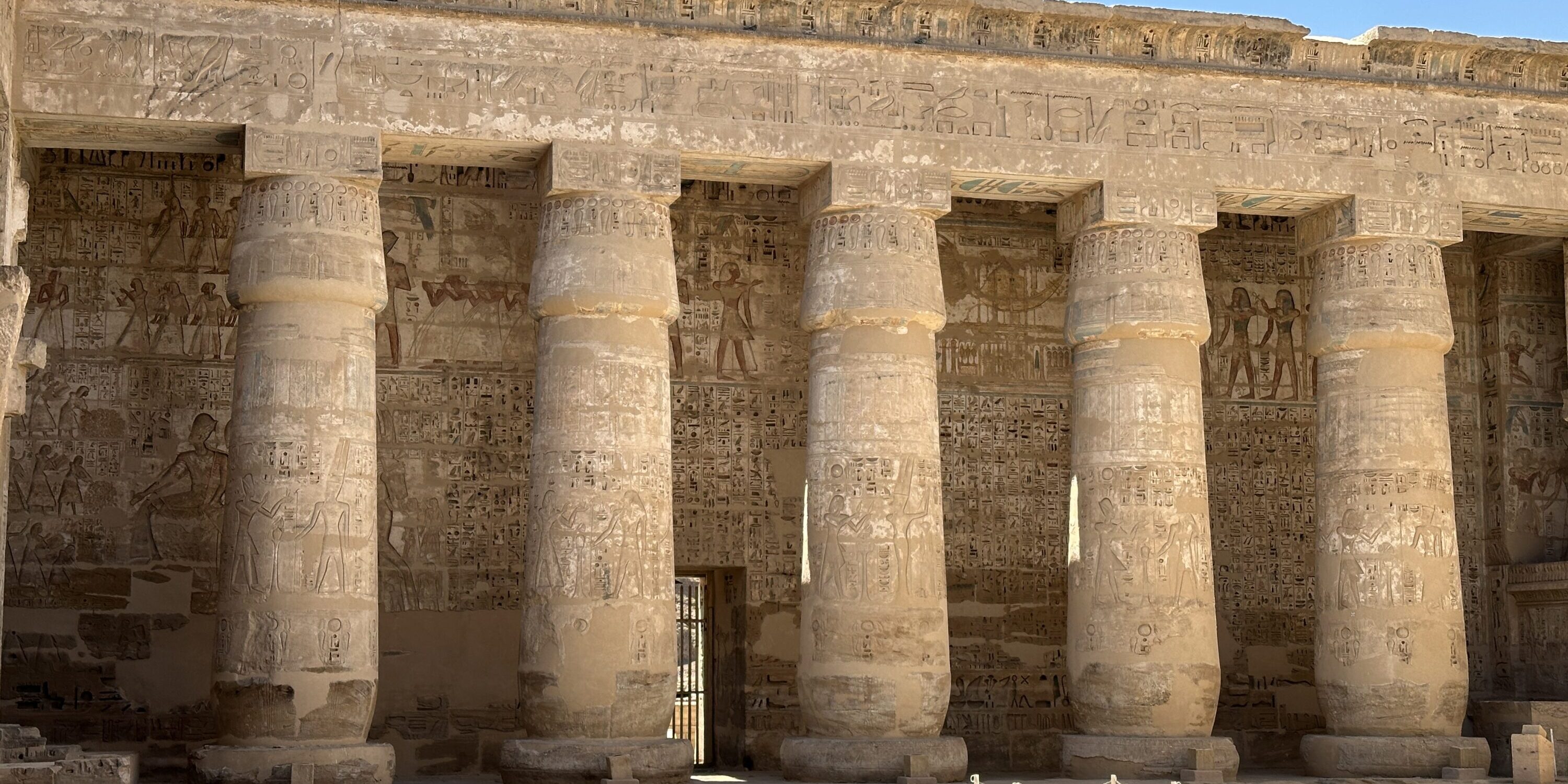
Ancient Christian Networks Revealed Across Egypt’s Nile Valley
New archaeological research is bringing Egypt’s early Christian landscape into clearer focus, documenting churches, monasteries, inscriptions and the ancient routes that connected them along the Nile Valley.
Visitors to Luxor typically come to see the monuments of the pharaohs: the richly decorated tombs of the Valley of the Kings, the mortuary temples of the West Bank and the towering remains of ancient Thebes. Yet a different chapter of Egyptian history is written across many of those same landscapes. Centuries after the great temples were built, Christian communities prayed, lived and traveled among their ruins, sometimes adapting older buildings for new purposes.
A research initiative called the Coptic Project is now examining that history on a wider scale. In a study published in the archaeological journal Antiquity, researchers Ariadna Guimerà Martínez and Pau de Soto Cañamares describe an effort to understand not simply where Egypt’s Christian monasteries stood, but how they related to one another, to nearby settlements and to the roads and river routes that sustained everyday life.
More Than 1,500 Inscriptions and 163 Christian Structures
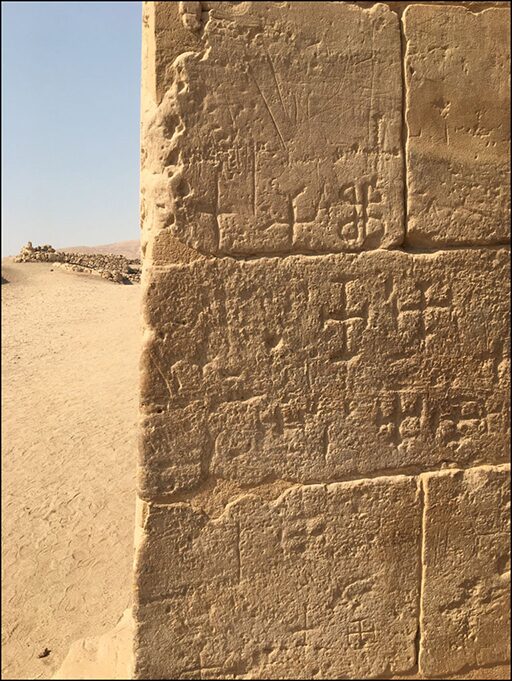
During fieldwork on Luxor’s West Bank in 2020, the project recorded more than 1,517 Coptic graffiti and inscriptions, along with 163 Christian structures classified among churches, monasteries and hermitages. The study examines evidence from roughly the third through seventh centuries AD, a period when Egypt became one of the important centers of early Christian monastic life.
These figures should not be mistaken for an announcement that 163 previously unknown buildings were all discovered at once. The importance of the project lies in its systematic documentation and in bringing many kinds of evidence together. Individual inscriptions may identify the presence of Christian visitors or residents, while buildings, pathways and scattered archaeological material help reconstruct a much broader inhabited landscape.
For archaeologists, the location of an inscription can be as significant as its wording. A Christian text carved into an older temple wall may reveal how a building was encountered or used long after its original religious function changed. When numerous inscriptions and structures are plotted across the terrain, a more detailed picture of the region’s later history begins to emerge.
Christian Life Among the Temples of the Pharaohs
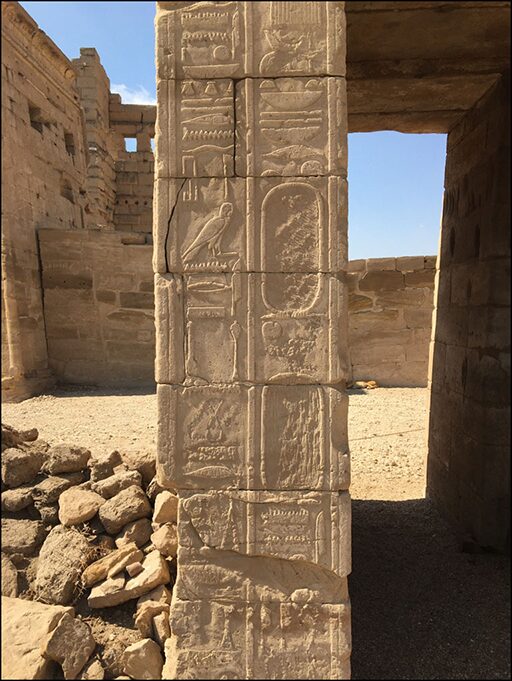
Two examples bring the research especially close to places familiar to modern travelers. At Deir el-Medina, best known as the settlement of the artisans who prepared royal tombs, the researchers documented Coptic graffiti on the east wall of the Temple of Hathor. The markings form part of the evidence for Christian activity within a complex whose architectural history reaches back to earlier Egyptian religious traditions.
At Medinet Habu, the vast mortuary temple complex of Ramesses III, the study illustrates the Chapel of St. Anthony situated within the ancient precinct. Its presence points to a remarkable continuity of human occupation, even as the beliefs and practices associated with the site changed over the centuries.
The story is not simply one of older sanctuaries being abandoned and replaced. Across Egypt, the surviving architecture of the pharaonic and Greco-Roman periods became part of the physical environment encountered by later Christian populations. Some places acquired Christian inscriptions or buildings, while others served as landmarks along established paths. Reading these layers together allows visitors to recognize that an Egyptian temple can preserve evidence from several distinct historical periods.
The Nile, Desert Roads and the Monastic Network
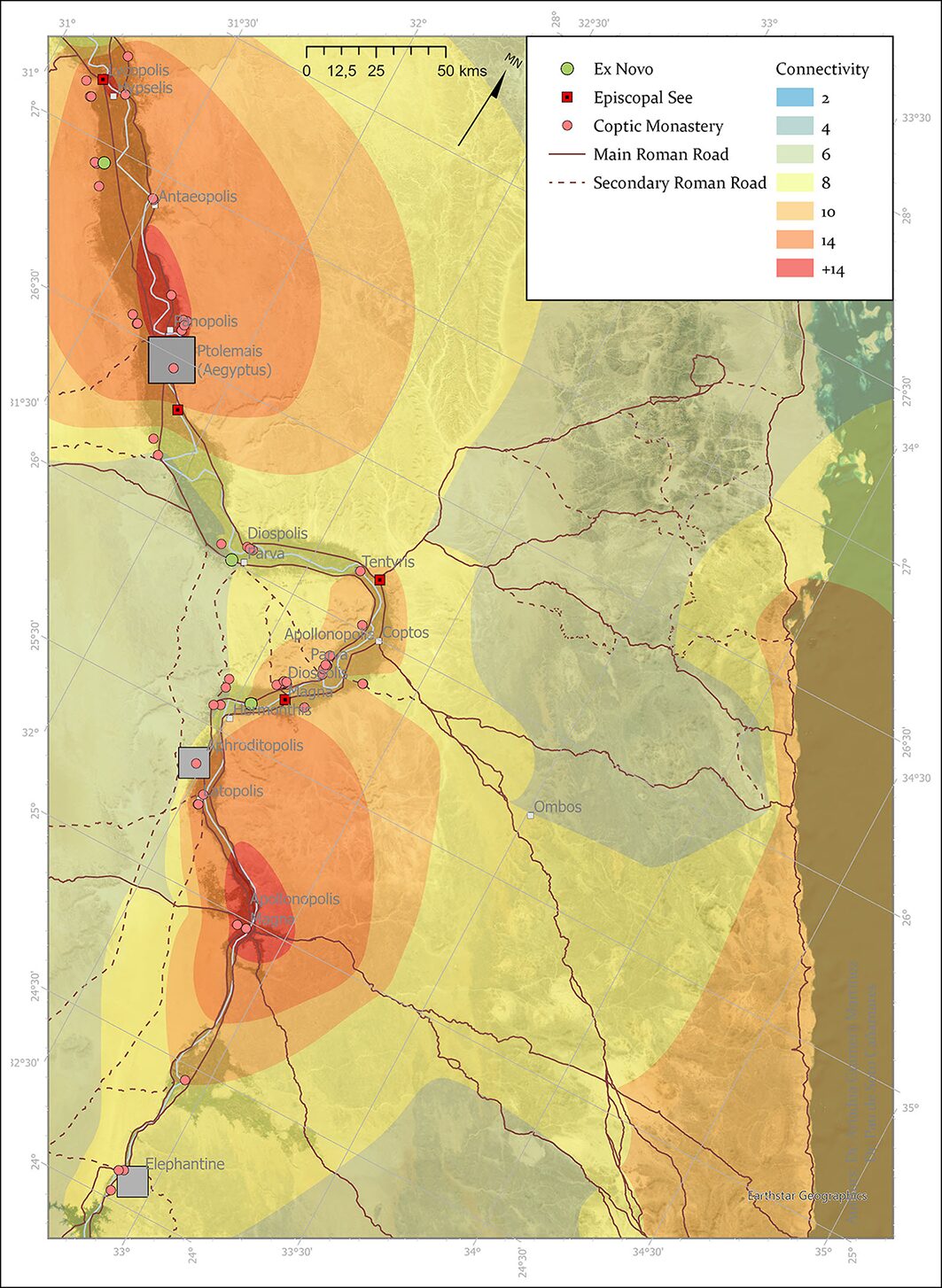
Egyptian monasticism is often imagined through the solitary figure of a hermit withdrawing into the desert. That tradition was certainly important, but the new research asks how even relatively remote religious settlements remained connected to a populated and economically active Nile Valley.
The project combines archaeological survey, ancient documentary evidence, satellite and cartographic information, and computer-based geographic mapping. Researchers have examined an approximately 100-square-kilometer study area on Luxor’s West Bank, recording religious structures, paths and surface finds. They then integrated information about roads, tracks, Nile routes and ports to model how people and goods could have moved between communities.
The findings suggest that waterways and overland corridors played important roles in the organization of Christian settlements. Monasteries were not necessarily isolated islands of devotion. Their inhabitants could be part of networks involving neighboring villages, towns, pilgrims, supplies and regional exchanges. By estimating potential travel routes and the relative accessibility of different places, the researchers can test how geography shaped those relationships.
Such models are reconstructions rather than direct records of every journey. Nevertheless, they offer an important way to examine the often-overlooked practical dimension of Christian life in ancient Egypt, including the movement of people, food, manuscripts and other necessities through landscapes still recognizable today.
Why This Matters for Egypt’s Christian Heritage
Egypt holds a significant place in the history of Christianity. The New Testament describes the flight of Joseph, Mary and Jesus into Egypt (Matthew 2:13–15), while the subsequent centuries saw influential Christian communities emerge in Alexandria and across the Nile Valley. Traditions associated with early monastic figures such as Antony and Pachomius would have a lasting influence on Christian religious life well beyond Egypt.
The Coptic Project helps tell part of that later story through physical evidence rather than relying solely on written accounts. Its focus on settlements, routes, religious buildings and inscriptions reveals the ordinary spaces in which Christian communities developed. The work also reminds visitors that Egypt’s Christian heritage is not confined to the churches and monasteries that remain in active use. It can be traced in the walls of ancient temples and across desert paths that tourists may otherwise overlook.
For travelers exploring the Luxor West Bank, locations such as Medinet Habu and Deir el-Medina can therefore be appreciated on more than one historical level. They preserve the achievements of ancient Egyptian builders while also bearing witness to the people who lived among their monuments in the Christian centuries that followed.
A Public Archaeological Map Planned for 2027
Another significant feature of the project is its commitment to making research data publicly accessible. The authors say an online mapping platform is planned for early 2027. The resource is intended to allow scholars and interested readers to explore the locations of Coptic religious buildings, examine archaeological records and visualize historical transport patterns.
If launched as described, the platform could become a useful resource for historians, educators and travelers interested in following Egypt’s Christian history across the landscape. It may also provide a foundation for future research as new evidence is identified and added to the existing database.
For now, the new study offers a valuable reminder: the archaeological story of Egypt did not end with the pharaohs. Its monumental landscapes continued to be inhabited, adapted and understood by generations of Christians whose traces remain visible in stone.
Source and image attribution: Ariadna Guimerà Martínez and Pau de Soto Cañamares, “The Coptic Project: exploring monastic networks in Late Antique Egypt,” Antiquity (2026), DOI: 10.15184/aqy.2026.10432. Figures reproduced from the original open-access paper under the Creative Commons Attribution 4.0 International license. Photographs and map credited to the original authors; no modifications other than webpage display sizing.