

The painted funerary mask of Mesehti, cataloged as GEM 39209, comes from Asyut in Middle Egypt and belongs to the 11th Dynasty. The surviving mask preserves the stylized face, black wig, outlined eyes, facial hair, and broad collar that transformed the deceased into an idealized funerary image.
Key Facts
- Object: Mummy mask of Mesehti.
- Inventory: GEM 39209.
- Individual: Mesehti.
- Period: 11th Dynasty, Middle Kingdom.
- Provenance: Asyut, Middle Egypt.
- Material: Painted cartonnage.
- Current museum: Grand Egyptian Museum, Giza.
What the Mask Shows
The face is presented frontally with strongly outlined eyes and brows. A dark wig frames the face, while facial hair and a broad multi-band collar contribute to the formal funerary appearance. These features were not intended simply as portraiture in the modern sense. Egyptian funerary masks helped create an enduring, recognizable and ritually effective image of the deceased.
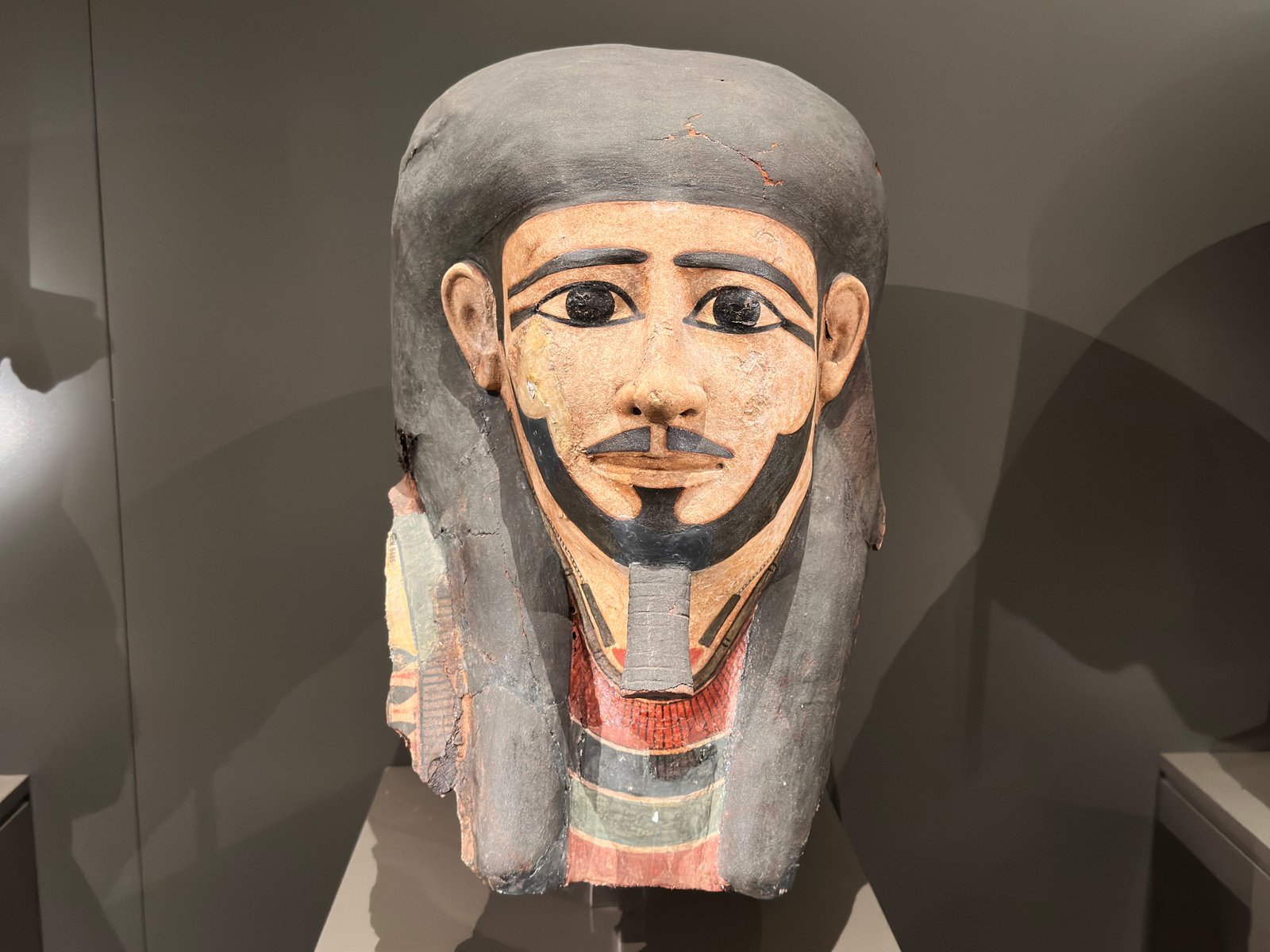
Mesehti and Asyut
Asyut was one of the major provincial centers of Middle Egypt and preserves important evidence for elite burial practices around the First Intermediate Period and early Middle Kingdom. Mesehti is particularly well known from a richly equipped tomb at Asyut whose surviving funerary equipment provides unusually vivid evidence for provincial elite culture.
Why the Object Matters
The mask is useful because it connects a named individual, a securely identified regional center, a specific historical period, and an identifiable museum object. For researchers and travelers, that combination allows the photograph to function as more than a generic image of an Egyptian funerary object.
Identification Standard
The object identification, museum inventory number, individual, period and Asyut provenance are treated here as the controlling catalog data. Interpretive statements about the mask’s appearance are limited to features visible in the photograph and standard funerary function rather than adding unsupported biographical claims about Mesehti.
See also the Egypt Museum Artifact Index and the Grand Egyptian Museum guide.