

This New Kingdom grey-granite statue in the Luxor Museum depicts a bound foreign prisoner in a deliberately humiliating pose. The captive lies prostrate with his hands tied behind his back. His facial features and hairstyle identify him as a man from the Syrian-Palestinian / western Asiatic world.
Key Facts
- Object: Statue of a bound Asiatic prisoner.
- Period: New Kingdom.
- Material: Grey granite.
- Findspot / provenance: Qasr el-Koba (Koubbeh Palace), Cairo.
- Current location: Luxor Museum.
- Identity of captive: Syrian-Palestinian / western Asiatic, based on the conventional hairstyle and facial representation.
- Inscription: Includes an offering prayer dedicated to a man named Peninhery.
- Inventory number: Not securely established in the sources reviewed here.
What the Statue Shows
The prisoner is shown with his body forced low to the ground and his arms bound behind him. Egyptian royal and elite art repeatedly used images of subdued foreigners to express domination over Egypt’s enemies. Here the physical posture itself communicates defeat and subjection.
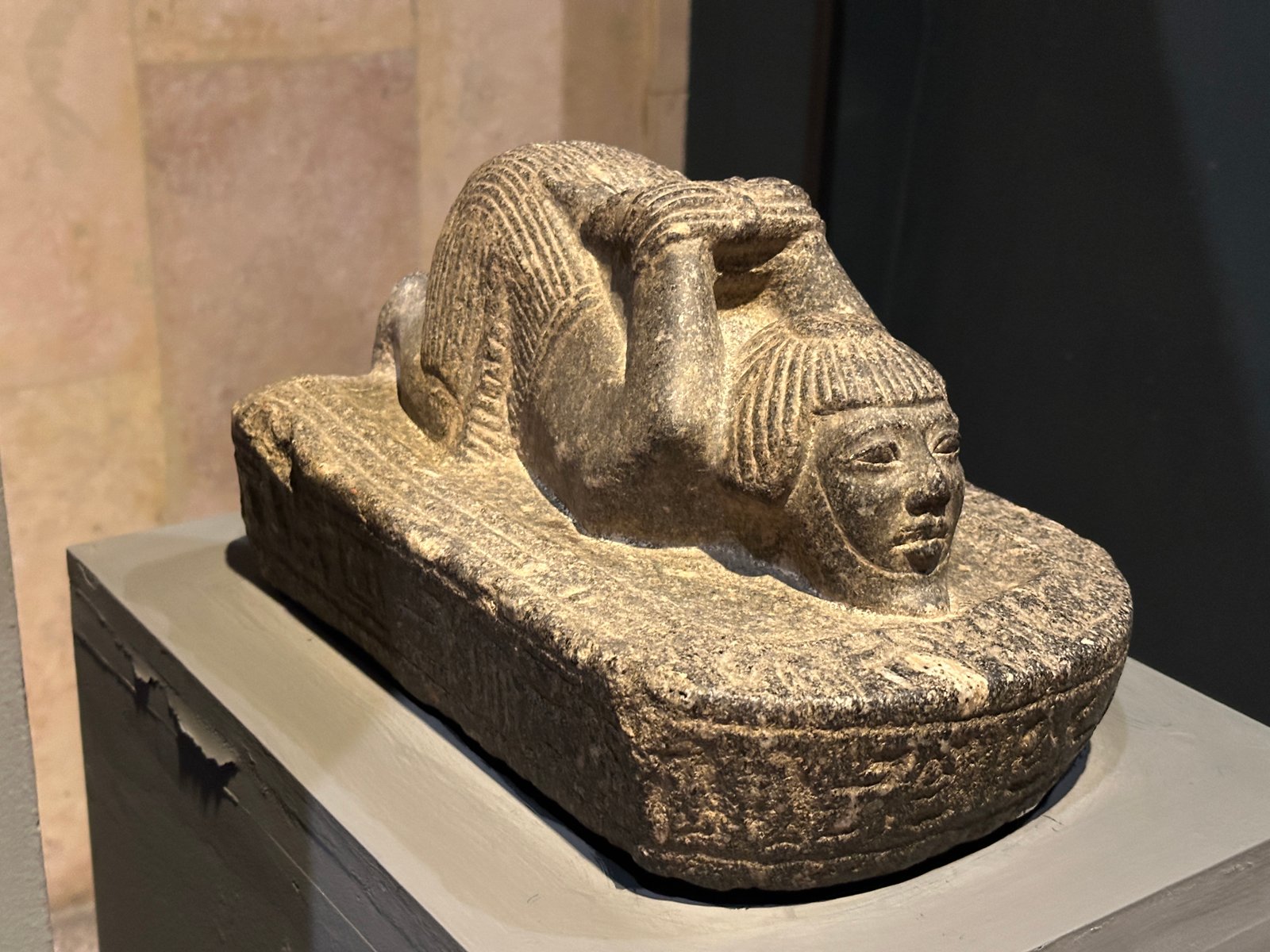
An Asiatic Captive
The museum description identifies the prisoner’s features and hairstyle with the Syrian-Palestinian world. In broader Egyptological terminology, he may therefore be described as a western Asiatic captive. This type of ethnic representation belongs to a long Egyptian artistic tradition in which Nubians, Libyans, and peoples from western Asia were differentiated through conventional hairstyles, dress, facial features, and inscriptions.
The Name Peninhery
The surviving inscription bears an offering prayer dedicated to a man named Peninhery. That name belongs to the beneficiary of the inscription and should not be confused with the identity of the bound prisoner himself. The captive is a symbolic foreign enemy, while Peninhery is the named Egyptian individual associated with the monument’s inscription.
Why It Is Useful for Biblical-Egypt Background
The statue does not identify an Israelite prisoner and should not be presented as direct evidence for the biblical oppression. Its value is contextual. It provides a vivid New Kingdom example of how Egyptians visually represented and symbolically subordinated peoples from the Syrian-Palestinian and western Asiatic world—the same broad geographic sphere from which the biblical Hebrews originated.
See also the Egypt Museum Artifact Index.
Full-Size Images
Click the thumbnail to open the full-size photograph in a new tab. See the Egypt Photo Gallery for image-use and licensing terms.