

The chariot cataloged as CG 51188 was discovered in tomb KV46, the burial of Yuya and Thuya in the Valley of the Kings. It is one of the best-preserved 18th-Dynasty chariots and provides unusually detailed evidence for Egyptian wheel, axle, leather, and light-frame construction.
Key Facts
- Object: Chariot from the tomb of Yuya and Thuya.
- Catalog number: CG 51188.
- Findspot: Tomb KV46, Valley of the Kings.
- Period: 18th Dynasty, New Kingdom.
- Association: Probably Yuya; the chariot itself is not inscribed.
- Materials: Wood, leather, and gilded decoration.
- Total length: Approximately 2.45 m in the original Cairo Museum catalog.
- Current collection: Egyptian Museum, Cairo.
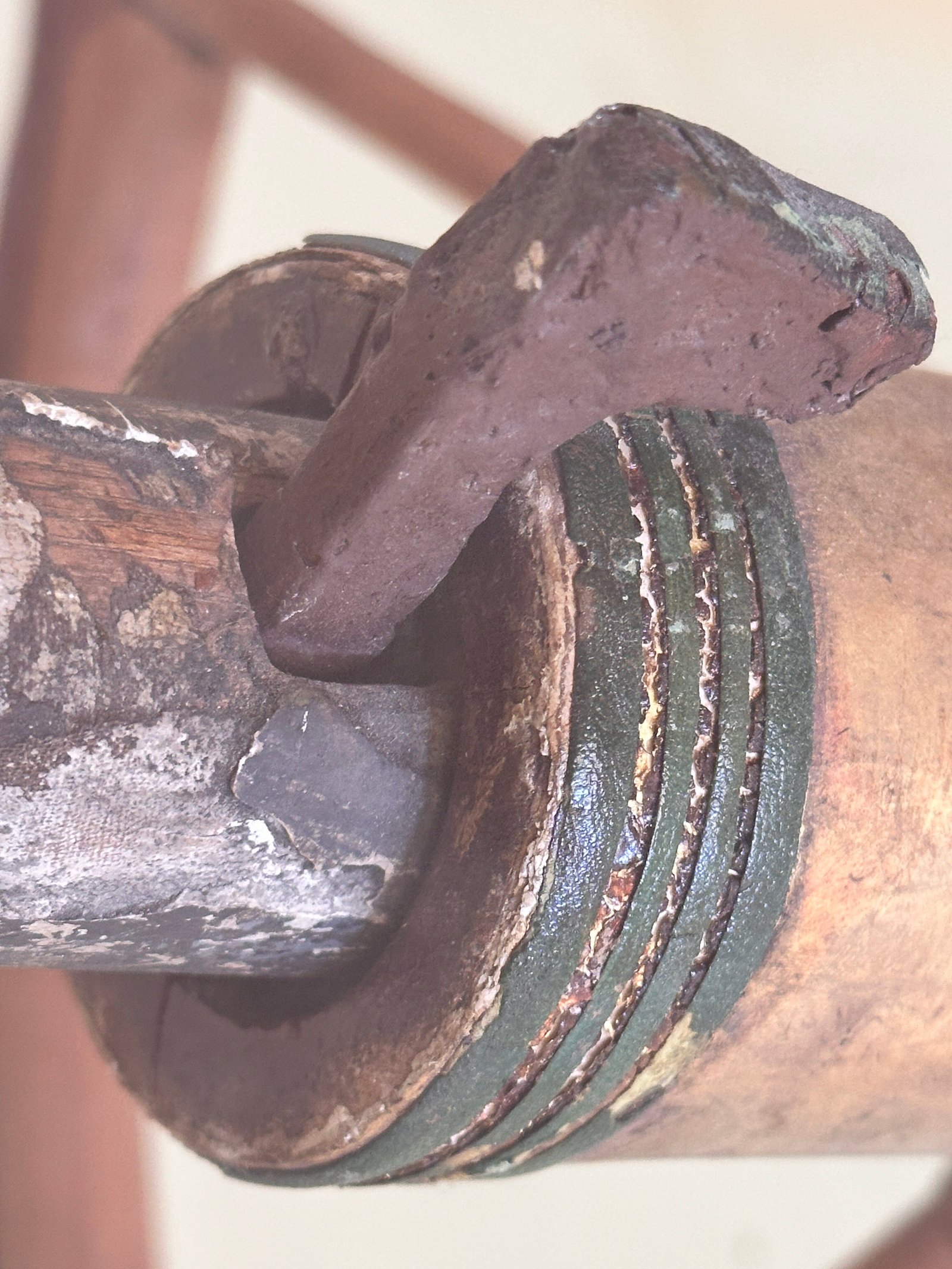
- Photographed detail: Wheel hub, fixed axle, securing peg, and surviving green leather bindings around the nave.
The Original Cairo Museum Catalog
J. E. Quibell’s 1908 Tomb of Yuaa and Thuiu, published as part of the Catalogue général of the Cairo Museum, records the chariot as 51188. The catalog gives a total length of 2.45 m and describes a light wooden chariot with extensive gilded ornament. It also documents the wheel, axle, nave, pole, yoke, and frame dimensions in unusual technical detail.
That primary catalog is especially important because later popular descriptions sometimes confuse catalog numbers among the many objects from KV46. CG 51188 specifically belongs to the chariot.
Wheel, Hub, Axle, and Leather Tire
The surviving wheel construction helps explain why Egyptian chariots could be extremely light. The wheel is built from bent wooden components tied together, with a leather tire around the rim. Modern engineering studies of ancient chariots specifically cite the Yuya–Thuya wheel as an example of low rotational mass, and published photographs document its multi-layer leather tire.
The Egypt Christian Tours photograph focuses on the hub and axle assembly rather than the complete vehicle. It shows the fixed wooden axle entering the wheel hub, a dark securing peg, and surviving green leather bindings around the nave. These details make the photograph useful for studying construction rather than merely identifying the whole chariot.
Was It a War Chariot?
The Metropolitan Museum of Art describes the KV46 chariot as probably too light for combat. That distinction matters. Chariots could serve several functions—ceremonial display, transport, hunting, or warfare—and not every surviving royal or elite chariot should automatically be labeled a battlefield vehicle.
For CG 51188, the safest description is therefore a light 18th-Dynasty chariot from KV46, probably associated with Yuya, rather than a specifically military chariot.
Yuya, Thuya, and the 18th Dynasty
Yuya and Thuya occupied an unusually prominent position in the court of Amenhotep III. Their daughter Tiye became Great Royal Wife, making Yuya and Thuya grandparents of Akhenaten. The survival of their largely intact burial equipment provides an important archaeological window into elite life immediately before the Amarna Period.
Evidence and Interpretation
Secure evidence: CG 51188, KV46 provenance, dimensions, wooden construction, leather components, and wheel/axle details are documented in the original Cairo Museum catalog and later scholarship.
Qualified attribution: the object is commonly called Yuya’s chariot because of its burial context, but the chariot itself is not inscribed with his name.
Sources and Further Reading
- J. E. Quibell, Tomb of Yuaa and Thuiu (1908), CG 51188.
- The Metropolitan Museum of Art, model of the chariot from the tomb of Yuya and Tjuyu.
- Journal of Ancient Egyptian Interconnections discussion of Egyptian chariot wheels and CG 51188.
See also the Egypt Museum Artifact Index.